
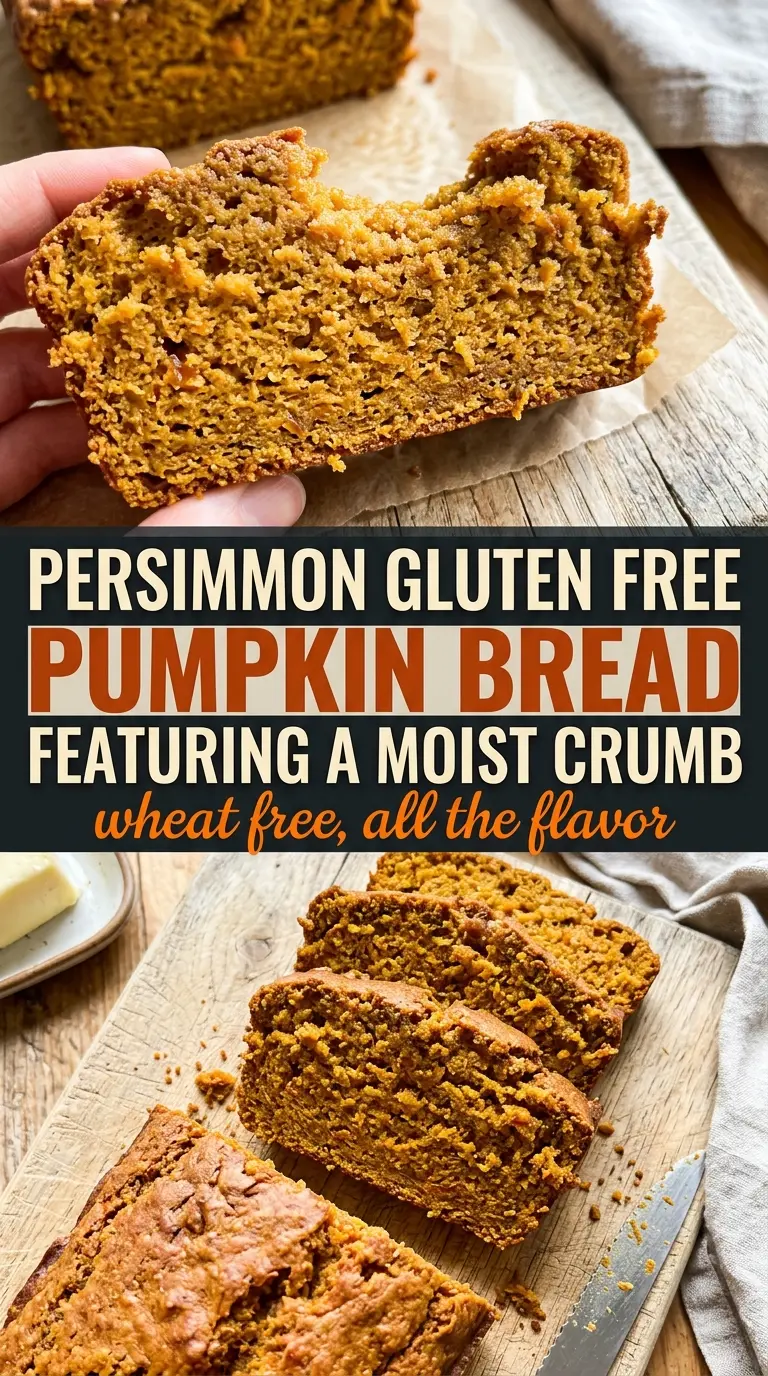
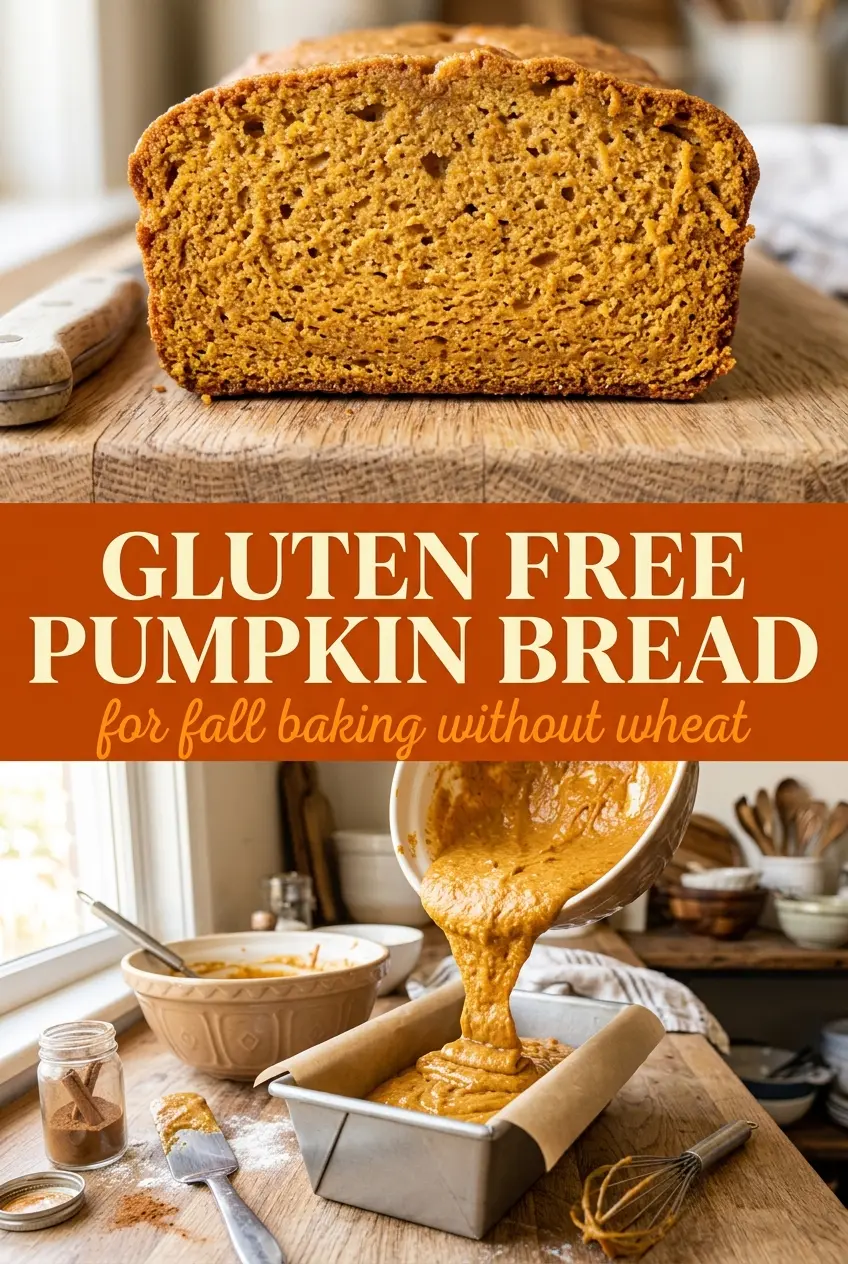
Gluten free pumpkin bread should come out tender, lightly sweet, and sliced with a crumb that holds together instead of crumbling into the plate. The best loaves have that deep orange color, a soft center, and a warm spice aroma that makes the kitchen smell like you’ve been baking all afternoon, even though the batter comes together in minutes. When it’s done right, nobody misses the wheat.
The trick is using a 1:1 gluten-free baking flour blend that already knows how to behave like regular flour. That blend usually includes starches and binders that help the loaf rise and set without turning gummy. Pumpkin puree brings moisture and body, oil keeps the crumb soft for days, and eggs provide the structure gluten would normally handle. If your flour blend doesn’t include xanthan gum, add it; it helps the loaf slice cleanly instead of collapsing at the middle.
Below, I’ll walk you through the small details that matter here: how to mix the batter without making the loaf dense, what a fully baked center looks like, and why cooling matters more with gluten-free quick breads than it does with the wheat version.
The loaf stayed moist for days and the crumb held together perfectly once it cooled. I used a 1:1 gluten-free flour blend like you suggested, and nobody at brunch guessed it was gluten free.
Save this gluten free pumpkin bread for the days when you want a soft, spiced loaf that slices cleanly and never tastes like a compromise.
The Reason Gluten-Free Pumpkin Bread Stays Dense Instead of Tall
Most gluten-free quick breads fail in the same place: the batter gets overmixed, then the loaf bakes up heavy in the middle and too fragile at the edges. Gluten-free flour doesn’t need the same stirring that wheat flour can tolerate. Once the dry ingredients disappear into the wet, stop. Every extra stroke tightens the crumb and pushes the loaf toward a bready, compact texture instead of a soft slice.
The other mistake is pulling it too early because the top looks done. Pumpkin bread can brown before the center fully sets, especially in a loaf pan. A toothpick should come out clean or with just a few moist crumbs clinging to it, and the middle should spring back lightly when touched. If the center still sinks under your finger, it needs more time even if the surface looks ready.
What Each Ingredient Is Actually Doing in This Loaf
- Gluten-free 1:1 baking flour — This is the foundation. A good blend replaces wheat flour with starches and binders in the right balance, which is why the texture stays tender instead of gritty or crumbly. If your blend doesn’t include xanthan gum, add it or the loaf will be more fragile when sliced.
- Pumpkin puree — This adds moisture, color, and the unmistakable pumpkin flavor. Use pure pumpkin puree, not pumpkin pie filling, which already contains sugar and spices and throws off both the texture and seasoning.
- Vegetable oil — Oil keeps the loaf softer than butter would in this style of quick bread. It helps the crumb stay moist even after a day or two, which matters a lot in gluten-free baking where dryness shows up fast.
- Eggs — Eggs provide structure and help the loaf set cleanly. They also give the bread a little lift, which helps balance the density that can happen with gluten-free flour.
- Pumpkin pie spice — This gives the loaf its warm background flavor without making you measure out individual spices. If yours tastes flat, the spice blend is usually the first thing to refresh.
Building the Batter Without Beating the Air Out of It
Mix the wet base until it looks smooth
Whisk the pumpkin puree, oil, and eggs until the mixture looks uniform and glossy. You’re not trying to whip in air here; you’re just breaking up the eggs so the batter bakes evenly. If streaks of egg remain, those spots can turn custardy in the finished loaf. A smooth base gives you a more even crumb from edge to center.
Add the dry ingredients only until the flour disappears
Stir the flour, sugar, pumpkin pie spice, baking soda, and xanthan gum into the wet mixture just until no dry patches remain. The batter will be thick, and that’s fine. If you keep mixing after it comes together, the loaf can turn tight and gummy instead of soft. A few small lumps are better than an overworked batter.
Bake until the center is set, not just the top
Pour the batter into the greased loaf pan and bake at 350°F until a toothpick inserted in the center comes out clean, usually 55 to 65 minutes. The top should dome, crack slightly, and feel firm when pressed. If the loaf is browning too fast before the center sets, lay a loose piece of foil over the top for the last stretch of baking. That protects the crust while the middle finishes.
Cool all the way before slicing
Let the loaf cool in the pan for a short time, then move it to a rack and leave it alone until fully cool. Gluten-free quick breads set up as they cool, and slicing too early is the fastest way to get a gummy middle and broken slices. Once it’s cool, the crumb firms up enough to cut cleanly with a serrated knife.
How to Adapt This for Different Needs
Dairy-Free by Default
This loaf is already dairy-free as written because it uses oil instead of butter. That keeps the crumb soft and avoids the firmer texture butter can create once the loaf cools.
Make It More Spiced
If you want a stronger spice flavor, add a little cinnamon or ginger on top of the pumpkin pie spice. The loaf can take it, but don’t overdo it or the pumpkin gets lost behind the spice.
Sugar Swap With a Different Sweetener
You can replace the granulated sugar with a cup-for-cup granulated sugar substitute designed for baking, but the loaf may brown a little differently and taste slightly less rounded. The structure will still work, though the crumb may be a touch drier.
Storage and Reheating
- Refrigerator: Store tightly wrapped for up to 5 days. The crumb stays moist, but the loaf firms up a bit in the fridge.
- Freezer: It freezes well. Wrap slices or the whole cooled loaf tightly, then freeze for up to 3 months.
- Reheating: Warm slices in the microwave for 10 to 15 seconds or toast them lightly. Don’t heat it too long or the crumb can turn dry and chalky.
Questions I Get Asked About This Recipe
Gluten Free Pumpkin Bread
Ingredients
Equipment
Method
- Preheat the oven to 350°F and grease a loaf pan.
- Whisk together the pumpkin puree, vegetable oil, and eggs in a large bowl until smooth.
- In a separate bowl, combine the gluten-free 1:1 baking flour, granulated sugar, pumpkin pie spice, baking soda, and xanthan gum if using.
- Fold the dry ingredients into the wet ingredients until just combined.
- Pour the batter into the prepared loaf pan.
- Bake for 55-65 minutes, until a toothpick inserted in the center comes out clean, then let it cool before slicing.