
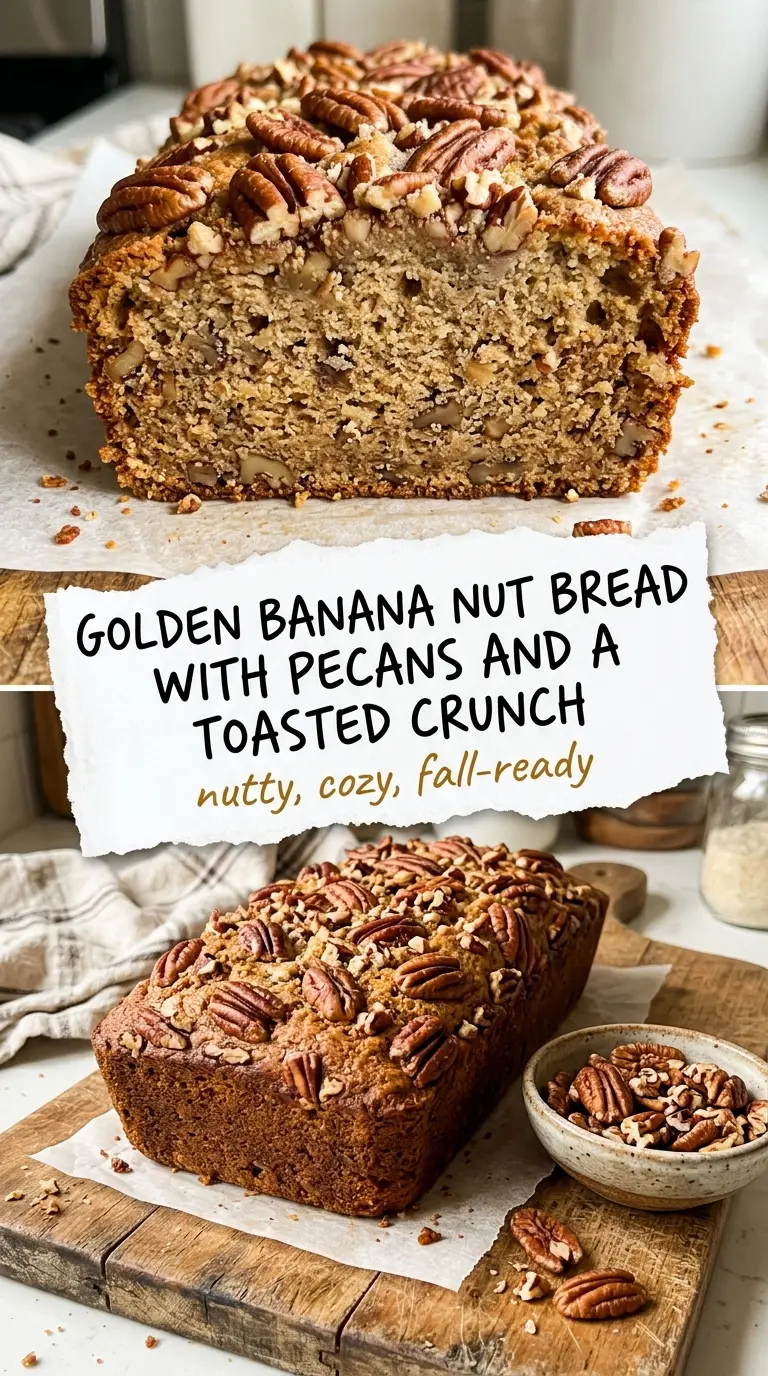
Banana nut bread gets its best texture from contrast, and pecans deliver exactly that: a soft, fragrant crumb inside with a toasted crunch in every slice. The loaf stays moist from the bananas and butter, but it never turns gummy, which is where a lot of banana breads go wrong. A good banana bread should slice cleanly, hold together on the cutting board, and still taste like it was worth heating the oven for.
What makes this version work is the balance. Very ripe bananas bring sweetness and moisture, brown sugar deepens the flavor, and the toasted pecans keep the loaf from tasting flat. I also like folding the nuts in at the end instead of stirring them aggressively; that keeps the batter tender and stops the bread from turning dense. Toasting the pecans first takes only a few minutes, but it changes the whole loaf by pulling out their buttery, almost caramel-like edge.
Below, I’ve laid out the one detail that matters most for getting a tender crumb, plus the small ingredient choices that make the difference between an average loaf and one people keep slicing into while it’s still warm.
The pecans stayed crunchy even after baking, and the loaf came out so moist that I didn’t need butter on the first slice. My kitchen smelled incredible while it baked.
Save this banana nut bread with pecans for the days when you want a moist loaf with toasted crunch and a bakery-style finish.
The Trick to Banana Bread That Stays Tender Instead of Dense
The biggest mistake with banana bread is working the batter like cake batter. Once the flour goes in, every extra stroke builds gluten, and that’s what turns a soft loaf heavy and a little rubbery. Stop mixing as soon as the flour disappears and the batter still looks a bit streaky.
The other thing that matters here is moisture balance. Overripe bananas bring enough liquid and sweetness that you don’t need extra fuss, but if they’re under-ripe the loaf bakes up bland and dry. Use bananas with plenty of brown spots and a soft texture; they mash smoothly and give the bread its deep banana flavor without needing extra sugar.
What Each Ingredient Is Doing in This Loaf
- Very ripe bananas — These are the backbone of the loaf. They provide sweetness, moisture, and that unmistakable banana flavor; if they’re still yellow, the bread won’t taste nearly as good. Mash them well so the batter stays even, but a few small lumps are fine.
- Butter — Melted butter gives the crumb a rich, soft texture and keeps the loaf from feeling dry. You can use neutral oil in a pinch, but the flavor won’t be as round.
- Brown sugar — This adds a deeper sweetness than white sugar and helps the loaf stay tender. Light or dark brown sugar both work; dark brown sugar gives a slightly richer molasses note.
- Egg — The egg binds everything together and helps the loaf rise evenly. Don’t skip it unless you’re making a tested egg-free version, because the texture will fall apart more easily.
- All-purpose flour — This gives the loaf its structure without making it too sturdy. Spoon and level it instead of packing it into the cup, or you’ll get a dry crumb.
- Baking soda — It reacts with the bananas and brown sugar to help the loaf rise. If your baking soda is old, the bread will bake up flatter and heavier.
- Cinnamon — This doesn’t make the bread taste like spice cake; it just warms the banana flavor and plays nicely with the pecans.
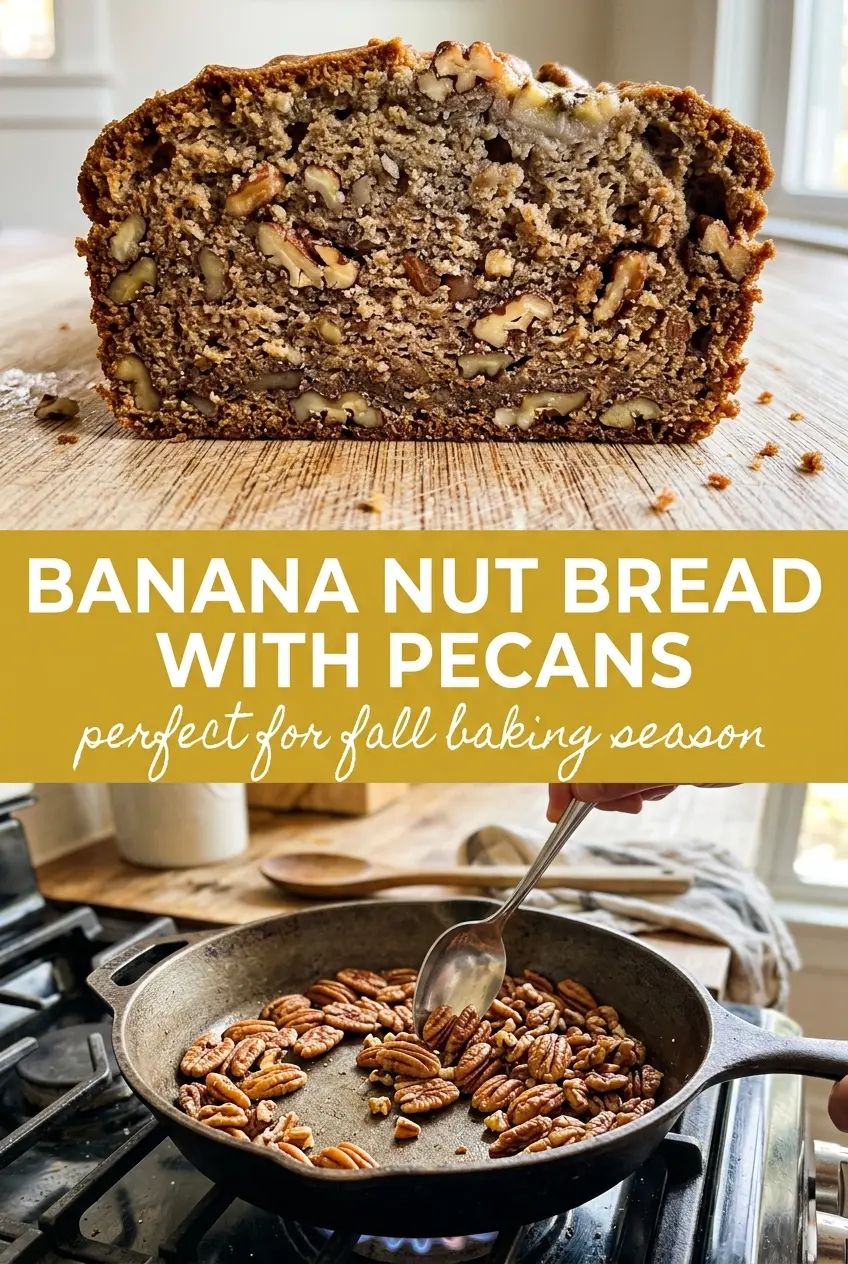
- Pecans — Toasting them first is the move that changes everything. Raw pecans can taste dull in baked banana bread, but toasted pecans stay crisp longer and bring a buttery, nutty finish to each slice.
How to Build the Loaf Without Overmixing It
Toasting the Pecans First
Warm the chopped pecans in a dry skillet over medium heat until they smell nutty and deepen just a shade in color. That usually takes 3 to 4 minutes, and they can go from toasted to burnt fast, so keep them moving. Pull them off the heat as soon as they’re fragrant; they’ll keep cooking from residual heat on the pan. Let them cool before they go into the batter so they don’t melt the butter or soften the loaf.
Mixing the Wet Ingredients
Stir the mashed bananas, melted butter, brown sugar, and egg until the mixture looks smooth and glossy. You want the sugar mostly dissolved and the bananas broken down well enough that the batter bakes evenly. If the butter is too hot, it can scramble the egg or make the mixture look greasy, so let it cool for a minute before you add it. The batter should look loose, not whipped.
Folding in the Dry Ingredients
Add the flour, baking soda, and cinnamon and fold just until you stop seeing dry flour. A few streaks are fine at this stage because they disappear as you add the pecans and pour the batter into the pan. Overmixing here is the fastest way to get a tight, tough loaf. Fold in the toasted pecans last so they stay distributed without getting crushed.
Baking Until the Center Sets
Pour the batter into the prepared loaf pan and scatter extra pecans over the top for a better crust and a more finished look. Bake at 350°F until a toothpick in the center comes out clean, usually 55 to 60 minutes. If the top is browning too fast, tent it loosely with foil for the last 10 to 15 minutes. Let the loaf rest in the pan for 10 minutes before moving it, or it can break apart while it’s still delicate.
How to Adapt This for Different Pans and Preferences
Gluten-Free Version
Swap the all-purpose flour for a 1:1 gluten-free baking blend that includes xanthan gum. The loaf will still be moist, but the crumb may be a little more delicate, so let it cool fully before slicing. If the blend is very fine, don’t add extra flour to compensate; that usually makes the bread dry.
Dairy-Free Swap
Use melted coconut oil or a neutral dairy-free butter alternative in place of the butter. Coconut oil brings a faint coconut note and can firm up as it cools, while vegan butter keeps the flavor closer to the original. Either way, let the fat cool slightly before mixing it with the egg.
Walnut Swap
Walnuts work well if that’s what you have, but they taste a little sharper and less buttery than pecans. Toast them the same way so they keep their crunch in the loaf. The result is still excellent, just slightly more rustic.
Storage and Reheating
- Refrigerator: Store tightly wrapped for up to 5 days. The crumb firms up a bit in the fridge, but the flavor stays good.
- Freezer: This loaf freezes well for up to 3 months. Slice it first, wrap the slices individually, then place them in a freezer bag so you can thaw only what you need.
- Reheating: Warm slices in a toaster oven or a skillet over low heat. The mistake people make is microwaving too long, which turns the crumb gummy; use short bursts if you’re using the microwave.
Answers to the Questions Worth Asking
Banana Nut Bread With Pecans
Ingredients
Equipment
Method
- Preheat the oven to 350°F and grease a loaf pan.
- Toast the chopped pecans in a dry skillet over medium heat for 3-4 minutes, until fragrant, then set aside.
- Mix the mashed bananas, melted butter, brown sugar, and egg until smooth.
- Fold in the flour, baking soda, and cinnamon until just combined, then fold in the toasted pecans.
- Pour the batter into the prepared loaf pan and top with extra pecans.
- Bake for 55-60 minutes, until a toothpick inserted in the center comes out clean.
- Cool in the pan for 10 minutes before transferring to a wire rack.