
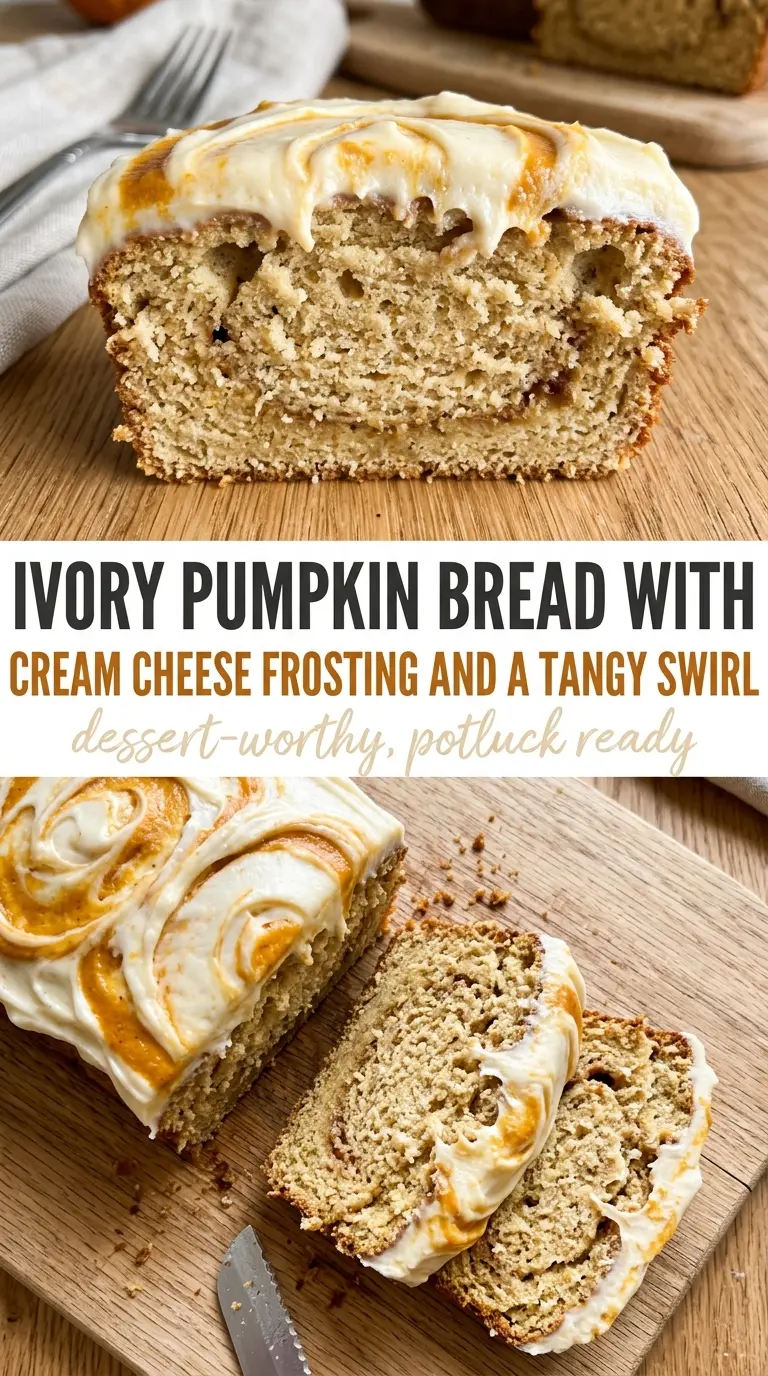
Moist pumpkin bread needs a good tangy topping to keep it from tasting one-note, and cream cheese frosting does that job better than anything else. The loaf stays soft for days, with warm spice in every slice, while the frosting brings just enough sharpness and sweetness to make each bite taste complete. It’s the kind of bread people cut into “just a sliver” and then come back for another piece five minutes later.
The trick here is keeping the batter uncomplicated and the mixing gentle. Pumpkin puree brings the moisture, oil keeps the crumb tender, and a full cup of sugar gives the loaf its dessert-like edge without making it dense. The frosting is meant to be thick and spreadable, not runny, so the bread has to cool all the way down before you even think about adding it.
Below, I’ve laid out the few places where pumpkin bread usually goes sideways — especially overmixing and frosting too early — plus the small adjustments that help you get that bakery-style swirl on the first try.
The loaf came out perfectly moist and the cream cheese frosting set up thick enough to spread without sliding off. I baked it until the center tested clean, and the spice level was spot on.
Like this pumpkin bread with cream cheese frosting? Save it to Pinterest for the days when you want a soft spiced loaf with a tangy, bakery-style finish.
The Fastest Way to Ruin Pumpkin Bread Is Overmixing the Batter
Once the flour goes in, the batter should look a little rough and thick. That’s the right point to stop. If you keep stirring because you’re trying to smooth out every streak, the bread turns tight and rubbery instead of tender.
Another common failure shows up in the oven, not the bowl. Pumpkin bread can look done on top while the center is still damp, so the toothpick test matters here. You want the tester to come out clean or with a few moist crumbs, not wet batter. If the top is browning before the middle is set, tent it loosely with foil for the last stretch of baking.
- The pumpkin puree carries the moisture and flavor, so use plain pumpkin, not pumpkin pie filling.
- Oil gives this loaf a softer crumb than butter would. Butter adds flavor, but oil keeps pumpkin bread plush for longer.
- Pumpkin pie spice does the heavy lifting for the warm spice note. If yours has lost its aroma, the loaf will taste flatter than it should.
- Brown sugar can replace part of the granulated sugar if you want a deeper, molasses-like flavor, but the loaf will bake up a touch more damp.
What Each Ingredient Is Actually Doing in This Loaf
- Pumpkin puree — This is the backbone of the loaf’s texture and color. Use canned puree for the most reliable consistency; homemade puree can be watery and throw off the bake.
- Vegetable oil — Oil keeps the crumb soft even after the bread chills. Melted butter can work, but it changes the texture and the loaf firms up faster.
- Eggs — They give the bread structure and help it rise evenly. Room-temperature eggs blend in more smoothly, which keeps the batter from looking curdled.
- Pumpkin pie spice — This gives the loaf its warm, rounded spice without forcing you to measure five separate spices. If you want to substitute, use cinnamon plus a smaller amount of ginger and nutmeg, but the flavor won’t be quite as blended.
- Cream cheese and butter — These need to be softened so the frosting turns silky instead of lumpy. Cold cream cheese leaves tiny bits behind that never fully smooth out.
- Powdered sugar — It sweetens and thickens the frosting at the same time. Add it gradually so the frosting stays fluffy instead of turning pasty.
Getting the Batter Mixed and the Frosting Set at the Right Time
Building the Pumpkin Base
Whisk the pumpkin puree, oil, and eggs until the mixture looks smooth and glossy. That first mix gives you an even base before the dry ingredients go in. Once you add the flour, sugar, spice, and baking soda, stir only until the flour disappears. A few streaks are better than an overworked batter.
Baking Until the Center Springs Back
Scrape the batter into a greased loaf pan and bake at 350°F until the top is domed and a toothpick in the center comes out clean. The loaf should smell deeply spiced and look set at the edges, with just a slight crack along the top. If the center still leaves wet batter on the tester, give it a few more minutes and check again.
Whipping the Frosting Smooth
Beat the cream cheese and butter first until there are no lumps left. Then add the powdered sugar and vanilla, mixing until the frosting turns light and spreadable. If the frosting looks loose, it needs a little more sugar or a short chill, not more cream cheese.
Cooling Before the Swirl
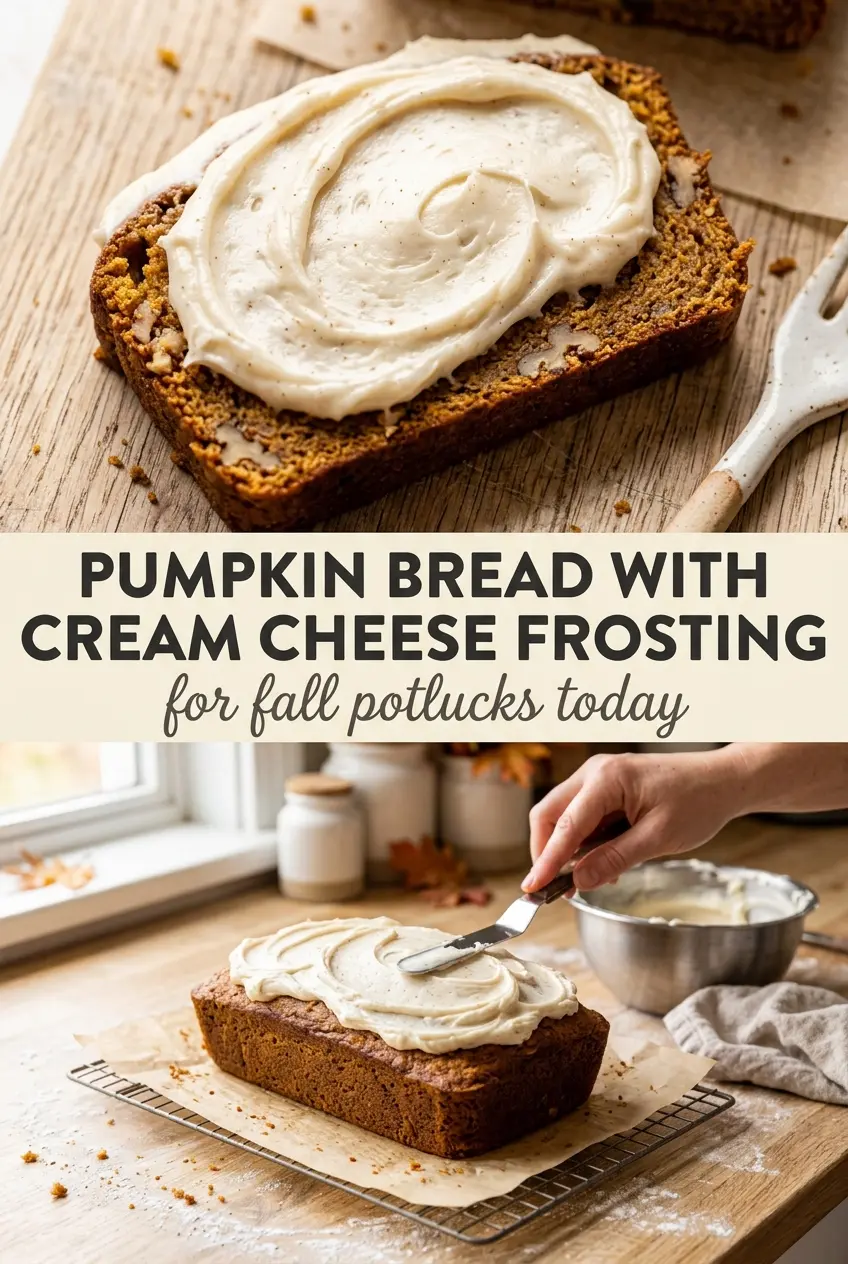
Let the loaf cool completely before adding the frosting. If the bread is even slightly warm, the frosting will melt, slide, and soak into the top instead of sitting in a neat layer. Spread it on with the back of a spoon or swirl it with a spatula for that rustic bakery look.
How to Adapt This Pumpkin Bread Without Losing What Makes It Good
Dairy-Free Version
Swap the cream cheese and butter for dairy-free versions with a firm texture. The frosting will still give you that sweet-tangy finish, though it may soften faster at room temperature than the original.
Lower-Sugar Slice
Cut the frosting portion in half or spread a thin layer over the loaf instead of a thick swirl. The bread itself already has enough sweetness to stand on its own, so this keeps the dessert feel without making each slice heavy.
Gluten-Free Swap
Use a 1:1 gluten-free flour blend that contains xanthan gum. The loaf may bake up a little more fragile, but the pumpkin and oil help keep it moist instead of sandy.
Storage and Reheating
- Refrigerator: Store covered for up to 4 days. The frosting firms up in the fridge, and the crumb stays moist.
- Freezer: Freeze the unfrosted loaf tightly wrapped for up to 2 months. Frost after thawing for the cleanest texture.
- Reheating: Warm plain slices for 10 to 15 seconds in the microwave. If the frosting is already on top, let the slice sit at room temperature first so it softens without melting into the bread.
Answers to the Questions Worth Asking
Pumpkin Bread With Cream Cheese Frosting
Ingredients
Equipment
Method
- Preheat the oven to 350°F and grease a loaf pan.
- Whisk together pumpkin puree, vegetable oil, and eggs, then fold in flour, granulated sugar, pumpkin pie spice, and baking soda until just combined.
- Pour the batter into the prepared loaf pan and bake for 55-65 minutes, until a toothpick inserted in the center comes out clean.
- Let the pumpkin bread cool completely before frosting.
- Beat the cream cheese and butter together until smooth.
- Mix in powdered sugar and vanilla extract until fluffy.
- Spread or swirl the cream cheese frosting over the cooled pumpkin bread before slicing.