
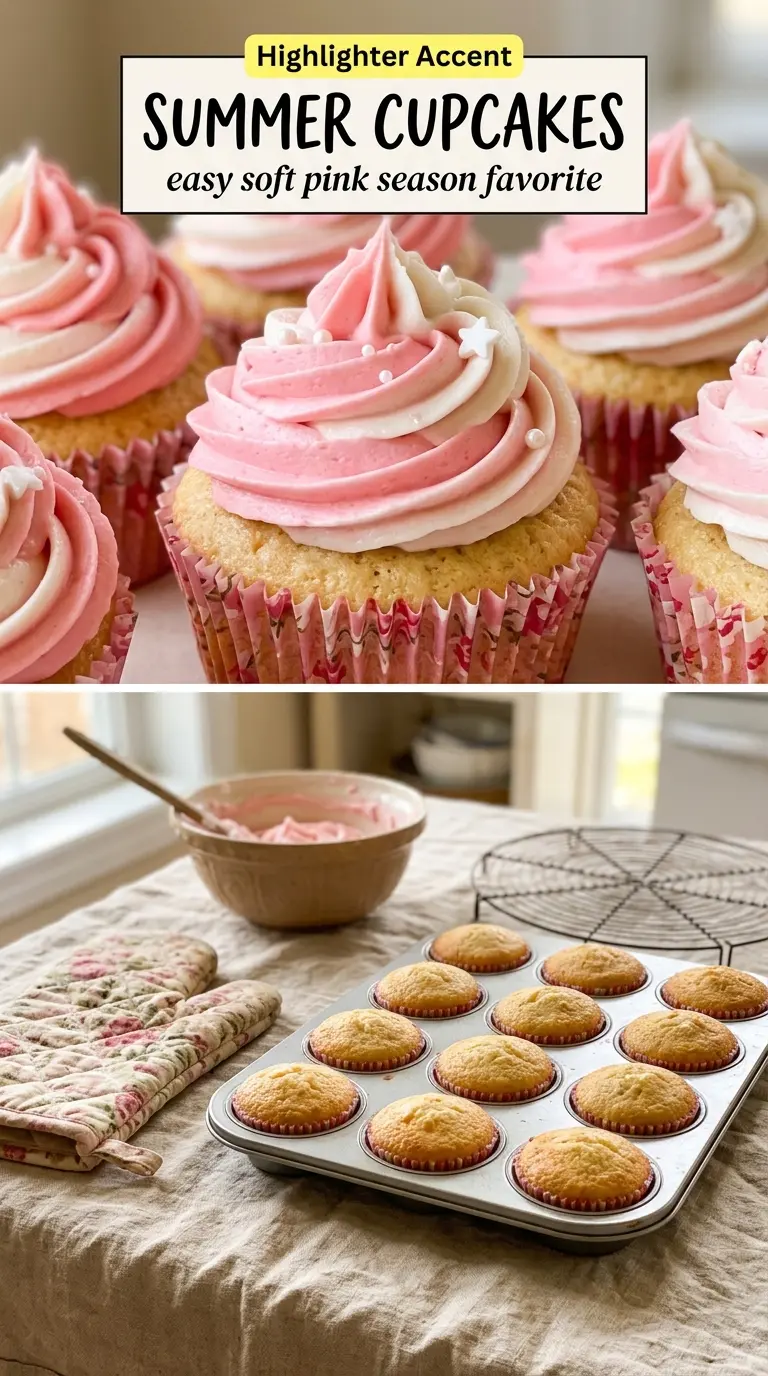
Fluffy vanilla cupcakes topped with silky pink buttercream have a way of disappearing fast. The crumb stays tender without turning airy and fragile, and the frosting pipes into a clean swirl that still holds its shape instead of melting into a puddle on the counter. That balance matters more than decoration alone. A cupcake can look pretty and still eat dry, greasy, or bland. This version keeps the texture soft, the sweetness in check, and the finish stable enough to serve with confidence.
The difference comes from a few small choices that pay off. The cake batter leans on proper creaming for lift, but it doesn’t rely on excess mixing, which is how you end up with a tough crumb. The buttercream gets enough structure to pipe, yet a little acidity keeps it from tasting flat. If you’ve ever made cupcakes that looked right but tasted forgettable, this is the kind of recipe that fixes that problem.
Below you’ll find the detail that matters most for getting the frosting smooth in warm weather, plus a few useful swaps if you need to change the flavor or make them ahead.
The cupcakes stayed soft for two days, and the buttercream actually held its swirl on a warm afternoon picnic. I loved the little tang in the frosting — it kept everything from tasting too sweet.
These summer cupcakes keep their soft crumb and rosy buttercream swirl, so they’re worth pinning for birthdays, picnics, and any time you want a pretty dessert that still tastes homemade.
Why the Cupcake Crumb Stays Tender Instead of Drying Out
Dry cupcakes usually come from one of two places: too much flour or too much mixing after the flour goes in. Once the flour is hydrated, the batter needs only enough stirring to disappear the streaks. Past that point, the gluten tightens up and you lose that soft, springy bite people expect from a good vanilla cupcake.
The other piece is baking just until the centers set. Cupcakes keep cooking in the pan for a minute or two after they come out of the oven, so pulling them when a tester comes out with a few moist crumbs is better than waiting for it to come out bone dry. If the tops dome and then sink, they were probably underbaked. If they dome, crack, and feel tight, the oven ran too hot or the batter was overworked.
- Cake flour gives the most tender crumb here. All-purpose flour works in a pinch, but the cupcakes will bake a little sturdier.
- Room-temperature butter and eggs help the batter emulsify, which means a finer texture and better rise.
- Buttermilk or a buttermilk substitute brings a gentle tang and keeps the cake from tasting one-note sweet.
- Don’t skip lining the pan if you want neat edges and even release. These cupcakes are soft enough to tear if you try to pry them out.
What the Vanilla, Butter, and Tang Are Doing in These Cupcakes
Vanilla extract gives the cake its warm backbone, but use a good one. In a simple cupcake, there’s nowhere for weak vanilla to hide. If you want a more pronounced bakery-style flavor, vanilla bean paste works too.
Butter matters in both the cake and the frosting. In the cake, it gives flavor and structure. In the buttercream, it needs to be soft enough to whip smooth but not greasy or melted, or the frosting will slump before you even pipe it.
Buttermilk or sour cream is what keeps the crumb moist without turning dense. If you don’t have buttermilk, mix plain milk with a little lemon juice or vinegar and let it sit for a few minutes. Sour cream gives a richer bite and works well if you want a slightly tighter, more bakery-style crumb.
How to Mix, Bake, and Frost Them Without Losing the Swirl
Whipping the Butter and Sugar
Beat the butter and sugar until the mixture looks pale and fluffy, not just combined. That stage traps air, and it’s part of what gives the cupcakes lift before they even hit the oven. If the mixture stays dense and yellow, the cake will bake up heavier. Scrape the bowl halfway through so the bottom doesn’t stay streaky.
Adding the Dry Ingredients in Stages
Add the flour mixture in portions, alternating with the dairy if the recipe calls for it. This keeps the batter from seizing into a thick paste, and it helps the flour hydrate evenly. Stop mixing as soon as the last dry streak disappears. If the batter looks a little lumpy, that’s fine. If it looks glossy and stretchy, it’s already been mixed too long.
Baking Until the Centers Spring Back
Fill the liners evenly so the cupcakes rise at the same rate. Bake until the tops spring back when touched lightly and a tester comes out with a few crumbs, not wet batter. If they brown too quickly on top while the centers stay raw, your oven runs hot — move the pan one rack lower next time or check with an oven thermometer.
Whipping the Frosting to Pipeable Smoothness
Buttercream should look smooth, satiny, and spreadable enough to hold a peak. If it’s grainy, the powdered sugar needs more mixing. If it’s loose, chill it briefly and beat again. Warm kitchens are the enemy here; if the frosting starts to slide off the spatula, it’s telling you the butter is too soft.
Make Them a Little More Citrus
Add lemon or orange zest to the batter and a teaspoon or two of juice to the frosting. The citrus sharpens the sweetness and gives the cupcakes a brighter finish without changing the structure.
Dairy-Free Version
Use a neutral non-dairy butter for the cake and frosting, plus an unsweetened non-dairy milk with a little vinegar in place of buttermilk. The texture will be a touch less rich, but the cupcakes still bake up soft and the frosting pipes well if the butter alternative is firm at room temperature.
Strawberry Buttercream
Swap part of the vanilla in the frosting for freeze-dried strawberry powder. Fresh berries add too much moisture, but the powder gives color and flavor without thinning the buttercream.
Storage and Reheating
- Refrigerator: Store frosted cupcakes in an airtight container for up to 3 days. The cake stays soft, but the frosting firms up.
- Freezer: Freeze unfrosted cupcakes for up to 2 months, wrapped well. Frosting can be frozen separately, but the texture is best if you whip it again after thawing.
- Reheating: Let refrigerated cupcakes sit at room temperature for 30 to 45 minutes before serving. Don’t microwave frosted cupcakes — it softens the buttercream and ruins the swirl.
Answers to the Questions Worth Asking
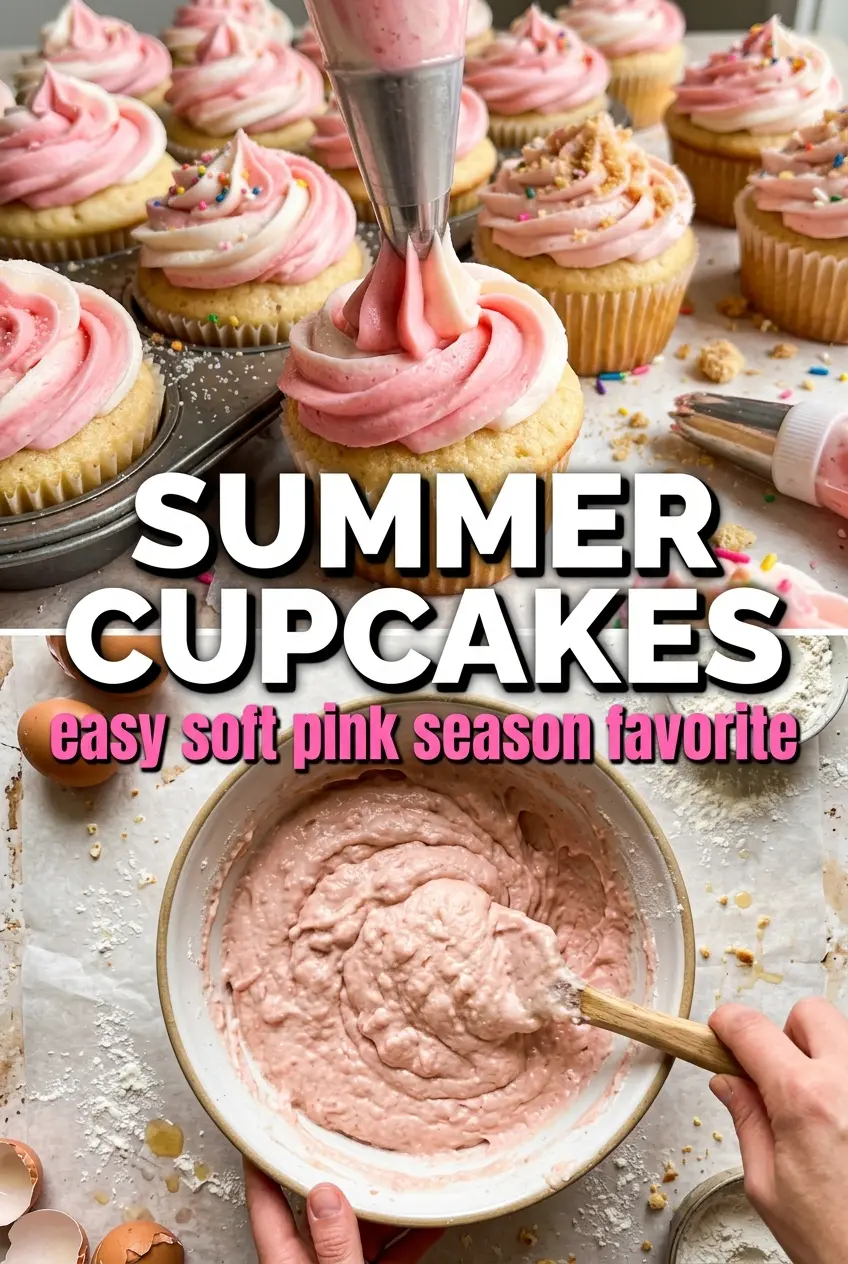
Summer Cupcakes
Ingredients
Equipment
Method
- Heat oven to 350°F and line a sheet pan with cupcake liners (so the batter bakes evenly and releases cleanly).
- Whisk together all-purpose flour, baking powder, and salt until evenly combined (this keeps the sponge tender without lumps).
- Beat butter and granulated sugar in a stand mixer on medium speed until light and fluffy, about 2-3 minutes (look for a pale, airy texture).
- Add eggs one at a time, then mix in vanilla extract until smooth, scraping the bowl as needed (the batter should look glossy).
- Mix in the flour mixture alternately with milk, beginning and ending with flour, just until no dry streaks remain (avoid overmixing for a soft crumb).
- Fold in sour cream and pink food coloring until the batter turns a consistent pale pink (swirl lightly so it stays fluffy).
- Spoon batter into liners about 2/3 full, then bake at 350°F for 25-35 minutes until the tops spring back and a toothpick comes out mostly clean (visible domed tops are a good cue).
- Beat butter in a stand mixer on medium speed until smooth and creamy, about 1 minute (it should look spreadable).
- Add powdered sugar in 1/2-cup additions, mixing on low until combined, then increase to medium to smooth the frosting (pause to scrape down the bowl).
- Mix in milk, sour cream, and vanilla extract until silky (the frosting should hold shape when you lift a spoon).
- Add pink food coloring a little at a time until you reach a bright pink hue, then mix 30-60 seconds more (stop once the color is even).
- Cool cupcakes in the pan for 5 minutes, then transfer to a rack to cool completely (hot cupcakes melt frosting).
- Pipe or spread pink buttercream onto fully cooled cupcakes in swirls (aim for peaks that stay defined).
- If needed for neat swirls, chill frosted cupcakes for 10 minutes to firm the frosting, then serve at cool room temperature (swirls should look crisp and glossy).