
Strawberry rhubarb pie earns its place in the dessert rotation because the filling lands in that perfect middle ground: bright, juicy, and tart enough to keep every slice from tasting one-note. When it’s done right, the fruit holds together in soft pockets, the juices thicken into a glossy sliceable filling, and the crust stays flaky instead of soggy. That balance is what keeps people coming back for another piece.
The trick is respecting how differently strawberries and rhubarb behave. Rhubarb breaks down fast and releases a lot of liquid, while strawberries soften more gently, so the best pies don’t rely on hope alone. A little starch, the right amount of sugar, and a hot enough bake give the filling structure without turning it gluey. Letting the pie cool long enough to set is just as important as the baking itself; cut it too soon and the fruit runs everywhere.
Below, I’ve included the details that matter most: how to keep the crust crisp, how to judge when the filling has thickened enough, and what to change if your strawberries are extra sweet or your rhubarb is especially sharp.
The filling set up beautifully and didn’t run all over the plate when I sliced it. The crust stayed crisp on the bottom, which never happens with fruit pie in my kitchen.
Save this strawberry rhubarb pie for the tart-sweet filling and flaky crust that slice cleanly after cooling.
The Reason Strawberry Rhubarb Pie Turns Watery Before It Sets
Most fruit pies fail for the same reason: the filling releases liquid faster than the starch can thicken it. Rhubarb is especially guilty here because it softens quickly and sheds a lot of juice, and strawberries can push the mixture even further once the sugar starts drawing moisture out. If the pie goes into the oven with too much raw liquid in the bowl, you don’t get a sliceable filling. You get soup under a lid of pastry.
The fix starts before baking. Tossing the fruit with the right amount of thickener coats the juices as they come out, which helps the filling gel instead of pooling. A hot oven also matters because it sets the crust faster and gives the starch enough heat to activate. If the top is browning before the filling is bubbling in the center, the pie isn’t done yet.
- Let the filling look slightly loose before it goes in. It should never be dry in the bowl, but it also shouldn’t look soupy. The starch needs fruit juice to work.
- Bake until the filling bubbles through the center. Not just around the edges. That bubbling is the sign the thickener has fully activated.
- Cool it completely before slicing. The filling thickens as it cools, and cutting early is the fastest way to lose the set.
What the Strawberry, Rhubarb, and Thickener Each Do in the Filling
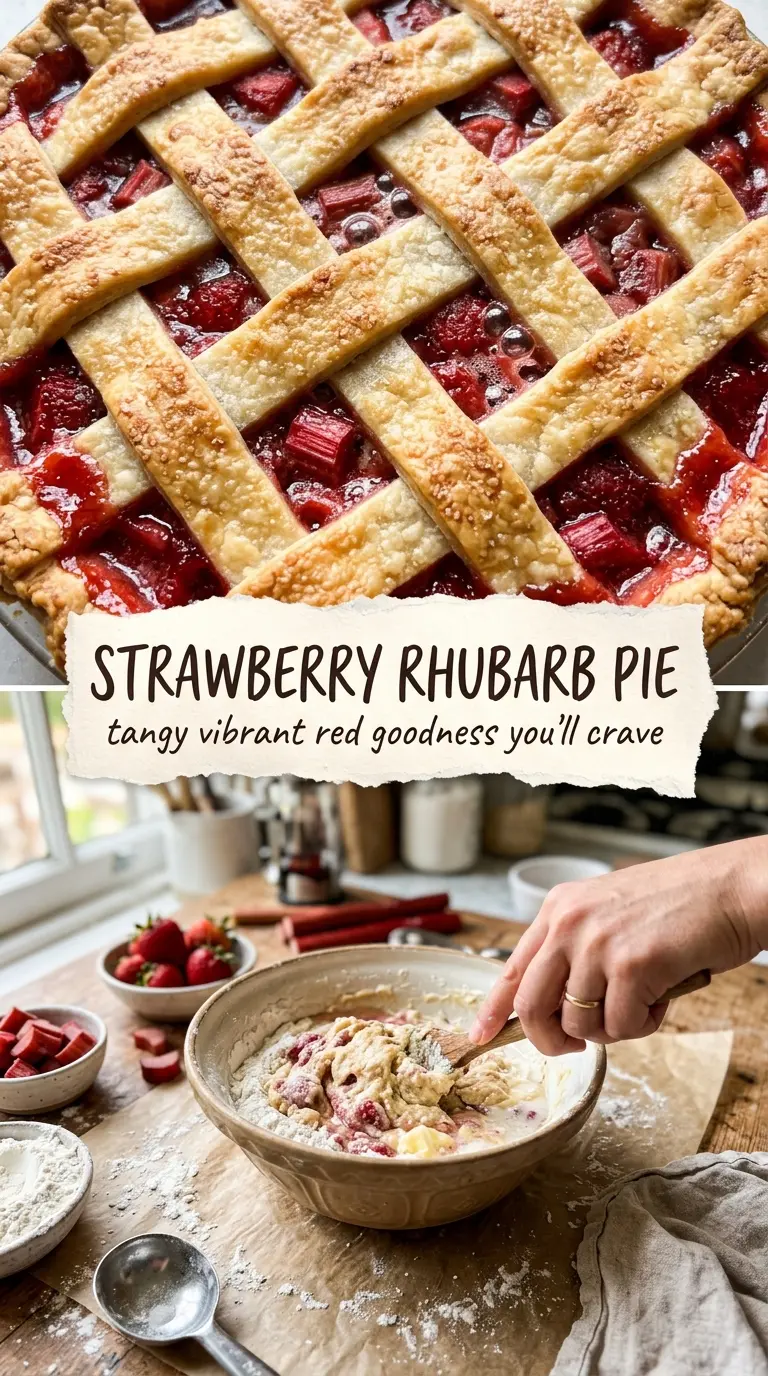
- Strawberries bring sweetness and a softer texture. Pick berries with good flavor, not just size. If yours are especially juicy, the pie may need a little extra thickener.
- Rhubarb is the sharp, structured half of the filling. It’s what keeps the pie from tasting flat. Trim away any tough strings if the stalks look fibrous, and cut them into even pieces so they cook at the same rate.
- Granulated sugar doesn’t just sweeten the filling; it helps pull out juices so the starch can do its job. If your berries are very ripe and sweet, reduce the sugar a little, but don’t cut it too far or the rhubarb will take over.
- Cornstarch gives the filling a cleaner set than flour and keeps the juices glossy instead of cloudy. If you swap in flour, the filling will thicken more softly and can taste a little pasty. Use a touch more flour by volume than cornstarch if that’s what you have.
Building the Pie So the Bottom Crust Stays Crisp
Prepare the Filling First
Mix the fruit with sugar, thickener, and any seasonings until every piece is lightly coated. The bowl will look wet after a few minutes, and that’s normal. Don’t let the mixture sit too long before assembling unless you plan to drain and thicken the extra juice, because the longer it rests, the more liquid the fruit gives off.
Keep the Bottom from Going Soft
Roll the bottom crust evenly and keep it cold until it goes into the pan. A chilled crust is less likely to slump and more likely to brown properly. If you’re especially worried about sogginess, brush the bottom lightly with egg wash or dust it with a small spoonful of flour or crushed cookie crumbs before adding the filling.
Bake Until the Center Shows a Slow Bubble
Fruit pies need more than browned edges. The filling should bubble in the center for several minutes, not just around the rim, or the starch hasn’t fully set. If the crust is getting dark before that happens, tent the edges with foil and keep baking until the middle is active and glossy.
Let the Pie Set Without Disturbing It
The cooling time is part of the recipe, not an afterthought. Set the pie on a rack and leave it alone until the pan is barely warm and the filling has had time to firm up. If you cut while it’s hot, even a well-baked pie will collapse on the plate.
How to Adapt This Pie When You Need a Different Crust or Filling Balance
Gluten-Free Crust Swap
Use a sturdy gluten-free pie crust that rolls well and doesn’t crumble at the edges. The filling works the same, but the crust usually needs an extra watch in the oven because gluten-free dough can brown faster and dry out sooner. Chill it well before baking so it holds together.
Less Tart, More Strawberry
If your rhubarb is aggressively sharp, shift the ratio toward more strawberries and add the sugar in stages. That keeps the pie bright without crossing into mouth-puckering territory. The texture will be a little softer and sweeter, which works well if you’re serving it with unsweetened whipped cream.
Dairy-Free Finish
Use a dairy-free pie crust made with vegan butter or shortening. You won’t lose the flaky layers if the dough stays cold and you handle it lightly. The filling itself is already dairy-free, so this is an easy adjustment with no change to the fruit mixture.
Storage and Reheating
- Refrigerator: Keep covered for up to 4 days. The crust softens a little after day one, but the flavor stays good.
- Freezer: Baked pie freezes well. Wrap slices or the whole cooled pie tightly and freeze for up to 2 months. Thaw in the refrigerator overnight.
- Reheating: Warm slices in a 300°F oven until the crust crisps back up and the filling loosens slightly. The microwave softens the pastry and makes the filling weep.
Questions I Get Asked About This Recipe
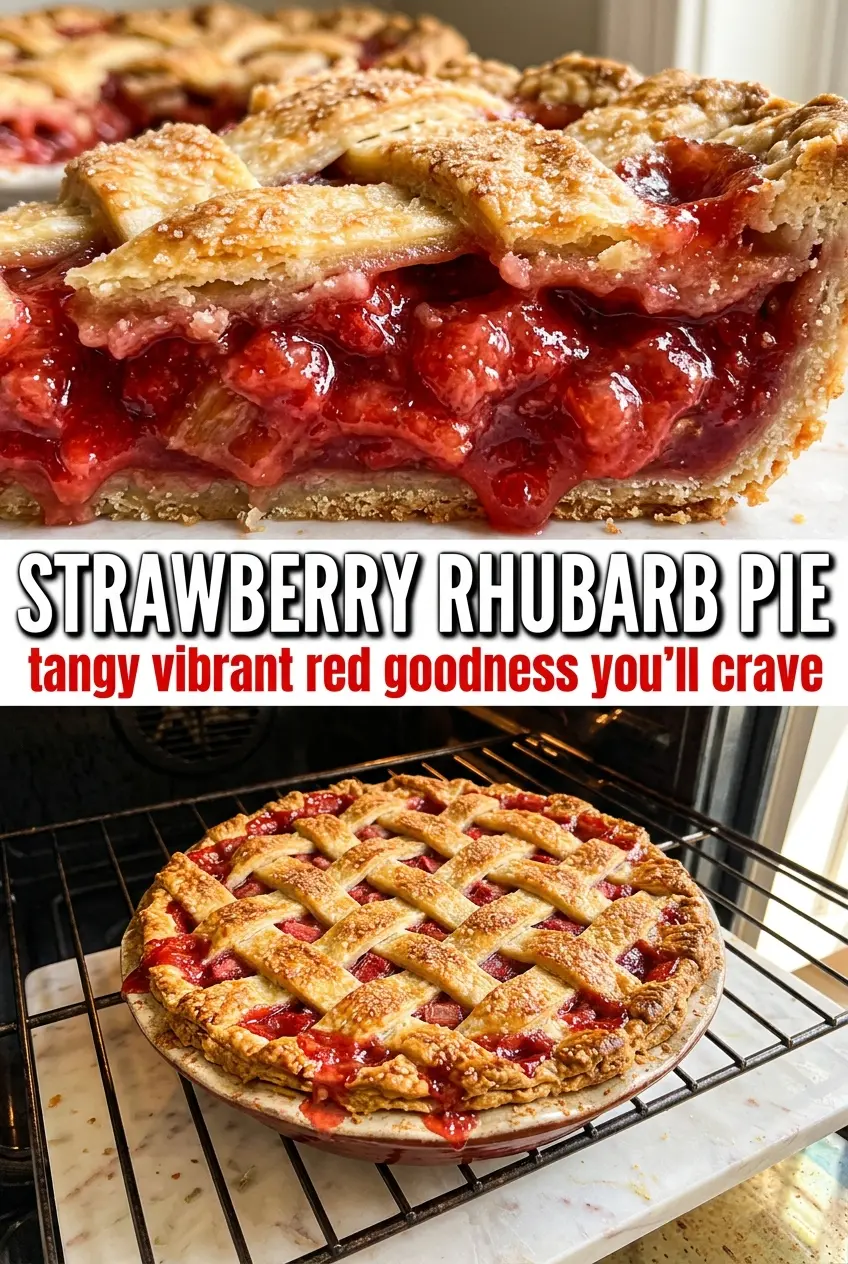
Strawberry Rhubarb Pie
Ingredients
Equipment
Method
- Heat oven to 425°F (220°C). Place a sheet pan in the oven while it heats so the bottom crust bakes crisp.
- Combine rhubarb, strawberries, granulated sugar, brown sugar, cornstarch, lemon juice, cinnamon, and salt in a mixing bowl. Toss until the fruit is evenly coated and glossy.
- Fit one pie crust into a pie dish and trim the edges. Spoon the fruit filling into the crust, keeping it level.
- Cover with the second pie crust and seal the edges by crimping or pressing gently. Cut 4 to 6 vents in the top crust so steam escapes.
- Brush the top crust with milk and sprinkle turbinado sugar if using. Dot with butter for a deeper golden color.
- Bake at 425°F (220°C) for 15 minutes. Look for bubbling filling near the vents and a lightly set crust.
- Reduce heat to 350°F (175°C) and bake for 20 minutes. Bake until the crust is deep golden and the filling bubbles steadily, not just at the edges.
- Let the pie cool for at least 2 hours before slicing. The filling should thicken as it cools, so the slices hold together.