
Buttery graham crust, rich cheesecake, and a bright strawberry topping make this dessert feel like two classics meeting in one clean slice. The shortbread crumble on top gives it that strawberry shortcake nostalgia, while the cheesecake layer keeps everything dense, cool, and creamy instead of airy and flimsy. It’s the kind of dessert that disappears fast because every bite gives you contrast: crisp crumbs, smooth filling, juicy berries, and a little cloud of whipped cream.
What makes this version work is the balance. The crust has enough butter to hold together without turning greasy, and the filling stays simple so the strawberries can still taste fresh when you add them on top. I like to bake it just until the center has a slight wobble, then let the fridge do the rest. That slow chill is what gives you those neat slices instead of a soft middle that slumps when you cut it.
Below you’ll find the one trick that keeps the cheesecake from cracking, plus the small finishing detail that makes the strawberry topping look bakery-clean instead of messy.
The cheesecake set up beautifully and the strawberry topping stayed fresh, not watery. I followed the chilling time and got the cleanest slices I’ve ever cut from a dessert like this.
Save this strawberry shortcake cheesecake for the kind of dessert table that needs a creamy center, fresh berries, and a clean slice.
The Cracks Usually Start Before the Oven Does
Cheesecake cracks usually have less to do with the oven and more to do with how the batter was treated before it went in. If the cream cheese is still cold, you’ll beat in pockets of air and tiny lumps that show up later as a rough top. If you whip the batter hard after the eggs go in, you build even more air, and that air expands in the oven and collapses as it cools. That’s how you get the split top and the sunken center people blame on baking time.
This version stays smooth because it keeps the mixing gentle once the eggs are added. The filling should look glossy and thick, not fluffy. The other thing that matters is the cool-down. A cheesecake that goes straight from oven heat to the fridge is more likely to crack from the sudden temperature swing. Letting it cool slowly first gives the structure time to settle.
- Cream cheese — Full-fat blocks give you the dense, sliceable texture you want. Tub cream cheese is too soft and often too wet for a clean baked cheesecake.
- Graham cracker crumbs — These bring the classic cheesecake base and a little sweetness. Fine crumbs press together best, but don’t overpack the crust or it turns hard instead of crisp.
- Shortbread cookies — These mimic the shortcake part of the dessert without making the topping soggy. Crush them coarsely so you still get little buttery bits on top.
- Fresh strawberries — Fresh matters here because frozen berries release too much juice and dull the top layer. Slice them right before serving so they stay bright and don’t weep into the whipped cream.
Building the Layers Without Losing the Contrast
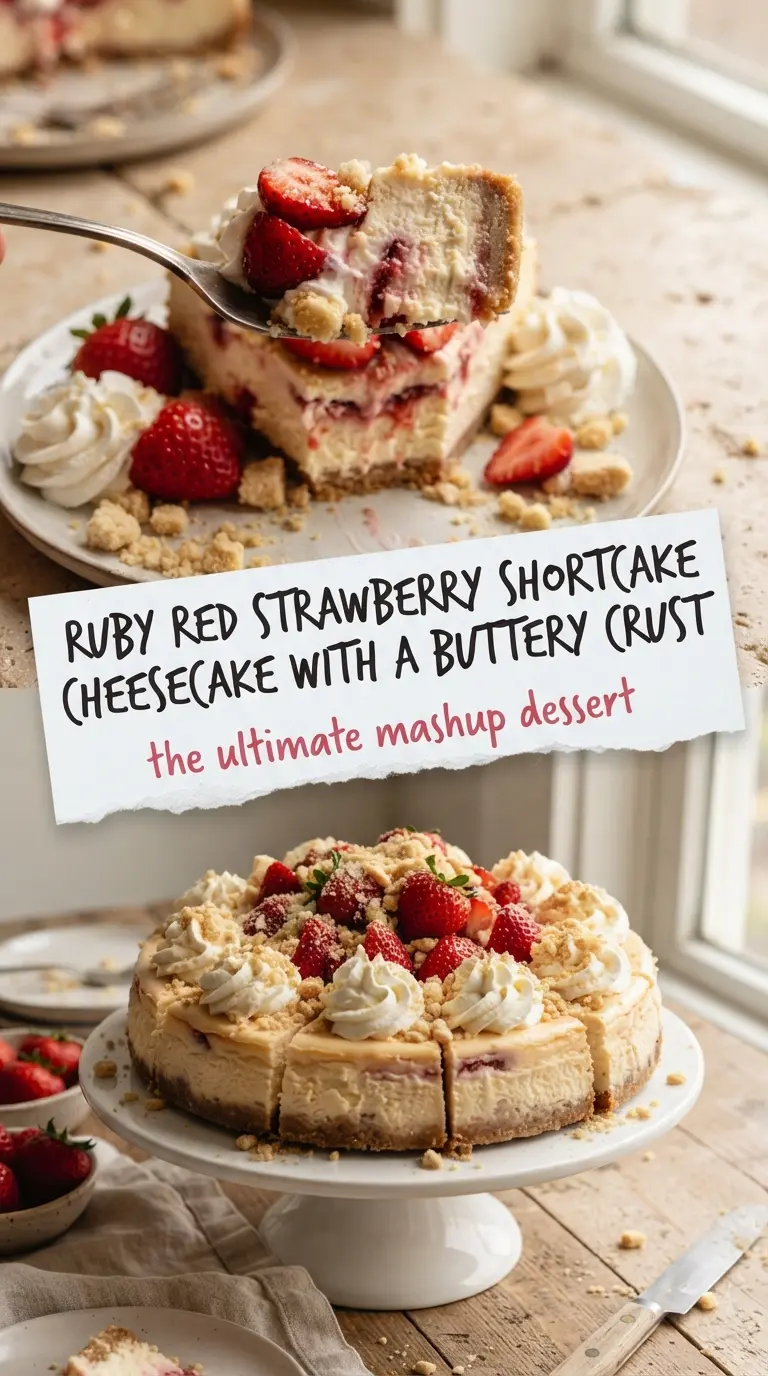
Graham crust: Mix the crumbs with melted butter until every crumb looks damp, like wet sand. Press it firmly into the pan and bring it a little up the sides if you want each slice to hold better. If the crust is loose, the first cut will crumble and the filling will slide.
Cheesecake filling: Beat the cream cheese and sugar until smooth before the eggs go in. Add the eggs one at a time and stop mixing as soon as they disappear. That keeps the batter creamy instead of airy. Stir in the vanilla at the end so the flavor stays clean and the batter doesn’t overwork.
Final topping: Wait until the cheesecake is fully chilled before adding strawberries, shortbread crumbs, and whipped cream. If you add them too soon, the berries bleed and the whipped cream softens into the surface. The cleanest presentation comes from topping it right before serving.
The Parts of the Recipe That Need Your Attention
Pressing the Crust Right
The crust should be compact enough to hold together when sliced, but not packed so tightly that it bakes into a brick. Use the bottom of a measuring cup to flatten it evenly, especially at the seam where the base meets the side. If the crumbs are still loose after pressing, the butter ratio was off and the crust will fall apart under the filling.
Mixing the Filling Gently
Start with softened cream cheese so the batter turns silky without heavy beating. Once the eggs go in, use low speed and stop as soon as the mixture is uniform. Overmixing after the eggs are added builds air bubbles that puff in the oven and drop as the cheesecake cools, which is where the cracks come from.
Knowing When It’s Done
Pull the cheesecake when the edges look set and the center still has a slight jiggle, about the size of a coin in the middle. It will finish setting as it cools. If you wait until the center is completely firm in the oven, it will overbake and turn dry around the edges.
Cooling Before the Topping
Let the cheesecake cool all the way at room temperature before it goes into the fridge. That slow transition helps prevent a sunken center and keeps condensation from forming on the surface. Once it’s chilled, the strawberry topping sits neatly on top instead of sliding around.
How to Adapt This for Different Tables and Dietary Needs
Gluten-Free Crust
Swap the graham crackers for a gluten-free cookie crumb or gluten-free graham style cracker. The texture stays close, but the flavor changes a little depending on the brand, so choose one with a sturdy, buttery crumb rather than a dry, sandy one.
Extra-Strawberry Version
Add a thin layer of sliced strawberries between the chilled cheesecake and the whipped cream for more fruit in every bite. Keep the layer light so the berries don’t slide when you cut the cake.
Lighter Whipped Finish
Use just a few spoonfuls of whipped cream on each slice instead of covering the whole top. You still get that shortcake feel, but the cheesecake flavor stays in front instead of getting buried under the garnish.
Storage and Reheating
- Refrigerator: Store covered for up to 4 days. The strawberries stay best if you add them the day you serve it, but the cheesecake itself keeps its texture well.
- Freezer: Freeze the plain cheesecake without the fresh topping for up to 2 months. Wrap it tightly, then thaw it overnight in the refrigerator before adding strawberries and whipped cream.
- Reheating: Don’t reheat this dessert. Serve it cold from the fridge so the filling stays firm and the topping keeps its shape.
Answers to the Questions Worth Asking
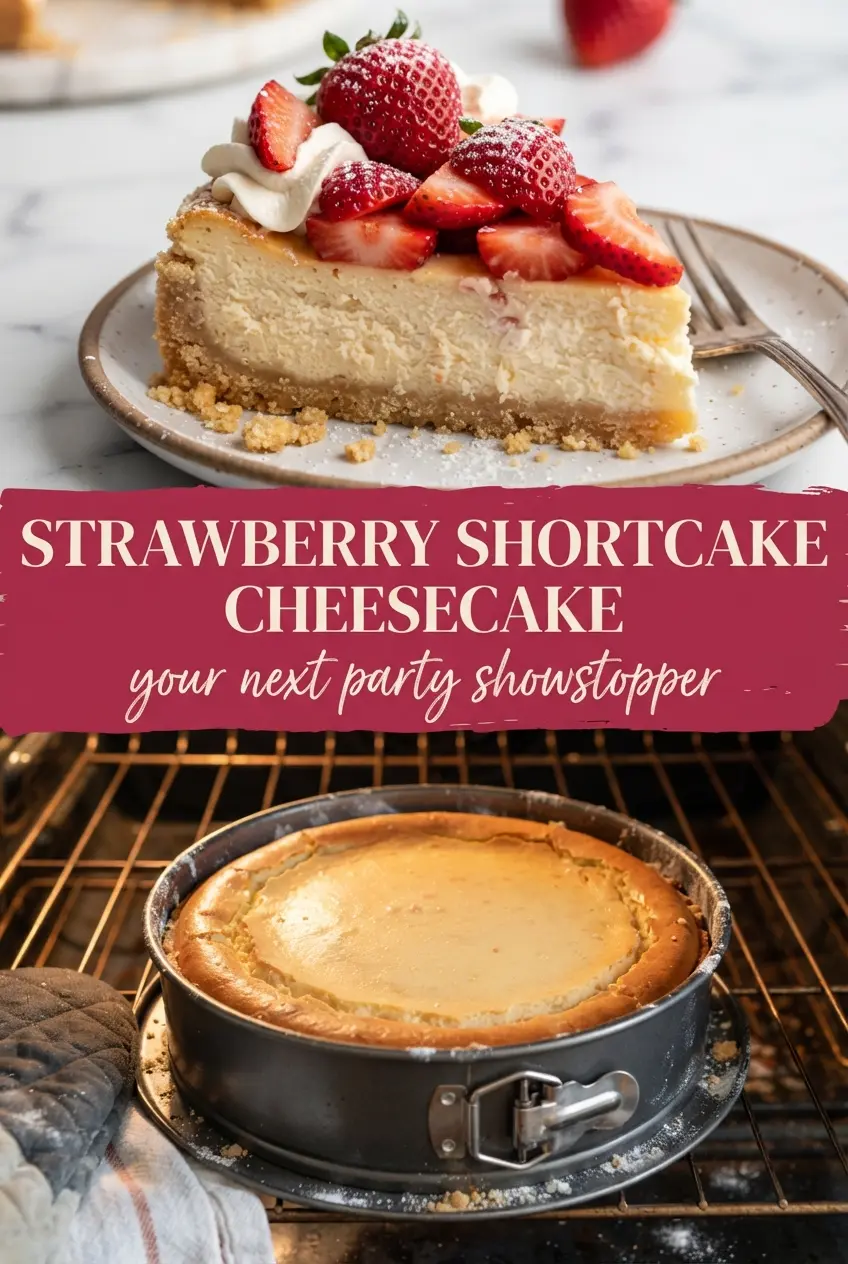
Strawberry Shortcake Cheesecake
Ingredients
Equipment
Method
- Mix graham cracker crumbs with melted butter until the texture resembles wet sand, then press into the bottom of a springform pan firmly and evenly to form a flat crust.
- Set the pan aside while you prepare the cheesecake filling so the crust can firm up slightly.
- Beat cream cheese and granulated sugar until smooth, scraping the bowl as needed to remove lumps.
- Add eggs one at a time, mixing just until each egg disappears before adding the next.
- Stir in vanilla extract, then pour the batter over the crust in the springform pan.
- Bake at 325°F for 50-55 minutes, until the center is just set and still has a slight jiggle.
- Cool the cheesecake at room temperature, then chill until fully firm for at least 4 hours (overnight for the cleanest slices).
- Spread sliced strawberries over the chilled cheesecake in an even layer.
- Sprinkle crumbled shortbread cookies over the strawberries for the shortcake-style crunch.
- Add dollops of whipped cream on top right before serving.