
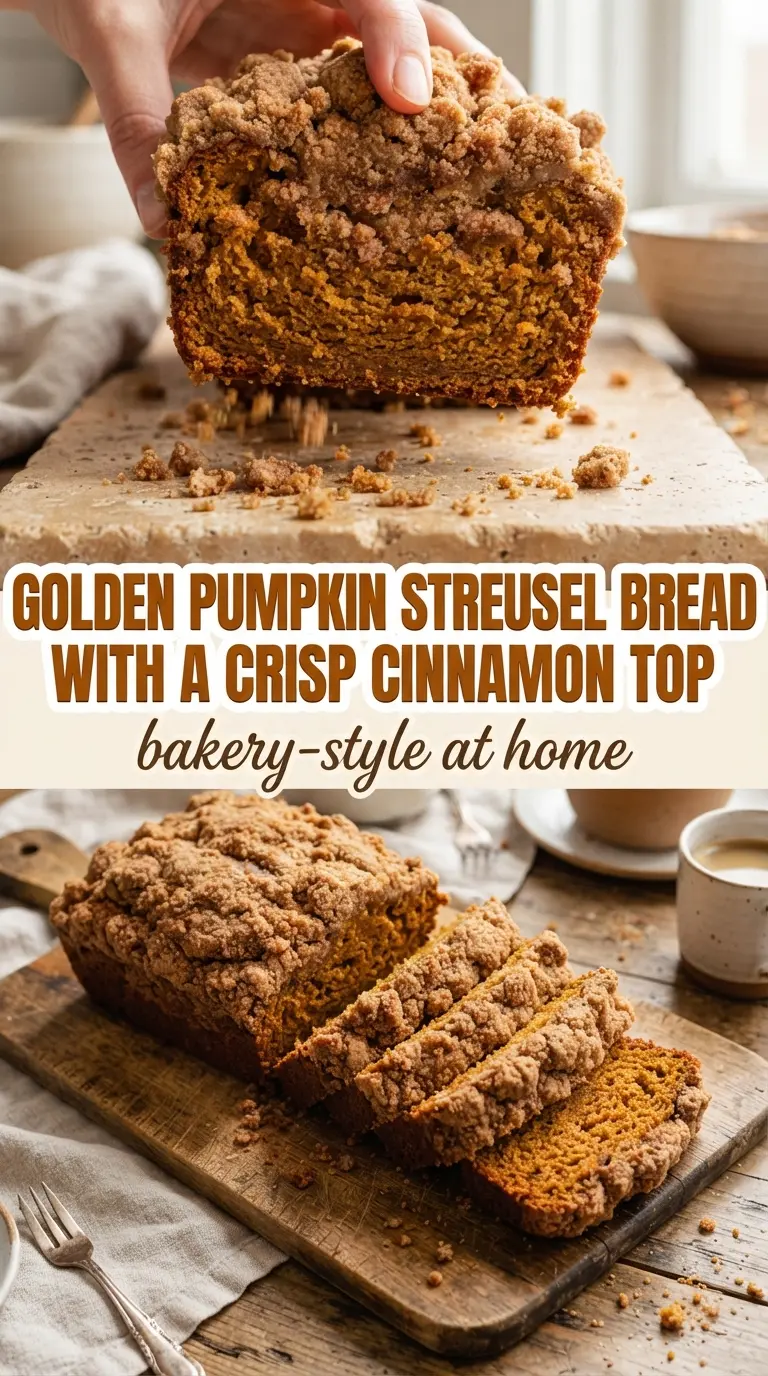
Warm-spiced pumpkin bread with a thick cinnamon streusel is the kind of loaf that disappears while it’s still cooling. The crumb stays soft and moist without turning heavy, and the topping bakes into a crisp, buttery shell that cracks when you slice through it. You get that classic pumpkin loaf comfort, but the streusel gives each piece a little contrast and a much better finish than a plain quick bread.
The reason this version works is balance. Pumpkin puree brings moisture, but the batter still has enough structure from the flour and eggs to hold up under a generous streusel. The oil keeps the loaf tender for days, and the brown sugar in the topping adds a deeper caramel note that plays well with the pumpkin pie spice. If you’ve ever had pumpkin bread turn gummy in the middle or felt like the topping sank, the fix is in the mixing and the bake.
Below, I’m walking through the part that matters most: how to keep the batter from getting tight, how to build a streusel that actually stays crumbly, and what to do if the top darkens before the center is done. Those little details are what turn a decent loaf into one worth baking again.
The streusel stayed crisp on top and the loaf was perfectly moist without being dense. I covered it with foil for the last 15 minutes and it baked evenly all the way through.
Like this pumpkin streusel bread? Save it to Pinterest for the days when you want a tender loaf with a crunchy cinnamon topping and zero guesswork.
The One Mistake That Makes Pumpkin Bread Heavy Instead of Tender
Pumpkin bread turns dense when the batter gets worked too much after the flour goes in. Once the dry ingredients hit the wet mixture, the gluten starts developing fast, and that’s what gives you a tight, heavy slice instead of a soft crumb. Stir only until the flour disappears and a few streaks are still visible, then stop. The oven will finish the job.
The other place people lose the texture is in the streusel. If the butter softens too much, the topping melts into the batter instead of staying crumbly. Cold butter cut into the flour and sugar gives you those little uneven bits that bake into a crisp, nubbly crust. That contrast is half the point of the loaf.
What Each Ingredient Is Doing in This Loaf
- All-purpose flour — This gives the bread its structure without making it bready. You need enough to support the pumpkin and eggs, but not so much that the loaf turns dry or tough.
- Pumpkin puree — Use pure pumpkin, not pumpkin pie filling. The puree brings moisture and that earthy pumpkin flavor, and the loaf depends on it for its tender crumb.
- Vegetable oil — Oil keeps the bread soft for days, which butter doesn’t do quite as well in a quick loaf like this. A neutral oil is the right choice here because it won’t compete with the spice.
- Eggs — They add structure and help the loaf rise evenly. Two eggs are enough to bind everything without making the texture cakey.
- Pumpkin pie spice and cinnamon — The spice in the batter gives the bread warmth all the way through, while the cinnamon in the streusel creates a sharper, sweeter top note. That split is what keeps the flavor from tasting flat.
- Brown sugar for the streusel — Brown sugar melts a little at the edges and helps the topping bake into a crisp, sandy crust. If you use white sugar instead, the streusel will be drier and less flavorful.
- Cold butter — This is what makes the topping crumbly. Soft butter blends in too much; cold butter gives you distinct pieces that hold their shape in the oven.
Building the Batter and Streusel So Both Bake Right
Mix the dry ingredients first
Whisk the flour, baking soda, salt, and pumpkin pie spice together before anything else. That step keeps the spice from clumping in one part of the loaf and helps the baking soda distribute evenly, which matters for a loaf that bakes through in the center. If you skip a thorough whisk here, you’ll get uneven flavor and spots that rise differently.
Bring the wet ingredients together until smooth
In a separate bowl, whisk the pumpkin puree, sugar, oil, and eggs until the mixture looks glossy and uniform. You want the sugar mostly dissolved and the eggs fully blended so the batter comes together without streaks. If it looks curdled, keep whisking a little longer; the pumpkin and oil need time to emulsify before the flour goes in.
Fold, don’t beat, the batter
Add the dry ingredients to the wet mixture and fold just until no dry flour remains. The batter should look thick and a little rough, not perfectly smooth. Overmixing is what makes pumpkin bread tight and rubbery, and once the flour is hydrated, every extra stir pushes it in the wrong direction.
Make the streusel with cold butter
Mix the streusel flour, brown sugar, cold butter, and cinnamon with your fingers until you have uneven crumbs and some larger pieces. Those bigger bits are what give you the crisp top instead of a dusty layer that melts away. If the butter starts to smear, stop and chill the bowl for a few minutes before continuing.
Bake until the center sets
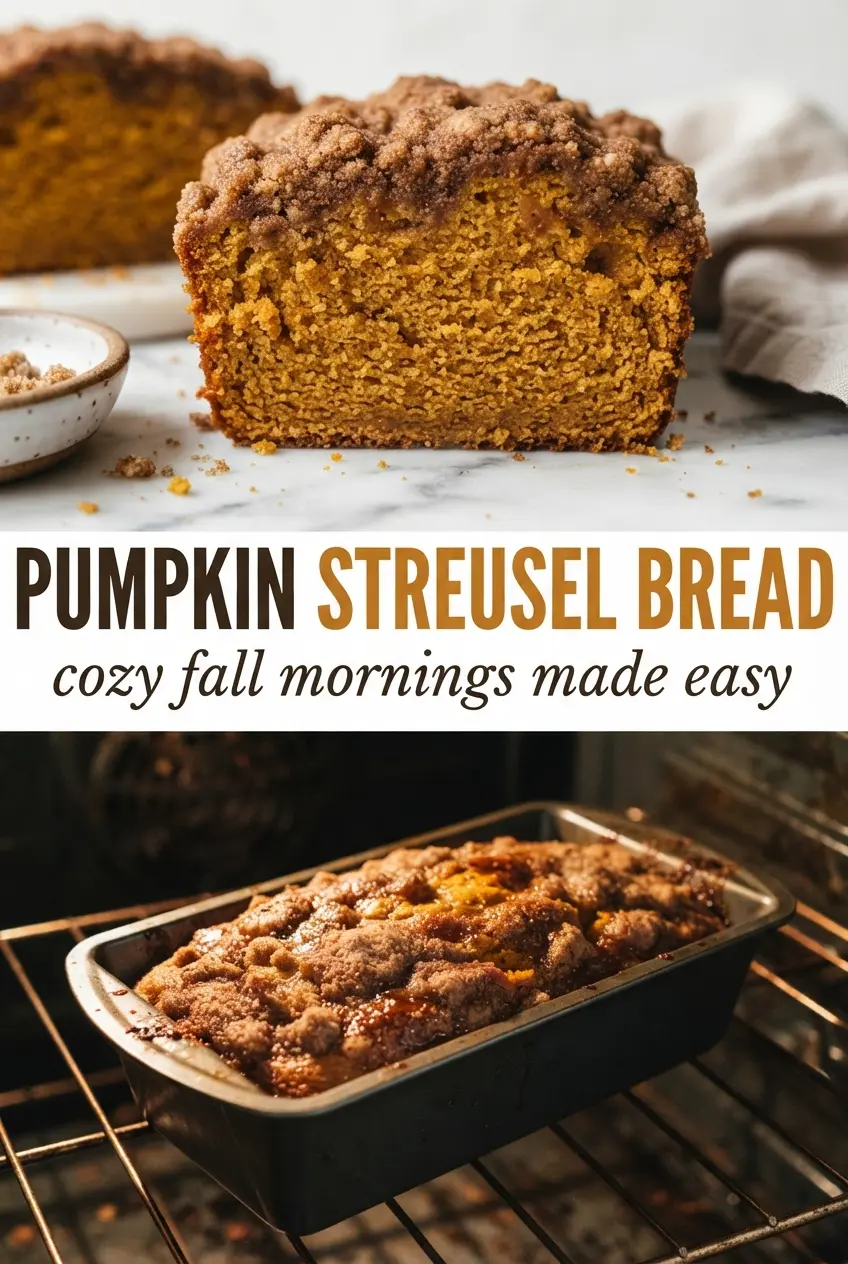
Pour the batter into a greased loaf pan and scatter the streusel thickly over the top. Bake at 350°F until a toothpick comes out clean, usually 55 to 60 minutes, but start checking near the end because every loaf pan behaves a little differently. If the top is getting too dark before the middle is done, tent it loosely with foil so the crumb can finish without burning the streusel.
Three Ways to Adjust the Loaf Without Ruining the Texture
Gluten-free version with a 1:1 baking blend
Swap the all-purpose flour for a cup-for-cup gluten-free baking flour that includes xanthan gum. The loaf will be a little more delicate and may need an extra few minutes in the oven, but the streusel still works well as long as the butter stays cold.
Dairy-free streusel that still crisps up
Use a plant-based butter block, not a tub spread, for the streusel. Tub spreads hold too much water and melt too quickly, while a firmer butter substitute still gives you that crumbly top with better browning.
A less sweet loaf with the same texture
Cut the granulated sugar in the batter down slightly if you want a loaf that tastes more pumpkin-forward. Don’t cut the streusel sugar too much, though, or you’ll lose the crisp top and end up with a flatter, drier crust.
Storage and Reheating
- Refrigerator: Keep the loaf covered for up to 5 days. The crumb stays moist, though the streusel will soften a little after the first day.
- Freezer: This bread freezes well. Wrap slices tightly or freeze the whole loaf, then thaw at room temperature while still wrapped so condensation doesn’t make the topping soggy.
- Reheating: Warm slices in a 300°F oven for a few minutes or toast them lightly. The common mistake is microwaving too long, which turns the crumb rubbery and softens the streusel completely.
Questions I Get Asked About This Pumpkin Streusel Bread
Pumpkin Streusel Bread
Ingredients
Equipment
Method
- Heat the oven to 350°F and grease a loaf pan lightly so the bread releases cleanly after baking.
- Whisk together flour, baking soda, salt, and pumpkin pie spice in a mixing bowl until the dry spices are evenly distributed (no visible spice streaks).
- Whisk pumpkin puree, granulated sugar, vegetable oil, and eggs in a separate bowl until smooth and glossy.
- Fold the dry ingredients into the wet ingredients until just combined, keeping mixing brief to avoid a dense loaf.
- Pour the batter into the greased loaf pan and smooth the top for even baking.
- Mix all-purpose flour, brown sugar, cold butter, and cinnamon for streusel with your fingers until crumbly, with small pea-size butter pieces still visible.
- Sprinkle the streusel thickly over the batter so it fully covers the top for a crackly crust.
- Bake at 350°F for 55-60 minutes, until a toothpick inserted in the center comes out clean and the streusel looks deep golden; if it browns fast, cover loosely with foil.