
Strawberry rhubarb jam lands in that sweet spot between bright and comforting: glossy, spoonable fruit with just enough tart edge to keep every bite interesting. The strawberries bring body and perfume, while rhubarb cuts through the sugar so the finished jam tastes alive instead of flat. It’s the kind of preserve that disappears fast, whether you spread it on toast, swirl it into yogurt, or tuck it into pastry.
What makes this version work is balance and timing. Rhubarb breaks down faster than strawberries, so the fruit is cooked just long enough to soften without losing all of its shape. Sugar doesn’t just sweeten here; it helps the jam set and keeps the flavor round. A little patience at the end matters more than people think, because that’s when the bubbles change from watery and loose to thick and glossy.
Below you’ll find the cue I watch for when the jam is ready, plus a few smart swaps if your berries are extra sweet or your rhubarb is especially sharp. It’s a simple preserve, but the details are what keep it from turning into syrup.
The jam set up beautifully and stayed spoonable instead of getting rubbery. I loved that the rhubarb kept a little tang, and it was perfect after about 30 minutes on the stove.
Save this strawberry rhubarb jam for the mornings when you want bright fruit flavor and a set that actually holds on the spoon.
The Set Happens in the Last Few Minutes
Most homemade jam problems start with impatience. People cook it until it looks thick in the pot, then wonder why it turns into loose fruit sauce once it cools. Hot jam always looks thinner than it will be in the jar, so the real test is how it falls from the spoon and whether it sheets slightly instead of running off like juice.
Rhubarb also changes the game because it softens quickly and releases a lot of liquid. If you start with too much heat, the fruit can collapse before the sugar has a chance to concentrate and help the jam set. Keep the simmer active but controlled, and stir often enough to keep the bottom from scorching.
- Look for glossy bubbles — When the mixture gets thick, the bubbles turn smaller and slower. That’s the sign the water is cooking off and the sugars are concentrating.
- Watch the spoon test — Lift a spoonful and let it fall back into the pot. If it drips in a thin stream, it needs more time. If it falls in a heavier sheet, you’re close.
- Don’t rush the cooling step — Jam firms up as it cools, so removing it too late is usually safer than pulling it too early.
What Each Ingredient Is Actually Doing in This Jam
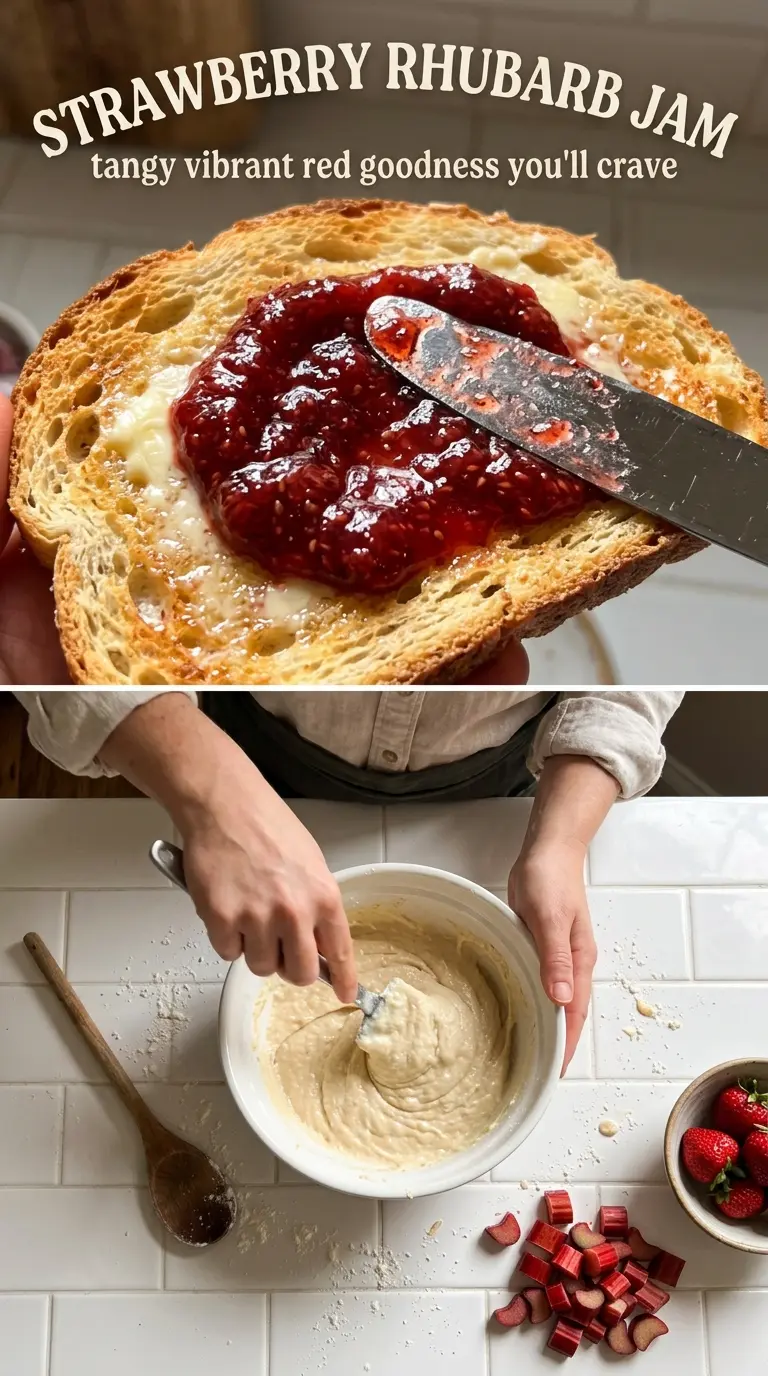
- Strawberries — These provide sweetness, color, and the soft fruit base that makes the jam taste round. Fresh or frozen both work, but frozen berries often give you a little extra juice, so don’t be surprised if the mixture takes a few minutes longer to reach set.
- Rhubarb — This is the sharp edge that keeps the jam from tasting one-note. Use firm stalks and trim away all leaves completely; if your rhubarb is very thick, slice it into small pieces so it cooks evenly before the strawberries turn to mush.
- Sugar — It balances the tart fruit and helps the jam thicken. You can reduce it a little if your berries are very sweet, but cutting it too far changes both the texture and the final set.
- Lemon juice — A little acidity brightens the flavor and helps the preserve gel. If your rhubarb tastes especially sharp, use the lower end of the amount so the jam stays lively instead of sour.
Cooking the Fruit Down Without Losing the Set
Starting with the Fruit and Sugar
Combine the fruit and sugar first and let it sit briefly if the recipe calls for it. That gives the fruit a head start on releasing juice, which helps prevent dry pockets of sugar from sticking to the pan and scorching. Once the mixture hits heat, stir until the sugar dissolves and the fruit looks juicy and loose.
Keeping the Simmer Controlled
Bring the pot to a lively simmer, not a hard boil. A boil that’s too aggressive can break the fruit down before the liquid has a chance to reduce evenly, and that leaves you with uneven texture. Stir often, scraping the bottom and corners of the pan, especially once the bubbles start thickening and slowing down.
Knowing When It’s Done
The best cue is the way the jam falls from the spoon. It should look glossy and slightly viscous, and the fruit should be softened without disappearing completely. If you’re uncertain, pull the pot from the heat and let a small spoonful cool for a minute; the set becomes much easier to judge once it’s no longer screaming hot.
How to Adjust This Jam for Different Kitchens and Different Fruit
Use frozen strawberries without changing the method
Frozen strawberries work well here, and they often break down a little more quickly than fresh. Keep the heat moderate and give the jam a few extra minutes to reduce because the extra thawed liquid has to cook off before the set happens.
Make it less sweet without wrecking the texture
You can trim the sugar a bit, but don’t slash it aggressively or the jam will stay loose and taste sharp. If you want a brighter, less sweet finish, keep the sugar mostly intact and add a touch more lemon instead; that changes the flavor without undermining the set.
Swap in pectin only if your fruit is very watery
You don’t need added pectin for a good strawberry rhubarb jam, but if your berries are pale and watery, a small amount can help. Add it according to the package directions and still cook the jam until the bubbles tighten up; pectin helps, but it doesn’t replace proper reduction.
Storage and Reheating
- Refrigerator: Keep sealed jars refrigerated for up to 3 weeks. The jam may firm up a little more after chilling, but the texture should stay spreadable.
- Freezer: This freezes well in freezer-safe containers with a little headspace left at the top. Thaw it in the refrigerator overnight so the fruit doesn’t weep and loosen the set.
- Reheating: Jam usually doesn’t need reheating, but if you want it looser for topping pancakes or ice cream, warm only the portion you need over low heat. High heat can overcook the fruit and thin out the texture again.
Answers to the Questions Worth Asking
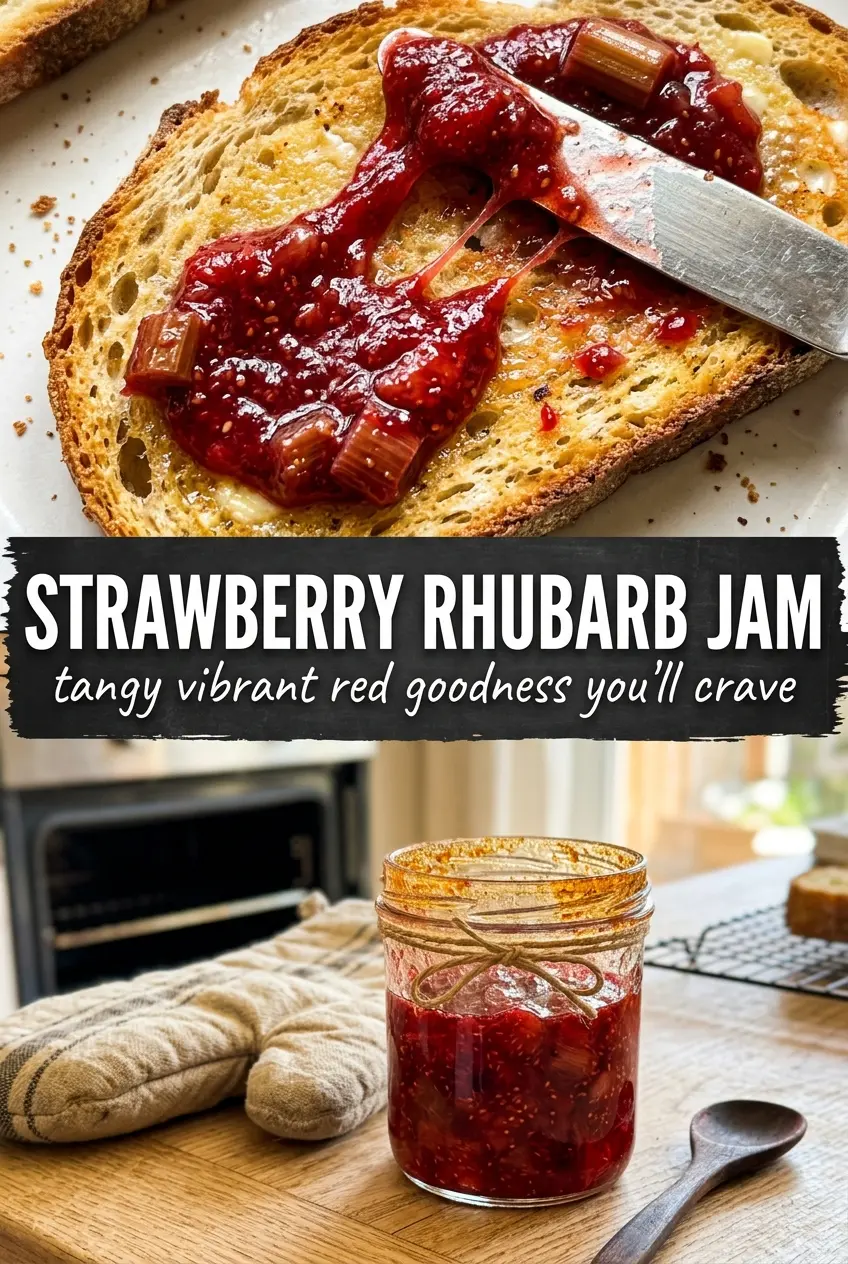
Strawberry Rhubarb Jam
Ingredients
Equipment
Method
- Combine strawberries, rhubarb, and granulated sugar in a Dutch oven. Cook over medium heat for 10-12 minutes until the fruit releases juice and the sugar dissolves, stirring occasionally, then bring the mixture to a gentle simmer with active bubbling.
- Stir in lemon juice and powdered pectin until fully combined. Boil for 1-2 minutes at a steady simmer, watching for a thickened, glossy look that coats the back of a spoon.
- Check doneness by spooning a small amount onto a cold plate and tilting; it should wrinkle slightly as it cools. Simmer for an additional 3-5 minutes if it remains runny, until the visual cue of a cohesive gel appears.
- Remove from heat and stir in vanilla extract if using. Let it stand off the heat for 2-3 minutes so bubbles settle and the texture becomes evenly thick and spreadable.
- Ladle the hot jam into clean jars, leaving about 1/4 inch headspace at the top. Wipe rims and seal with lids, then cool at room temperature until set and slightly thickened, showing a spoonable gel.
- Refrigerate jam after cooling and use within the recommended time window. For best flavor and set, store chilled and keep lids tightly closed.