
Golden peach slices bubbling up around bursts of blueberry make this cobbler the kind of dessert people scoop out while it’s still too hot to serve cleanly. The topping bakes into a soft, buttery crust with crisp edges where it catches the fruit juices, and that contrast is what keeps this one in repeat rotation. It tastes like you put in far more effort than you did.
What makes this version work is the balance: the fruit gets a quick toss with sugar so it starts releasing juice before it goes into the oven, and the batter goes straight over the top without stirring. That means the fruit stays underneath where it belongs, while the batter rises around it and bakes into a tender shell instead of turning muddy. A small hit of vanilla rounds out the fruit, and a little lemon zest is a smart add if your peaches are especially sweet.
Below, I’ll walk you through the part that matters most — how to keep the topping light instead of dense — plus a few simple ways to adapt the fruit depending on what you have on hand.
The topping baked up golden and set just right, and the peaches stayed juicy without making the whole thing soggy. I added the lemon zest like suggested, and it gave the fruit such a nice lift.
Save this peach blueberry cobbler for the nights when you want a bubbling fruit dessert with a buttery crust and almost no fuss.
The Secret to Cobbler Topping That Bakes Up, Not Dense
The biggest mistake with cobbler is overworking the batter or stirring it into the fruit. That’s how you end up with a cake-like middle that never quite sets right. Here, the batter needs to stay loose and separate so it can puff around the fruit juices and create those soft pockets under a browned top.
The other trap is baking before the fruit has started to bubble at the edges. If you pull it too early, the center of the topping can still look pale and raw because the fruit underneath never got hot enough to finish the job. You want a deep golden top and active bubbling around the sides. That bubbling tells you the fruit juices have thickened enough to hold together instead of running everywhere when you scoop.
What Each Ingredient Is Actually Doing in This Peach Blueberry Cobbler
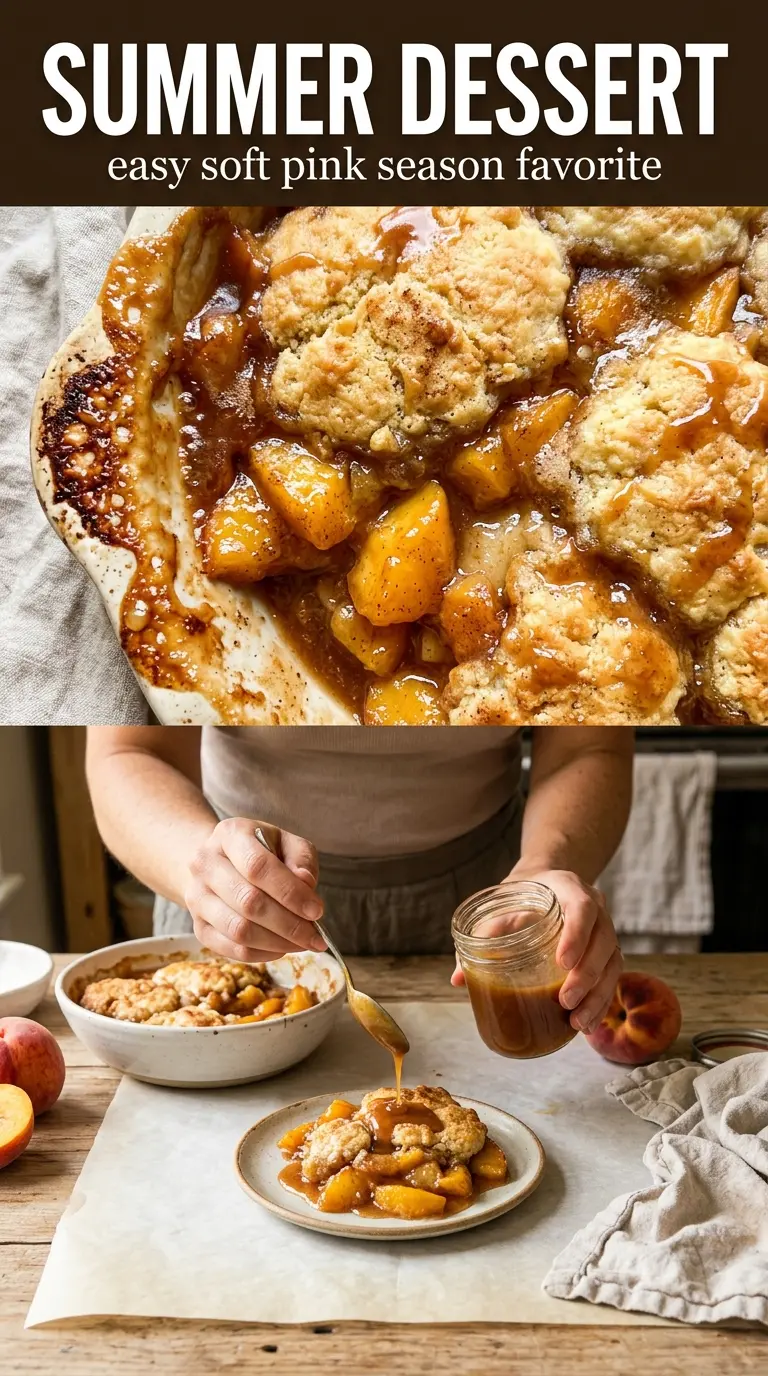
- Fresh peaches — These carry the whole dessert with their soft texture and natural sweetness. Ripe peaches matter here because underripe ones stay firm and taste flat after baking. If yours are a little underwhelming, a tiny extra pinch of sugar and that lemon zest help wake them up.
- Blueberries — They add sharp bursts of juice that keep the cobbler from tasting one-note. Frozen blueberries work in a pinch, and you don’t need to thaw them first, but expect a slightly darker, looser filling.
- All-purpose flour — This gives the topping enough structure to rise over the fruit without turning tough. Cake flour is too delicate here, and bread flour makes the crust heavy.
- Butter — Melted butter keeps the batter simple and gives the crust its rich, tender edges. Use real butter, not a spread, because you need the flavor and baking behavior that margarine can’t match.
- Whole milk — This loosens the batter just enough so it can pour over the fruit. Lower-fat milk works, but the topping won’t taste as plush.
- Vanilla extract — It smooths out the fruit and gives the batter a bakery-style depth. A good vanilla matters more than you’d think because there aren’t many ingredients to hide behind.
Building the Fruit Layer and Topping So They Bake Together
Coating the Fruit First
Toss the peaches and blueberries with part of the sugar until the fruit looks glossy and lightly wet. That short rest starts drawing out juice, which is exactly what you want in the pan. If you skip this step, the fruit can stay a little dry underneath and the cobbler won’t have that syrupy layer at the bottom.
Mixing a Loose, Pourable Batter
Whisk the flour, remaining sugar, baking powder, milk, melted butter, and vanilla just until the dry streaks disappear. A few lumps are fine. If you beat it smooth, the topping turns tighter and less tender. The batter should pour slowly, almost like a thick pancake batter.
Pouring Without Stirring
Pour the batter over the fruit and leave it alone. Don’t spread it around or fold it in. During baking, the batter rises through the juices and forms an uneven, rustic crust with crisp edges and a soft center. Stirring destroys that structure and leaves you with a heavy, blended filling instead of a cobbler.
Baking Until It Fizzes at the Edges
Bake until the top is deeply golden and the fruit is bubbling around the sides of the pan. The center should look set, not wet, and a toothpick inserted into the topping should come out with a few moist crumbs. Let it rest for 10 minutes before serving so the juices thicken slightly and don’t run everywhere when you scoop.
How to Adapt This Peach Blueberry Cobbler for What You Have on Hand
Gluten-Free Cobbler With a Tender Finish
Swap the all-purpose flour for a good 1:1 gluten-free baking blend. The topping will still brown well, but it may bake a touch more fragile, so give it the full rest time before serving. Don’t use almond flour alone; it won’t give you the same rise or structure.
Dairy-Free Version
Use a neutral dairy-free butter alternative and unsweetened almond or oat milk. The texture stays close to the original, though the flavor loses a little richness, so vanilla matters even more here. Choose a butter substitute meant for baking, not a soft spread from the fridge section.
Swapping the Fruit Without Losing the Structure
Nectarines, blackberries, raspberries, or sliced plums all work in place of the peaches. Keep the total fruit amount about the same so the baking time stays close, and use a little extra sugar only if the fruit is tart. Softer fruit like raspberries will break down more, which gives you a saucier filling.
Storage and Reheating
- Refrigerator: Store covered for up to 4 days. The topping softens as it sits, but the flavor stays good.
- Freezer: It freezes, though the fruit softens more after thawing. Cool completely, wrap well, and freeze for up to 2 months.
- Reheating: Warm portions in a 325°F oven until the center is hot and the top perks back up a little. The microwave works, but it makes the crust soft instead of gently crisp.
Answers to the Questions Worth Asking
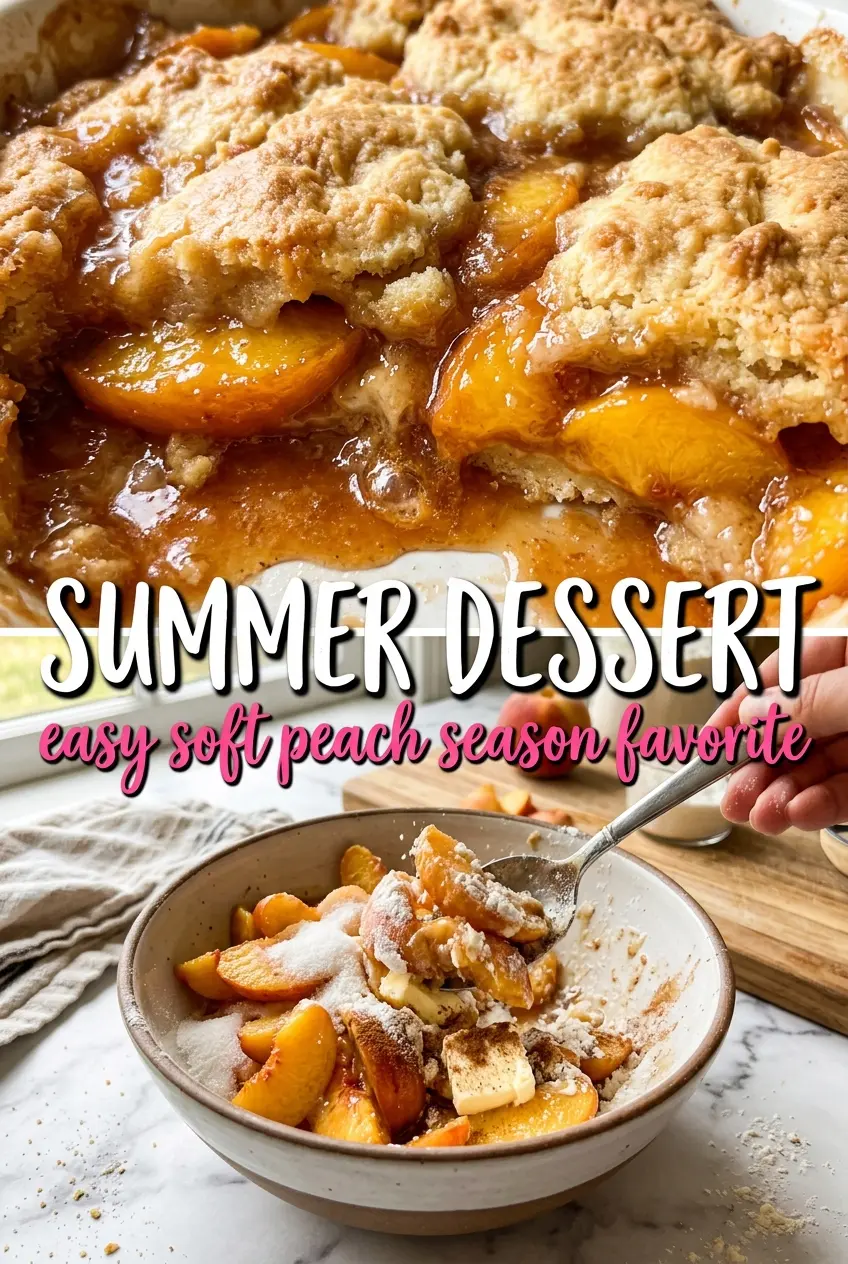
Summer Dessert
Ingredients
Equipment
Method
- Preheat oven to 375°F and place a sheet pan on the middle rack to heat while you assemble the dish.
- Toss peaches and blueberries with 1/4 cup sugar, then spread them evenly in a baking dish.
- Mix all-purpose flour, remaining sugar, and baking powder in a bowl until evenly combined.
- Whisk whole milk, melted butter, and vanilla extract together, then pour into the dry ingredients and mix just until smooth.
- Pour batter over the fruit in an even layer without stirring so the fruit bubbles up during baking.
- Bake at 375°F for 40-45 minutes, until golden and bubbling around the edges.
- Cool for 10 minutes before serving so the cobbler sets slightly.