
Sticky hoisin meatballs earn their keep fast: browned at the edges, tender in the center, and glossed in a sauce that clings instead of sliding off the pan. The scallion sauce cuts through the sweetness with a sharp, fresh bite, so every mouthful lands with a little contrast instead of tasting one-note. That balance is what keeps these from feeling heavy, even though they’re rich and savory enough to stand on their own.
The trick is treating the meatballs and the glaze as two separate jobs. The meat mixture stays tender because it’s only mixed until the ingredients come together; overworking it makes the texture tight and bouncy. The glaze gets its depth from hoisin plus a little rice vinegar, which keeps the sweetness in check and helps the sauce tighten into that shiny, sticky coating you want on the outside of the meatballs.
Below, I’ve included the timing and visual cues that matter most, because the difference between glossy and messy usually comes down to heat control and when you cover the pan. The scallion sauce also comes together in minutes, but it changes the whole dish.
The glaze turned out sticky and shiny without burning, and the scallion sauce kept the whole dish from tasting too sweet. I made these with pork, and the meatballs stayed tender even after simmering.
Sticky hoisin meatballs with scallion sauce are the kind of one-pan dinner you’ll want to keep close for busy nights when you still want something bold and glossy.
The Secret to Sticky Meatballs That Stay Tender, Not Tight
The most common mistake with meatballs like these is overmixing. Once the ground meat starts to look uniform, stop. If you keep working it, the proteins tighten up and you get dense little rounds instead of meatballs that stay juicy after simmering in the glaze.
The other place people lose the texture is heat. You want a hard sear first, just enough to build color and set the outside, then a lower simmer to finish cooking through while the glaze thickens. If the pan stays too hot after the sauce goes in, the hoisin can scorch before it has a chance to turn sticky.
What Each Ingredient Is Actually Doing in This Dish
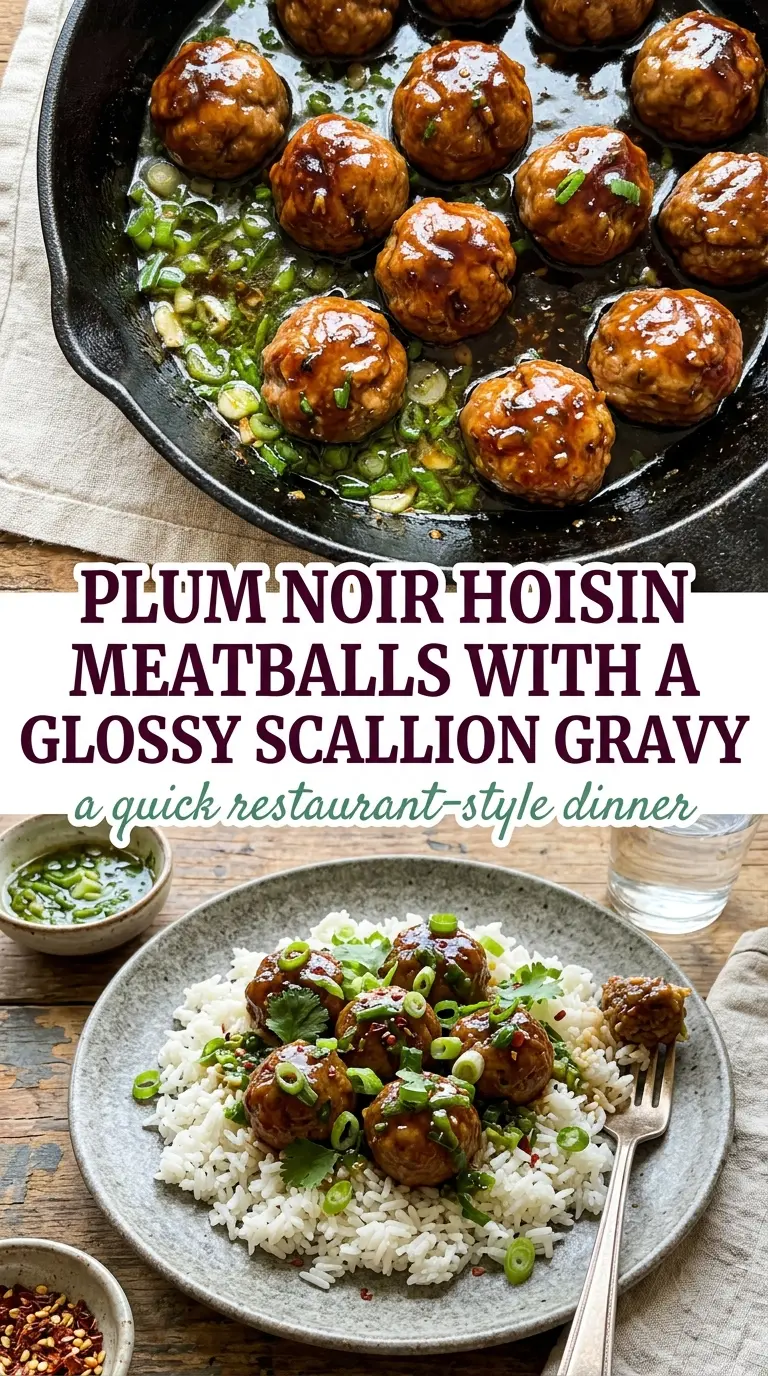
- Ground pork or beef — Pork gives you a softer, richer meatball. Beef works well too, especially if you want a little more chew and deeper savory flavor. If you use very lean beef, the meatballs can come out drier, so don’t skip the egg and breadcrumbs.
- Breadcrumbs — These hold onto moisture and keep the meatballs tender. Panko gives a lighter texture; fine breadcrumbs make a tighter, more compact meatball. Either works as long as you don’t pack the mixture.
- Hoisin sauce — This is doing the heavy lifting for sweetness, body, and that dark glossy finish. There isn’t a true one-to-one substitute for its flavor, but in a pinch you can mix barbecue sauce with a little soy sauce and a dab of miso or peanut butter for depth.
- Fresh ginger and garlic — These keep the meatballs from tasting flat. Fresh is worth using here; the dried versions won’t give you the same lift or aroma.
- Rice vinegar — This is what keeps the glaze from turning cloying. If you don’t have it, use apple cider vinegar in the same amount, but expect a slightly sharper edge.
- Scallions — The scallion sauce depends on their raw bite. Slice them fresh and use both the white and green parts for the best balance.
How to Build the Glaze So It Turns Sticky Instead of Thin
Mix the Meatballs Just Until They Hold Together
Combine the pork, breadcrumbs, hoisin, soy sauce, garlic, ginger, egg, and sesame oil in a large bowl, then stop as soon as the mixture looks evenly distributed. It should feel cohesive but still soft. If it starts looking paste-like, you’ve gone too far and the meatballs will cook up dense. Shape them into 16 to 20 even balls so they finish at the same time.
Brown First, Don’t Boil
Heat the skillet over medium-high and let the meatballs brown for 5 to 7 minutes, turning them so you get color on several sides. That browning builds the flavor base for the sauce. If they’re sticking hard, give them another minute before moving them; they’ll release once a crust forms. You’re looking for a deep caramelized exterior, not full doneness yet.
Finish in the Sauce Over Lower Heat
Reduce the heat before adding the glaze ingredients. Stir in the hoisin, soy sauce, rice vinegar, sesame oil, and water, then cover the pan and simmer for 4 to 6 minutes. The sauce should go from loose and shiny to thicker and lacquered, clinging to the meatballs instead of pooling under them. If the glaze looks too thin at the end, uncover the pan for a minute or two so the extra liquid can cook off.
Keep the Scallion Sauce Bright
Whisk the scallions, soy sauce, rice vinegar, sesame oil, and sugar in a small bowl right before serving. You want the sugar dissolved and the scallions still crisp, not wilted. Spoon it over the meatballs at the last minute so it stays fresh against the warm glaze.
Three Ways to Adapt These Hoisin Meatballs Without Losing the Point
Make It Gluten-Free
Use certified gluten-free breadcrumbs and swap in a gluten-free soy sauce or tamari. The texture stays the same, and the sauce still gets that same deep savory finish. Check your hoisin too, since some brands contain wheat.
Use Turkey Instead of Pork
Ground turkey works, but it needs a little help because it’s leaner. Keep the egg and breadcrumbs, and don’t overcook it in the sauce. The final result is lighter and a bit less rich, but still sticky and satisfying.
Make It Spicier
Stir a teaspoon or two of chili crisp or sriracha into the glaze, or add red pepper flakes to the meat mixture. Heat works best here when it’s balanced against the sweet hoisin, not dumped on top at the end. A little goes a long way.
Storage and Reheating
- Refrigerator: Store leftovers in an airtight container for up to 4 days. The glaze thickens as it chills, so the meatballs may look a little tighter the next day.
- Freezer: These freeze well. Cool completely, then freeze the meatballs and sauce together in a sealed container for up to 2 months. Thaw overnight in the fridge before reheating.
- Reheating: Warm gently in a skillet over low heat with a splash of water to loosen the glaze. Microwave reheating works in a pinch, but use short bursts so the sauce doesn’t separate and the meatballs don’t toughen.
Answers to the Questions Worth Asking
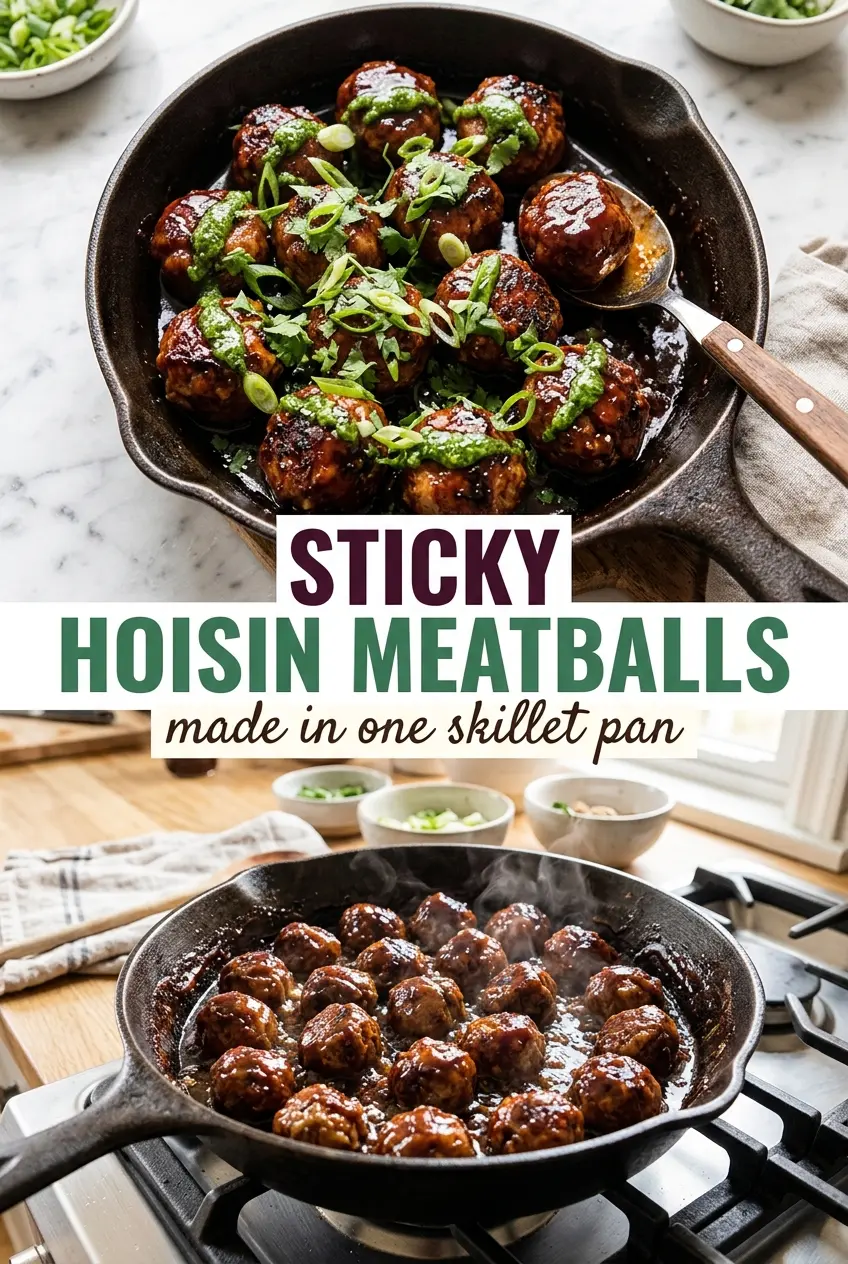
Sticky Hoisin Meatballs With Scallion Sauce
Ingredients
Equipment
Method
- In a large bowl, combine ground pork or beef, breadcrumbs, hoisin sauce, soy sauce, garlic, minced fresh ginger, large egg, and sesame oil; mix until just combined and shape into 16 to 20 meatballs. Keep mixing brief so the meatballs stay tender.
- Heat a cast iron skillet over medium-high heat and brown the meatballs for 5 to 7 minutes until caramelized on all sides. Look for darkened edges and a light crust.
- Reduce the heat, then pour in hoisin sauce, soy sauce, rice vinegar, sesame oil, and water for the glaze; stir until glossy. Scrape up any browned bits so they dissolve into the sauce.
- Cover and simmer for 4 to 6 minutes until the meatballs are cooked through and the glaze has thickened. The sauce should cling to the meatballs and look shiny.
- Whisk together chopped scallions, soy sauce, rice vinegar, sesame oil, and sugar in a small bowl until the sugar dissolves. The mixture should be bright green and evenly seasoned.
- Plate the sticky meatballs and drizzle with the scallion sauce just before serving. Add extra hoisin glaze if you want a thicker, darker finish.