
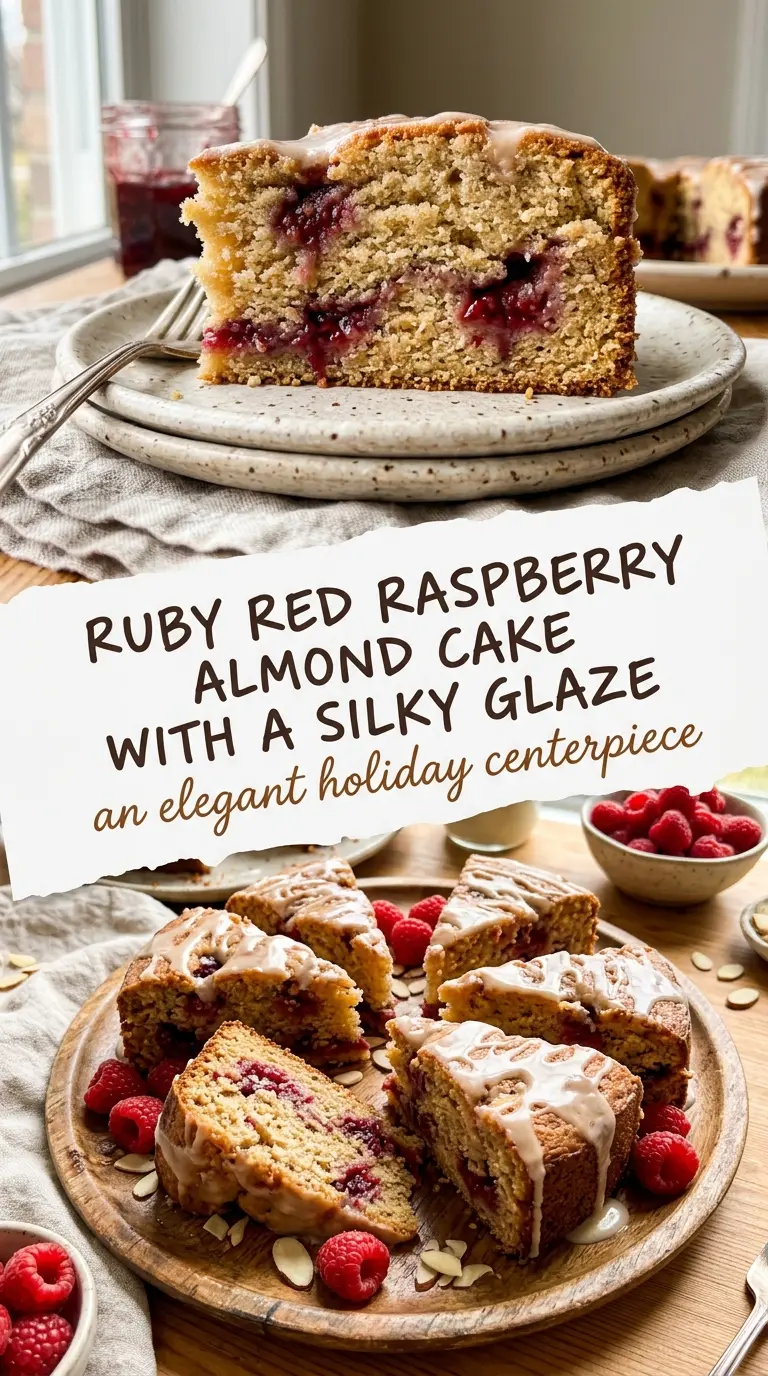
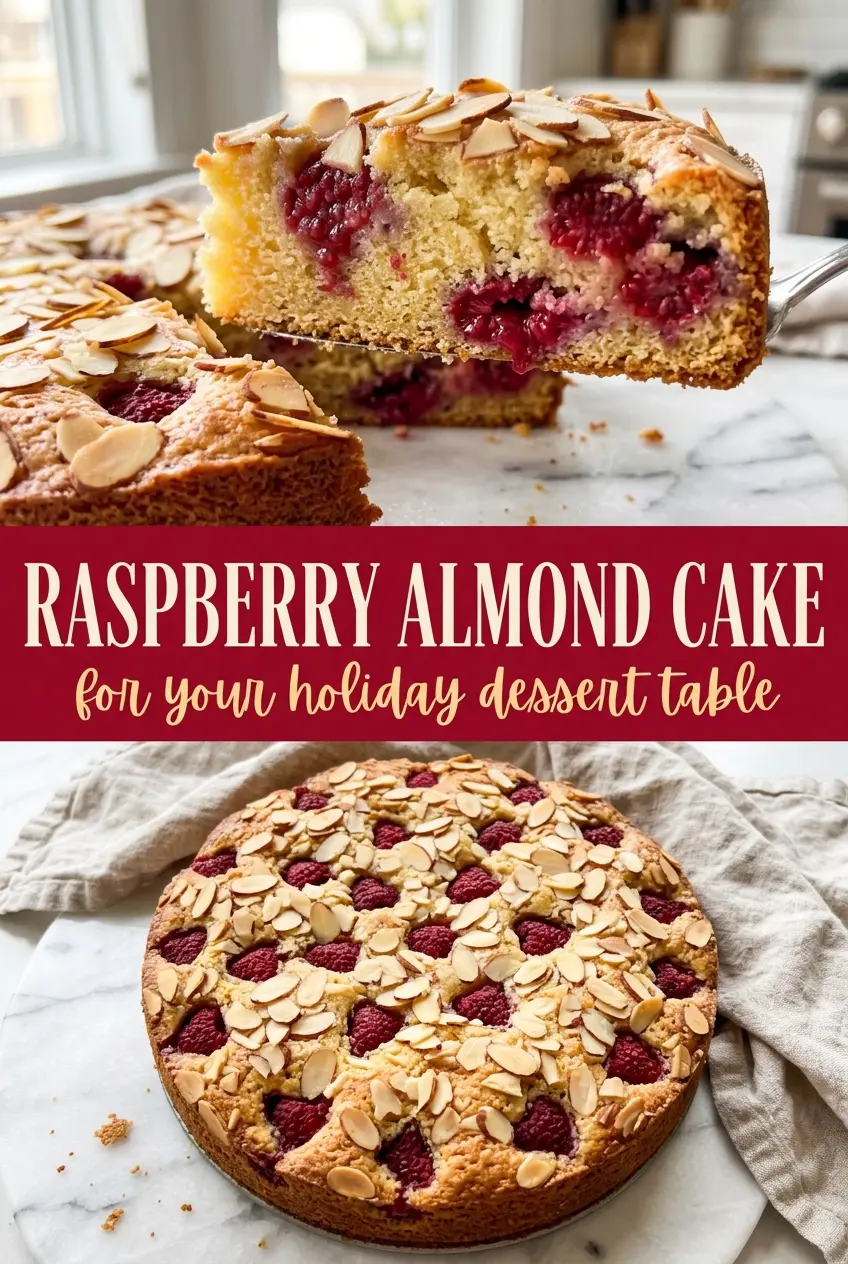
Raspberry almond cake bakes into one of those rare desserts that looks elegant on the table and still tastes like something you’d happily cut a second slice of on a quiet afternoon. The crumb stays soft and moist from the sour cream, the almond extract gives the batter a warm, nutty backbone, and the raspberries turn jammy as they bake so every bite has a bright little burst of fruit. It’s the kind of cake that doesn’t need a frosting pile to feel finished. A dusting of sliced almonds on top is enough.
The trick here is to keep the batter tender and the berries intact. Butter and sugar need to be beaten until pale so the cake has lift, but once the flour goes in, the mixing stops as soon as the batter comes together. That keeps the crumb from turning tight. Folding the raspberries in at the end, instead of stirring them aggressively, gives you those pretty pockets of fruit instead of a pink-streaked cake. If you’re using frozen raspberries, don’t thaw them first; they hold their shape better that way and bleed less into the batter.
Below, I’ve included the one detail that keeps this cake from baking up dense, plus a few smart swaps if you need to work with what’s already in your kitchen.
The raspberries stayed in little pockets instead of sinking, and the cake was still tender the next day. I used yogurt because that’s what I had, and it baked up beautifully with the almond flavor coming through.
Save this raspberry almond cake for the days when you want a buttery crumb, bright berries, and a cake that looks like you worked harder than you did.
The Mistake That Makes Raspberry Cake Dense Instead of Tender
Most berry cakes go heavy because the batter gets overmixed once the flour goes in, or because the fruit is stirred in so aggressively that the batter loses the air that was built into the butter and sugar. This cake depends on that early creaming step. When the butter and sugar are beaten until pale and fluffy, you’re creating tiny air pockets that help the cake rise without turning dry.
The second place people go wrong is with the raspberries. If you crush them into the batter, you’ll get streaks instead of distinct bursts of fruit, and the extra juice can make the center sink a little. Fold them in gently with a spatula and stop as soon as they’re distributed. The sliced almonds on top do more than decorate; they protect the surface a bit and give you a crisp, toasted finish that contrasts with the soft crumb underneath.
What Each Ingredient Is Actually Doing in This Cake
- All-purpose flour — This gives the cake its structure without making it too firm. Cake flour will make it a little more delicate, but all-purpose flour is dependable and already works beautifully here.
- Butter — Softened butter creams with the sugar to build the cake’s lift and flavor. If the butter is too cold, the mixture won’t trap air; if it’s melted, the cake turns dense.
- Sour cream or yogurt — This is what keeps the crumb plush. Full-fat yogurt is the best swap if you don’t have sour cream, and plain Greek yogurt works too, though it gives a slightly tighter, tangier crumb.
- Almond extract — This is the signature note. Use the measured amount and don’t overdo it; a little goes a long way and too much tastes sharp instead of nutty.
- Raspberries — Fresh berries hold their shape best, but frozen raspberries work well straight from the freezer. Don’t thaw them first or they’ll bleed too much juice into the batter.
- Sliced almonds — These add texture and help the top finish with a light crunch. Toasting them first is optional, but it gives the cake a deeper nutty flavor.
Building the Batter Without Deflating It
Whipping the Butter and Sugar
Beat the softened butter and sugar until the mixture looks pale and a little fluffy, not greasy or gritty. That usually takes a few minutes, and the change in color matters more than the clock. If the butter is too soft and starts looking shiny, chill the bowl for a few minutes before continuing. You want air trapped in the fat, not melted butter sliding around the bowl.
Adding the Eggs One at a Time
Mix in each egg fully before adding the next. The batter may look slightly curdled after the first egg, but it smooths out as you continue. If you dump them all in at once, the batter can separate and lose the light texture you worked to create. Scrape the bowl once or twice so no butter streaks hide at the bottom.
Bringing in the Dairy and Dry Ingredients
Stir in the sour cream, milk, vanilla, and almond extract, then fold in the flour mixture just until the last streaks disappear. The batter should look thick and smooth, not elastic. Overmixing after the flour goes in develops gluten and makes the cake chewy instead of tender. Stop while you can still see a few flour streaks, then finish by hand.
Folding in the Raspberries and Baking
Add the raspberries with a light hand so they stay mostly whole. Pour the batter into the prepared pan, scatter the sliced almonds over the top, and bake until the top is golden and a tester comes out clean or with a few moist crumbs. If the center still looks wet but the edges are coloring fast, tent the pan loosely with foil for the last part of baking. Let the cake cool before slicing or the crumb will tear.
What to Change When You Need a Different Version
Dairy-Free Swap
Use a thick unsweetened dairy-free yogurt in place of the sour cream and a neutral plant milk in place of the milk. The cake will still stay tender, but the flavor will be slightly less rich, so the almond extract becomes even more important.
Gluten-Free Version
A 1:1 gluten-free baking blend works best here. The cake will be a little more delicate when warm, so let it cool fully before removing it from the pan. Don’t try to replace the flour with almond flour alone; that changes the structure too much and the cake won’t set the same way.
Mixed Berry Variation
Swap part of the raspberries for blueberries or chopped strawberries if that’s what you have. Blueberries keep a cleaner shape, while strawberries add more juice and a softer center. Keep the total fruit amount the same so the batter doesn’t get overloaded.
Storage and Reheating
- Refrigerator: Store covered for up to 4 days. The crumb stays moist, though the top loses a little of its crisp almond texture.
- Freezer: This cake freezes well. Wrap slices tightly and freeze for up to 2 months, then thaw at room temperature while still wrapped so condensation doesn’t make the crust soggy.
- Reheating: Warm individual slices in a low oven or in short bursts in the microwave. High heat dries out the edges before the center warms through, which is the easiest way to ruin the texture.
Answers to the Questions Worth Asking
Raspberry Almond Cake
Ingredients
Equipment
Method
- Preheat the oven to 350°F and grease a springform or round cake pan so the cake releases cleanly.
- Sift together the flour, baking powder, and salt in a bowl to evenly distribute the leavening.
- Beat the softened butter and sugar until light and fluffy, then beat in the eggs one at a time for a smooth batter.
- Mix in the sour cream, milk, vanilla, and almond extract, then slowly fold in the dry ingredients until just combined to avoid overmixing.
- Gently fold in the raspberries, then pour the batter into the prepared pan and scatter sliced almonds over the top.
- Bake for 45 to 50 minutes at 350°F, until a tester comes out clean, then cool before slicing so the center sets.