
Beef taco skillet lands in that sweet spot between taco night and a one-pan dinner: saucy, hearty, and just messy enough to feel fun without turning into a stack of dishes. The ground beef gets fully coated in a taco-style tomato sauce, and the torn tortilla pieces soften into the skillet instead of sitting on the side, which gives every bite a thick, almost casserole-like texture. A blanket of melted cheddar on top finishes it with the kind of salty richness that keeps people going back for another spoonful.
The trick here is the tomato soup. It sounds unusual, but it gives the sauce body fast and helps everything cling to the beef and tortillas instead of sliding around in the pan. Salsa brings the seasoning, acidity, and a little heat, while the water loosens the mixture just enough for the tortillas to absorb some liquid before the whole skillet tightens up again. If you’ve ever ended up with a greasy taco filling or a dry tortilla casserole, this version avoids both by simmering everything together in one pan.
Below you’ll find the small timing details that matter, plus a few smart swaps for making this work with what you already have on hand. It’s the kind of recipe that rewards a good simmer and a short covered finish, and that’s what gives it its best texture.
The sauce thickened up perfectly and the tortilla pieces softened just enough without turning mushy. I used a mild salsa and it still had great flavor, and my husband went back for seconds before I even sat down.
Save this beef taco skillet for nights when you want a fast, one-pan dinner with saucy beef, tender tortillas, and melted cheddar.
The Reason the Tortillas Go In the Skillet, Not on the Side
Most taco-style skillet dinners go wrong when the tortillas stay separate until serving. That gives you a beef mixture that tastes fine on its own, plus dry tortilla pieces that never really pick up the sauce. Here, the tortillas simmer in the liquid just long enough to soften and soak up flavor, then the whole pan tightens as it rests under the cheese. The result is closer to a hearty taco casserole than a loose taco filling, and that texture is what makes the dish work.
The other important point is the simmer. If the pan stays at a hard boil, the tortillas break down too quickly and the beef can end up swimming in a thin red sauce. A low simmer for five minutes is enough to thicken the soup-salsa base and let the tortilla pieces absorb it without losing all structure. You want the pan bubbling gently at the edges, not raging in the center.
What Each Ingredient Is Actually Doing in This Dish
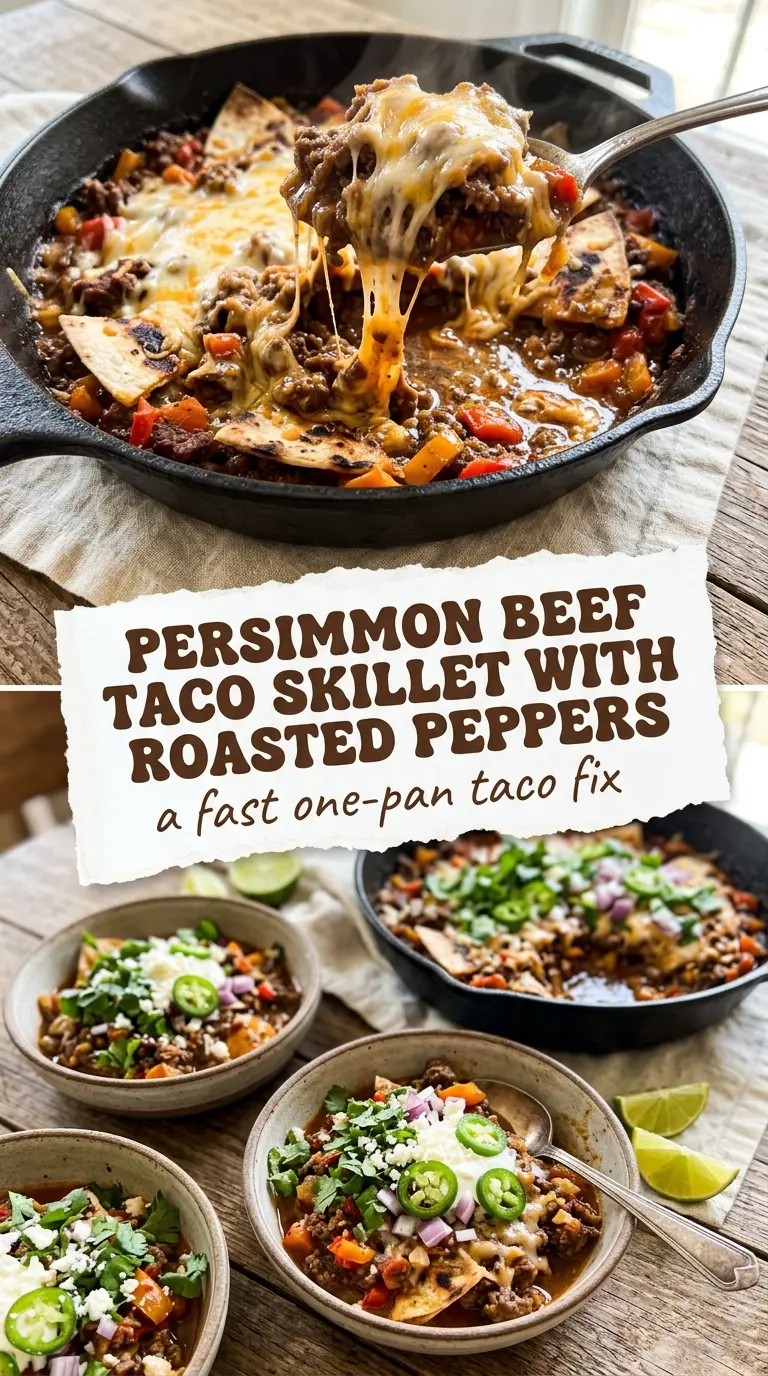
- Ground beef — Use an 80/20 or 85/15 blend if you can. You want enough fat for flavor, but not so much that the skillet turns greasy. If you use a leaner beef, leave a tablespoon or two of fat in the pan after draining so the sauce still tastes rich.
- Tomato soup — This is the shortcut that gives the skillet its body. It thickens quickly and coats the beef and tortillas in a way plain tomato sauce won’t. If you swap it for tomato sauce, the dish will be looser and less silky, so add a spoonful of tomato paste if you want a thicker finish.
- Salsa — Salsa does the seasoning work here. It brings salt, acidity, and the taco-style flavor that plain tomatoes can’t match. Use a salsa you already like eating, because the flavor concentrates a little as it simmers.
- Flour tortillas — Flour tortillas soften in the sauce and help thicken the skillet. Cut them into bite-size pieces so they distribute evenly and don’t clump together. Corn tortillas can work, but they break down more and give a softer, more rustic texture.
- Cheddar cheese — A sharp cheddar gives you the best payoff because it stands up to the tomato base. Pre-shredded cheese works, but freshly shredded melts smoother. Cover the pan after adding it so the heat stays trapped and melts the cheese without overcooking the filling underneath.
Building the Skillet So It Stays Thick, Not Soupy
Brown the beef fully
Cook the beef over medium-high heat until there’s no pink left and the edges have started to take on some color. That browning is where the deeper flavor comes from, so don’t rush it. If there’s a lot of grease in the pan, drain it off before you add the rest of the ingredients, or the finished skillet will taste heavy instead of savory.
Let the sauce come together before the tortillas soften
Stir in the tomato soup, salsa, and water, then add the tortilla pieces. The sauce will look a little loose at first, and that’s fine. It needs that extra moisture to start, because the tortillas will drink some of it up as they simmer. If you add too little liquid, the tortillas can tighten up before the sauce has a chance to thicken around them.
Simmer until the sauce clings
Reduce the heat and let the mixture simmer for about five minutes, stirring often so the tortillas don’t stick to the bottom. You’re looking for a thick, scoopable texture where the sauce coats the beef instead of pooling around it. If the pan starts looking dry before the tortillas have softened, add a splash of water and keep stirring.
Melt the cheese with the lid on
Sprinkle the cheddar over the top, then cover the skillet long enough for it to melt into a smooth layer. Turn off the heat first if the pan is very hot; that keeps the cheese from separating or getting oily. Serve it right away while the top is still glossy and the edges are bubbling.
How to Adapt This for Different Diets and Pantry Situations
Make it gluten-free
Swap the flour tortillas for certified gluten-free corn tortillas, cut into pieces. They’ll soften faster and break down a little more, so reduce the simmer by a minute or two and watch the texture closely. The skillet will still be hearty, just a bit more rustic and spoonable.
Use ground turkey or chicken
This works well with ground turkey or chicken, but you’ll want to season more aggressively because the meat itself is milder than beef. Leave a little fat in the pan if the meat gives off any, or add a teaspoon of oil before the tomato soup goes in. The finished dish will be lighter, but the sauce still gives it plenty of body.
Make it dairy-free
Skip the cheddar or use your favorite melting dairy-free shreds. The flavor is still solid without cheese because the salsa and tomato soup do most of the heavy lifting. If you leave the cheese off completely, add a little avocado or a dollop of dairy-free sour cream at the table for richness.
Stretch it for a bigger crowd
Double everything in a Dutch oven or very large skillet and give the mixture a few extra minutes to simmer down. The key is surface area: if the pan is too crowded, the tortillas steam instead of soaking up sauce. Keep the heat at a gentle simmer and stir from the bottom so the center doesn’t catch.
Storage and Reheating
- Refrigerator: Store leftovers in an airtight container for up to 3 days. The tortillas will soften more as it sits, which is normal.
- Freezer: It freezes, but the tortilla texture turns softer after thawing. For best results, freeze in portions and expect a more casserole-like texture when reheated.
- Reheating: Reheat gently on the stove over low heat with a splash of water to loosen the sauce. The common mistake is blasting it in the microwave until the beef gets rubbery and the cheese turns oily.
Answers to the Questions Worth Asking
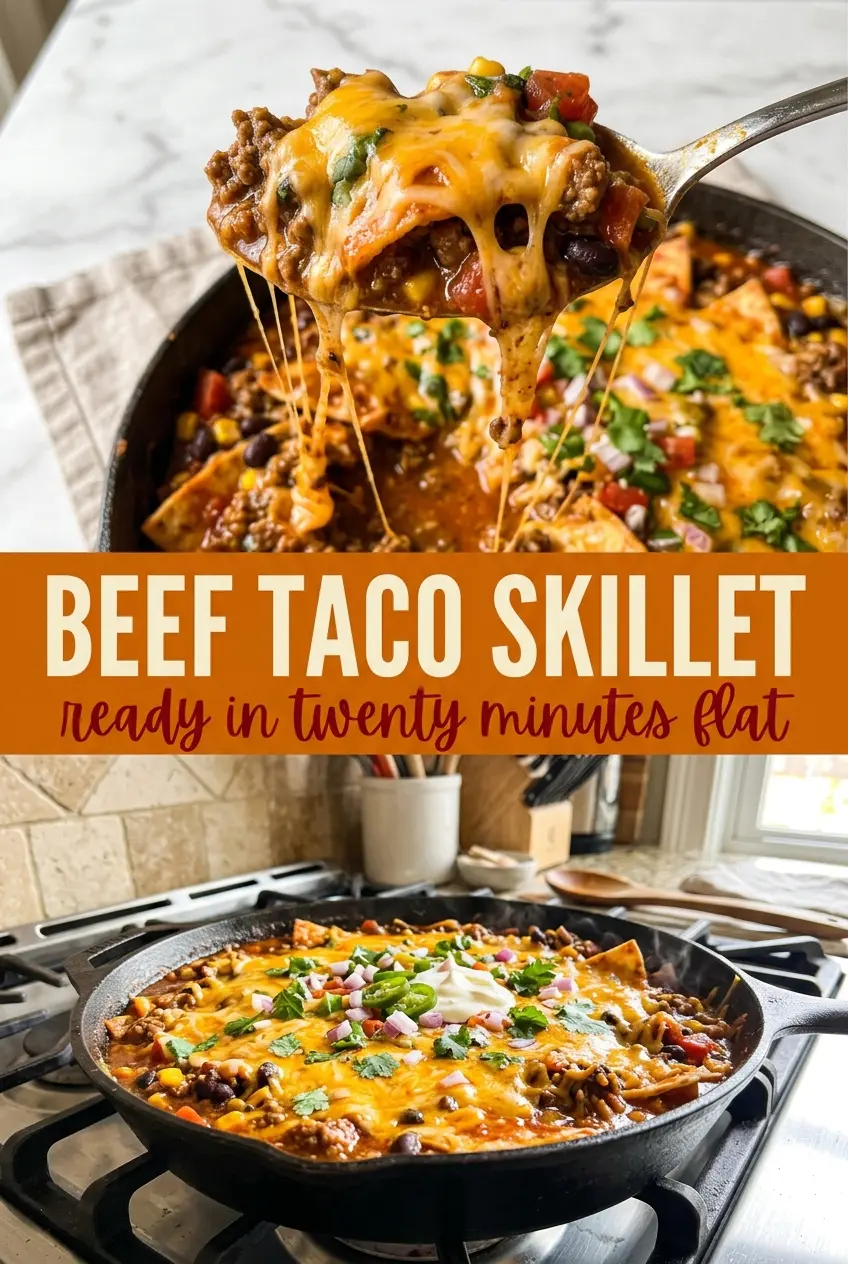
Beef Taco Skillet
Ingredients
Equipment
Method
- Cook the ground beef in a large skillet over medium-high heat until browned, stirring occasionally, about 5-7 minutes; drain off any excess fat as the skillet juices thin and the meat loses its pink color.
- Stir in the tomato soup, salsa, water, and torn tortilla pieces until evenly combined and the tortillas are coated in the red-orange mixture.
- Bring the mixture to a boil, then reduce the heat to low and simmer for 5 minutes, stirring frequently, until thickened and saucy enough to cling to the tortillas.
- Season with salt and pepper to taste, then stir to distribute the seasoning through the skillet.
- Sprinkle the shredded cheddar over the top and cover until melted, about 1-3 minutes, watching for the cheese to fully soften and turn glossy.
- Serve hot straight from the skillet once the sauce is bubbling at the edges and the cheddar is melted.