
Turkey meatloaf earns its place at the table when it stays tender instead of turning dry and crumbly. The best versions slice cleanly, hold onto their juices, and still give you that glossy ketchup glaze that turns sticky at the edges as it bakes. This one does all of that without leaning on heavy fillers or a long ingredient list.
The trick is building moisture before the turkey ever hits the bowl. The onion cooks in butter first, which softens it and carries the garlic and thyme through the meatloaf instead of leaving little raw bits behind. A small amount of baking soda helps the onion soften faster and brown a little better, while the Dijon, egg yolks, Parmesan, and oats work together to keep the loaf cohesive without making it dense.
Below, you’ll find the timing that keeps the glaze from burning, the texture cues that tell you the loaf is mixed enough, and a few smart swaps if you need to work with what’s already in the kitchen.
The onion base made a huge difference and the loaf stayed juicy all the way through. The glaze thickened up perfectly and didn’t slide off when I sliced it.
Love a juicy meatloaf with a tangy ketchup glaze? Save this turkey version for the nights when you want comfort food that still slices neatly.
The Onion Base Is What Keeps This Turkey Meatloaf Juicy
Lean turkey needs help. If you just mix it with breadcrumbs and sauce, it can bake up tight and a little chalky. The cooked onion mixture changes that. It adds moisture, but more importantly, it spreads fat and flavor through the loaf so the turkey doesn’t have to carry everything on its own.
The baking soda is subtle, but it matters. It helps the onions soften faster and gives them a deeper, sweeter finish without browning too hard in the pan. That means the flavor reads rounder once the loaf bakes. The Dijon and Parmesan do a second job too: they season from the inside, so the meatloaf tastes complete even before the glaze hits the top.
What Each Ingredient Is Actually Doing in This Dish
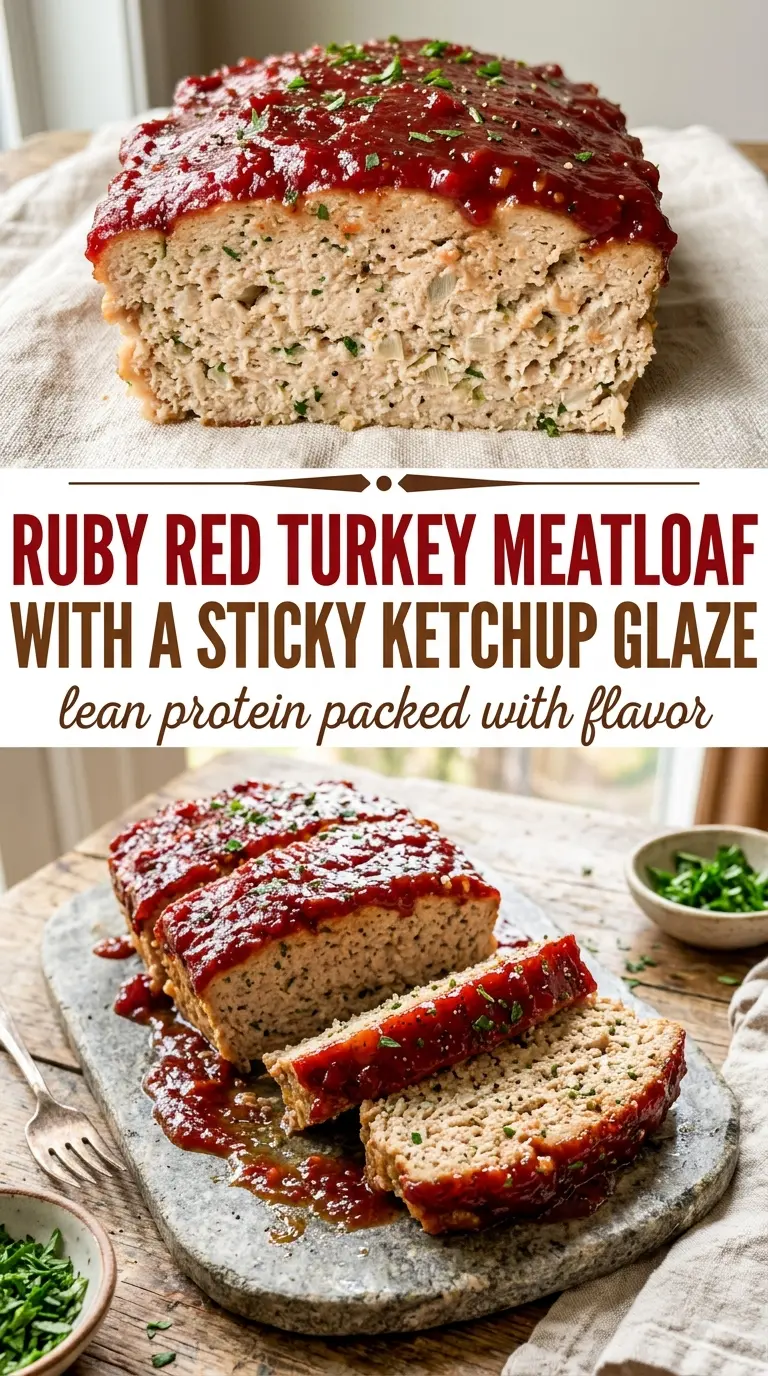
- Ground turkey — Use lean turkey for a lighter loaf, but don’t go all the way to ultra-lean if you can avoid it. A little fat keeps the texture from turning mealy.
- Butter — This is the moisture insurance. Olive oil works in a pinch, but butter gives the onion base a fuller taste and better body.
- Quick oats — They bind without turning the loaf bready. Regular oats can work if you pulse them a few times first.
- Egg yolks — Yolks add richness and help the loaf hold together without the firmer, drier feel you can get from whole eggs.
- Dijon mustard and Worcestershire — These build savory depth fast. They don’t disappear in the mix, so every slice tastes seasoned all the way through.
- Parmesan — It brings salt and umami. Pre-grated is fine here, though freshly grated melts and blends more smoothly.
How to Mix and Glaze It Without Ending Up With a Dry Loaf
Cook the onion until it gives up its sharpness
Start with the onion in butter over low heat and let it soften until it’s translucent and sweet-smelling, not browned and crisp at the edges. If you rush this part, the onion tastes raw inside the finished loaf. Stir in the garlic and thyme at the end so they don’t scorch, then let the mixture cool before it goes into the turkey.
Mix the turkey just until it comes together
Add the cooled onion mixture, egg yolks, mustard, Parmesan, parsley, and oats, then work everything together with your hands only until the mixture looks evenly combined. If you keep kneading, the turkey tightens up and the loaf bakes dense. The right texture is cohesive and slightly tacky, not paste-like.
Brush the glaze in two stages
Simmer the ketchup, brown sugar, cider vinegar, and hot sauce until it thickens slightly and loses its raw sugar edge. Brush on half before the loaf goes into the oven so it can set into the surface, then add the rest near the end for a glossy finish. If you glaze only at the beginning, the sugars can scorch before the center finishes cooking.
What to Change When You Need a Different Version
Dairy-Free Version
Swap the butter for olive oil and skip the Parmesan, then add a little extra salt to keep the loaf balanced. You lose some richness, but the onion base and glaze still carry the dish well.
Gluten-Free Version
Quick oats are already naturally gluten-free if you buy certified oats, so this is an easy swap for most kitchens. If you need a firmer slice, add another teaspoon of cornstarch rather than more oats.
Make It a Little More Traditional
If you want a more classic meatloaf texture, replace part of the turkey with ground beef and use the same glaze. The loaf will be richer and a little looser, so the rack setup matters even more to keep it from sitting in rendered fat.
Storage and Reheating
- Refrigerator: Store slices in an airtight container for up to 4 days. The glaze will tighten up a bit, but the flavor deepens overnight.
- Freezer: It freezes well. Wrap individual slices tightly and freeze for up to 2 months so you can reheat just what you need.
- Reheating: Warm covered in a 325°F oven with a splash of water or extra glaze until heated through. The common mistake is blasting it in the microwave, which dries the edges before the center is warm.
Answers to the Questions Worth Asking
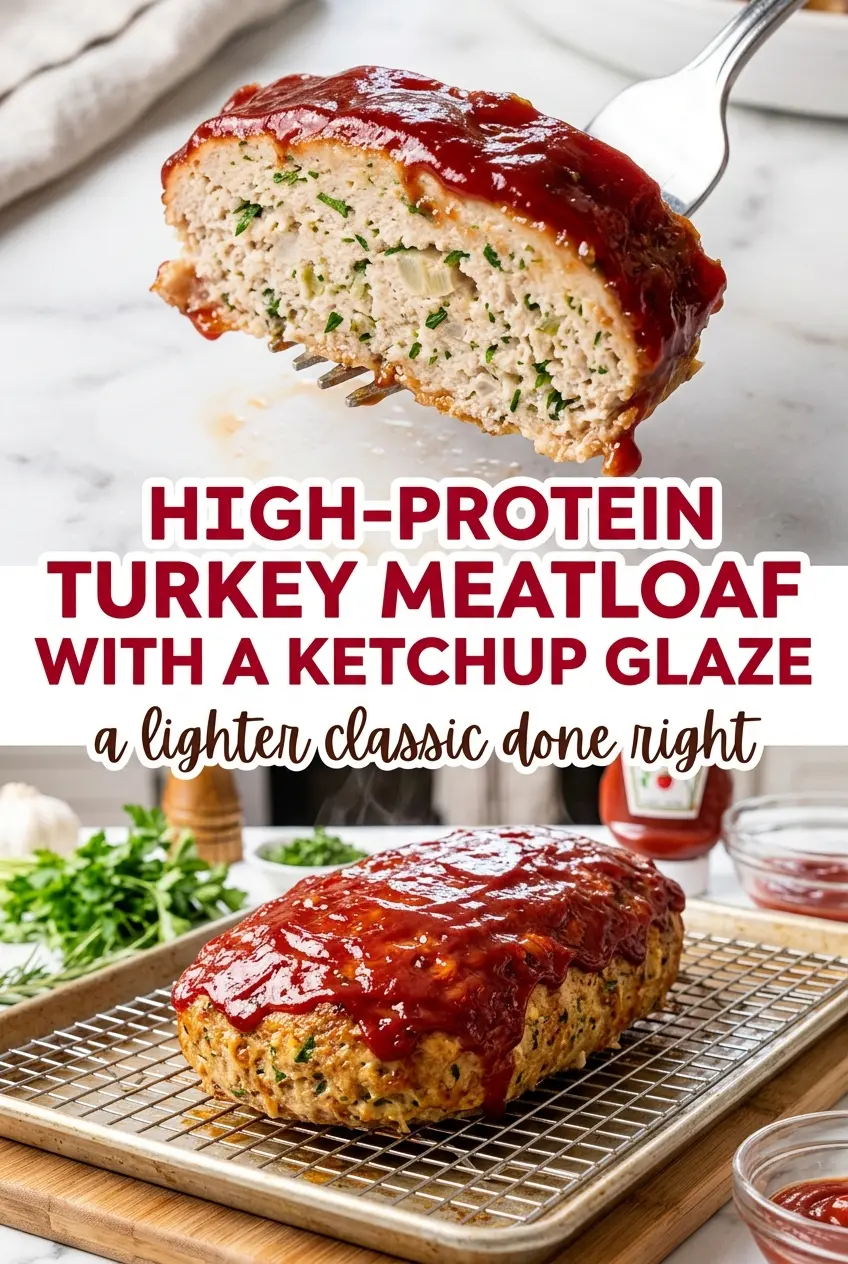
Turkey Meatloaf With Ketchup Glaze
Ingredients
Equipment
Method
- Adjust the oven rack to the upper-middle position and heat the oven to 350°F, then set a foil-lined wire rack in a rimmed baking sheet. This keeps the loaf from steaming and helps the glaze set.
- Melt the butter in a skillet over low heat, then stir in the baking soda, add the onion and salt, and cook until softened, about 4 minutes. You'll see the onion turn translucent and glossy.
- Stir in the garlic and thyme until fragrant, then add the Worcestershire and cook 1 minute more. The mixture should smell sharp and savory without browning.
- Whisk together the ketchup, brown sugar, cider vinegar, and hot sauce in a saucepan, then simmer until slightly thickened, about 5 minutes. The glaze should cling to a spoon instead of running freely.
- Set the glaze aside to cool slightly while you finish the meat mixture. It will brush on more smoothly.
- Whisk the egg yolks and Dijon mustard into the cooled onion mixture, then add the turkey, Parmesan, parsley, and oats and mix by hand until combined. Stop as soon as it’s uniform so the loaf stays tender.
- Shape the mixture into a 9x5-inch loaf on the rack. Aim for a tight, even surface so the glaze adheres.
- Brush half the glaze over the top and sides, then bake for 40 minutes. Look for bubbling around the edges.
- Brush on the remaining glaze and continue baking until the internal temperature reaches 160°F, about 35 to 40 minutes longer. The center should feel set, and the thermometer should read 160°F when inserted into the thickest part.