
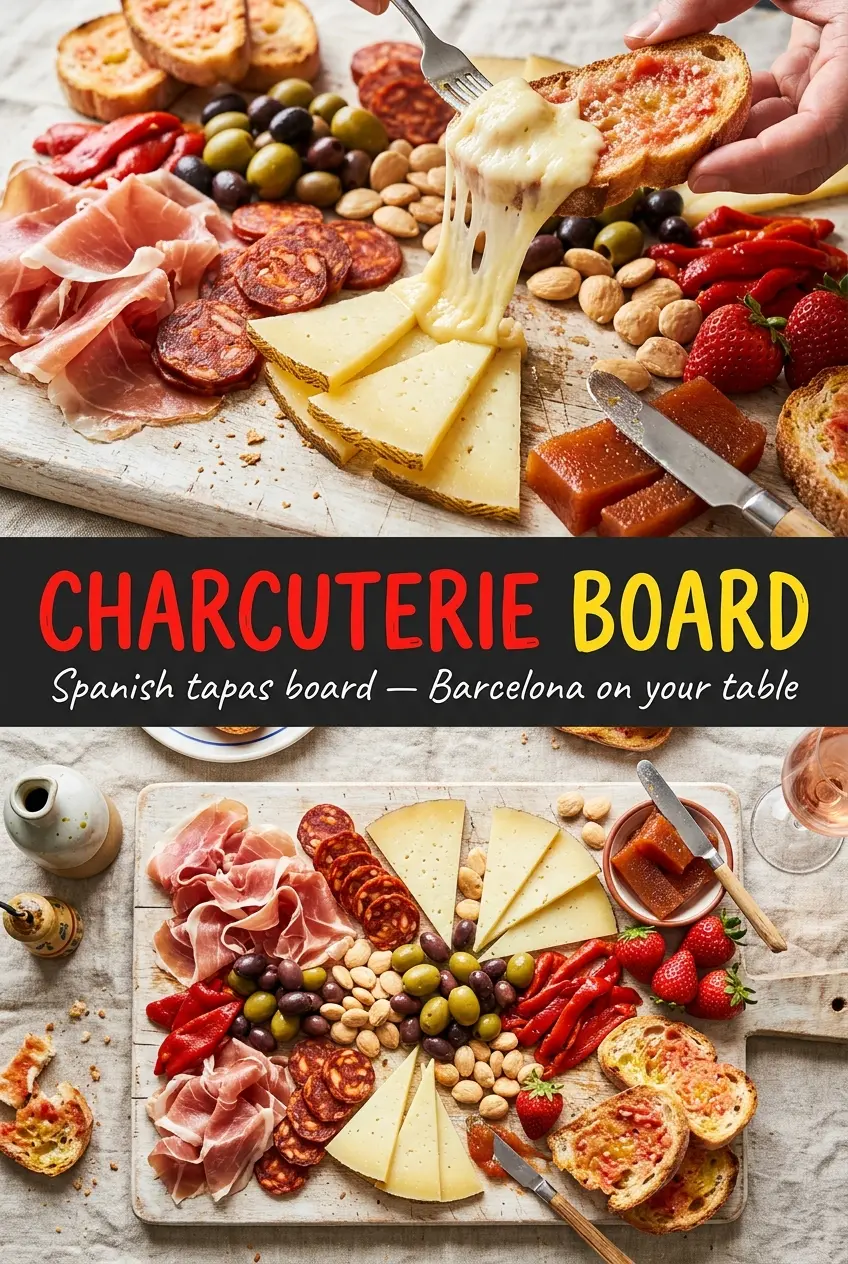
Serrano ham, chorizo, aged manchego, and that jammy swipe of membrillo turn a simple grazing board into something people hover around and keep coming back to. The salty meat, nutty cheese, and sweet quince paste hit in layers, and the pan tumaca on the side keeps the whole spread from feeling like plain crackers and cheese dressed up for a party.
What makes this board work is balance. The cheeses are sturdy enough to stand up to cured meats, the almonds bring crunch, and the strawberries and roasted peppers keep the salty bites from getting too heavy. Pan tumaca matters here more than a basket of plain bread because the tomato-rubbed toast gives you moisture, olive oil, and a little acidity in one bite.
Below, I’m walking through the part that makes this board taste distinctly Spanish, plus the swaps that still keep the spirit of it intact if you can’t find one of the ingredients.
The pan tumaca kept the board from tasting dry, and the membrillo with the manchego was the bite everybody kept asking about. I didn’t expect the strawberries to work, but they made the chorizo taste even better.
Save this Spanish charcuterie board for the nights when you want cured meats, manchego, and pan tumaca to do the heavy lifting.
The reason pan tumaca belongs on the board
Most charcuterie boards lean on crackers or sliced baguette and call it done. That works, but it leaves the whole spread a little dry and one-note. Pan tumaca changes the rhythm of the board because the bread is rubbed with ripe tomato and finished with olive oil, so every bite already has juiciness and a hit of acidity before the cheese or meat even touches it.
The other thing people miss is pacing. If you stack too much salty meat next to too much aged cheese, the board starts tasting flat fast. Here, membrillo, strawberries, and roasted peppers keep resetting your palate, which is why the next bite of manchego tastes sharp and clean instead of heavy.
- Serrano ham — Use thin, supple slices. It should fold softly, not crack like jerky. Prosciutto can stand in if needed, but serrano has a deeper, more savory edge that fits the rest of the board.
- Chorizo — Choose a cured, sliceable chorizo, not raw cooking sausage. The paprika and fat bring warmth and color, and they’re a big part of the Spanish character here.
- Manchego — Aged manchego gives you the nutty, slightly crystalline bite that pairs best with membrillo. Younger manchego is milder and softer, which is fine, but it won’t have the same contrast.
- Membrillo — This is the sweet anchor. It’s dense on purpose, so slice it thin or cube it if it’s firm. That texture is what lets it sit on the board without turning into a smear.
- Pan tumaca bread — Use crusty bread with enough structure to hold up after rubbing. Soft bread turns soggy fast. A good olive oil matters here because there’s nowhere for a weak one to hide.
Building the board so every bite stays balanced
Start with the pan tumaca first
Toast the bread until the surface is crisp and the inside still has a little chew. Rub each piece with the cut side of a ripe tomato half while the toast is warm, then drizzle with olive oil and a pinch of salt. If the bread is too cool, the tomato won’t soften into it; if it’s too soft, the bread collapses under the moisture.
Set the cheeses apart from one another
Place the manchego, mahon, and queso de murcia in separate areas instead of clustering them together. That keeps people from mixing up the flavors and makes the board easier to read. Let the goat cheese come to room temperature before serving so it spreads with a clean edge instead of crumbling cold and chalky.
Fold in the cured meats with some air around them
Fan the serrano ham and drape the chorizo in small stacks rather than lining everything up flat. The goal is movement and contrast, not symmetry for its own sake. If you pack the meats too tightly, the board starts looking heavy and people hesitate to take the first piece.
Finish with the sweet and briny pieces
Add the membrillo, olives, almonds, peppers, and strawberries around the open spaces. These are the bites that keep the board lively, so don’t bury them under the meats. A few rosemary sprigs give the platter a fresh, resinous smell, but use them as an accent, not as a filler that crowds the food.
How to adapt this for different shopping lists and diets
Gluten-Free Board
This is naturally close to gluten-free as long as you serve the pan tumaca with gluten-free bread or skip the bread entirely and focus on the meats, cheeses, and accompaniments. The texture changes a little without the toast, but the flavors stay intact.
Vegetarian Version
Leave out the serrano ham and chorizo and build around the cheeses, membrillo, almonds, olives, roasted peppers, and fruit. The board loses the smoky-salty backbone from the cured meats, so add a few more olives and a little extra olive oil on the bread to keep it satisfying.
No Membrillo on Hand
A firm, not-too-sweet fig jam is the closest swap. It won’t have the same clean quince flavor, but it gives you the same sweet, dense contrast against the manchego.
Storage and Reheating
- Refrigerator: Store leftover meats, cheeses, and accompaniments separately for up to 3 days. The bread softens fast, so keep pan tumaca components apart and assemble fresh if possible.
- Freezer: This board doesn’t freeze well assembled. Cured meats and cheeses lose texture, and the bread goes stale in the wrong way once thawed.
- Reheating: Don’t reheat the full board. Toast fresh bread if you want pan tumaca again, then bring the cheeses and meats back to room temperature before serving so the flavors open up.
Questions I Get Asked About This Recipe
Charcuterie Board
Ingredients
Method
- Rub thick-sliced crusty bread with a cut tomato half and drizzle olive oil; this is pan tumaca, the base of the Spanish board, and arrange it so guests can pick pieces up easily.
- Arrange manchego, mahon, and queso de murcia in separate sections so the cheeses stay distinct on the platter.
- Fan serrano ham across one area of the board and place chorizo slices alongside it in a separate cluster.
- Add membrillo, marcona almonds, olives, roasted peppers, and strawberries across the remaining open space to create contrasting colors and flavors.
- Serve with pan tumaca pieces on the side and scatter fresh rosemary over the board for a finishing cue.