
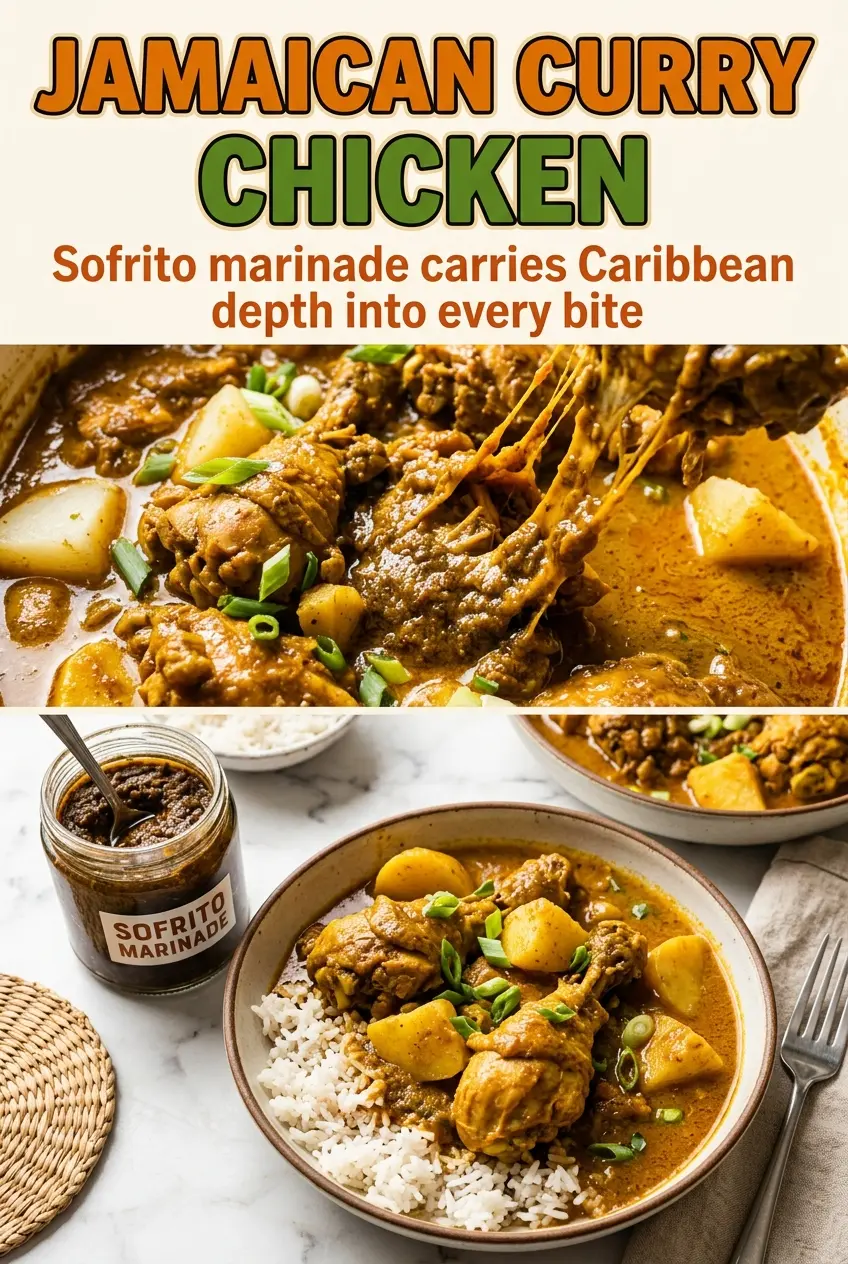
Golden curry-coated chicken, tender potatoes, and a coconut broth with enough heat to wake up the whole pot—this is the kind of Jamaican curry chicken that disappears fast once it hits the table. The sauce clings instead of pooling, the chicken stays deeply seasoned all the way through, and the Scotch bonnet brings clean, bright heat that never feels flat or one-note.
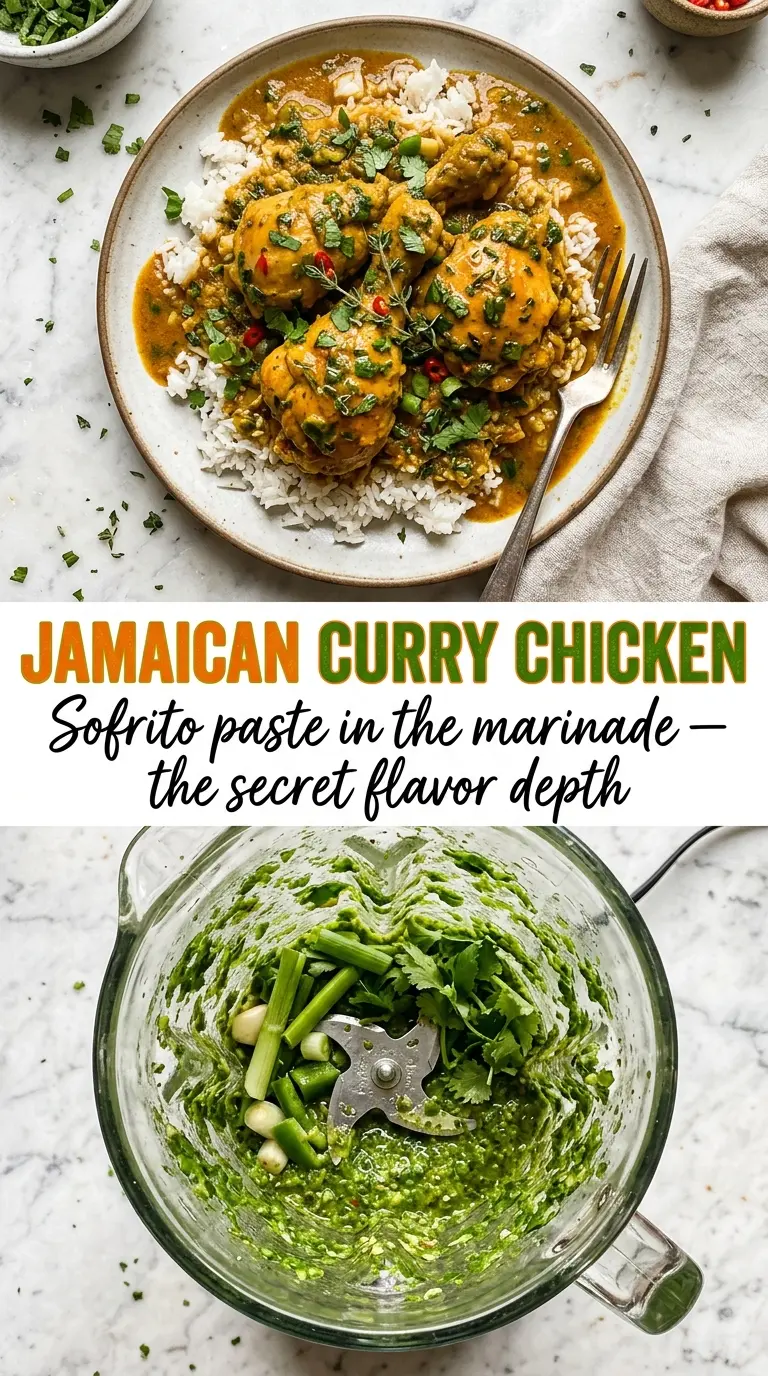
What makes this version stand out is the sofrito paste in the marinade. Blending green onion, cilantro, garlic, and bell pepper gives the chicken a deeper aromatic base before it ever touches the pan, so the flavor isn’t sitting only on the surface. Browning the chicken first matters too. It gives the curry powder a chance to toast in the oil and keeps the finished sauce from tasting raw or thin.
Keep reading for the timing that keeps the potatoes intact, the heat level to aim for, and the small changes that let you dial this dish up or down without losing the character of the curry.
The curry simmered down into this rich, silky sauce and the chicken was seasoned all the way through from that sofrito marinade. My potatoes held their shape and the Scotch bonnet heat came through without overpowering the coconut milk.
Save this Jamaican Curry Chicken for the nights when you want deep curry flavor, tender potatoes, and a coconut broth that tastes like it simmered all afternoon.
The Marinade Is Doing More Than Seasoning the Chicken
Most curry chicken recipes rely on the simmering sauce to do all the work, which leaves the meat tasting seasoned on the outside and plain underneath. That isn’t a small detail. Once the chicken starts braising, the sauce can only carry so much salt and spice into the meat, especially if the pieces are bone-in and skinless.
The sofrito paste fixes that. Green onion, cilantro, garlic, and bell pepper blend into a wet seasoning that gets right into the chicken during the marinate, and the curry powder coats everything at the same time. The result is flavor that stays in the chicken after the sauce reduces. If your curry ever tastes thin or disconnected, it’s usually because the seasoning never made it past the surface.
What Each Ingredient Is Actually Doing in This Dish
- Jamaican curry powder — This is the backbone of the dish. It usually has more turmeric and warm spice than standard curry powder, and that deeper color matters here because it helps build both flavor and the signature golden sauce.
- Scotch bonnet pepper — This gives the curry its real heat and fruitiness. Habanero can stand in if that’s what you can find, but use less if you don’t want the sauce to turn sharply hot before it finishes simmering.
- Coconut milk — Full-fat coconut milk gives the sauce body and keeps the spices round instead of harsh. Light coconut milk works in a pinch, but the sauce won’t have the same silkiness or cling.
- Potatoes — They thicken the sauce naturally as they simmer and absorb the curry broth on the way. Cube them evenly so they cook through at the same time and don’t fall apart before the chicken is tender.
- Sofrito base — This is the ingredient that changes the whole dish. If you skip the paste, the curry still works, but it loses the layered aromatics that make each bite taste seasoned from the inside out.
Building the Curry So the Sauce Turns Rich, Not Watery
Blending the Marinade Into a Paste
Blend the sofrito ingredients until they form a smooth paste, then coat the chicken with the curry powder, allspice, cayenne, salt, and the paste. The mixture should cling to the meat, not slide off in a wet puddle. If it looks loose, the chicken will steam instead of taking on that seasoned surface that carries through the whole dish. Two hours is the minimum here because the aromatics need time to settle into the meat.
Brown First, Then Build the Pot
Heat the oil until it shimmers and brown the chicken in batches for 8 to 10 minutes. You’re looking for real color on the outside, not pale pieces that just turn opaque. That browning deepens the curry flavor and leaves fond in the pan, which is the start of the sauce. If you crowd the pot, the chicken will release liquid and boil in its own juices, which keeps the curry flat.
Let the Curry Simmer Down
Once the aromatics go in, return the chicken, add the potatoes, coconut milk, broth, and thyme, then bring everything to a steady simmer. The sauce should move in small bubbles, not a hard boil. Too much heat can split the coconut milk and make the potatoes break apart before the chicken is tender. After 35 to 40 minutes, the sauce should be slightly thickened and the chicken should pull cleanly from the bone.
Finish With the Flavor That Wakes It Up
Taste the curry at the end and adjust the salt before serving. The broth tightens as it reduces, so the final seasoning should happen after the sauce has reached its finished texture. A scatter of sliced green onion over rice gives the dish a fresh edge right before it hits the plate.
How to Adapt This Curry Chicken Without Losing the Point
Dairy-Free, Naturally
This recipe already lands in dairy-free territory as written, so there is nothing to strip out. The coconut milk gives the sauce its body and keeps the heat rounded instead of sharp, which is why it belongs here in a way dairy never quite would.
Milder Heat Without Losing the Curry Character
Use one seeded Scotch bonnet or swap in half a habanero. You still get the fruitiness and warmth, just with less burn at the back of the throat. Removing the seeds won’t erase all the heat, so the sauce stays lively instead of turning flat.
Chicken Thighs Instead of Mixed Bone-In Pieces
Bone-in thighs cook evenly and stay juicy, which makes them the easiest cut for this curry if you want less handling. Cut the simmer time back slightly if the pieces are smaller, and start checking for tenderness around the 30-minute mark so the meat doesn’t go stringy.
Storage and Reheating
- Refrigerator: 3 to 4 days. The sauce thickens and gets even richer as it sits.
- Freezer: Yes, it freezes well. Cool it completely, portion it into containers, and freeze for up to 2 months. The potatoes soften a little after thawing, but the flavor holds up.
- Reheating: Warm it gently on the stove over low heat with a splash of broth or water. A hard boil can split the coconut milk and break the potatoes apart, so keep the heat low and stir often.
The Questions People Usually Ask Before Making Jamaican Curry Chicken
Authentic Jamaican Curry Chicken
Ingredients
Equipment
Method
- Add the green onion, cilantro, garlic, and bell pepper to a blender and blend until smooth to make the sofrito paste.
- Set the sofrito paste aside so it’s ready for seasoning the chicken.
- Season the chicken with Jamaican curry powder, allspice, cayenne, salt and thyme, plus the sofrito paste, and massage to coat evenly.
- Cover and refrigerate the seasoned chicken to marinate for at least 2 hours.
- Heat vegetable oil in a Dutch oven over medium-high heat and brown the chicken, turning, for 8-10 minutes, until you see deep golden color.
- Remove the chicken to a plate, then sauté the diced onion, minced garlic, grated fresh ginger, and Scotch bonnet peppers in the same pot for 2-3 minutes, stirring until fragrant.
- Return the chicken to the pot and add the cubed potatoes, coconut milk, chicken broth, and thyme.
- Simmer the curry on medium-low until the potatoes are tender and the chicken is fully cooked, 35-40 minutes, stirring occasionally to keep the sauce from sticking.
- Serve the Jamaican curry chicken over rice and top with sliced green onion for freshness.