
Tangy rhubarb jam earns its place in the jar when it sets up with that bright, clean fruit flavor and just enough sweetness to round off the edges. The best batches taste sharp at first, then settle into something soft and glossy, with a texture that spreads instead of running. That balance is what keeps this from tasting flat or overly sugary.
The trick is giving the fruit time to release its juices before you turn up the heat, then cooking it far enough that the pectin can do its job without scorching the bottom of the pan. Rhubarb can go from pale and watery to thick and concentrated fast, so a heavy pot and steady attention matter more than complicated technique. A little lemon helps the set and keeps the flavor lively.
Below you’ll find the part that matters most: how to tell when the jam is actually ready, not just bubbling hard. If you’ve ever ended up with a jar that looked perfect in the pot and stayed loose on the toast, the notes in this post will help you avoid that again.
The jam set up beautifully once I let it cook past the first foamy stage, and the rhubarb stayed bright instead of turning dull. I used it on toast and spooned the rest over yogurt.
Like this bright rhubarb jam? Save it to Pinterest for the mornings when you want a tangy spread that sets up glossy and spreadable.
The Part That Decides Whether Rhubarb Jam Sets or Stays Runny
Rhubarb gives off a lot of water, and that is where most jam problems start. If you rush the cooking, the pot looks busy and bubbly long before the fruit has actually concentrated enough to set. You need evaporation, not just heat. That means a wide pan helps more than a deep one, because more surface area lets moisture leave faster.
The other mistake is stopping too early because the jam still looks loose in the pot. Hot jam always looks thinner than cooled jam, so the real test is when the fruit has turned glossy, the bubbling slows down a little, and the mixture starts to cling to the spoon instead of sliding off in a watery sheet. If you’ve ever had rhubarb jam that never thickened on the shelf, it probably needed a few more minutes at a steady boil.
- Fresh rhubarb — Use stalks that are crisp and firm, not limp. Thicker stalks often need a little extra chopping so they soften evenly. If yours are very green, the flavor will be more tart and less berry-like, but the set will still work.
- Sugar — This does more than sweeten. It helps the jam gel and gives the finished texture body. Cutting the sugar too far can leave you with a loose preserve that tastes sharp but never really settles.
- Lemon juice — Lemon brightens the rhubarb and supports the set. Bottled lemon juice works in a pinch, but fresh tastes cleaner here. If your rhubarb is especially mild, the lemon keeps the flavor from falling flat.
- Pectin — If your recipe uses added pectin, it needs the right boil and timing to activate cleanly. Don’t dump it in after the fruit has already cooked down. Stir it in exactly as directed so it dissolves before the jam starts tightening.
Cooking the Rhubarb Down to the Right Set
Softening the Fruit First
Start by combining the rhubarb with the sugar and letting it sit long enough for the fruit to draw out its juices. The mixture should look wet and slightly glossy before it goes on the heat. That head start keeps you from having to blast the pan later, which can scorch the sugar before the rhubarb softens.
Boiling Hard Without Burning
Bring the pot to a full boil and keep it there, stirring often and scraping the bottom so nothing sticks. You’re looking for a thicker bubble that rises more slowly as the water cooks off. If the heat is too high and the jam starts catching on the pan, lower it immediately — scorched rhubarb tastes bitter fast.
Testing the Finish
When the jam starts to look glossy and slightly heavy on the spoon, test a small spoonful on a chilled plate. Let it sit for a minute, then push it with your finger. If it wrinkles instead of running right back together, it’s ready. If it still looks like syrup, give it a few more minutes and test again.
Three Ways to Make Rhubarb Jam Work for Your Pantry
Lower-Sugar Version
You can reduce the sugar a little, but don’t cut it aggressively unless your recipe includes low-sugar pectin. Less sugar means a looser set and a sharper flavor. The result will taste more tart and less candy-like, which some people love on yogurt or scones.
No-Pectin Jam
If you skip added pectin, you need a longer cook and a little more attention at the end. The jam will usually taste a touch more concentrated and old-fashioned, but it can take longer to reach a true set. Use a wide pan so the extra moisture has somewhere to go.
Freezer-Friendly Batch
If you’d rather skip canning, portion the jam into freezer-safe containers once it cools. This keeps the color bright and the texture fresh, and it’s the easiest route if you’re making a small batch. Leave a little headspace so the jam can expand as it freezes.
Storage and Reheating
- Refrigerator: Store sealed jars in the fridge for up to 3 weeks after opening. The texture may firm up slightly as it chills.
- Freezer: Freezes well for up to 6 months in freezer-safe containers. Leave headspace and thaw overnight in the fridge.
- Reheating: Jam usually doesn’t need reheating, but if it thickens too much after chilling, stir in a spoonful of warm water over low heat. Don’t boil it again unless you want it even thicker.
Questions I Get Asked About This Recipe
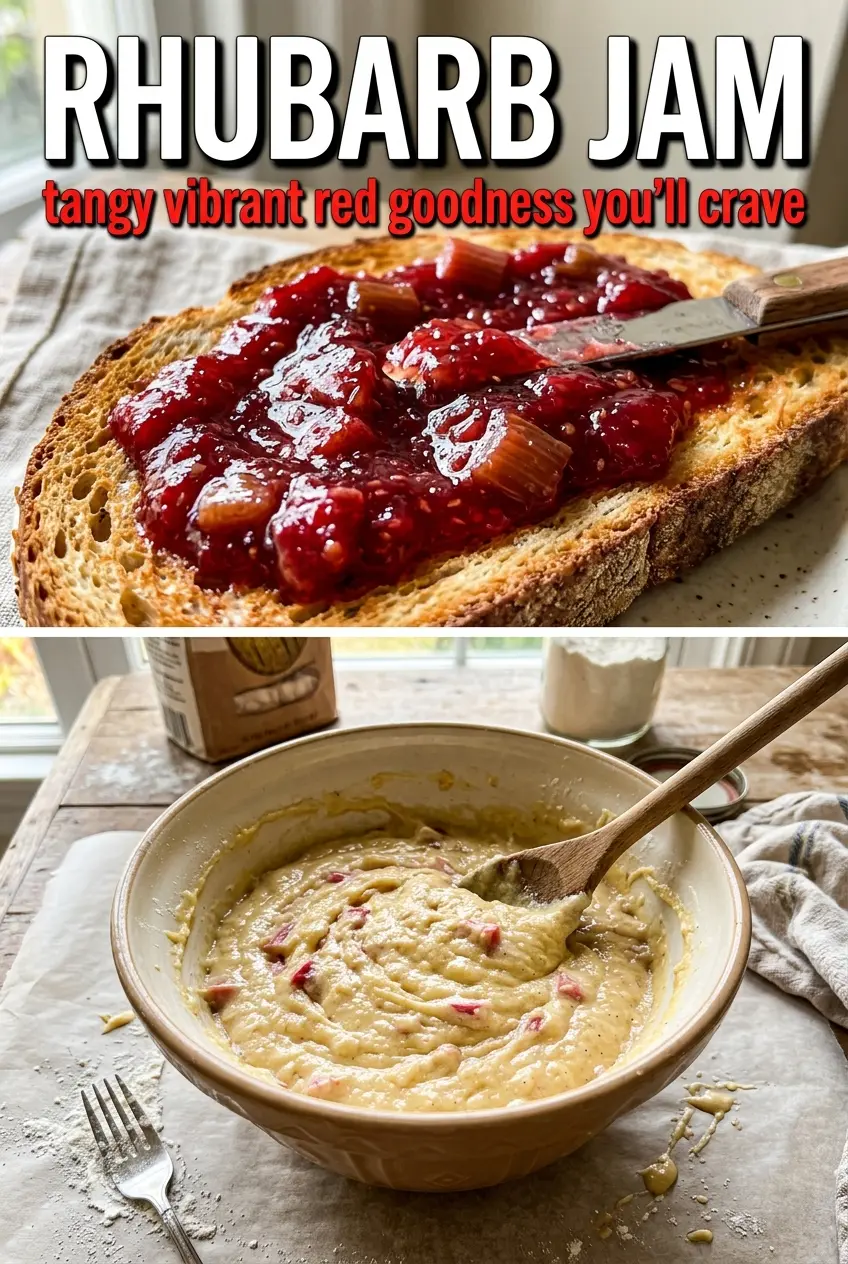
Rhubarb Jam
Ingredients
Equipment
Method
- Combine rhubarb and granulated sugar in a Dutch oven, then bring to a gentle boil over medium-high heat and watch for bubbling around the edges for 2–3 minutes.
- Reduce to medium heat and stir in lemon juice and lemon zest, continuing to simmer with steady bubbles for 15–20 minutes until the rhubarb breaks down and thickens slightly.
- Stir powdered pectin into water until smooth, then pour it into the simmering rhubarb and cook at a rolling simmer for 2–3 minutes.
- Test thickness by spooning a small amount onto a cold plate; return it to the pot and simmer 3–5 more minutes if it doesn’t wrinkle when pushed.
- Ladle hot jam into clean jars and let cool to room temperature until glossy and spoonable, about 1 hour.