
Rhubarb muffins bake up with a tender crumb, bright pockets of tart fruit, and a sugared top that turns lightly crisp in the oven. The best batches don’t bury the rhubarb under sweetness. They let that sharp, rosy flavor stay front and center so every bite has a little contrast instead of tasting flat.
What makes this style work is balance. Rhubarb gives you a burst of acidity, so the batter needs enough fat and sugar to smooth the edges without muting them. Chopping the stalks into small, even pieces matters too. Too large, and the muffins can tear as you bite into them; too small, and you lose the juicy bite that makes them worth baking.
Below, I’ve included the details that matter most: how to keep the fruit from sinking, what to do if your rhubarb is especially stringy, and the best way to store a batch so the tops stay nicely textured.
The rhubarb stayed in little tender pockets instead of disappearing, and the tops baked up with that light crunch I was hoping for. My batch was gone before lunch.
Save these rhubarb muffins for the days when you want tart fruit, soft crumbs, and a crisp sugared top in one pan.
The Trick to Keeping Rhubarb from Vanishing into the Batter
Rhubarb can disappear fast in muffins if the batter is too loose or the pieces are cut too small. The goal is to suspend the fruit, not dissolve it. A thicker batter gives the rhubarb something to cling to, which keeps those pink-tinted pockets visible after baking instead of turning the whole muffin gummy around the edges.
The other common issue is excess moisture. Fresh rhubarb releases liquid as it bakes, and if the pieces are wet from washing, that moisture works against the crumb. Pat the stalks dry after trimming, and toss them with a spoonful of flour before folding them in. That light coating helps the pieces stay put and prevents a dense layer from forming at the bottom of the cups.
What the Ingredients Are Doing in These Muffins
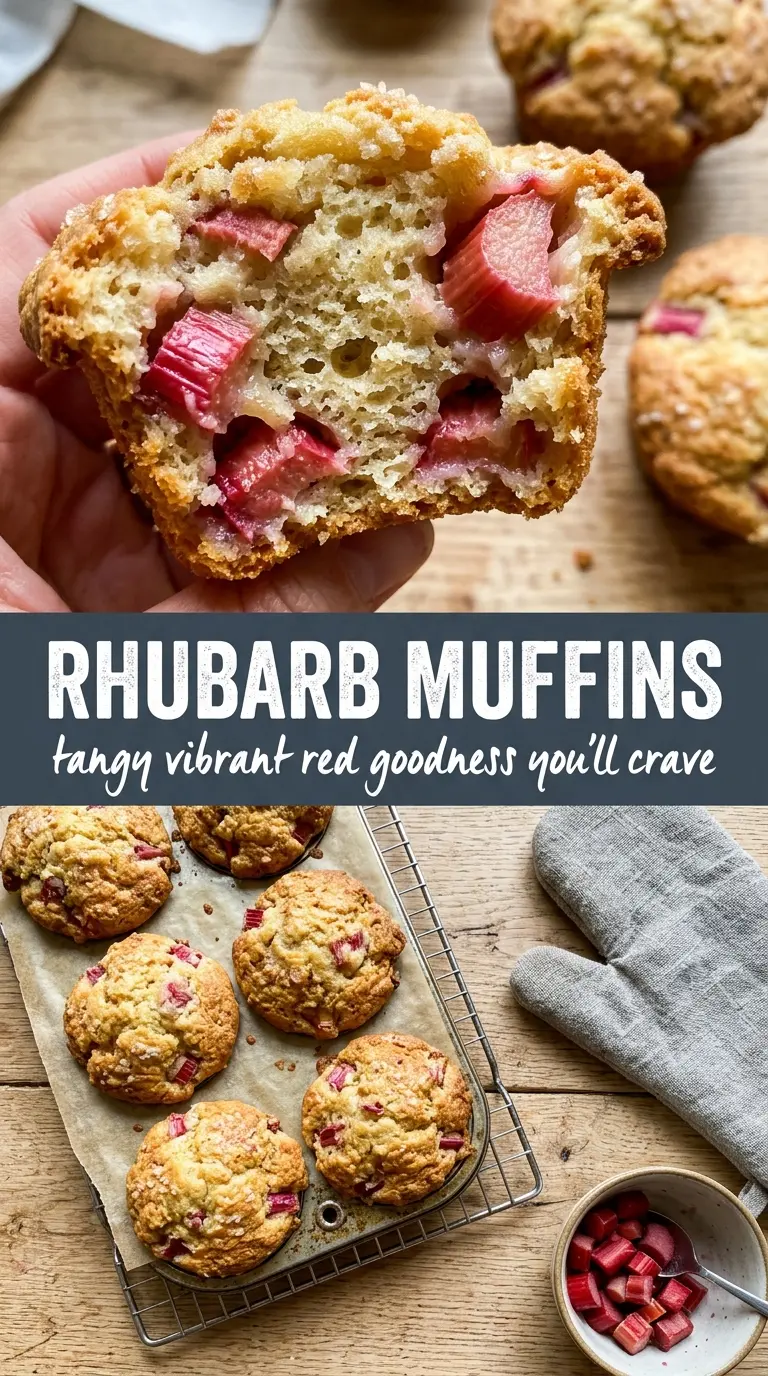
The rhubarb is the star, and fresh stalks give you the cleanest tart bite. Frozen rhubarb can work, but don’t thaw it first or it turns watery and soft before it even hits the oven. If you use frozen, fold it in straight from the freezer and add a minute or two to the bake time.
Butter brings flavor and a fine, tender crumb, while sugar does more than sweeten here — it reins in the rhubarb’s sharpness and helps the tops brown. If you’re tempted to cut the sugar too much, remember that rhubarb needs that cushion. Too little, and the muffins taste harsh instead of balanced.
A little flour tossed with the fruit matters more than people think. It helps the rhubarb stay suspended in the batter so the bottom doesn’t turn wet. If you want a dairy-free version, swap the butter for a neutral plant-based butter and use a milk alternative with a little body, like oat milk.
Building the Muffin Batter Without Overmixing It
Start with the dry ingredients
Whisk the flour, leavening, and salt together before anything wet goes in. That gives you even lift, which matters because muffins punish uneven mixing fast. If the leavener is clumped in one spot, you’ll get lopsided domes and dense tunnels instead of a clean crumb.
Mix the wet ingredients just until smooth
Stir the melted butter, sugar, eggs, and milk until the mixture looks unified and glossy. Don’t beat air into it the way you would for cake; muffins want structure, not fluff. If the butter looks streaky, it’s still too cool, so give it a few extra stirs before combining.
Fold the rhubarb in at the very end
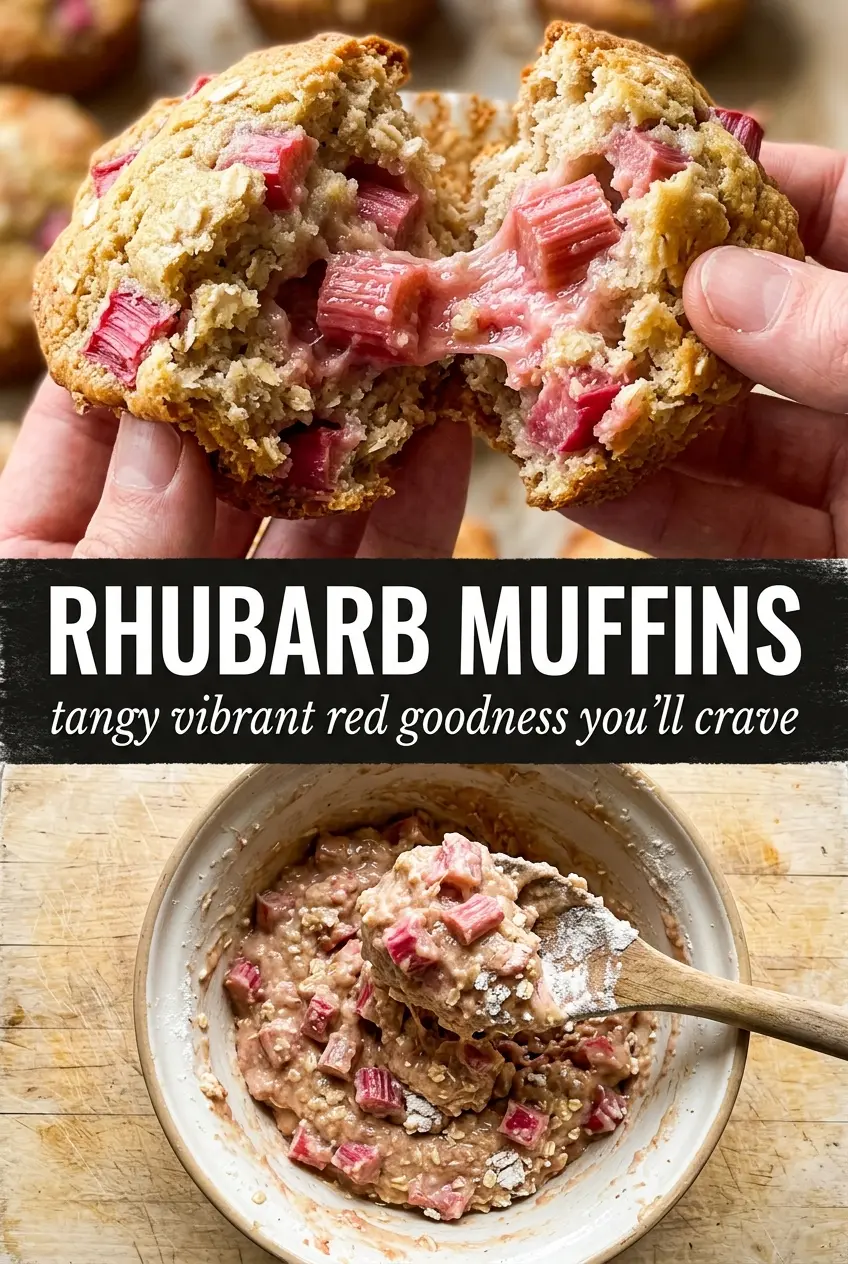
Add the flour-coated rhubarb with a spatula and stop as soon as the fruit is distributed. Overmixing at this point turns the batter tough and can crush the pieces, which is how you lose those clean tart bursts. The batter should look a little rough and thick when it goes into the pan.
Bake until the tops spring back
Divide the batter evenly and bake until the tops are set, the edges are deeply golden, and a tester comes out with a few moist crumbs. If it comes out wet, the centers still need time; if it comes out bone-dry, the muffins may already be past their best texture. Let them sit in the pan for a few minutes before moving them so the crumb can firm up.
Three Ways to Make These Rhubarb Muffins Fit Your Kitchen
Strawberry-Rhubarb Muffins
Fold in a handful of chopped strawberries with the rhubarb for a softer, sweeter muffin and a juicier crumb. The strawberries mellow the tartness, but they also release more liquid, so keep the fruit pieces small and don’t overfill the cups.
Gluten-Free Version
Use a 1:1 gluten-free baking blend that already includes xanthan gum. The muffins will still rise and hold together, but the crumb will be a little more delicate, so let them cool before removing them from the pan.
Lower-Sugar Batch
You can trim some of the sugar, but don’t cut it aggressively. Rhubarb needs sweetness for balance, and the sugar also helps the tops brown. Reducing it a little will give you a brighter, more tart muffin; reducing it too much will leave the fruit sharp and the crumb less tender.
Storage and Reheating
- Refrigerator: Store in an airtight container for up to 4 days. The tops soften a bit, but the crumb stays moist.
- Freezer: These freeze well. Wrap individually, then store in a freezer bag for up to 2 months.
- Reheating: Warm from room temperature in a 300°F oven for 6 to 8 minutes, or microwave briefly if you don’t mind a softer top. Don’t reheat too long or the rhubarb turns overly soft and the muffin dries out.
Answers to the Questions Worth Asking
Rhubarb Muffins
Ingredients
Equipment
Method
- Preheat the oven to 375°F and line a 12-cup muffin tin with paper liners. This helps the muffins bake evenly from the start.
- Chop the rhubarb into small pieces and set it aside. Keep pieces fairly uniform so they cook at the same rate.
- In a bowl, toss rhubarb with brown sugar and cornstarch until coated. The cornstarch will help the fruit turn jammy instead of watery.
- In a large bowl, whisk flour, granulated sugar, baking powder, salt, and cinnamon. Mix just until no dry pockets remain.
- Whisk eggs and milk together, then whisk in melted butter. Combine until smooth and glossy.
- Pour the wet mixture into the dry ingredients and stir gently until no streaks of flour remain. Fold carefully so the muffins stay tender.
- Spoon batter into muffin cups, filling each about one-third full. This base layer helps the fruit stay suspended.
- Add a spoonful of rhubarb filling to each cup, then cover with more batter until cups are about two-thirds full. Distribute fruit evenly for consistent bake times.
- If desired, sprinkle a pinch of granulated sugar over the tops for a crisp finish. Use sparingly so it doesn’t harden into overly sweet crust.
- Bake at 375°F for 25-35 minutes, until tops are golden and a toothpick comes out mostly clean. Watch for firm domes and no wet batter around the edges.
- Cool in the pan for 10 minutes, then transfer muffins to a rack to cool further. Cooling sets the jammy center so it doesn’t run when you bite in.