
Rhubarb bread bakes up with a tender crumb, little pockets of tangy fruit, and a sugary top that turns faintly crisp in the oven. What makes it worth keeping in the rotation is the contrast: the rhubarb stays bright enough to cut through the sweetness, so every slice tastes balanced instead of flat.
The trick is treating rhubarb like the wet, juicy ingredient it is. Too much moisture in the batter can leave the center gummy, which is why a light hand with mixing matters more here than with a lot of quick breads. A little extra sugar helps tame the sharpness, but the fruit still needs room to do its thing.
Below, you’ll find the small details that keep the loaf from sinking in the middle, plus a few ways to adapt it if your rhubarb is especially tart or you want to bake it as muffins instead of a loaf.
The rhubarb stayed tender and didn’t sink to the bottom, and the top baked up with just enough crunch. I had a second slice warm from the pan.
Save this rhubarb bread for the days when you want a tart-sweet loaf with a crisp golden top and a soft, sliceable crumb.
The Part That Keeps Rhubarb Bread from Turning Dense
Rhubarb brings moisture, acidity, and a little bite, which is exactly why quick breads built around it can go wrong. If you overmix once the flour goes in, the batter tightens up and the loaf bakes up heavy instead of tender. The other trap is packing in too much rhubarb for the amount of batter, which sounds generous but usually ends with a wet line through the center.
The better approach is to coat the rhubarb lightly if the pieces look especially juicy and fold it in at the very end. That keeps the fruit suspended instead of sinking and helps the crumb stay even all the way through. A little sugar on the top also does more than sweeten — it gives the loaf that delicate crackle that makes the first slice worth waiting for.
What Each Ingredient Is Actually Doing in This Loaf
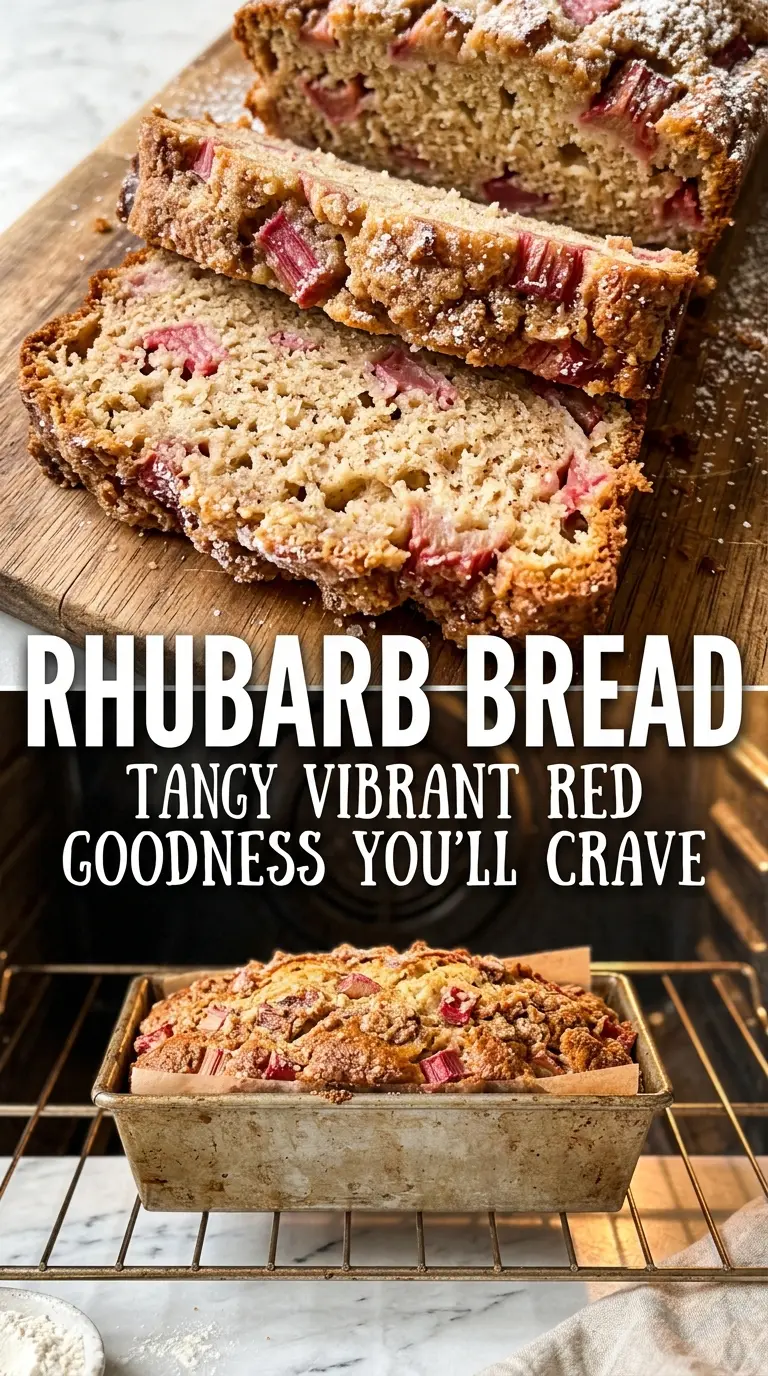
- Rhubarb — This is the whole point of the loaf. Fresh rhubarb gives the clean tartness and soft, jammy pockets you want; frozen rhubarb works too, but it needs to stay frozen until the last minute so it doesn’t bleed too much liquid into the batter.
- Sugar — It balances the sharpness of the rhubarb and helps the top brown. If your stalks are particularly sour, don’t cut the sugar too far or the bread will taste harsh instead of bright.
- Butter or oil — Butter gives a deeper, richer flavor and a firmer crumb; oil gives a softer loaf that stays moist a little longer. Either works, but oil is the easier choice if you’re baking ahead and want the bread to stay tender on day two.
- Milk or yogurt — This adds moisture and keeps the crumb from drying out around the fruit. Yogurt gives a slightly tangier finish and a bit more structure, which is helpful if your rhubarb is very juicy.
- Flour — Use all-purpose flour unless the recipe says otherwise. If you swap in whole wheat, expect a nuttier flavor and a tighter crumb, so replace only part of the flour unless you want a heavier loaf.
How to Fold in the Fruit Without Beating the Loaf Down
Mix the wet ingredients first
Stir the eggs, sugar, fat, and dairy until the mixture looks smooth and glossy. That gives you an even base before the flour goes in, and it keeps you from overworking the batter later. If the butter is too cool and still streaky, warm it just enough to blend smoothly or the loaf can bake unevenly.
Add the dry ingredients just until the flour disappears
Once the flour mixture goes in, switch to a spatula and fold only until you stop seeing dry pockets. The batter should look thick but still spoonable. If you keep stirring at this point, the gluten tightens and you lose that soft quick-bread texture.
Fold in the rhubarb at the very end
Add the chopped rhubarb last and move it through the batter gently. You want every piece coated, not smashed. If the fruit is wet, toss it with a spoonful of flour first so it doesn’t all settle at the bottom of the pan.
Bake until the center springs back
The loaf is done when the top is deeply golden and a tester comes out with a few moist crumbs, not raw batter. The center should feel set when you press it lightly, and the edges will start pulling from the pan. If the top browns too fast before the middle is done, lay a loose piece of foil over it for the last stretch of baking.
Three Ways to Adapt Rhubarb Bread Without Losing What Makes It Good
Make it dairy-free
Use a neutral oil instead of butter and swap in an unsweetened plant-based milk. The loaf stays moist, though it loses a little of the buttery depth, so a pinch of vanilla or a little orange zest helps round out the flavor.
Turn it into muffins
Spoon the batter into a lined muffin tin and bake until the tops spring back and the centers are set. Muffins bake faster and give you more of the crisp top-to-soft middle contrast, but they dry out sooner, so pull them as soon as the crumbs are just set.
Use frozen rhubarb
Frozen rhubarb works well if you add it straight from the freezer and fold it in quickly. Don’t thaw it first or it will dump extra liquid into the batter and make the center heavy.
Storage and Reheating
- Refrigerator: Store the cooled loaf tightly wrapped for up to 4 days. The crumb gets a little firmer in the fridge, but the flavor holds up well.
- Freezer: This bread freezes well. Wrap slices or the whole loaf in plastic and foil, then freeze for up to 2 months.
- Reheating: Thaw at room temperature, then warm slices briefly in a low oven or toaster oven. A microwave will soften the crust and can make the fruit pockets gum up.
Questions I Get Asked About This Recipe
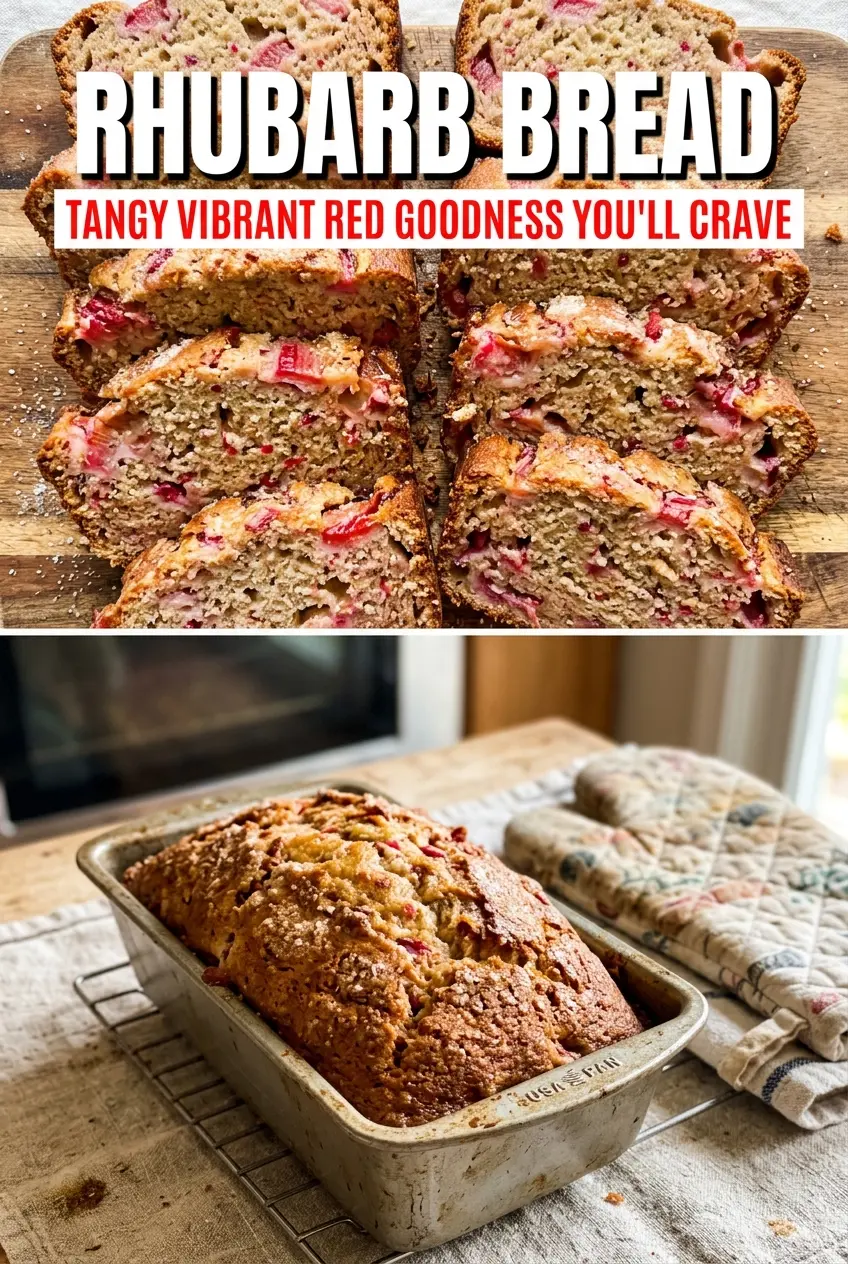
Rhubarb Bread
Ingredients
Equipment
Method
- Preheat the oven to 350°F and line a sheet pan with parchment paper for easier baking and cleanup.
- Combine rhubarb, granulated sugar, cornstarch, and lemon juice in a bowl, then toss until the fruit looks evenly coated.
- Rest the rhubarb mixture for 10 minutes so the sugar draws out juices and begins to thicken.
- In a bowl, whisk flour, baking powder, baking soda, and salt until evenly distributed.
- In another bowl, whisk melted butter and brown sugar until glossy, then whisk in eggs, milk, and vanilla extract.
- Add the dry ingredients to the wet ingredients and mix just until no dry streaks remain.
- Spoon half the batter into a greased loaf pan, then spread the rhubarb filling evenly over the batter.
- Top with remaining batter and smooth the surface with a spatula, then sprinkle with a little sugar for a crisp top if desired.
- Bake for 25–35 minutes at 350°F until the top is golden and a toothpick in the center comes out mostly clean with a few moist crumbs.
- Cool the bread in the pan for 15 minutes, then lift out and cool at least 30 minutes before slicing so the filling sets.