
Juicy peaches, a tender golden crust, and those streaks of raspberry juice running through the top make this cobbler feel a little more dramatic than the usual version. The fruit softens into a syrupy filling under a buttery batter, and the top bakes up with crisp edges where it meets the hot melted butter in the pan. It’s the kind of dessert that looks rustic at first glance, then gets people leaning in when they see the deep red swirls cut across the surface.
The trick here is restraint. The batter goes into the butter first, and the fruit goes on top without stirring. That separation is what gives you the layered cobbler texture instead of a muddled cake. The raspberries don’t just add color; they bring sharpness, which keeps the peaches from tasting flat and one-note once the sugar and heat do their work.
Below, I’ll walk through why the fruit should sit right on top of the batter, what the raspberry addition changes, and how to keep the crust from turning heavy. If you’ve ever had cobbler come out soggy in the middle, the process notes here are worth reading before you start.
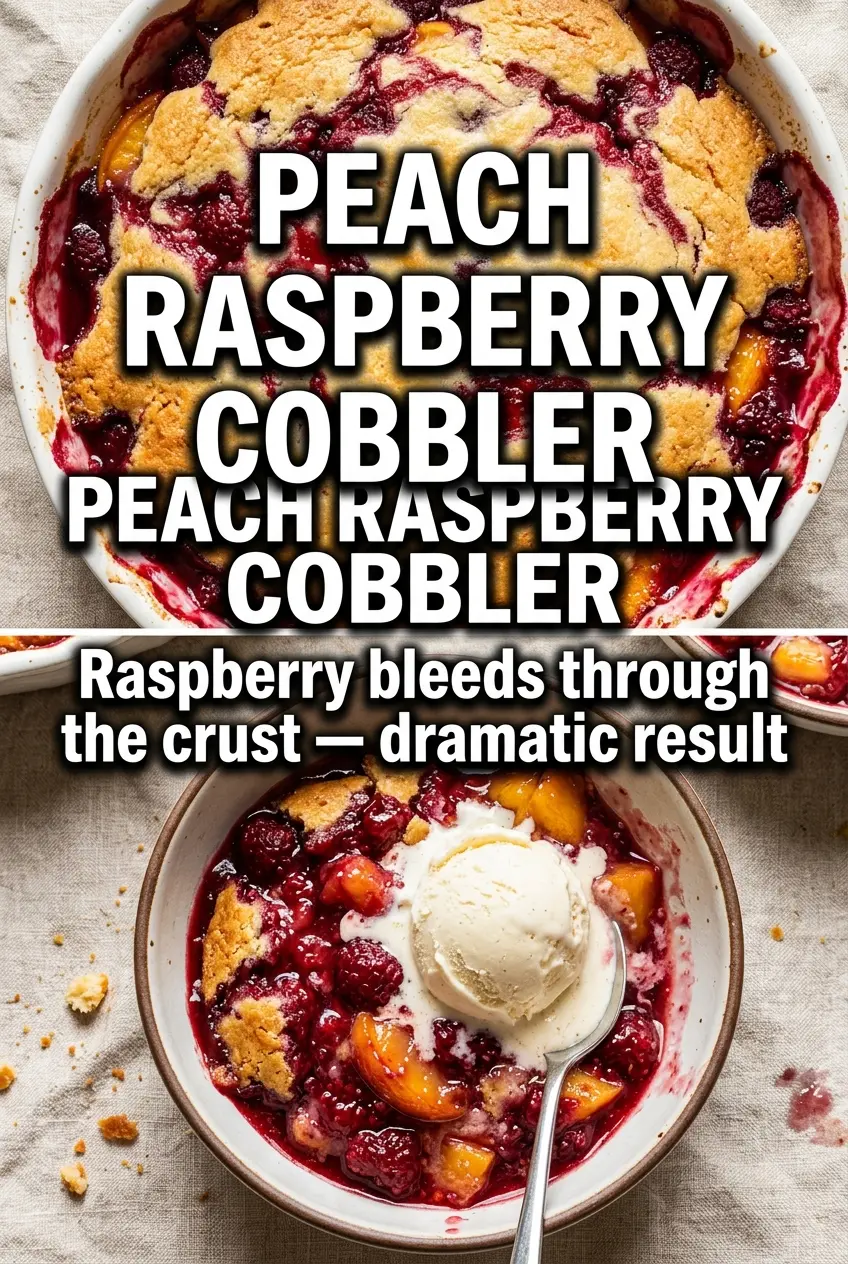
The raspberry juices bled through the top and the crust baked up crisp around the edges while staying soft underneath. I served it warm and there wasn’t a spoonful left after dinner.
Save this peach cobbler with raspberries for the dessert that bakes into burgundy swirls and a buttery, golden top.
The Reason the Fruit Goes on Top Instead of Getting Stirred In
The batter in a cobbler like this is meant to rise up around the fruit, not swallow it. When you pour it into the butter first and leave it alone, the flour mixture starts setting at the bottom while the fruit sinks and steams the middle from above. Stirring turns that into a heavier, denser bake, and you lose the contrast between crisp edges, soft interior, and syrupy fruit.
The raspberries matter here because they break down fast and leak juice early in the bake. That juice runs through the top layer and paints the crust without making it wet, as long as the oven stays hot enough to set the batter before the fruit fully collapses. If your cobbler ever turns pale and pudding-like, the oven was too cool or the dish was overcrowded with fruit.
What Each Ingredient Is Doing in This Cobbler
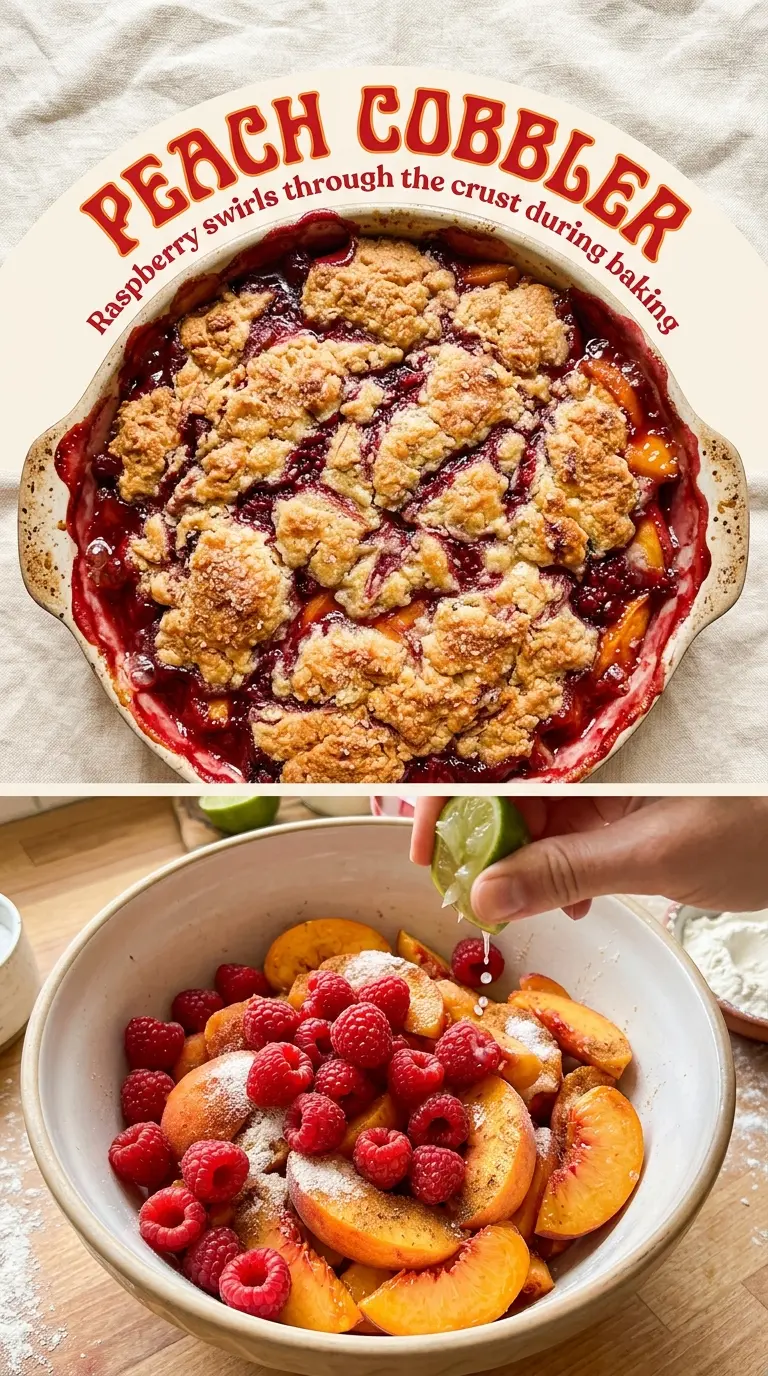
- Peaches — Fresh peaches give you the best syrupy filling and hold their shape better than canned fruit. If yours are firm, let the sliced peaches sit with the sugar and lemon for a few minutes so they start releasing juice before they hit the oven.
- Raspberries — These are what create the dramatic red-purple streaks and the tart edge that keeps the dessert from tasting too sweet. Frozen raspberries work too; add them straight from frozen so they don’t turn mushy before baking.
- Butter — Pouring the melted butter into the pan first is what gives the crust those lacy, caramelized edges. Use real unsalted butter here; margarine won’t give the same flavor or browning.
- Whole milk — The fat in whole milk helps the batter bake up tender instead of dry and bready. Lower-fat milk works in a pinch, but the texture won’t be as rich.
- Baking powder — This is the lift that lets the batter puff around the fruit. If your baking powder is old, the cobbler will bake up flat, even if everything else is right.
Building the Cobbler So the Crust Stays Light and the Fruit Stays Bold
Start with the butter and hot oven
Pour the melted butter into the baking dish first, then set it aside while you mix the batter. That layer needs to be even so the batter can spread into it and fry at the edges as it bakes. If the butter pools in one corner, the crust will brown unevenly and you’ll get a greasy patch instead of a crisp bottom.
Mix the batter just until it comes together
Stir the flour, sugar, milk, baking powder, and salt until you no longer see dry streaks, then stop. A cobbler batter should look smooth but not whipped; overmixing builds too much gluten and gives you a tougher top. Pour it directly over the butter and don’t stir the two together.
Toss the fruit and keep the layering intact
Mix the peaches, raspberries, sugar, lemon juice, and cinnamon until the fruit is coated, then spoon it evenly over the batter. Do not stir once the fruit is in the pan. The fruit will sink and the batter will rise around it on its own, which is what creates that layered cobbler texture instead of a uniform cake.
Bake until the top is golden and the juices are bubbling through
Bake until the surface is deeply golden and the raspberry juice has started to bleed through the crust in dark streaks. The center should look set but still soft, not liquid, and the edges should be pulling slightly away from the pan. If the top browns too fast before the filling bubbles, cover it loosely with foil for the rest of the bake.
Three Ways to Adapt This Peach Cobbler Without Losing What Makes It Good
Make it dairy-free
Swap the butter for a dairy-free baking stick and use an unsweetened non-dairy milk with some body, like oat milk. The top will still brown, but the flavor will be a little less rich and the bottom won’t have quite the same buttery edge.
Use frozen fruit when peaches aren’t in season
Frozen peach slices and raspberries work well if you keep them frozen until the last minute and add a few extra minutes to the bake. The filling will be a little looser, but the flavor still comes through once the juices bubble and thicken.
Make it gluten-free
Use a 1:1 gluten-free flour blend that includes xanthan gum. The texture will be slightly more tender and a touch less chewy, but the cobbler still rises and browns well if you don’t overmix the batter.
Add a little more spice without overpowering the fruit
A pinch of nutmeg or cardamom works if you want more warmth, but keep it light. Too much spice muddies the peach flavor and covers up the raspberry brightness that makes this version stand out.
Storage and Reheating
- Refrigerator: Store covered for up to 4 days. The crust softens as it sits, but the flavor holds up well.
- Freezer: This cobbler freezes best after baking and cooling completely. Wrap tightly and freeze for up to 2 months, then thaw overnight in the fridge.
- Reheating: Rewarm in a 325°F oven until the filling is hot and the top tightens back up, about 15 to 20 minutes. The microwave will heat it, but it turns the crust soft and soggy.
Answers to the Questions Worth Asking
Peach Cobbler
Ingredients
Equipment
Method
- Preheat oven to 350°F. Pour 1/2 cup melted butter into a 9x13 dish and let it spread evenly for the base.
- Mix the cobbler batter ingredients, then pour batter over the butter in the dish.
- Toss peaches, raspberries, sugar, lemon juice, and cinnamon until evenly combined.
- Spoon the peach-raspberry mixture over the batter without stirring, so the fruit sits on top of the batter layer.
- Bake for 45-55 minutes, until the cobbler is golden and raspberry juice bleeds through the crust.
- Serve warm with vanilla ice cream.