
Watermelon sorbet should taste like pure, icy watermelon first, with a clean snap of lime and just enough sugar to keep it from freezing into a hard block. This version goes a step further with elderflower cordial, which adds a soft floral note that makes the fruit taste brighter and more layered without turning it perfumed. The result is light, vivid, and cold in the best possible way.
The key is straining the watermelon after blending. That removes the watery pulp that can make the texture icy instead of smooth. The sugar also needs a little time to dissolve fully, and the brief chill before churning helps the base freeze more evenly. If you’ve ever ended up with a sorbet that tastes right but eats like flavored ice, it usually needed a better balance of sugar and a cleaner puree.
Below, I’ve included the tiny details that matter most: how to keep the flavor balanced, what elderflower cordial actually does here, and the one variation I’d use if you want more of a granita texture instead of a churned sorbet.
The texture was spot-on after the chill time, and the elderflower made it taste much fancier than the few ingredients would suggest. I also loved that it scooped cleanly after a short freeze instead of turning into a solid block.
Watermelon sorbet with elderflower cordial and those edible flower tops is the one I’d pin for a dessert that looks elegant without any extra work.
The Reason This Sorbet Stays Smooth Instead of Turning Icy
Most watermelon sorbet failures come from two places: too much water and not enough sugar. Watermelon is already loaded with juice, so if you blend it and freeze it straight away, the texture can turn brittle and icy. Straining the puree removes a lot of that extra pulp, which gives the finished sorbet a cleaner, silkier scoop.
The sugar matters just as much. It doesn’t just sweeten the fruit; it lowers the freezing point enough that the sorbet stays spoonable. The lime juice keeps the flavor sharp, and the elderflower cordial brings a floral note that rounds out the watermelon instead of flattening it. If the base tastes faintly sweeter than you think it should before freezing, that’s usually the right place to stop.
What Each Ingredient Is Doing in This Watermelon Sorbet
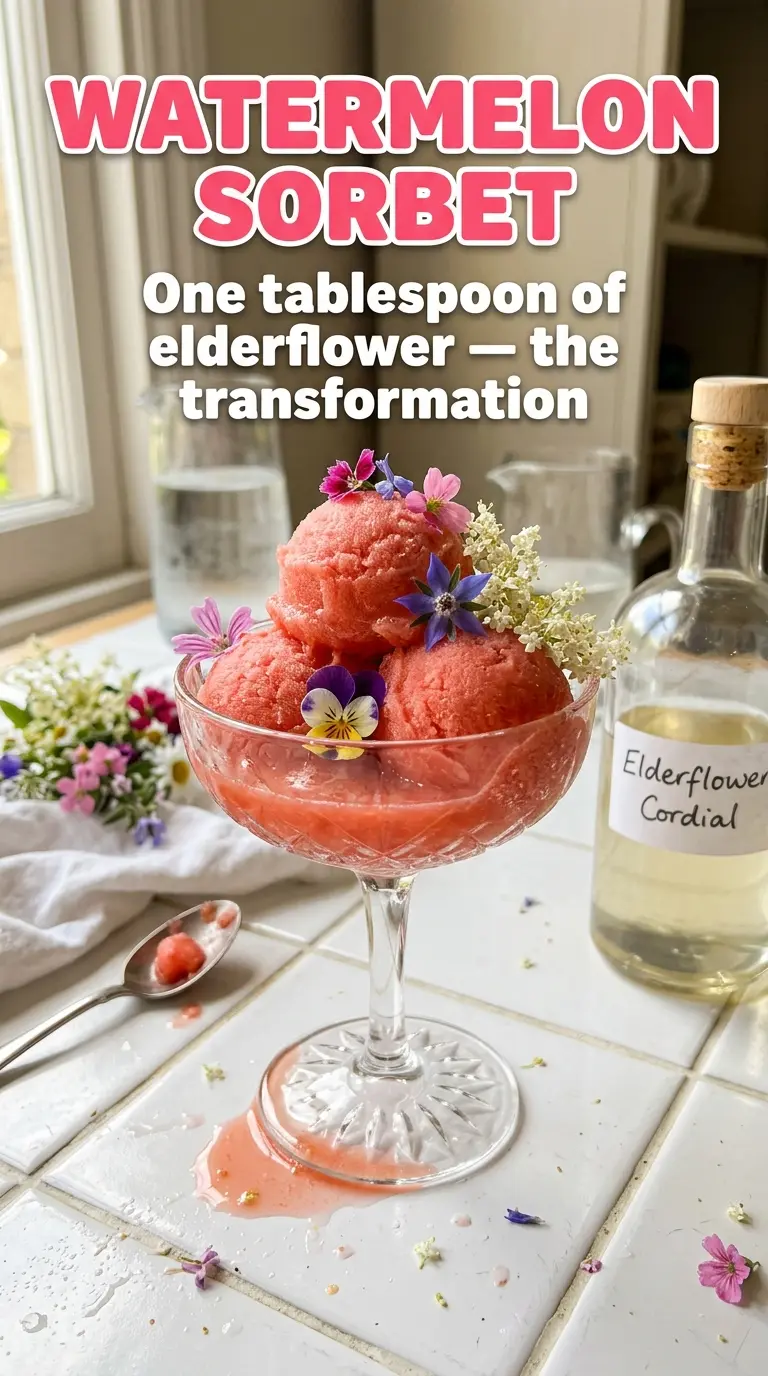
- Fresh watermelon — Use ripe, fragrant watermelon here. It should taste good on its own, because freezing doesn’t improve weak fruit. Seedless is easiest, but seeded melon works as long as you strain the puree well.
- Sugar — This is what keeps the sorbet from freezing solid. If you cut it too far, the texture gets hard and chalky. Honey or maple syrup change the flavor and won’t behave quite the same, so I’d only swap them if you want a different taste, not a better result.
- Fresh lime juice — Lime lifts the watermelon and keeps the sorbet from tasting flat. Bottled juice works in a pinch, but fresh juice gives the cleanest finish.
- Fresh elderflower cordial — This is the ingredient that makes the sorbet feel special. It adds a light honeysuckle-floral note that reads almost like a premium cocktail in frozen form. If you can’t find it, a small splash of simple syrup with a drop of orange blossom water can echo the effect, but the flavor won’t be identical.
- Pinch of salt — Salt doesn’t make this salty. It sharpens the watermelon and helps the floral note stay balanced instead of sugary.
- Edible flowers — They don’t change the flavor much, but they turn a pretty dessert into something that looks finished. Choose flowers that are labeled edible and use them sparingly so the garnish stays elegant, not crowded.
The 20 Minutes of Work That Set Up the Freeze
Blend and strain the watermelon
Blend the cubed watermelon until it’s completely smooth, then push it through a fine-mesh sieve. Don’t skip the straining step if you want a refined sorbet; the little bits of pulp are what make frozen fruit desserts feel rough and fluffy instead of clean. Press gently with a spoon, but don’t force every last fiber through. That extra push just brings the grit back.
Dissolve the sugar before it goes anywhere near the freezer
Stir the sugar, lime juice, elderflower cordial, and salt into the watermelon puree until the sugar disappears. If it still feels sandy on the spoon, keep stirring for another minute or two. Sugar crystals that don’t dissolve now can freeze into tiny hard bits later, and that’s what gives sorbet a crunchy, uneven texture.
Chill before churning or scraping
Give the base at least an hour in the refrigerator. A cold base freezes faster and more evenly, which means a smoother texture whether you’re using an ice cream maker or the fork-scrape granita method. If you start with room-temperature puree, the outside freezes first and the center stays slushy, which makes the finished texture unpredictable.
Freeze until soft-set, then serve cold bowls
Churn the mixture until it looks like soft frozen slush, or scrape it with a fork as it freezes for a more crystalline granita style. Scoop it into chilled bowls so it doesn’t melt immediately at the edges. The sorbet is best when it holds a clean scoop but still gives a little under the spoon.
Three Ways to Adapt This Watermelon Sorbet
Granita instead of sorbet
Skip the churn and freeze the mixture in a shallow dish, scraping it with a fork every 30 minutes. You’ll get a lighter, more crystalline texture with sharper edges and a little less creaminess. It’s the best option if you want a frozen dessert with almost no equipment.
Less floral, more plain watermelon
Leave out the elderflower cordial and add a little more lime juice if you want the fruit to stay front and center. The sorbet will taste cleaner and less cocktail-like, which is a good move if you’re serving it with other fruit desserts.
Vegan and dairy-free as written
This recipe is naturally dairy-free and vegan as long as your elderflower cordial fits those requirements. The ingredient list is already built for a clean frozen fruit dessert, so there’s no need to change the texture just to accommodate dietary needs.
How to make it sweeter or sharper
Taste the base before freezing and adjust in small amounts. More sugar softens the freeze and makes the sorbet rounder; more lime sharpens the finish and can make the melon taste brighter. Once it’s frozen, those adjustments are much harder to fix.
Storage and Reheating
- Refrigerator: Not recommended. Sorbet melts fast and doesn’t hold in the fridge.
- Freezer: Keeps for about 1 to 2 weeks in a covered container. Press parchment or plastic wrap directly onto the surface to limit ice crystals.
- Reheating: Not applicable. Let it sit at room temperature for 5 to 10 minutes before scooping if it gets too firm. That short rest softens the texture without melting the edges.
Questions I Get Asked About This Recipe
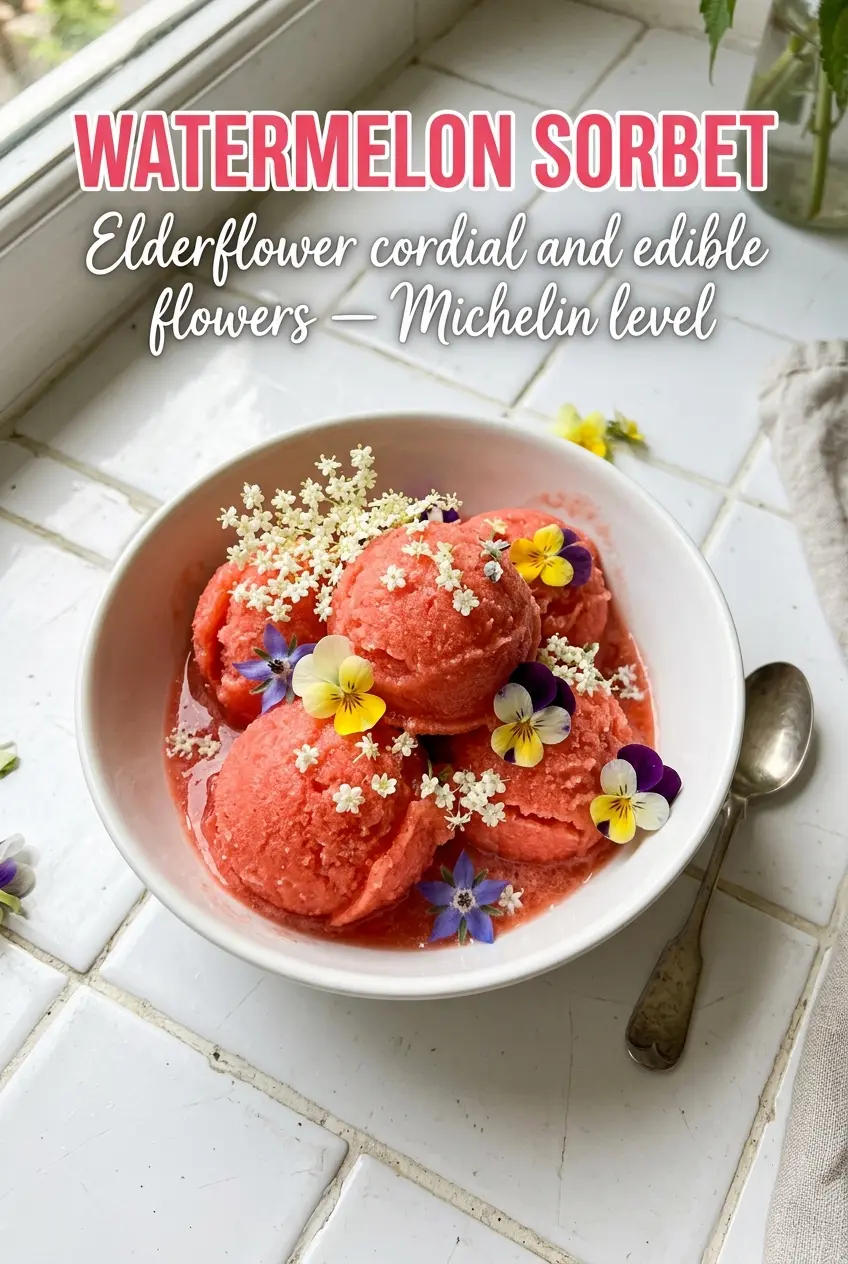
Watermelon Sorbet
Ingredients
Equipment
Method
- Blend the cubed watermelon until fully smooth, with no visible chunks. Strain the puree through a fine-mesh sieve into a bowl to remove excess fiber for a silkier sorbet.
- Stir the strained watermelon with sugar, lime juice, elderflower cordial, and salt until the sugar is dissolved. Mix thoroughly so the sweetness and floral notes are evenly distributed.
- Chill the mixture for 1 hour, uncovered or lightly covered, until cold. You should see it thicken slightly as it cools.
- Freeze the mixture for 2 hours, then churn in an ice-cream maker until it reaches a soft-scoop consistency. If you don’t have an ice-cream maker, fork-scrape the frozen mixture every 30 minutes to form small, airy ice crystals like granita.
- Scoop the sorbet into chilled bowls and garnish with edible flowers. Serve immediately for the brightest color and best texture.