
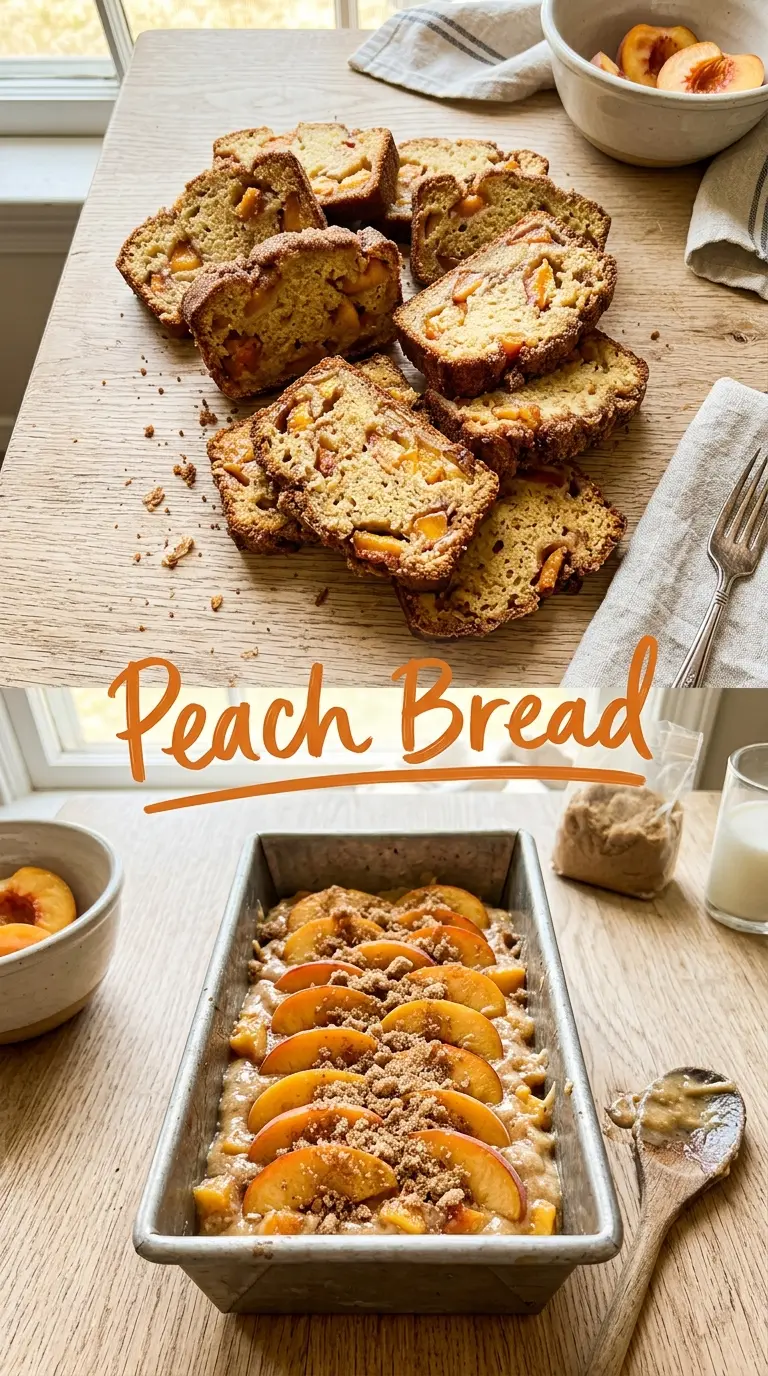
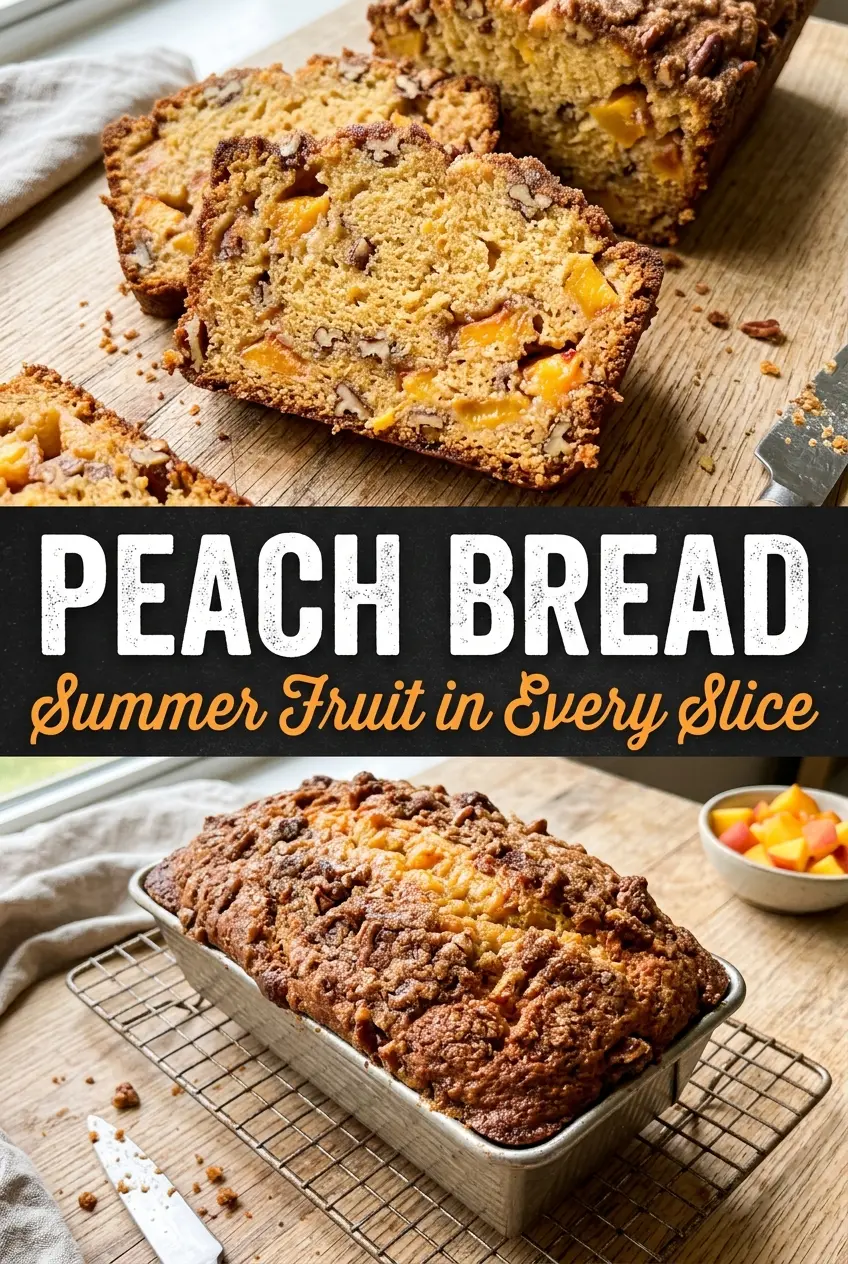
Golden-topped peach bread earns its place in the rotation because it bakes up with a soft, tender crumb and pockets of juicy fruit that stay distinct instead of melting into the batter. The brown sugar on top turns into a thin crackly lid, and that little bit of crunch against the moist loaf is what keeps each slice interesting. It tastes like a simple quick bread, but the texture has more going on than most versions.
This loaf works because the batter is built like a good cake batter first: butter and sugar are beaten until light, then eggs, sour cream, and vanilla bring richness without making the crumb heavy. The peaches go in last, after the dry ingredients are just combined, so the gluten doesn’t overdevelop and the fruit doesn’t get smashed into the batter. Patting the peaches dry matters here, too. Too much extra juice is how a peach bread turns dense and gummy in the center.
Below you’ll find the small choices that make this loaf dependable, from which peaches hold their shape best to how to know when the middle is baked through without drying out the edges.
The crumb stayed so soft and the peach pieces didn’t sink, which never happens for me. I also loved that the brown sugar topping baked into a thin crust instead of disappearing.
Save this peach bread for the days when you want a tender loaf with juicy peach pieces and that crackly brown sugar top.
Why Peach Bread Stays Dense When the Peaches Are Too Wet
Peach bread has one common failure point: the fruit releases enough juice to turn the middle heavy before the loaf sets. That’s why the peaches need to be diced small and patted dry. You want pieces that stay suspended in the batter, not fruit that leaks into the crumb and leaves you with a soggy center.
The other thing that matters is mixing restraint. Once the flour goes in, the batter only needs to come together. Overmixing builds a tougher loaf, and with peaches in the mix, that extra structure doesn’t help anything. A light hand keeps the crumb soft and lets the peach flavor stay bright instead of muddied by a gummy texture.
- Ripe but firm peaches — Soft enough to be sweet, firm enough to hold their shape. If your peaches are extra juicy, peel them, dice them, and let them drain on paper towels for a few minutes before folding them in.
- Sour cream — This is what gives the loaf its plush, moist crumb without thinning the batter. Plain Greek yogurt works in a pinch, but the bread will be a little tangier and slightly less rich.
- Brown sugar topping — It doesn’t just sweeten the top. It bakes into that thin crackly crust that makes the first bite better than the last.
What Each Ingredient Is Doing in This Peach Bread
- All-purpose flour — Gives the loaf enough structure to support the peaches without turning cakey. Bread flour isn’t needed here; it would make the crumb firmer than this recipe wants.
- Baking soda — Works with the sour cream to lift the loaf and keep it from baking up heavy. If it’s old, the bread won’t rise as well, and the center can feel flat even when it’s baked through.
- Cinnamon — It doesn’t overpower the peaches. It just adds warmth and helps the loaf taste fuller.
- Butter and sugar — Beaten together, they trap air at the start and build a lighter texture. Softened butter matters here; cold butter won’t cream properly and the loaf will bake up tighter.
- Eggs — Bind everything together and give the bread a smooth slice. Add them one at a time if you can, mixing just until the batter looks glossy after each one.
- Sour cream — Adds moisture and a little acidity, which keeps the loaf tender. Full-fat sour cream gives the best texture.
- Vanilla — Rounds out the peach flavor and keeps the loaf from tasting flat.
- Fresh peaches — They’re the whole point of the recipe, so use fruit that smells sweet and gives slightly at the stem end. Frozen peaches can work if you thaw and drain them well, but they usually soften more in the bake.
- Brown sugar — Sprinkled on top, it caramelizes and gives the loaf that thin, crackly finish.
Building the Batter Without Crushing the Peaches
Creaming the butter and sugar
Beat the softened butter and sugar until the mixture looks pale and fluffy, not just combined. That change in color tells you air has been worked into the batter, which helps the loaf rise without getting heavy. If the butter is too cold, the mixture stays grainy and you lose that lift right from the start.
Bringing in the wet ingredients
Add the eggs, vanilla, and sour cream after the butter mixture is light. The batter may look a little curdled after the eggs, and that’s fine. It comes back together once the flour goes in. If the mixture looks separated from the start, the butter was probably too cold or the eggs were too cold for the batter.
Folding in the flour and peaches
Stir in the dry ingredients only until the last streaks of flour disappear, then fold in the peaches gently. You want the batter thick enough to hold the fruit in place. If you keep stirring once the flour is incorporated, the loaf tightens up and the peaches break down into the crumb instead of staying in visible pieces.
Baking until the center is set
Spread the batter into the prepared loaf pan and sprinkle the brown sugar over the top. Bake until the top is deep golden and a tester comes out with a few moist crumbs, not wet batter. If the top browns too quickly before the center is done, lay a loose piece of foil over the loaf for the last stretch of baking.
Three Ways to Work This Peach Bread Into Your Kitchen
Make it dairy-free
Swap the butter for a good plant-based butter and use dairy-free sour cream or thick unsweetened coconut yogurt. The loaf will still be tender, but the flavor will lean a little lighter and less rich than the original.
Use nectarines instead of peaches
Nectarines work with the exact same method and give you a slightly firmer bite because there’s no fuzzy skin to soften in the batter. Keep the dice small so the fruit distributes evenly through the loaf.
Turn it into muffins
Portion the batter into a lined muffin tin and start checking them much earlier, since the smaller size bakes faster and dries out if left in too long. You’ll lose the dramatic loaf slice, but you gain more of the crackly brown sugar edge in every serving.
Storage and Reheating
- Refrigerator: Store tightly wrapped for 4 days. The crumb stays moist, but the topping softens a little after the first day.
- Freezer: Freezes well. Wrap the cooled loaf or individual slices in plastic, then foil, and freeze for up to 2 months.
- Reheating: Warm slices in a 300F oven for 8 to 10 minutes or toast them lightly. Microwaving works, but too much heat makes the peaches turn soft and the crumb rubbery.
Questions I Get Asked About This Peach Bread
Peach Bread
Ingredients
Equipment
Method
- Preheat the oven to 350F and grease a loaf pan.
- Beat butter and sugar until smooth, then add eggs, vanilla, and sour cream.
- Fold in all-purpose flour, baking soda, cinnamon, and salt until just combined.
- Fold in the diced fresh peaches.
- Pour the batter into the prepared loaf pan, then sprinkle the brown sugar (for topping) over the top.
- Bake at 350F for 55-65 minutes, until the loaf is set and the topping looks crackly and browned.
- Cool for 10 minutes before slicing so the crumb firms up.