
Tender ginger chicken meatballs turn a simple broth into a bowl that feels light but still leaves you satisfied. The meatballs stay soft and juicy, the ginger runs through both the broth and the chicken, and the baby bok choy keeps enough bite to give each spoonful a clean, fresh finish. It’s the kind of soup that tastes like you paid attention, even though it comes together in one pot with very little fuss.
What makes this version work is balance. The meatballs use egg and panko to stay tender instead of dense, and the broth gets a head start with ginger, garlic, and soy sauce so the flavor is already built before the chicken goes in. The bok choy is added at the end on purpose. If it simmers too long, the stems go limp and the greens lose their bright color fast.
Below, you’ll find the small details that keep the meatballs from turning tough and the bok choy from overcooking. There’s also a few smart ways to adapt the soup if you need to swap ingredients or want to stretch it into a fuller meal.
The broth was fragrant without being too salty, and the meatballs stayed tender all the way through. I added the bok choy at the very end like suggested and it stayed perfectly crisp on top.
Love the ginger broth and tender chicken meatballs? Save this soup for the nights when you want something warming, light, and one-pot with crisp baby bok choy.
The Secret to Tender Meatballs in Soup
Chicken meatballs go wrong in soup when they’re mixed too aggressively or simmered too hard. Ground chicken doesn’t have much fat, so once the mixture gets worked past the point of just combined, the texture turns bouncy and tight. The goal here is a mixture that holds together without becoming paste-like.
The broth matters just as much. A gentle simmer keeps the meatballs intact and gives them time to cook through without shedding into the pot. If the broth is boiling hard, the outside firms up before the center is done, and the meatballs can turn grainy instead of tender. Keep the surface moving with only a few lazy bubbles.
The bok choy needs a different kind of attention. It’s there for contrast, not to cook away into the broth. Add it only after the meatballs are done so the stems stay crisp and the leaves stay bright green.
What Each Ingredient Is Actually Doing in This Soup
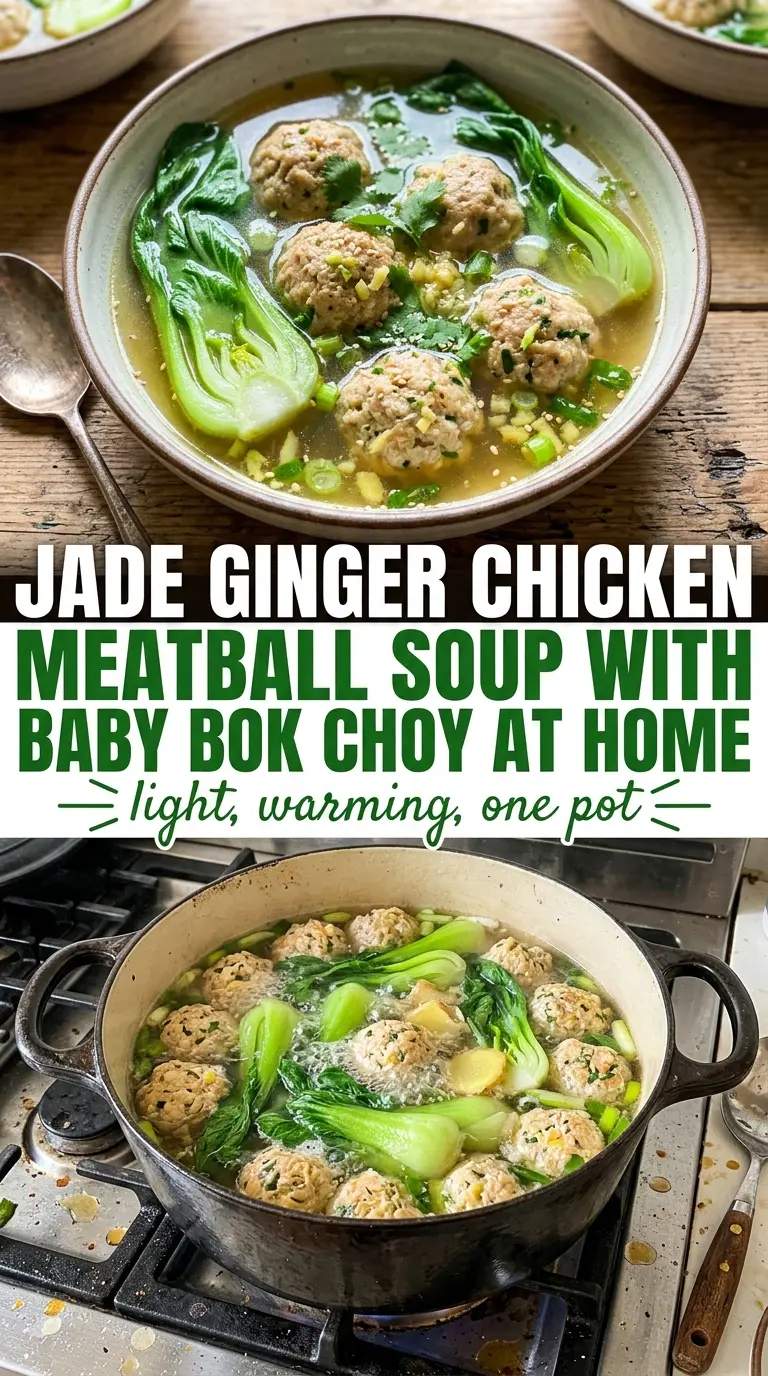
The ginger does double duty here: some goes into the meatballs for warmth from the inside, and the rest perfumes the broth so the flavor doesn’t stop at the surface. Fresh ginger is worth using here. Ground ginger won’t give you the same bright, sharp edge.
- Ground chicken — Lean chicken works best because it lets the ginger and scallions come through cleanly. If you use ground turkey, choose one that isn’t ultra-lean or the meatballs can taste dry.
- Panko breadcrumbs — These keep the meatballs light. Regular breadcrumbs work in a pinch, but panko gives a softer, less compact texture.
- Egg — The egg binds the meatball mixture without making it heavy. If you skip it, the meatballs are more likely to break apart in the broth.
- Fresh ginger and garlic — Fresh is the right choice here because the broth depends on their aroma. The garlic gets softened by the simmer and the ginger stays bright instead of muddy.
- Baby bok choy — This is the ingredient that makes the soup feel fresh and complete. Halved heads cook evenly, and the stems stay pleasantly crisp if you keep them in the broth only for the last few minutes.
- Soy sauce — It seasons the broth and gives it depth without needing a long simmer. Use low-sodium if that’s what you keep on hand, then adjust with salt at the end.
Building the Soup in the Right Order
Mix the meatball base gently
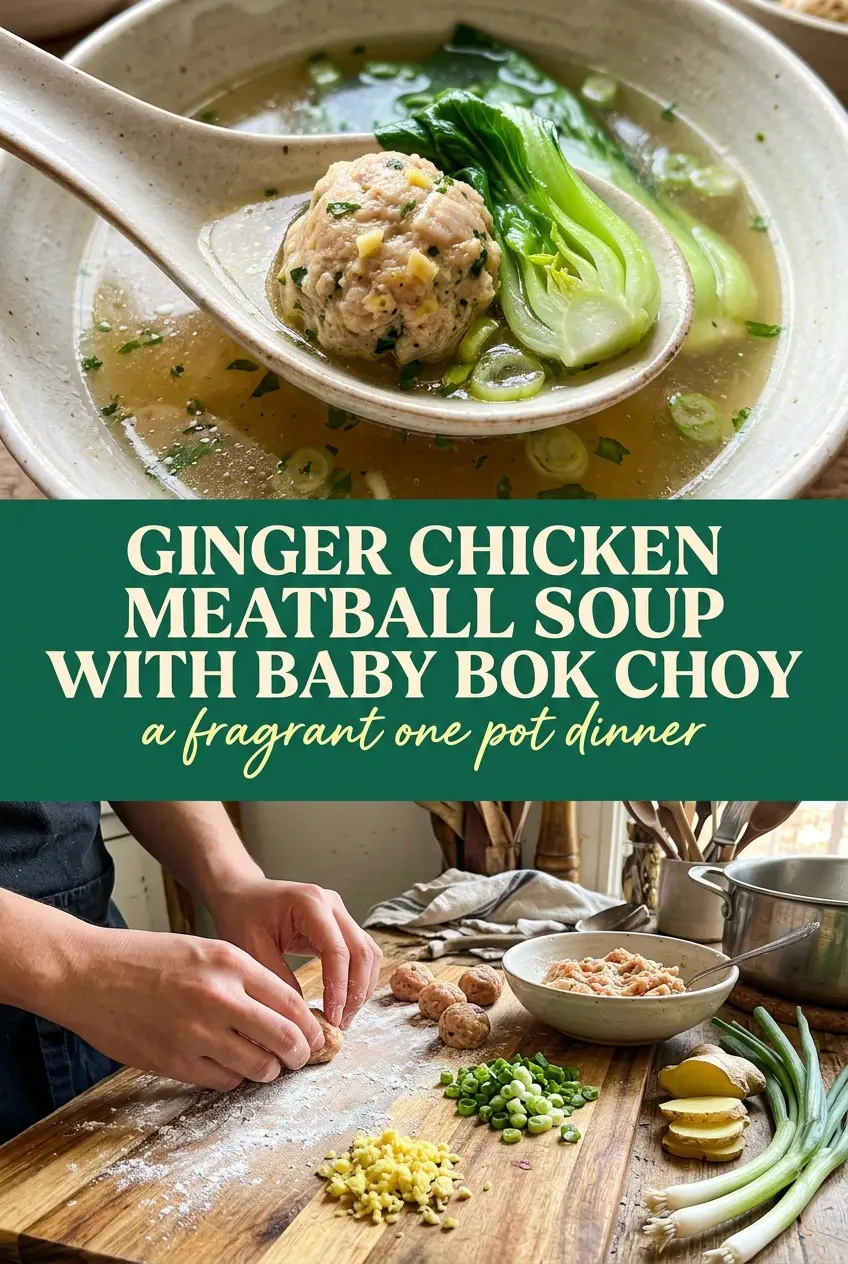
Combine the ground chicken, half the ginger, half the garlic, scallions, egg, and panko until the mixture just comes together. Stop as soon as you no longer see streaks of egg. If you keep stirring, the meatballs will turn dense instead of tender. Wet hands make rolling easier and keep the mixture from sticking to your palms.
Bring the broth to a quiet simmer
Warm the broth with the remaining ginger, garlic, and soy sauce until it’s steaming and barely bubbling. This is where the soup starts tasting layered instead of flat. If the broth is boiling hard when you add the meatballs, the outsides can toughen before the centers cook through. A gentle simmer gives you cleaner broth and better texture.
Poach the meatballs without stirring them apart
Drop the meatballs in one by one and leave them alone for a minute so they can set. After that, a very gentle stir keeps them from sticking without breaking them up. They’re done when they feel firm to the touch and no longer look pink in the center after 10 to 12 minutes. If they’re unusually large, give them another minute or two and check one before serving.
Finish with the bok choy at the end
Add the halved bok choy only after the meatballs are cooked. Two to three minutes is enough for the stems to turn tender-crisp and the leaves to wilt slightly. Any longer and the greens lose their color fast. Taste the broth at the end and add salt and pepper only after the soy sauce has had a chance to settle in.
How to Adapt This Soup When You Need a Swap
Gluten-Free Version
Use gluten-free breadcrumbs and swap in tamari for the soy sauce. The texture stays close to the original, and the broth still tastes rounded and savory. Keep the panko-style binder in place so the meatballs don’t turn compact.
Make It With Ground Turkey
Ground turkey works well if chicken isn’t available. Choose a package with some fat in it, or the meatballs can feel a little dry. The flavor shifts slightly lighter, but the ginger and garlic still carry the soup.
Add Noodles or Rice for a Bigger Dinner
Cooked rice noodles, soba, or a scoop of steamed rice turn this into a fuller meal. Add noodles right before serving so they don’t soak up too much broth. Rice can go straight into the bowl and let the hot soup do the rest.
Storage and Reheating
- Refrigerator: Store leftovers for up to 4 days. The bok choy softens a bit, but the broth and meatballs hold up well.
- Freezer: The soup freezes best without the bok choy. Freeze the meatballs and broth together, then add fresh greens when reheating.
- Reheating: Warm it over low heat until the broth is steaming and the meatballs are hot through. Don’t boil it hard or the meatballs can tighten up and the greens will go mushy.
Questions I Get Asked About This Recipe
Ginger Chicken Meatball Soup With Baby Bok Choy
Ingredients
Equipment
Method
- Combine the ground chicken, half the ginger, half the garlic, scallions, egg, and panko in a bowl, mixing until just combined. The mixture should look evenly speckled but not overworked.
- Roll the mixture into 1-inch meatballs. Arrange them as you go so they cook evenly when dropped into the broth.
- Bring the chicken broth to a simmer in a large Dutch oven over medium heat with the remaining ginger, remaining garlic, and the soy sauce. Look for steady small bubbles around the edges.
- Gently drop the meatballs into the simmering broth and cook for 10-12 minutes, until cooked through. The broth should remain at a gentle simmer, not a hard boil.
- Add the halved baby bok choy and simmer for 2-3 minutes, until just tender. The leaves should turn bright jade-green and still hold some bite.
- Season with salt and pepper before serving. Taste the broth and adjust until the flavors feel balanced and clear.