
Tangy tomatillo green chili salsa wakes up a plate in a way jarred salsa rarely does. The roasted edges bring in a little smokiness, the lime keeps everything bright, and the finished texture lands somewhere between spoonable and chunky enough to cling to chips. It’s the kind of salsa that disappears fast because it works on tacos, eggs, grilled meat, or straight from the bowl with chips.
What makes this version stand out is the quick broiler step. Tomatillos need that high heat to lose their raw sharpness, and the poblano plus jalapeño pick up just enough blistering to taste roasted instead of boiled-down. I leave the garlic in its skin while it roasts, which keeps it from burning and gives the salsa a sweeter, rounder backbone once it’s peeled and blended in.
Below you’ll find the small details that matter here: how dark the vegetables should get, when to leave a few pepper seeds in, and how to adjust the texture so the salsa lands exactly where you want it.
The salsa turned out bright and smoky, and the tomatillos broke down into the perfect texture after just a few pulses. I left a couple jalapeño seeds in like you suggested, and it had just the right kick for our tacos.
Save this roasted tomatillo salsa for taco night when you want bright heat, smoky depth, and a blender sauce that comes together in minutes.
The Broiler Is Doing More Than Just Charring the Peppers
Tomatillo salsa can go flat when the vegetables are undercooked or taste harsh when they’re just blended raw. The broiler changes both problems at once. It blisters the skins, softens the tomatillos, and concentrates the natural sugars enough to balance that sharp, green acidity that tomatillos bring to the bowl.
The other place people lose the texture is by chasing a perfectly smooth puree too fast. Pulse in short bursts and stop while you still see a little body in the salsa. If you blend until it looks airy and foamy, it can taste thin and aggressive instead of round and spoonable.
What Each Ingredient Is Actually Doing in This Dish
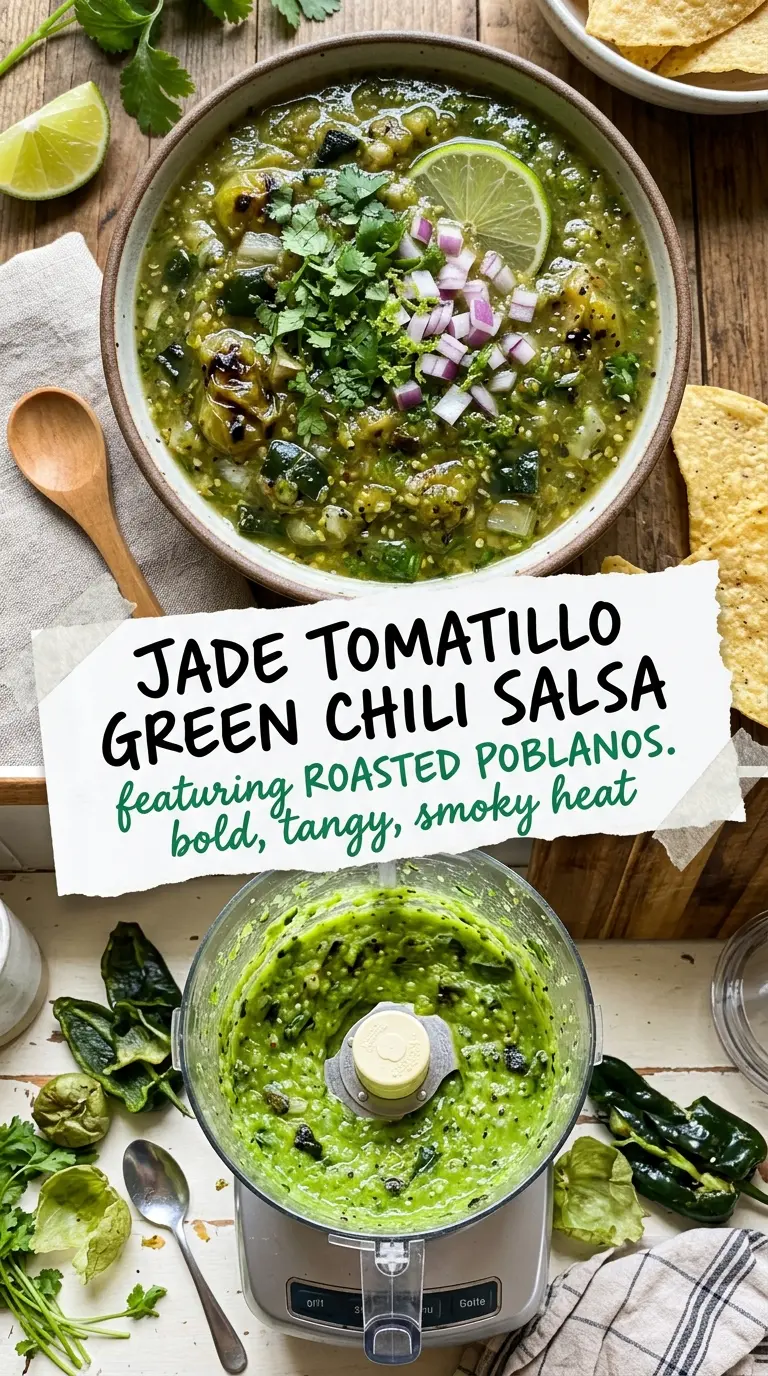
- Tomatillos — Fresh tomatillos are the center of the whole salsa. They need to be husked and rinsed because the sticky coating under the husk can taste bitter. Smaller tomatillos tend to be a little more tart, while larger ones can be milder and juicier.
- Poblano peppers — Poblanos bring smoke and a gentle pepper flavor without taking over. If you can’t find them, use an extra poblano-sized mild green chile or even a green bell pepper, but the salsa will lose that roasted depth.
- Jalapeño — This is the heat source, and the seeds matter. Leave some in for a hotter salsa, or remove them for a softer finish. If you want a sharper kick, use a serrano, but expect a much hotter result.
- Garlic — Roasting the cloves unpeeled keeps them sweet and prevents scorching. Raw garlic in this salsa can bite back hard, so don’t swap it in unless you want a much punchier, more aggressive sauce.
- Lime juice and cilantro — Add both after roasting so they stay bright and fresh. Cilantro gets muddy if it cooks, and lime loses its snap once heated too long.
How to Roast and Blend This Salsa Without Losing the Bright Green Edge
Blister the Vegetables, Don’t Steam Them
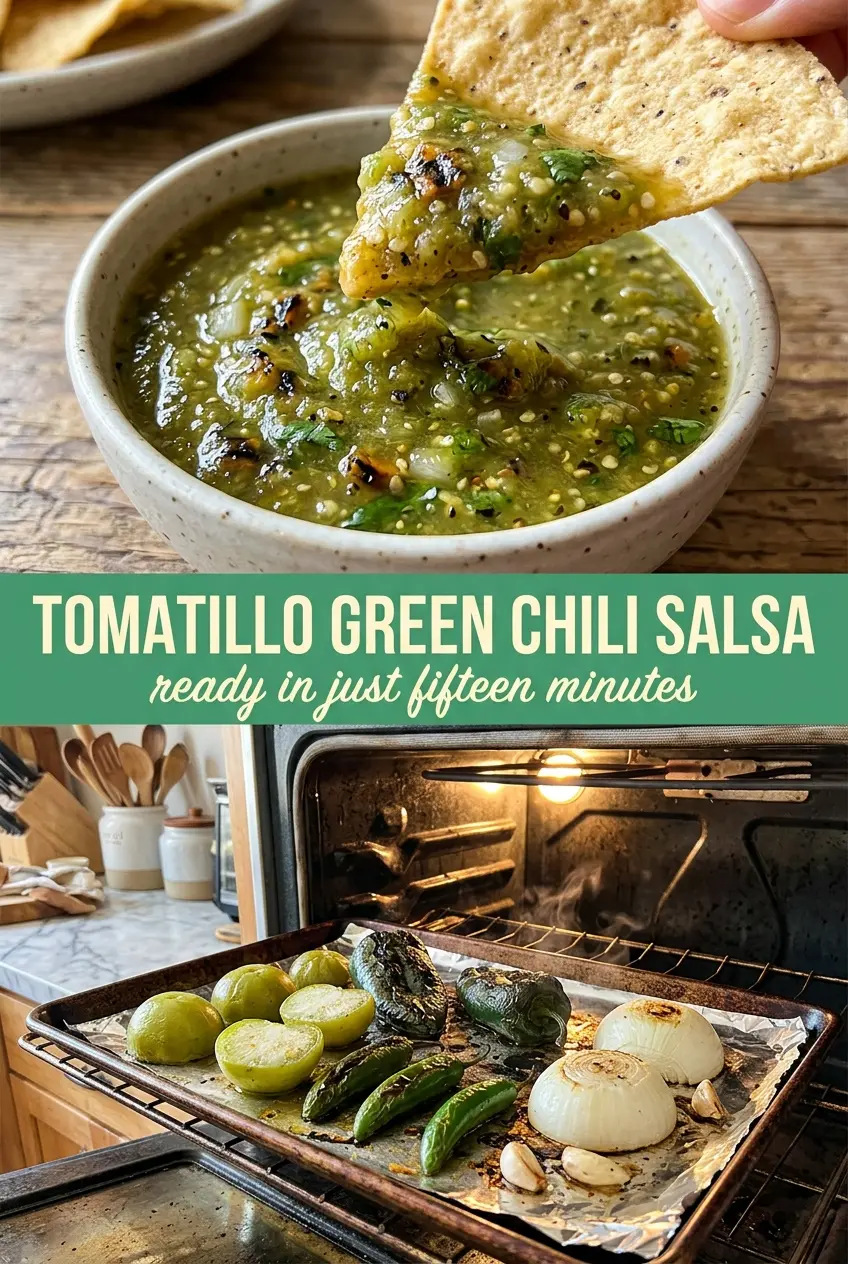
Spread the tomatillos, poblanos, jalapeño, onion, and garlic in a single layer under a hot broiler. Give them space so the heat can hit the surfaces directly; crowding them traps moisture and leaves you with soft vegetables that never pick up much char. You’re looking for blistered skins, dark spots on the tomatillos, and pepper skins that have loosened and wrinkled.
Let the Garlic Cool Before You Peel It
The garlic cloves roast in their skins so the outside doesn’t burn before the inside turns sweet. Let them cool just enough to handle, then squeeze the softened cloves out. If the garlic looks dried out or blackened, it stayed under the broiler too long and will read bitter in the finished salsa.
Pulse Until the Texture Matches How You’ll Serve It
Combine the roasted vegetables with cilantro and lime juice, then pulse in short bursts. Stop early if you want a chunky salsa for chips or go a little longer if you want something smoother for spooning over tacos. If the mixture looks foamy, the blender ran too long; let it settle, then pulse a few more times instead of keeping the motor going.
Season at the End, Not Before
Tomatillos can vary a lot in acidity, so salt should go in after blending. A few pinches can turn the salsa from sharp to balanced faster than you’d expect. If it tastes flat, it usually needs salt, not more lime.
What to Change When You Want It Milder, Hotter, or Dairy-Free
Milder Family-Style Salsa
Remove the jalapeño seeds and ribs before roasting, and peel the poblano completely if you want a softer pepper flavor. The salsa will still taste green and bright, but the heat drops enough that it works for people who usually avoid spicy food.
Extra-Heat Version
Swap the jalapeño for a serrano or add half of one more after tasting the first blend. That keeps the roasted flavor intact while pushing the salsa into sharper, hotter territory without making it one-dimensional.
Dairy-Free and Naturally Vegan
This salsa already fits a dairy-free and vegan table as written. The only thing to watch is what you serve it with — the salsa itself stays bright, simple, and plant-based without any changes.
Chunky Dip Instead of Smooth Sauce
Use short pulses and stop before the mixture fully loosens. That leaves small bits of pepper and tomatillo in the salsa, which makes it better for scooping with chips and gives the bowl a fresher, more rustic texture.
Storage and Reheating
- Refrigerator: Store in a covered container for up to 5 days. The flavor deepens as it sits, and the salsa may loosen a little from the tomatillos.
- Freezer: It freezes well for about 2 months in a sealed container, though the texture softens slightly after thawing. Stir it well after defrosting because some separation is normal.
- Reheating: This salsa is usually best served cold or room temperature, not heated. If you want it warm for a sauce, warm it gently on low heat and don’t let it boil, or the fresh green flavor will dull fast.
Answers to the Questions Worth Asking
Tomatillo Green Chili Salsa
Ingredients
Equipment
Method
- Preheat the broiler.
- Arrange the tomatillos, poblanos, jalapeno, onion, and garlic on a baking sheet.
- Broil for 8-10 minutes, until charred and blistered, flipping halfway through.
- Let the roasted vegetables cool slightly, then peel the garlic and remove the pepper skins and seeds if a milder salsa is preferred.
- Combine the roasted vegetables, cilantro, and lime juice in a blender or food processor.
- Pulse until the desired consistency is reached.
- Season with salt to taste.