
Golden, buttery bread wrapped around a molten cheese center is already enough to win dinner, but this garlic bread grilled cheese with marinara takes the idea one step further. The outside crisps up into a deep, garlicky crust while the inside stays stretchy and soft, so every bite gives you crunch first and then that slow cheese pull people always hope for but don’t always get.
What makes this version work is the combination of two cheeses and a very simple skillet method. Mozzarella brings the long melt and pull, while cheddar adds sharper flavor so the sandwich doesn’t taste flat. Garlic butter belongs on the outside of the bread, not inside the sandwich, because it browns better and keeps the bread from getting soggy before the cheese has time to melt.
Below, I’ll walk through the exact pan heat that keeps the bread from burning before the center melts, plus a few swaps if you want to change the cheese or make it a little more hearty. The marinara dip matters here too. It cuts through the richness and makes the whole sandwich feel a little more complete.
The bread got perfectly crisp and the cheese melted all the way through without the outside burning. Dipping it in warm marinara made it taste like the best part of garlic bread and pizza in one sandwich.
Crispy garlic bread grilled cheese with marinara is the kind of comfort sandwich worth keeping on repeat.
The Secret to a Crisp Shell and a Fully Melted Center
The biggest mistake with grilled cheese is rushing the heat. If the skillet is too hot, the bread goes from pale to burnt before the cheese has time to loosen and melt. Medium-low heat gives the bread time to turn evenly golden while the cheese turns soft and stretchy all the way through.
Pressing the sandwich gently once it hits the pan helps the bread make contact without squeezing the filling out. That’s the sweet spot: enough pressure to create an even crust, not enough to flatten the sandwich into a greasy sheet. Let the sandwich sit long enough to build color before you flip it. Moving it too early tears the crust and keeps it patchy.
What Each Ingredient Is Doing in This Sandwich
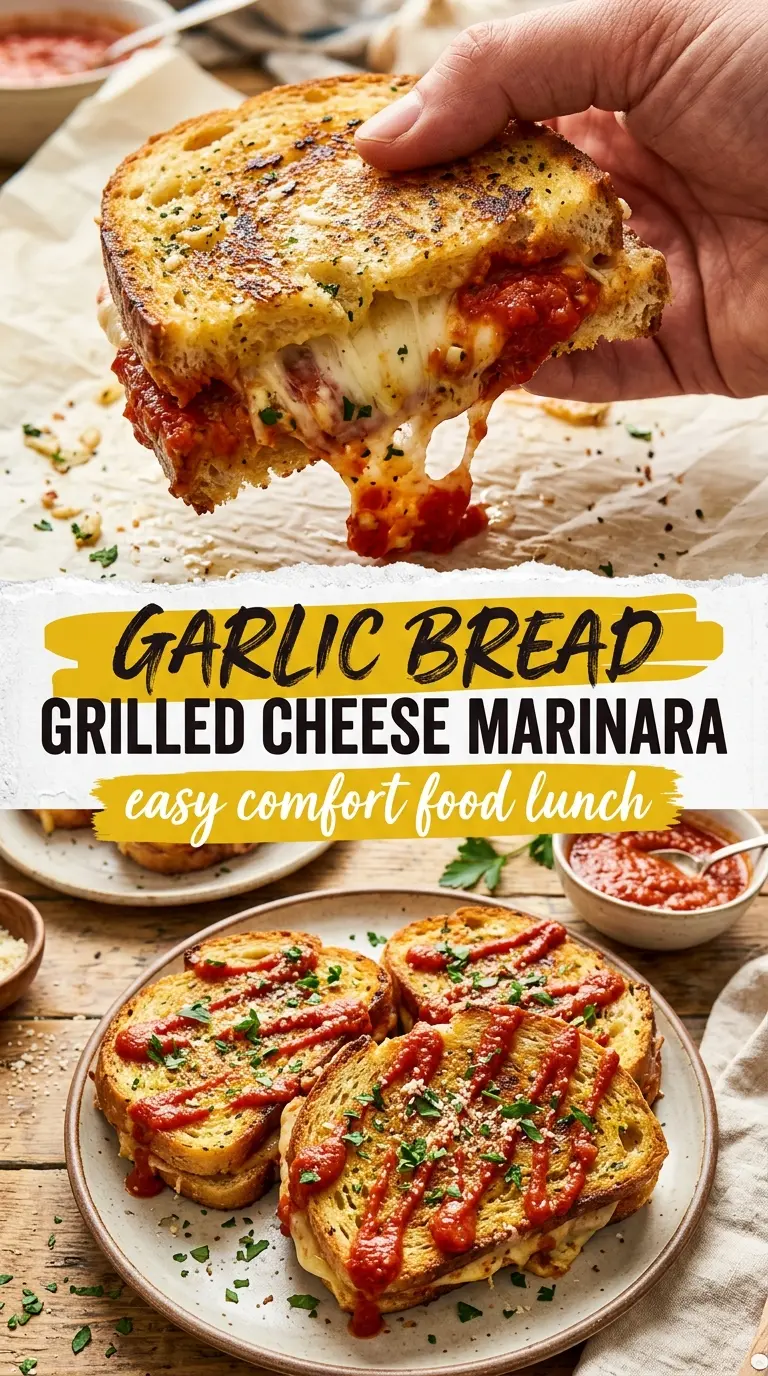
- Texas toast — Thick bread gives you enough structure to hold the cheese and enough surface area to brown into a sturdy crust. Thin sandwich bread can work in a pinch, but it softens faster and tears more easily when you flip it.
- Garlic butter — This is where the flavor starts. Use a garlic butter that spreads easily so it coats the bread in a thin, even layer; too much can make the outside greasy before it crisps.
- Mozzarella — This is the stretch factor. Shred it yourself if you can, because pre-shredded cheese is often coated with starch and doesn’t melt as smoothly.
- Cheddar — Mozzarella makes the pull, but cheddar gives the sandwich its backbone. A medium cheddar melts well and keeps the flavor from turning bland.
- Marinara — A thicker marinara works best for dipping because it clings to the sandwich instead of running all over the plate. If yours is very acidic, warm it with a pinch of sugar or a small pat of butter to round it out.
How to Build the Sandwich So the Cheese Melts Before the Bread Burns
Butter the Outside, Not the Inside
Spread the garlic butter on the outer sides of the bread slices in an even layer. That’s what gives you the crisp, seasoned crust once the bread hits the skillet. If you put the butter inside, it melts into the cheese and leaves the outside pale, which is the fastest way to end up with a sandwich that tastes rich but looks underdone.
Stack the Cheese with Purpose
Layer the mozzarella and cheddar evenly between the bread slices so there aren’t empty corners. Uneven cheese distribution leaves dry spots that brown faster than the rest of the sandwich. If you’re using a lot of cheese, keep it inside the bread edges by a small margin; melted cheese that leaks onto the pan burns and sticks.
Cook Low and Steady
Set the sandwich in a skillet over medium-low heat and leave it alone until the underside is deeply golden. A gentle sizzle is what you want, not aggressive popping. Flip too early and the bread won’t have enough structure; flip too late and the first side can go from golden to bitter in a minute.
Press for an Even Melt
Use a spatula to press the sandwich lightly after flipping, just enough to help the layers settle together. The center should feel soft when you touch the top, not rigid. If the bread browns before the cheese melts, lower the heat and cover the pan for a minute or two so the trapped steam finishes the job without softening the crust too much.
Three Ways to Change It Without Losing the Good Part
Gluten-Free Bread Swap
Use a sturdy gluten-free sandwich bread or gluten-free artisan loaf with enough body to hold up to the cheese. Some gluten-free breads brown faster, so keep the heat a little lower than you would with Texas toast. The texture won’t be exactly the same, but the crisp outside and melty center still work well.
Dairy-Free Version
Use a dairy-free butter substitute and a plant-based meltable cheese blend that’s made for sandwiches, not just topping pizza. Some vegan cheeses melt into a softer, less stretchy layer, so a lower heat and a covered pan help them come together before the bread over-browns. The marinara still gives you the bright finish this version needs.
Add Pepperoni or Cooked Bacon
A thin layer of pepperoni or a few strips of crisp bacon turns this into a more filling sandwich without changing the method. Keep the add-ins thin and dry so the bread still browns properly. Too much filling makes the sandwich slide around in the pan and can keep the cheese from sealing the slices together.
Storage and Reheating
- Refrigerator: Store leftover sandwiches for up to 2 days. The bread will soften a little as it sits.
- Freezer: Freezing isn’t ideal for the fully assembled sandwich because the bread can turn spongy when thawed. If you need to prep ahead, freeze the cooked sandwich tightly wrapped and re-crisp it from frozen.
- Reheating: Warm it in a skillet over low heat or in a toaster oven until the outside crisps again and the center loosens. The common mistake is using the microwave, which turns the bread limp and makes the cheese greasy instead of melted.
Answers to the Questions Worth Asking
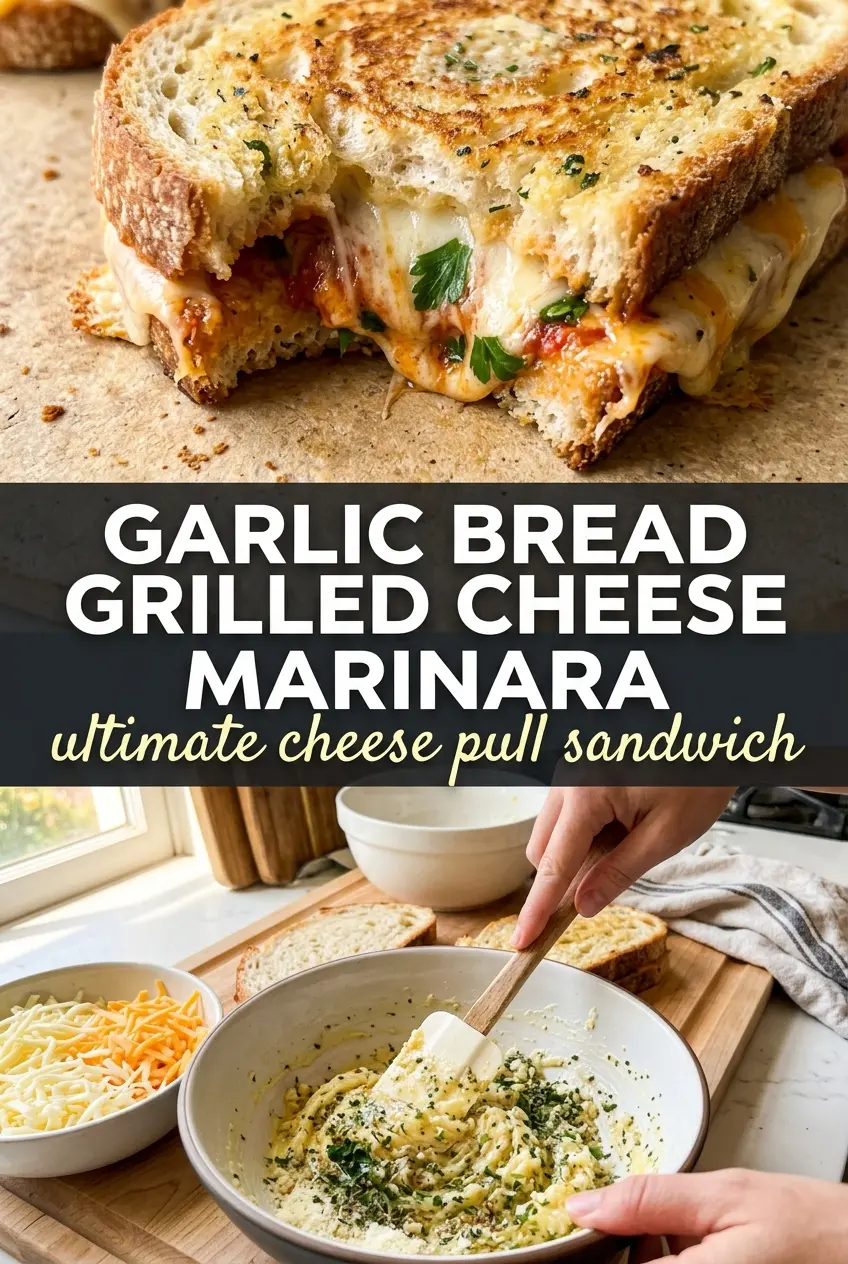
Garlic Bread Grilled Cheese with Marinara
Ingredients
Equipment
Method
- Spread garlic butter on one side of each Texas toast slice in an even layer so the edges brown uniformly.
- Layer shredded mozzarella and cheddar between the slices so the cheese reaches close to the crust for consistent melting.
- Preheat a cast iron skillet over medium heat until hot, then place the sandwiches in the pan and cook 4–5 minutes per side, flipping once, until golden.
- Press gently with a spatula for 30–45 seconds right after flipping so the layers melt together into an even pull.
- Serve the grilled cheese warm immediately with marinara for dipping on the side.