
Deeply caramelized onions tucked into juicy chicken breast, finished with a savory pan gravy, turn this French onion stuffed chicken into the kind of dinner that gets quiet at the table for the first few bites. The filling tastes rich and layered instead of one-note because the onions are cooked all the way down until they turn jammy and sweet, then balanced with Gruyère and just a little blue cheese for that unmistakable French onion edge.
The trick is treating each part like it matters on its own. The onions need time, not heat, so they soften and brown instead of scorching. The chicken needs a shallow pocket, not a full split, so the filling stays put and the meat still cooks evenly. And the gravy? It comes from the browned bits left in the pan after searing, which is exactly where the best flavor is hiding.
Below you’ll find the small details that keep the filling from leaking, the sear from drying out, and the gravy from tasting thin. If you’ve made stuffed chicken before and ended up with bland filling or a pan full of escaped cheese, this version fixes both problems.
The onions cooked down into this sweet, jammy filling and the little bit of blue cheese made it taste restaurant-level without overpowering anything. My gravy thickened up beautifully from the pan drippings too.
Save this French Onion Stuffed Chicken for the night you want caramelized onions, melty cheese, and a pan gravy that pulls the whole dish together.
The Onion Filling Needs More Time Than the Chicken Does
The biggest mistake with stuffed chicken is trying to build the filling at the same pace as the meat. That usually leads to onions that still taste sharp, cheese that leaks out before the chicken is cooked, and a center that never gets the depth you wanted. The onions in this recipe need to be fully caramelized first, which means letting them go until they’re deep golden, soft enough to collapse on a spoon, and sweet at the edges.
That extra time pays off in every bite. Once the onions are cooked down and mixed with the cheeses, the filling tastes like French onion soup condensed into one rich pocket. The chicken only needs enough cooking to reach 165°F, so the real work happens before it ever goes into the oven.
- Yellow onions — These bring the sweetness and body that make the filling taste built-in rather than piled on. Thin slices matter here because they cook down evenly and caramelize without leaving chunky raw edges.
- Gruyère — This is the cheese that gives the filling its classic nutty melt. If you swap it, use another good melting cheese with some character, not something bland and rubbery.
- Blue cheese — The small amount here is what keeps the filling from tasting flat. It doesn’t dominate; it adds the funky edge that makes the whole dish taste more complete. If blue cheese isn’t your thing, use a little extra Gruyère and a pinch of parmesan for sharper depth.
- Beef broth — This does two jobs: it loosens the onions as they caramelize and becomes the base for the gravy later. Use a broth you don’t mind tasting plain, because its flavor concentrates as it cooks.
- Chicken breasts — Large, even pieces work best because they hold a pocket without splitting open. If yours are small, pound them lightly first so they can be stuffed without tearing.
What Actually Happens Between the Sear and the Oven
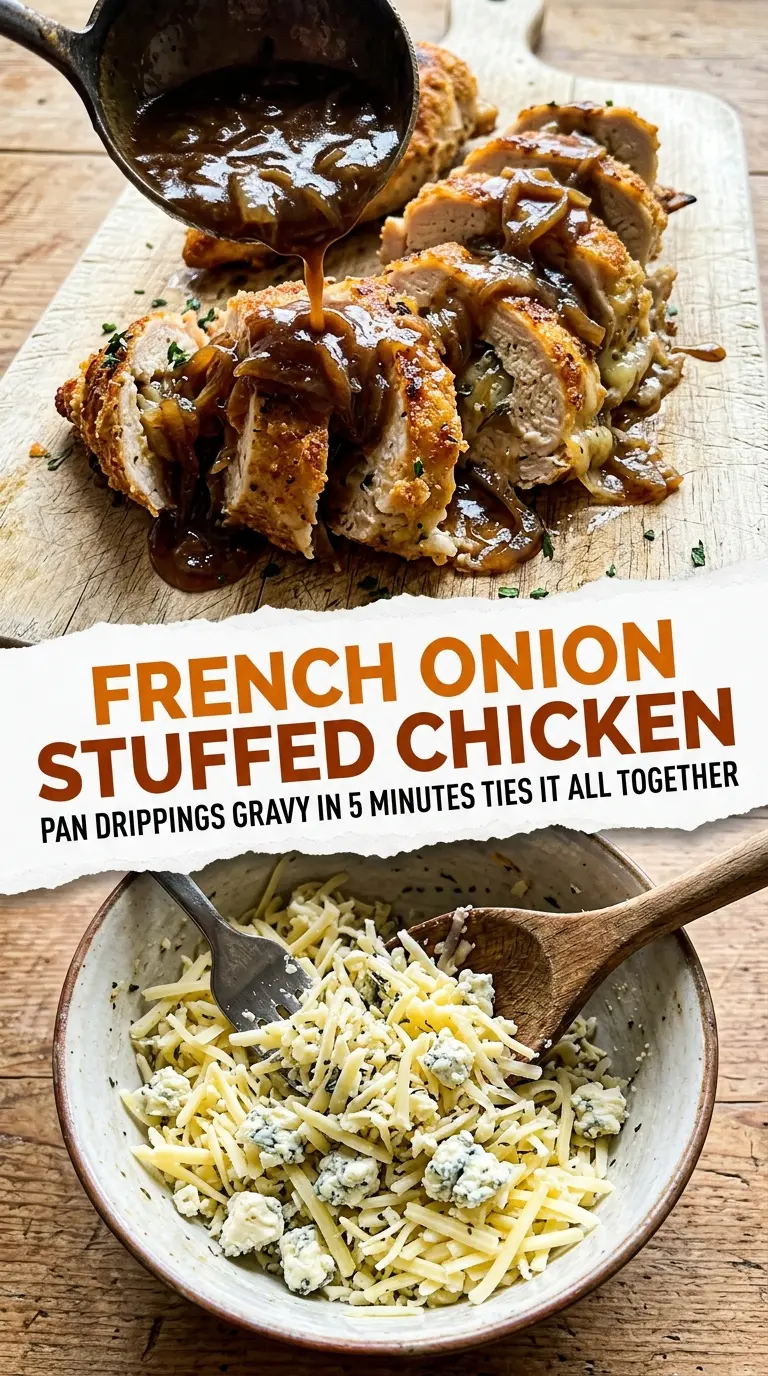
Caramelizing the onions first gives the filling its backbone. Cook them in butter over medium heat and keep stirring just often enough to prevent burning on the bottom of the pan. They’ll soften, turn translucent, then slowly go from pale gold to deep brown. If they start to catch too fast, lower the heat and add a splash of broth so the sugars don’t scorch.
When the filling is cool enough to handle, mix in the cheeses. That matters more than it sounds like it should, because hot onions can start melting the cheese before they ever reach the chicken pocket and turn the stuffing messy instead of contained. The stuffing should be thick and spoonable, not runny.
The gravy comes from the same pan you sear the chicken in, so don’t wash it out. Those browned bits are concentrated flavor. Once the broth goes in, they lift off the pan and turn into a quick sauce that makes the whole plate taste finished.
Getting the Stuffing, Sear, and Gravy in the Right Order
Cook the Onions Until They Turn Jammy
Melt the butter, add the sliced onions, and give them time to collapse into a soft, sweet mass. Stir often enough to keep the edges from burning, but not so often that they never get a chance to brown. By the end, they should look glossy and deeply golden, with almost no liquid left in the pan. Add the broth and thyme near the end so they pick up every bit of flavor without watering the onions back down.
Build the Filling Before You Touch the Chicken
Let the onions cool for a few minutes, then fold them with the Gruyère and blue cheese. If you stuff the chicken while the onions are still piping hot, the cheese starts to melt and squeeze out during searing. The filling should hold together when pressed, with enough texture that it doesn’t slide out of the pocket.
Sear for Color, Then Finish in the Oven
Season the chicken well, cut a pocket into the thickest part, and stuff it without overfilling. A toothpick helps hold the opening closed, but don’t pack so much filling in that the chicken splits as it cooks. Sear the breasts for about 3 minutes per side until a deep golden crust forms, then move them to the oven and bake just until the center reaches 165°F. If the exterior is browning too fast before the center is done, lower the oven rack rather than turning the heat up.
Make the Gravy While the Chicken Rests
Resting matters here because the juices need a minute to settle back into the meat. While the chicken rests, add broth and Worcestershire to the pan drippings and simmer until the sauce reduces slightly and tastes round, not thin. If the gravy seems watery, keep simmering a few more minutes; if it tastes flat, it usually needs a pinch of salt more than anything else.
How to Adapt This for Different Tables and Different Diets
Make It Without Blue Cheese
Use all Gruyère if you want a milder filling. You lose the sharp, funky note that makes this taste closer to classic French onion soup, but the dish still works well and stays rich and melty.
Gluten-Free Version
This recipe is naturally close to gluten-free as long as your beef broth and Worcestershire are certified gluten-free. The method doesn’t change, and the gravy still thickens slightly as it simmers from the reduction.
Use Chicken Thighs Instead
Boneless thighs can be stuffed in a shallow fold rather than a deep pocket, but they won’t hold as much filling. They stay juicier than breasts, though, and they give you a little more forgiveness if you cook them a minute too long.
Storage and Reheating
- Refrigerator: Store the chicken and gravy in separate airtight containers for up to 3 days. The filling will firm up, but the flavor holds well.
- Freezer: The cooked chicken freezes decently, though the onions soften more after thawing. Freeze without the gravy for the best texture, then make a fresh pan sauce if you can.
- Reheating: Warm covered in a 325°F oven until hot in the center, or reheat gently in a skillet with a spoonful of broth. High heat dries out the chicken and can cause the cheese to leak out again.
Answers to the Questions Worth Asking
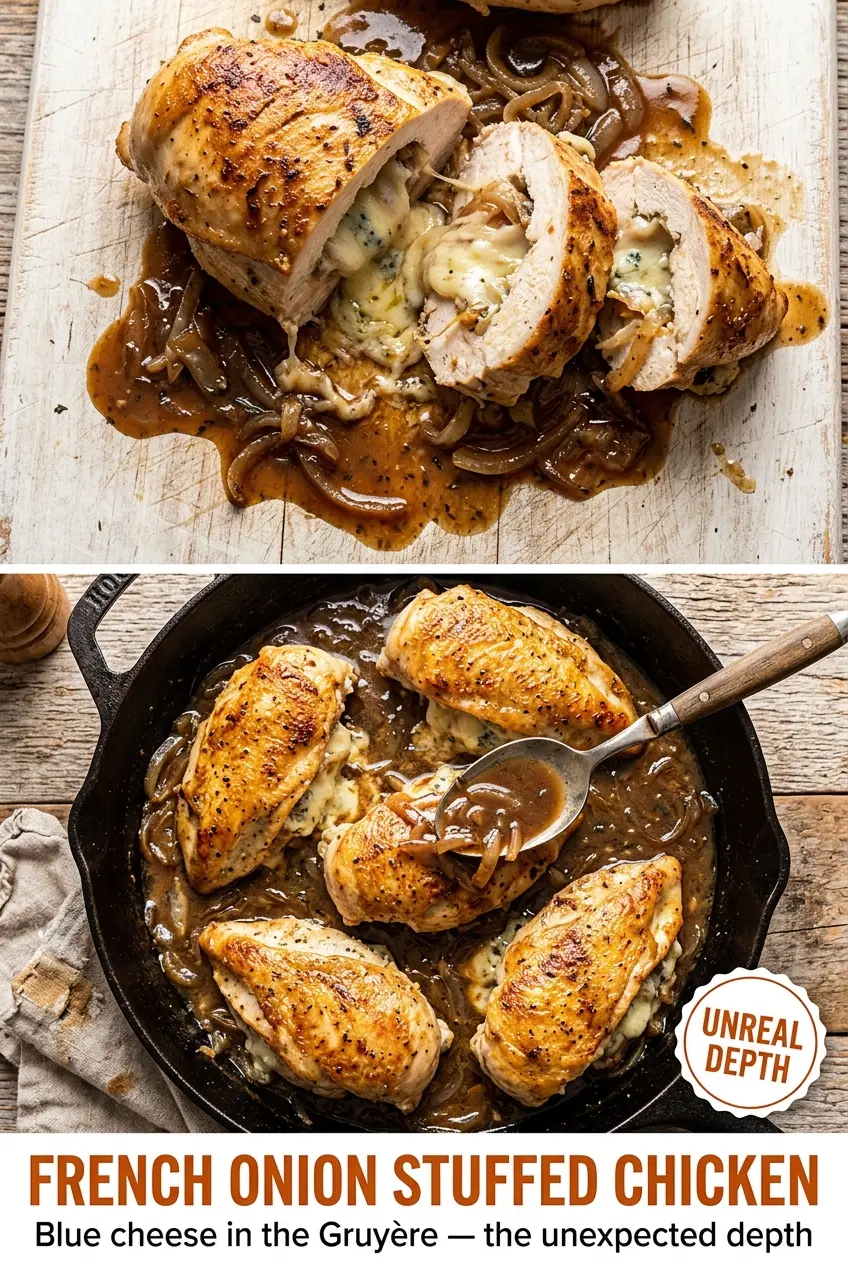
French Onion Stuffed Chicken
Ingredients
Equipment
Method
- Heat 3 tbsp butter in a skillet, then cook 2 large onions, stirring occasionally, for 40 min until deep golden.
- Add 1/2 cup beef broth and 1 tsp fresh thyme, then simmer for 5 min.
- Cool the onion mixture until warm rather than hot so it can be stuffed into the chicken.
- Preheat the oven to 375°F and line a sheet pan for baking.
- Cut pockets into 4 large boneless chicken breasts, then season with salt, pepper, and garlic powder.
- Mix 3 oz Gruyère with 1 oz blue cheese, then stuff the pockets with the cooled onion mixture and the cheese blend.
- Secure each stuffed chicken breast with toothpicks and lightly drizzle with 1 tbsp olive oil.
- Sear the stuffed chicken for 3 min per side in the skillet until browned.
- Bake for 20-25 min at 375°F until the thickest part reaches 165°F.
- Rest the chicken briefly before serving.
- Pour off the pan drippings and simmer them with 1 cup beef broth and 1 tsp Worcestershire for 5 min to thicken slightly.
- Drizzle the onion gravy over the chicken and serve.