
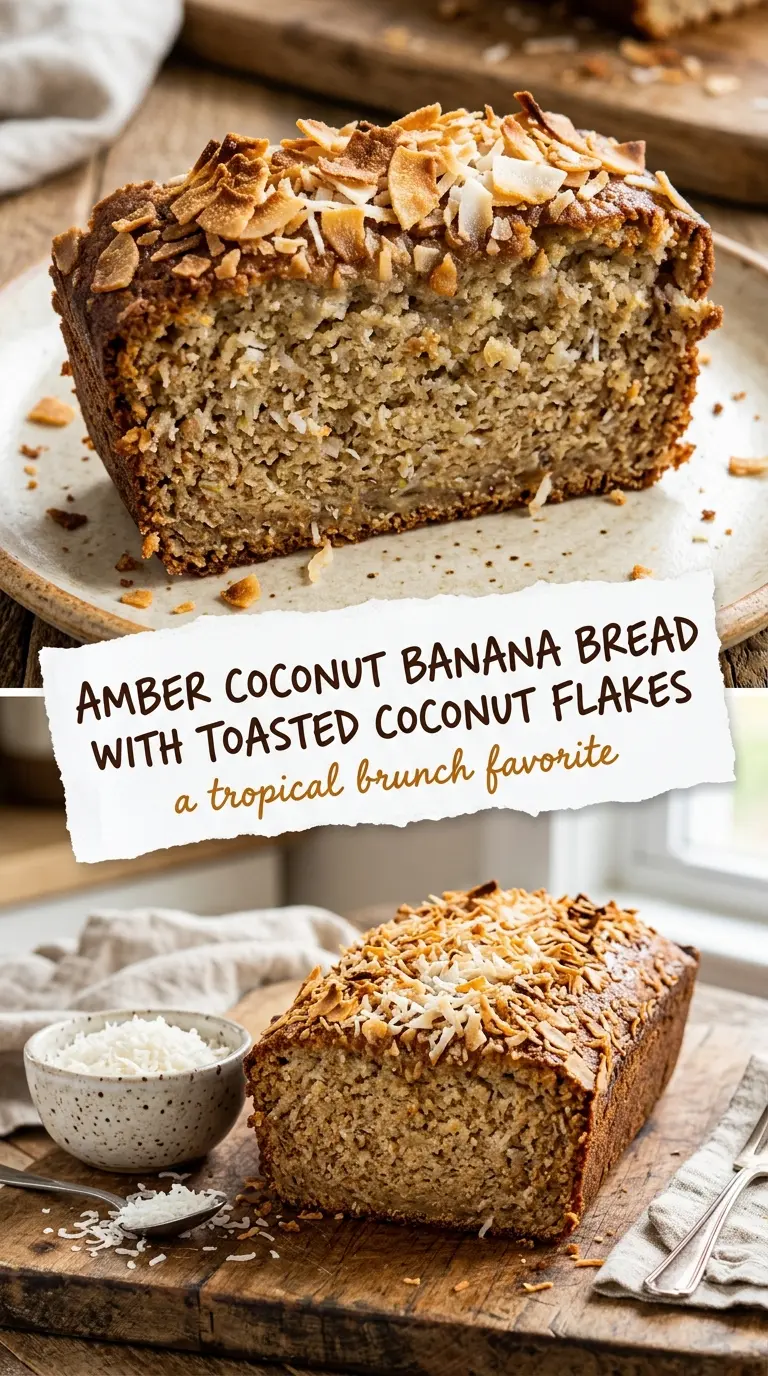
Toasted coconut turns banana bread into something that tastes familiar at first bite and a little more special by the second. The loaf stays soft and moist from the ripe bananas, but the coconut gives it a chewy edge and a warm, almost caramelized finish on top. That contrast is what keeps a plain banana bread from feeling flat.
The best part is that the batter stays simple. Coconut oil brings a gentle tropical note without overpowering the bananas, and the shredded coconut inside the loaf adds texture without making the crumb heavy. The topping is worth the extra handful because it browns into crisp little flakes that give each slice a better finish than plain sugar ever could.
Below, I’ve included the small details that matter most here: how ripe the bananas should be, why the batter should be mixed just until combined, and the easy move that gives the coconut topping more flavor before it even hits the oven.
The coconut on top got perfectly toasted and the loaf stayed moist for days. I used extra ripe bananas and the texture came out tender, not gummy.
Save this coconut banana bread for the slices with toasted coconut edges and a soft, banana-rich crumb.
The Part That Keeps This Loaf Moist Instead of Dense
Banana bread gets heavy when it’s overmixed or when the bananas aren’t ripe enough to carry the batter. Here, the coconut adds texture, but it also means you need enough moisture from the bananas to keep the crumb soft. If the bananas are still a little firm, the loaf bakes up less sweet and more bready, which is usually not what people want.
The other thing that matters is how the batter is handled. Once the flour goes in, the goal is to stop as soon as the dry streaks disappear. Stirring past that point develops too much gluten and turns a tender loaf into something tougher and more compact than it should be.
What Each Ingredient Is Actually Doing in This Loaf
- Very ripe bananas — These bring sweetness, moisture, and the soft texture that makes the loaf slice cleanly. Spotty, heavily speckled bananas are ideal. If yours are still yellow, roast them in the peel at 300°F until the skins darken and the flesh softens.
- Coconut oil — This gives the loaf a subtle coconut aroma and a tender crumb. Melt it first, then let it cool slightly so it doesn’t scramble the egg. Neutral oil works in a pinch, but the flavor gets less distinctive.
- Shredded coconut — This is where the texture comes from. Sweetened coconut makes the loaf a little richer and more dessert-like, while unsweetened coconut keeps the sweetness in check. Toasting a little extra for the top adds color and a deeper coconut note.
- All-purpose flour — Standard all-purpose flour gives enough structure without making the bread tough. Swap in a 1:1 gluten-free blend only if it includes xanthan gum; otherwise the loaf can crumble when sliced.
- Baking soda — Banana bread needs this lift. It reacts with the acidity in the bananas and keeps the loaf from baking up flat. Don’t replace it with baking powder unless you also adjust the amount, because the rise won’t be the same.
Building the Batter Without Beating the Texture Out of It
Mix the wet ingredients first
Start by whisking the mashed bananas with the coconut oil, sugar, and egg until the mixture looks smooth and glossy. Some small banana bits are fine, but you don’t want big lumps hiding in the batter because they can create wet pockets in the finished loaf. If the coconut oil is too hot, it can cook the egg on contact, so let it cool until it’s just warm, not steaming.
Fold in the dry ingredients gently
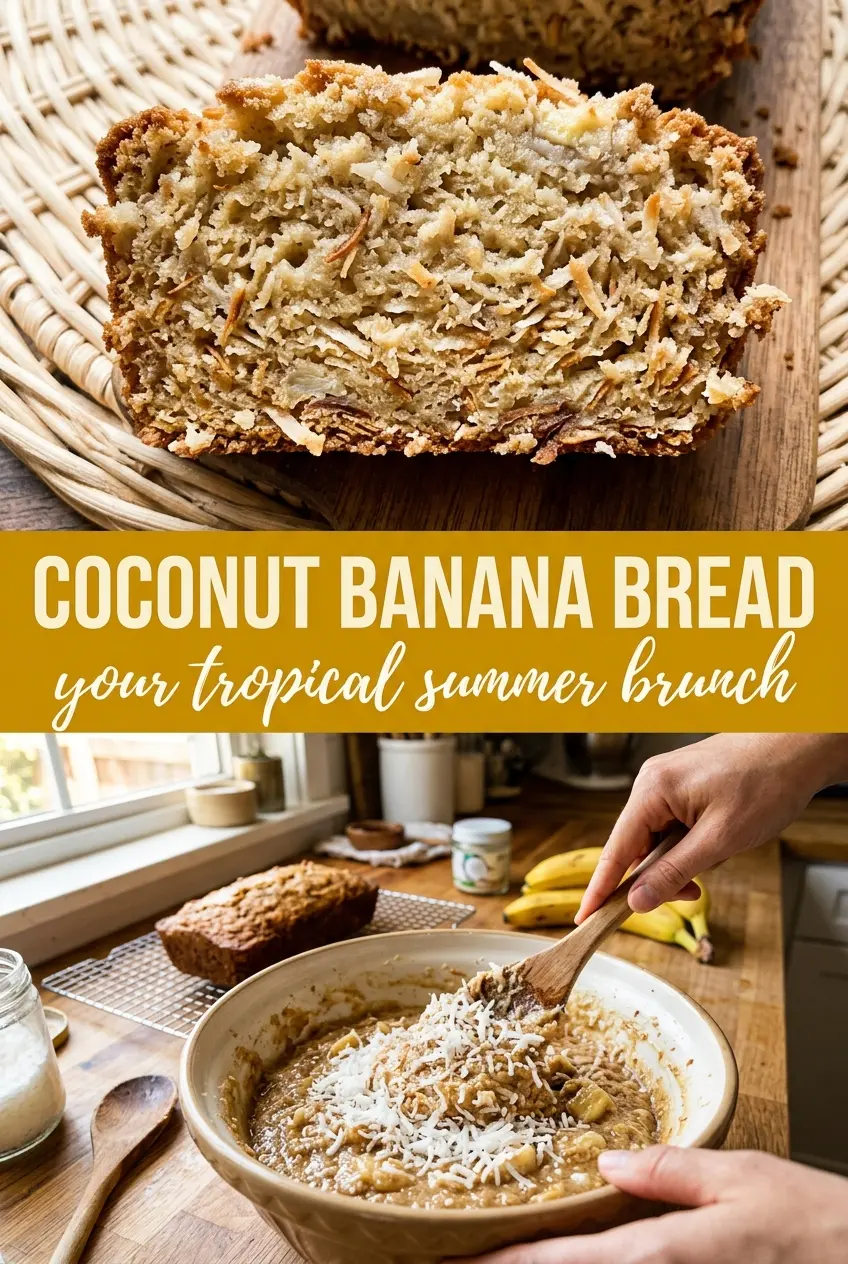
Add the flour, baking soda, and shredded coconut, then stir only until you stop seeing dry flour. The batter should look thick and a little rough, not whipped or silky. Overmixing is the fastest way to get a tight, rubbery crumb, and coconut bread is better when it stays tender and slightly open-textured.
Bake until the center is set
Pour the batter into the greased loaf pan, scatter extra coconut over the top, and bake until a toothpick comes out clean or with a few moist crumbs. The top should be deeply golden and the center should spring back lightly when touched. If the coconut is browning too quickly before the middle is done, lay a loose piece of foil over the loaf for the last part of baking.
How to Adapt This for Different Kitchens and Tastes
Make It Dairy-Free Without Losing the Tender Crumb
This loaf already leans dairy-free because it uses coconut oil instead of butter. That means you can serve it as written without changing the texture or hunting down special ingredients. The coconut flavor stays clean and the crumb stays soft.
Use Walnuts for a More Classic Banana Bread Feel
Fold in up to 3/4 cup chopped walnuts with the coconut if you want more crunch and a less tropical finish. Walnuts bring a bitter edge that balances the sweetness, but they do cut into the soft, chewy coconut texture, so the loaf reads more like a hybrid banana bread.
Swap in Gluten-Free Flour When You Need It
A good 1:1 gluten-free flour blend can work here as long as it includes xanthan gum. The loaf may bake a touch more fragile, so let it cool fully before slicing or it can break at the center. The banana and coconut help keep it from turning dry.
Toast the Coconut for a Deeper Top Layer
A quick toast in a dry skillet gives the coconut a warmer flavor and a better color on top of the loaf. Watch it closely because coconut goes from pale to burnt fast. This is the easiest upgrade if you want the bread to look as good as it tastes.
Storage and Reheating
- Refrigerator: Store tightly wrapped for up to 4 days. The coconut can soften a little, but the loaf stays moist.
- Freezer: Freezes well. Slice the cooled loaf, wrap individual pieces, and freeze for up to 2 months so you can thaw only what you need.
- Reheating: Warm slices in a toaster oven or low oven for a few minutes. Microwaving too long makes the crumb gummy and can turn the coconut chewy in the wrong way.
Questions I Get Asked About This Recipe
Coconut Banana Bread
Ingredients
Equipment
Method
- Preheat the oven to 350°F and grease a loaf pan.
- Toast the shredded coconut in a dry cast iron skillet over medium heat, stirring often, until golden and fragrant, then set aside to cool.
- Whisk together the mashed bananas, melted coconut oil, sugar, and egg until smooth and no streaks remain.
- Fold in the all-purpose flour, baking soda, and toasted shredded coconut until just combined, stopping when no dry flour shows.
- Pour the batter into the prepared loaf pan and sprinkle extra shredded coconut on top.
- Bake at 350°F for 55-60 minutes, until a toothpick inserted in the center comes out clean and the top looks set.
- Cool in the pan for 10 minutes, then transfer to a wire rack to finish cooling.