
These brown butter and maple chewy pumpkin cookies bake up thick, soft in the middle, and edged with just enough structure to keep every bite satisfying. The brown butter gives them a toasted, nutty depth that plain melted butter can’t touch, and the maple syrup adds a round sweetness that plays beautifully with the pumpkin spice instead of hiding it. What you get is a pumpkin cookie with real backbone, not the cakey, airy texture that so many versions fall into.
The trick is in the balance. Pumpkin puree brings moisture, but too much of it makes cookies puffy and bready, so this dough uses only a half cup and leans on an egg yolk for richness without extra water. Browning the butter first changes the whole cookie; it adds flavor before the dough even comes together, and chilling the dough keeps the cookies from spreading too thin in the oven.
Below, I’ll walk through the browning stage, the exact texture to look for before baking, and the small details that keep these cookies chewy instead of dry. If you’ve ever wished pumpkin cookies tasted a little deeper and baked a little better, this is the version worth keeping.
The brown butter gave these such a deep, toasty flavor, and the centers stayed chewy even after cooling. I chilled the dough exactly 30 minutes and they held their shape perfectly.
Chewy brown butter pumpkin cookies with maple and warm spice are the ones to pin for crisp edges, soft centers, and the best batch of fall baking.
The Browning Step That Gives These Pumpkin Cookies Their Backbone
Most pumpkin cookies struggle in the same way: too much moisture, not enough structure, and a texture that leans fluffy instead of chewy. Browning the butter helps offset that because it removes water, concentrates flavor, and gives the dough a deeper, almost caramelized taste that stands up to the pumpkin. That’s also why this recipe uses brown sugar and maple syrup together. Brown sugar adds chew and warmth, while maple brings a softer sweetness that doesn’t make the cookies taste flat.
The other thing that matters here is restraint. Pumpkin puree is a wet ingredient, and if it dominates the dough, the cookies bake up cakey. The egg yolk helps with richness and binding without adding extra lift from the white, and chilling the dough gives the flour time to hydrate so the cookies bake thicker instead of spreading into puddles.
What Each Ingredient Is Actually Doing in This Dish
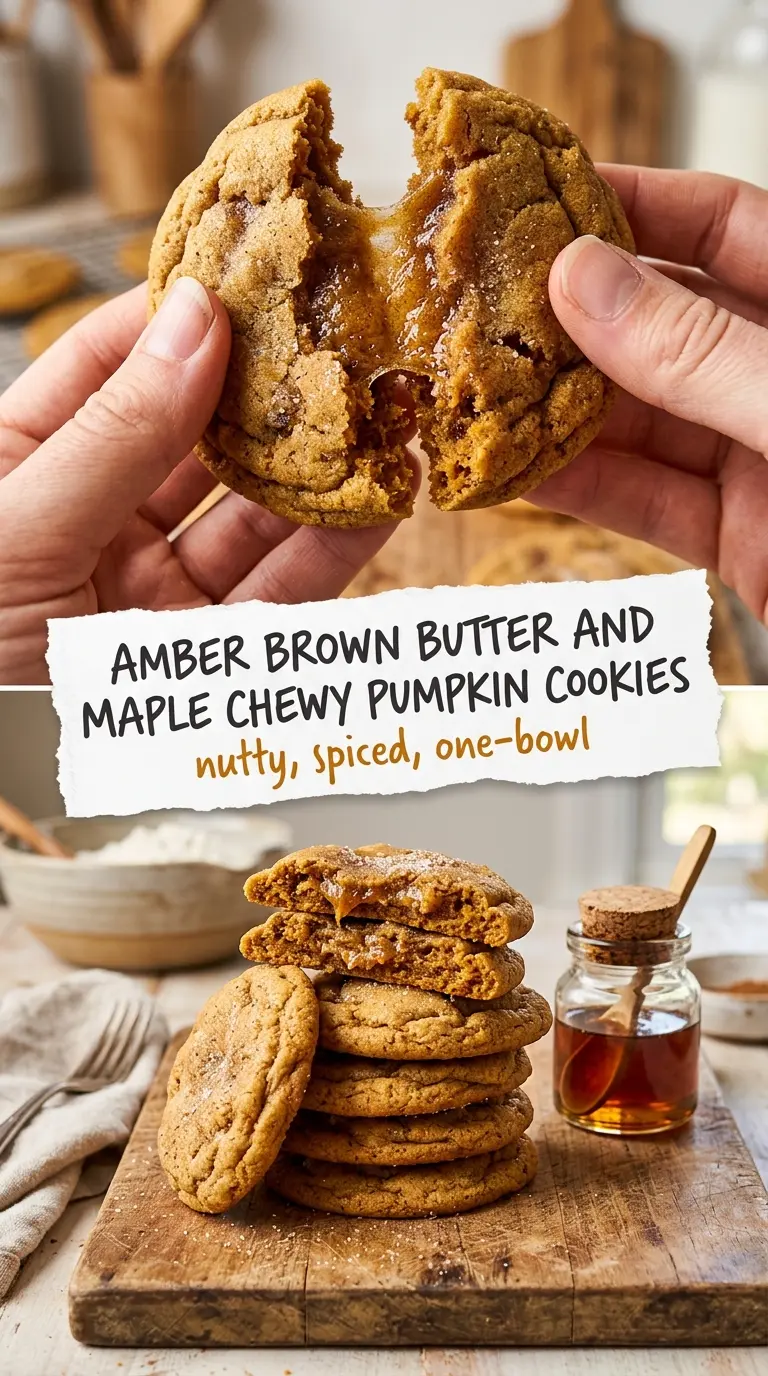
- Butter — Brown it until the milk solids turn amber and smell nutty. That step gives you the flavor base for the whole cookie, and there isn’t a real shortcut that tastes the same.
- Pumpkin puree — Use plain pumpkin puree, not pumpkin pie filling. The filling already contains sugar and spices, which throws off both texture and balance.
- Maple syrup — Use real maple syrup if you can. Pancake syrup will sweeten the dough, but it won’t bring the same depth or the same rounded finish.
- Egg yolk — The yolk adds richness and chew without making the dough too loose. If you only have a whole egg, the cookies will still work, but they’ll bake up a little lighter and less dense.
- Brown sugar — This is what keeps the crumb soft and chewy. Light or dark brown sugar both work; dark brown sugar gives you a deeper molasses note.
- Pumpkin pie spice — Use a fresh blend if yours has been sitting in the cabinet for years. Stale spice won’t ruin the cookies, but it will flatten the flavor.
Building the Dough Without Losing the Chew
Browning the Butter First
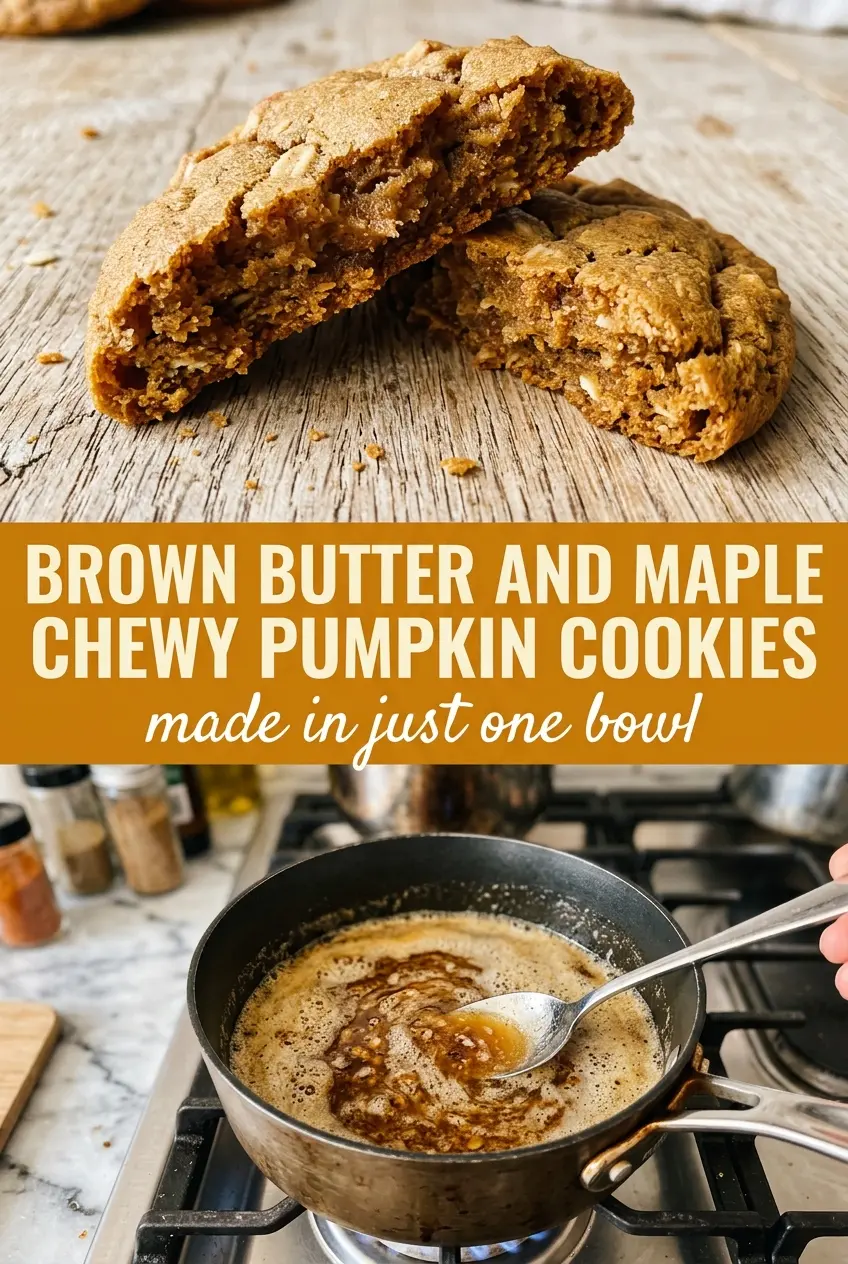
Set the butter over medium heat and swirl the pan often as it melts. It’ll foam first, then the bubbling will quiet down and you’ll start seeing golden specks at the bottom of the pan. Pull it the moment it smells nutty and the milk solids look deep amber, because it can go from browned to burnt fast. Pour it into a bowl right away so the residual heat doesn’t keep cooking it.
Mixing the Wet Ingredients
Let the brown butter cool for a few minutes before whisking in the pumpkin puree, maple syrup, brown sugar, egg yolk, and vanilla. If the butter is piping hot, it can melt the sugar too aggressively and make the dough greasy. The mixture should look smooth and glossy, with the brown sugar mostly dissolved and the pumpkin fully incorporated.
Adding the Dry Ingredients Just Until Combined
Fold in the flour, baking soda, pumpkin pie spice, and salt until no dry streaks remain. Stop as soon as the dough comes together; overmixing builds more gluten than you want and makes the cookies tougher. The dough will look a little soft, and that’s fine. It needs the chill time to firm up before baking.
Chilling and Baking for the Right Shape
Thirty minutes in the refrigerator makes a noticeable difference here. The dough should feel scoopable but firm, not sticky and slack. Scoop onto a lined baking sheet, then bake until the edges look set and the centers still look slightly underdone. That underbaked center is what gives you a chewy cookie after cooling, so don’t wait for the tops to look completely dry.
What to Change When You Want a Different Version
Dairy-Free Brown Butter Style
Use a plant-based butter that browns well, but keep an eye on the pan because some alternatives foam less and make it harder to read color. You’ll still get a toasty edge, though it won’t taste quite as nutty as real dairy butter. If the substitute is salted, reduce the added salt a little.
Gluten-Free Version
Swap in a 1:1 gluten-free flour blend that includes xanthan gum. The cookies will still bake up chewy, but they’ll be a little more delicate when warm, so let them cool on the pan for the full five minutes before moving them.
Extra-Spiced Cookies
Add a pinch of cinnamon and a small pinch of ground ginger if you want the spice to lean warmer and sharper. That makes the pumpkin more pronounced, but too much spice can crowd out the maple and brown butter, so keep the hand light.
Make-Ahead Dough
This dough can chill overnight. In fact, the flavor deepens a bit as it rests, and the cookies tend to bake up even thicker the next day. If the dough gets too firm in the fridge, let it sit at room temperature for 10 to 15 minutes before scooping.
Storage and Reheating
- Refrigerator: Store baked cookies in an airtight container for up to 5 days. They stay chewy, though the edges soften a little after the first day.
- Freezer: Freeze baked cookies for up to 2 months or freeze portioned dough balls and bake from frozen, adding 1 to 2 minutes. Dough freezes better than finished cookies if you want the freshest texture later.
- Reheating: Warm a cookie in the microwave for 8 to 10 seconds or in a low oven for a few minutes. Don’t overheat them or the centers will dry out and lose that soft, chewy bite.
Questions I Get Asked About This Recipe
Brown Butter And Maple Chewy Pumpkin Cookies
Ingredients
Equipment
Method
- Melt the butter in a saucepan over medium heat, swirling until it turns golden brown and smells nutty, about 5 minutes.
- Pour the brown butter into a large bowl and let cool slightly.
- Whisk the pumpkin puree, maple syrup, brown sugar, egg yolk, and vanilla into the brown butter.
- Fold in the all-purpose flour, baking soda, pumpkin pie spice, and salt until just combined.
- Chill the dough for 30 minutes.
- Preheat the oven to 350°F and scoop the dough onto a lined baking sheet.
- Bake for 11-13 minutes, until the edges are set but the centers look slightly underdone.
- Cool on the baking sheet for 5 minutes before transferring.