
Velvety carrot ginger miso soup has the kind of balanced, cozy finish that keeps a bowl from tasting flat. The carrots turn naturally sweet as they simmer, the ginger adds a clean heat, and the white miso brings in the savory depth that makes each spoonful taste fuller than the ingredient list suggests. It’s smooth, bright, and comforting without feeling heavy.
The detail that matters most is when the miso goes in. It should be whisked into hot soup off to the side first, then stirred back into the pot after blending. That keeps the flavor round and mellow instead of dulling it with a hard boil. I also like cooking the onions, garlic, and carrots together long enough for the onion to soften and the carrots to pick up a little color, because that early browning gives the finished soup a better base.
Below, you’ll find the trick for keeping the texture silky, notes on when to use a lighter or stronger miso, and a few smart ways to adapt the soup depending on what you have in the kitchen.
The miso added at the end made the soup taste so much richer, and the carrots blended into the smoothest texture without needing any cream. My husband went back for a second bowl before I even sat down.
Pin this silky carrot ginger miso soup for the nights when you want something cozy, savory, and naturally creamy without adding dairy.
The Reason the Miso Goes in After Blending
White miso is delicate enough that it can lose its rounded sweetness if it simmers hard for too long. The soup gets boiled and simmered before the miso enters, then the paste is dissolved in a ladleful of hot soup and stirred back in at the end. That small step keeps the miso tasting clean and savory instead of muted or slightly bitter.
The other common failure here is texture. If the carrots aren’t cooked until they collapse under a spoon, the blender leaves the soup with tiny gritty bits that you can’t hide later. Let them go fully tender; that’s what gives you the smooth, velvety body without cream.
What Each Ingredient Is Actually Doing in This Dish

- Carrots — These are the body of the soup, so fresher carrots with good color matter here. Older carrots still work, but they’ll taste a little flatter. Chop them evenly so they soften at the same pace and blend into a truly smooth puree.
- Fresh ginger — Grated ginger gives the soup its lift. Ground ginger won’t land the same way; it tastes dusty and one-dimensional here. If you need to substitute, use a smaller amount of jarred ginger paste, then taste before adding more.
- White miso paste — This is the ingredient that makes the soup taste finished. White miso is mild and slightly sweet, which fits the carrots. If you only have yellow miso, use a little less at first because it brings more salt and stronger fermented flavor.
- Vegetable stock — Choose one you’d drink on its own. A thin, bland stock leaves the soup tasting thin even after blending. If your stock is quite salty, hold back on extra salt until the end.
Building the Soup Base Without Losing the Sweetness of the Carrots
Softening the Onion and Garlic First
Start with the olive oil, onion, garlic, and carrots in the pot over medium-high heat. You want the onion to turn translucent and the carrots to pick up a little color at the edges, not scorch. If the garlic starts browning early, the heat is too high and the soup will taste harsh, so lower the burner before it happens. That first sauté builds the base flavor in a way boiling alone never can.
Cooking Until the Carrots Collapse
Add the ginger and stock, bring it to a boil, then turn it down to a steady simmer and cover the pot. The carrots need enough time to become very tender; a knife should slide through with no resistance. If the soup still has firm carrot pieces, keep cooking. The blender can’t make up for undercooked vegetables.
Blending to a Silky Finish
Use an immersion blender and keep it moving through the pot until the soup looks completely smooth. If the surface still shows little flecks or fibrous strands, give it another minute. For a countertop blender, work in batches and vent the lid so the steam can escape. Hot soup expands fast, and overfilling the blender is the easiest way to end up with a mess.
Whisking in the Miso the Right Way
Scoop out a ladle of hot soup and whisk it with the miso in a small bowl until no lumps remain. Stir that mixture back into the pot off the heat or over very low heat. Do not boil it once the miso is in. Boiling flattens the flavor and can make the soup taste less rounded.
Make it dairy-free and still creamy
This recipe already lands naturally dairy-free because the carrots blend into a smooth puree on their own. If you want it even richer, add a splash of coconut milk at the end, but keep it small so the carrot and ginger still taste bright. Too much coconut can pull the soup away from its clean, savory finish.
Use yellow miso for a deeper savory note
Yellow miso works if that’s what you have, but it’s saltier and more assertive than white miso. Start with a little less, taste after it’s stirred in, then add more only if the soup still needs depth. That swap makes the soup a touch earthier and less sweet.
Add coconut milk for a softer finish
A small amount of coconut milk turns the soup a little rounder and more luxurious without changing the cooking method. Stir it in after blending and before the miso, then taste again for salt. The result is softer and slightly sweeter, which works well if your carrots are especially earthy.
Storage and Reheating
- Refrigerator: Keeps well for 4 days. The soup may thicken a little as it chills, which is normal.
- Freezer: Freezes well for up to 2 months. Leave a little space in the container for expansion, and freeze before adding garnishes.
- Reheating: Warm it gently over low to medium-low heat and stir often. Don’t boil it hard after the miso has been added, or the flavor will go dull and the texture can separate slightly.
Questions I Get Asked About This Recipe
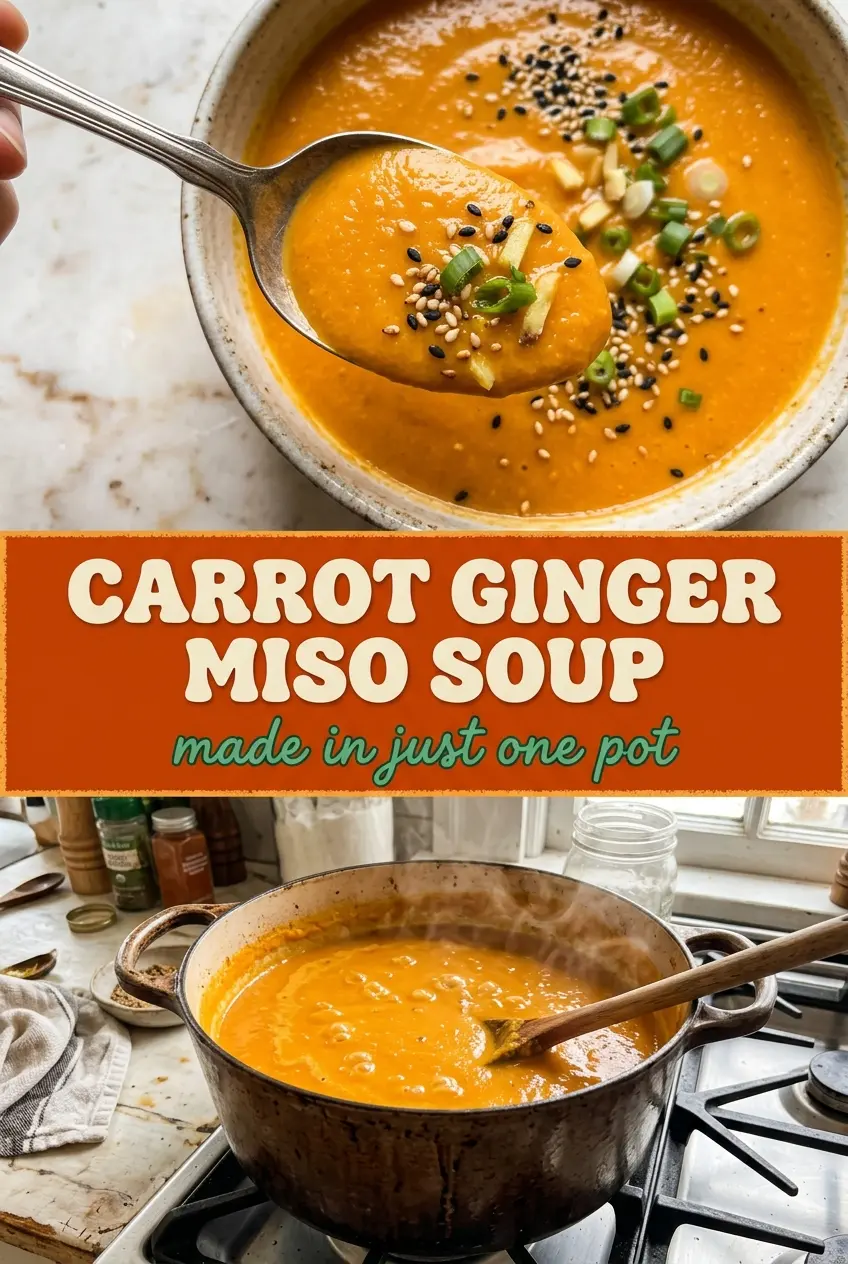
Carrot Ginger Miso Soup
Ingredients
Equipment
Method
- Heat the extra virgin olive oil in a soup pot over medium-high heat, then add the sweet onion, garlic, and carrots. Sauté until the onion is translucent, about 10 minutes, stirring occasionally so the carrots start to soften.
- Add the fresh ginger and vegetable stock, bring to a boil, then reduce to a simmer. Cover and cook until the carrots are very tender, about 30 minutes.
- Purée the soup with an immersion blender until completely smooth. Blend until no visible carrot bits remain for a velvety texture.
- In a small bowl, whisk the white miso paste with a ladle of hot soup until fully dissolved. Keep whisking until the mixture looks smooth and lump-free.
- Stir the miso mixture back into the pot. Mix gently to distribute the miso evenly without boiling hard.
- Season with salt and black pepper if needed, then garnish with scallions and sesame seeds before serving. Taste once more and adjust for balance right at the end.