
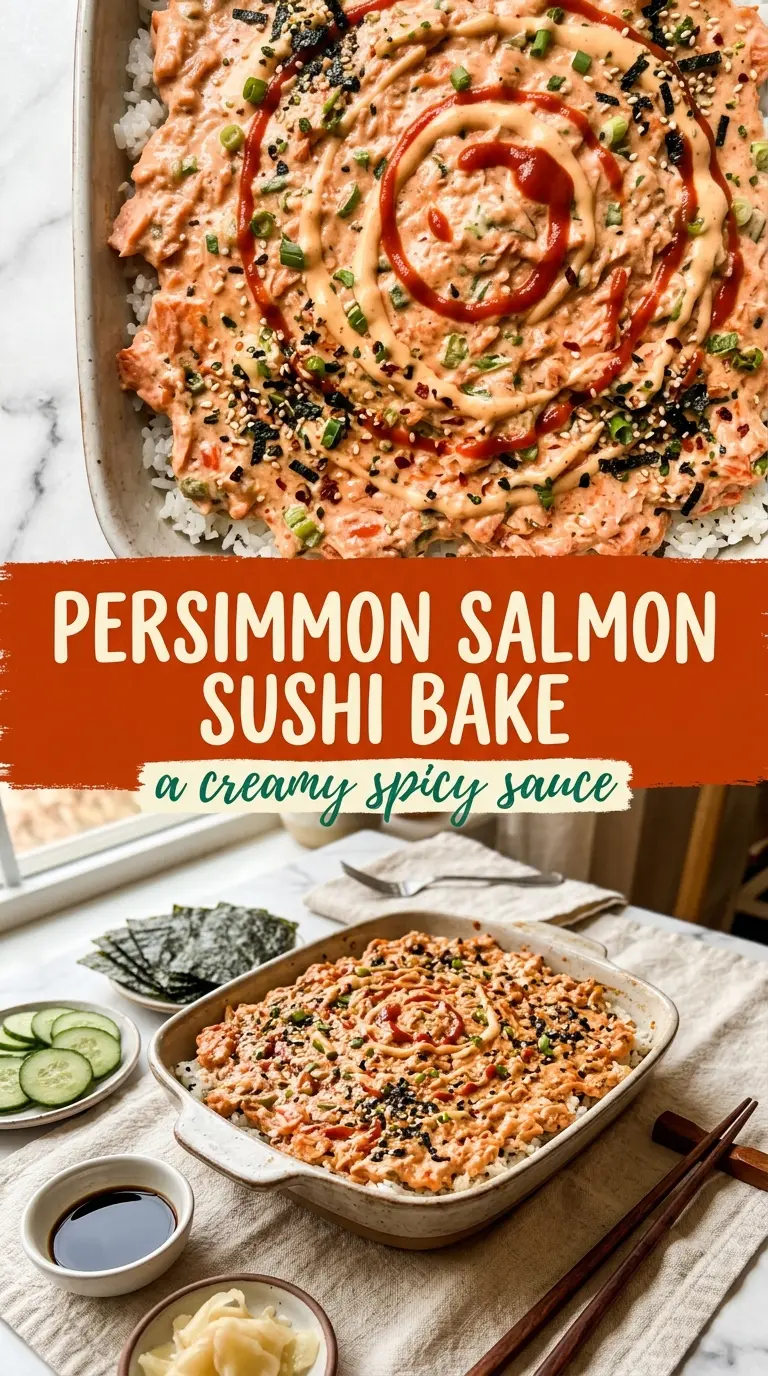
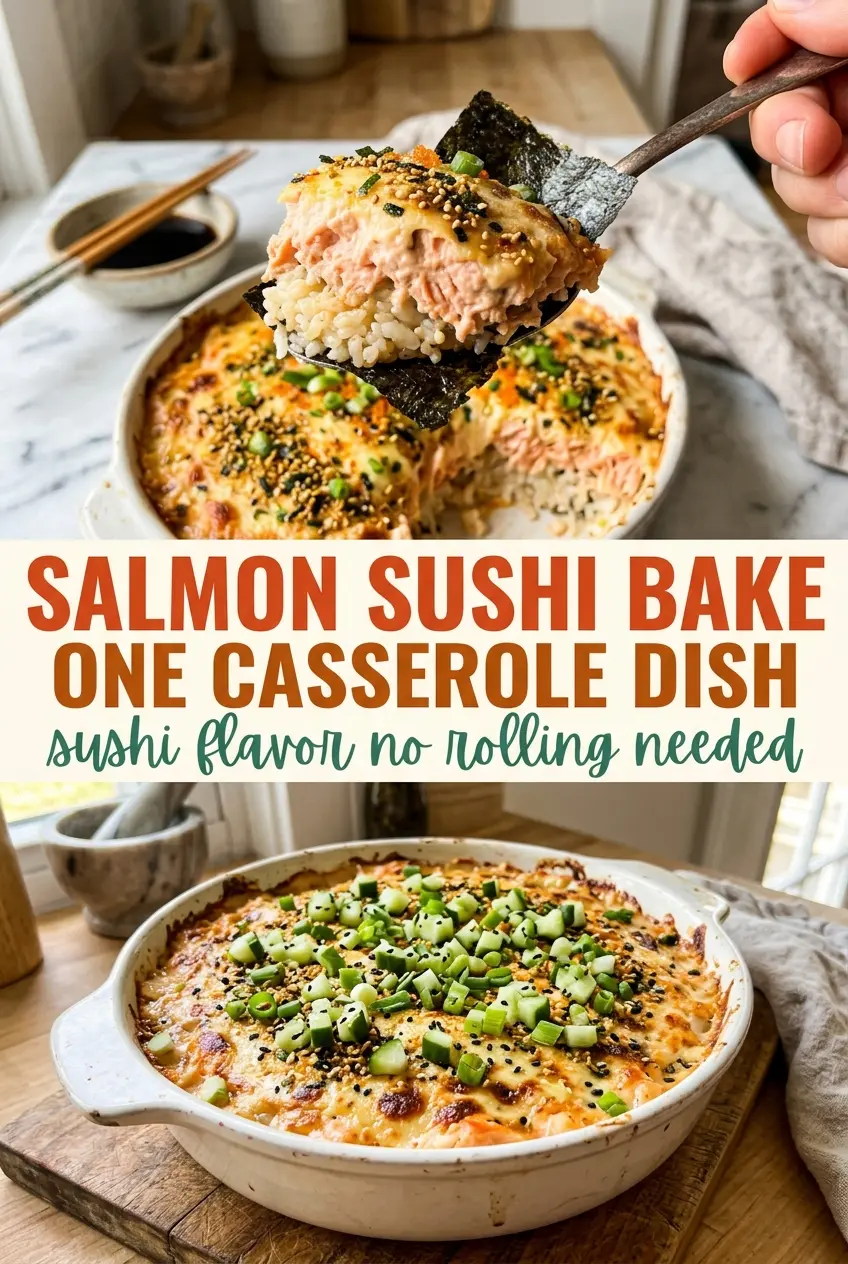
Salmon sushi bake hits the table with all the comfort of a casserole and the punchy, savory-salty balance of a sushi roll. The rice bakes into a firm, seasoned base that scoops cleanly, while the salmon topping stays creamy and just a little spicy from the sriracha mayo. It’s the kind of dinner that disappears fast because every bite has something different going on: tender rice, rich salmon, crisp cucumber, and that toasted furikake finish.
The small details matter here. Warm rice takes the vinegar seasoning better than cold rice, and pressing it firmly into the dish keeps the base from falling apart when you scoop it. Kewpie mayo gives the topping a silkier texture and a deeper, slightly sweet richness than regular mayo, and a short bake followed by a quick broil is what gives the top those browned edges without drying the salmon out.
Below, I’ll walk through the part that keeps the rice from getting mushy, plus a few practical swaps if you don’t have every sushi-bake ingredient on hand. If you’ve ever wanted sushi-night flavor without the rolling mat, this one lands in that sweet spot.
The rice stayed firm under the salmon mixture and the furikake on top gave it that salty crunch I was hoping for. I served it with cucumber and extra nori, and everyone went back for seconds.
Love the creamy salmon topping and crispy furikake finish? Save this Salmon Sushi Bake for an easy sushi-night dinner without any rolling.
The Trick to Keeping the Rice Layer Firm, Not Soggy
The rice layer is the foundation here, and it fails for one reason more than any other: too much moisture. Sushi rice should be seasoned while it’s still warm, then pressed into the pan firmly enough that it holds together when scooped. If you fluff it up or leave it loose, the salmon topping sinks into it and you lose that clear, layered bite.
Broiling also needs a light touch. You’re not trying to cook the fish from raw here — the salmon is already cooked — you’re just warming the topping and browning the surface. If you keep it under the broiler too long, the mayo can split and the edges of the rice can dry out before the top gets that light golden color.
What Each Ingredient Is Actually Doing in This Dish
- Sushi rice — Short-grain rice gives you the sticky, scoopable base that makes this dish work. Regular long-grain rice stays too separate and won’t hold the topping the same way.
- Rice vinegar, sugar, sesame oil, and salt — This is the seasoning that gives the rice that familiar sushi flavor. The sugar softens the vinegar’s bite, and the sesame oil adds a light nutty note without making the rice greasy.
- Cooked salmon — Use salmon that’s already cooked and flaked into bite-size pieces. Leftover roasted salmon works fine, and it’s the best way to keep the topping from turning dry while it bakes.
- Kewpie mayonnaise — This is the ingredient that gives the topping its glossy, creamy texture. Regular mayo works in a pinch, but Kewpie has a richer, slightly sweeter taste that fits the sushi-bake style better.
- Sriracha and soy sauce — Sriracha brings heat and color, while soy sauce deepens the savory flavor. If you want more control over the spice level, start with less sriracha and add it after tasting the mixture.
- Furikake — This gives you salt, crunch, and that unmistakable sushi-bake finish. It’s worth using a good one if you can find it, because it adds texture as well as seasoning.
- Cucumber and nori — The cucumber keeps each bite fresh, and nori sheets are what turn this from a casserole into a hand-held scoop. Don’t skip the nori if you want the full effect.
Building the Bake So the Layers Stay Distinct
Season the Rice While It’s Still Warm
Whisk the vinegar, sesame oil, sugar, and salt together, then fold it into warm rice so the seasoning spreads evenly. Warm grains absorb the mixture better, and that gives the rice a cleaner sushi flavor instead of leaving the seasoning sitting on the surface. If the rice is cold, rewarm it briefly before mixing so the vinegar doesn’t bead up and pool in the pan.
Press the Base Like You Mean It
Spoon the rice into an 8×8-inch baking dish and press it down firmly with the back of a spoon or lightly damp hands. You want a compact layer that feels even from edge to edge. A loose bed of rice breaks apart when you scoop, and that makes the whole dish harder to serve neatly.
Mix the Salmon Until It Holds Together
Combine the flaked salmon, Kewpie mayo, sriracha, soy sauce, and green onions until the fish is evenly coated and looks creamy, not wet. The topping should mound on a spoon instead of running off it. If it seems loose, add a little more salmon before you add more mayo, since extra mayo can make the final bake greasy.
Broil for Color, Not for Cooking Time
Bake the assembled dish just long enough to heat it through, then broil for a couple of minutes until the top is lightly browned in spots. Stay close to the oven because the line between golden and scorched is short. Pull it as soon as the furikake looks toasted and the mayo has a few browned peaks.
How to Adapt This for What You Have on Hand
Make It Dairy-Free and Still Creamy
This recipe is already dairy-free as written, which is one reason it works so well for a crowd. Just check your mayo and furikake labels if you’re serving anyone with allergies, since some brands add unexpected extras. The texture stays rich without needing any cheese or butter.
Swap the Salmon for Tuna or Crab
Cooked tuna or imitation crab both work if salmon isn’t what you have. Tuna gives a firmer, slightly drier bite, while crab leans sweeter and softer, so you may want a touch less mayo with crab to keep the topping from getting too loose.
Turn It Into a Lower-Carb Bowl
Skip the rice and serve the salmon mixture over shredded cucumber, cauliflower rice, or chopped romaine. You’ll lose the classic casserole base, but you keep the creamy spicy topping and the nori-cucumber contrast. Cauliflower rice works best if you cook off the moisture first so the bowl doesn’t turn watery.
Storage and Reheating
- Refrigerator: Store leftovers in an airtight container for up to 3 days. The rice firms up a bit, but the flavor holds well.
- Freezer: I don’t recommend freezing the finished bake. The mayo-based topping can separate and the cucumber loses its texture.
- Reheating: Reheat portions in the oven or air fryer at 325F until warmed through. The microwave works, but it softens the rice and can make the topping greasy, so use short bursts if that’s your only option.
Questions I Get Asked About This Recipe
Salmon Sushi Bake
Ingredients
Equipment
Method
- Preheat the oven to 400F.
- Whisk together rice vinegar, sesame oil, sugar, and salt, then fold into the warm cooked sushi rice.
- Press the seasoned rice firmly and evenly into an 8x8-inch baking dish and sprinkle with half the furikake.
- In a bowl, combine the cooked salmon, Kewpie mayonnaise, sriracha, soy sauce, and green onions sliced.
- Spread the salmon mixture evenly over the rice and sprinkle with the remaining furikake.
- Bake for 10 minutes, then broil for 2-3 minutes until lightly browned on top.
- Top with diced cucumber and serve scooped onto nori sheets.