
Shatteringly crisp cauliflower, sticky with gochujang glaze, tucked into a soft steamed bao bun is the kind of plant-based meal that disappears fast. The contrast is what makes it work: a crunchy edge on the cauliflower, a glossy spicy-sweet coating, then that pillowy bun holding everything together without getting heavy. It eats like something from a good dumpling shop, not a backup plan.
The trick is the batter. Flour and cornstarch give the cauliflower enough structure to crisp in the air fryer, while sparkling water keeps the coating light instead of dense. Toss the cauliflower in the glaze only after it comes out hot, because the sauce needs that heat to cling without turning the crust soggy. The pickled daikon and cucumber aren’t garnish here; they cut through the richness and keep each bite sharp.
Below, I’ve laid out the small details that make this recipe worth repeating, including how to keep the coating crisp, what to swap if you need a different sweetener, and the best way to assemble the buns so they hold together until the last bite.
The cauliflower got crisp in the air fryer and the glaze clung on without making it soggy. I served it in bao buns with the pickled daikon and it tasted like takeout from a place I’d go back to.
Save these air-fried Korean chili cauliflower bao buns for the night you want crispy, sticky, spicy-sweet tofu-free comfort with serious crunch.
The Crunch Depends on What You Do Before the Glaze Goes On
Cauliflower turns disappointing fast when the coating gets heavy. The air fryer helps, but it only works if the batter stays thin enough to crisp instead of clumping into a bready shell. Cornstarch matters here because it dries out the exterior and gives you that light crackle around the edges.
The other place people lose the texture is the sauce step. If you toss the cauliflower in glaze while it’s still sitting in the basket, the steam softens the crust before it has a chance to hold up. Move fast, toss while it’s hot, and get it into the buns right away.
- Cauliflower florets — Cut them into evenly sized pieces so they cook at the same rate. Tiny bits overcook before the rest is done, and oversized florets stay pale in the middle.
- Flour and cornstarch — This combination gives the coating structure and crispness. All flour works in a pinch, but the result is heavier and less shattery.
- Cold sparkling water — The bubbles help keep the batter airy. Cold still water will work, but the coating won’t feel as light.
- Gochujang — This is the backbone of the glaze, with heat, funk, and a little sweetness. There isn’t a close substitute for the same depth, though a mix of chili paste and miso can get you partway there.
- Rice vinegar — That small hit of acid keeps the glaze from tasting flat. Lime juice can stand in if that’s what you have, but the flavor shifts brighter and less rounded.
How to Build the Batter, Glaze, and Bao So Each Bite Stays Crisp
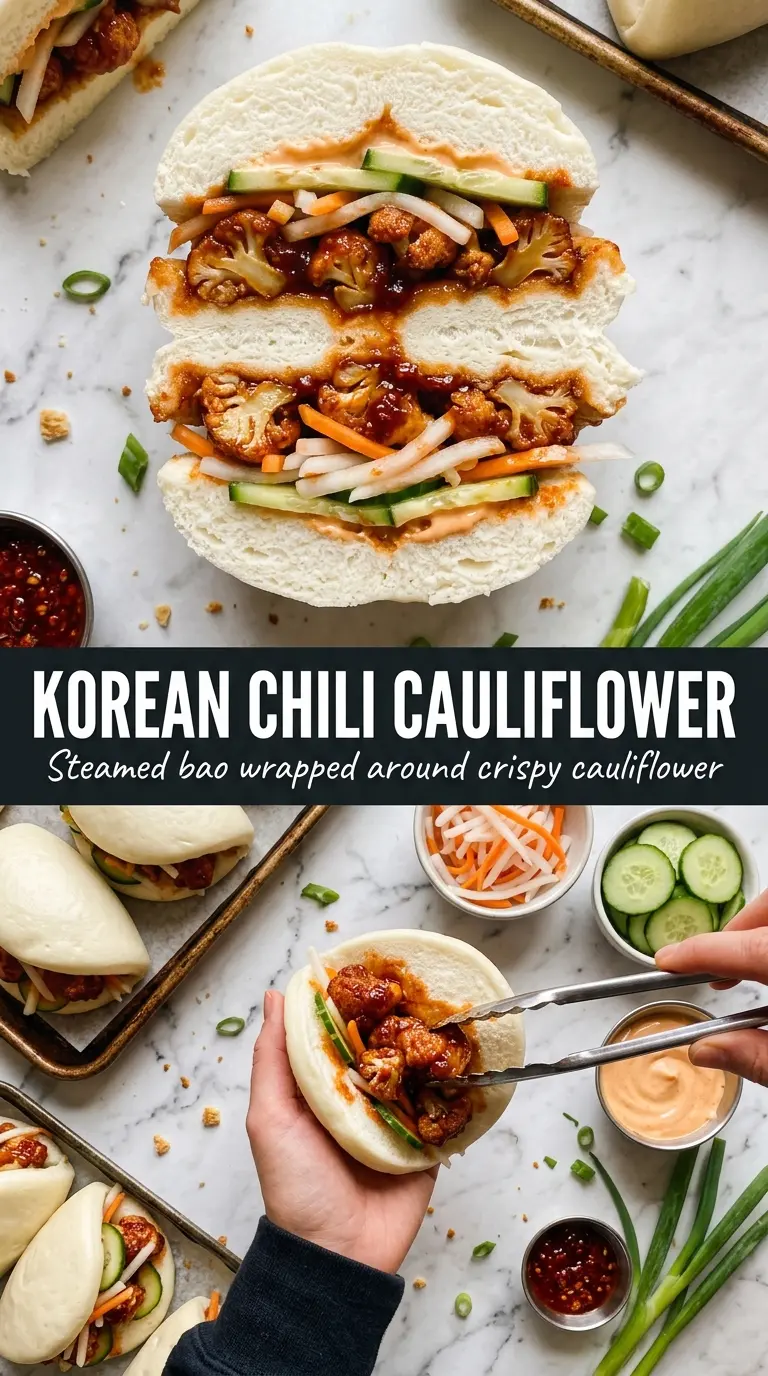
Make the batter first and keep it loose. It should coat the cauliflower like a thin jacket, not a paste. If it looks thick enough to mound, add a splash more sparkling water. A thick batter seals in too much moisture and gives you soft patches instead of crisp edges.
Coating the Cauliflower
Stir the florets through the batter until every surface is lightly covered, then lift them out with a fork or tongs and let the excess drip off for a second. A little unevenness is fine; those rough spots are where the crisp texture develops. If you pile on too much batter, the coating turns chewy instead of crunchy.
Air-Frying to a Deep Golden Edge
Spread the cauliflower in a single layer and give the pieces space. Crowding traps steam, which is the fastest way to lose the crisp crust. Flip halfway through, and look for browned ridges and dry, set surfaces before you pull them out. If the cauliflower still looks wet or pale in the thickest spots, it needs a few more minutes.
Reducing the Glaze
Simmer the gochujang mixture just long enough for it to thicken and shine. You want a sauce that coats the back of a spoon and clings in a thin layer, not a loose sauce that slides off the cauliflower. If it gets too thick, add a teaspoon of water at a time. If it tastes flat, another splash of rice vinegar wakes it up.
Assembling the Buns
Steam the bao buns until they’re soft and warm, then fill them while they’re still flexible. Spoon in the glazed cauliflower first, then top with pickled daikon and cucumber ribbons so the acid lands against the sauce. Finish with sriracha mayo right before serving. If the buns sit filled for too long, the bottom softens and the whole thing loses its bounce.
Three Smart Ways to Adapt These Bao Buns Without Losing the Point
Make It Vegan-Friendly From Top to Bottom
The cauliflower itself is already vegan, but the mayo and bao bun labels can trip people up. Use a vegan mayo for the sriracha sauce and check that your bao buns don’t contain milk or egg. The finished buns stay just as creamy and satisfying, with the same sweet-heat balance.
Gluten-Free Swaps That Keep the Crunch
Use a gluten-free flour blend in the batter and tamari instead of soy sauce in the glaze. The texture stays close to the original as long as the batter remains thin and the cauliflower has space in the air fryer. The bao buns are the only part that needs a dedicated gluten-free version, since standard steamed buns depend on wheat.
Turn It Into a Rice Bowl Instead of Bao
If you don’t have bao buns, serve the glazed cauliflower over steamed rice with the same pickled daikon, cucumber, and sriracha mayo. You lose the soft bun contrast, but you gain a meal that’s easier to batch for lunch. The glaze still carries the dish, and the pickles keep it bright.
Storage and Reheating
- Refrigerator: Store the glazed cauliflower, pickles, and buns separately for up to 3 days. The cauliflower softens after chilling, but it still eats well if you reheat it correctly.
- Freezer: The glazed cauliflower freezes better than the assembled buns. Freeze it in a single layer, then reheat straight from frozen in the air fryer until the coating crisps back up. Bao buns don’t freeze as nicely once filled.
- Reheating: Reheat the cauliflower in the air fryer at 375°F until hot and re-crisped. The mistake is microwaving it, which turns the coating soggy before the glaze warms through.
Questions I Get Asked About This Recipe
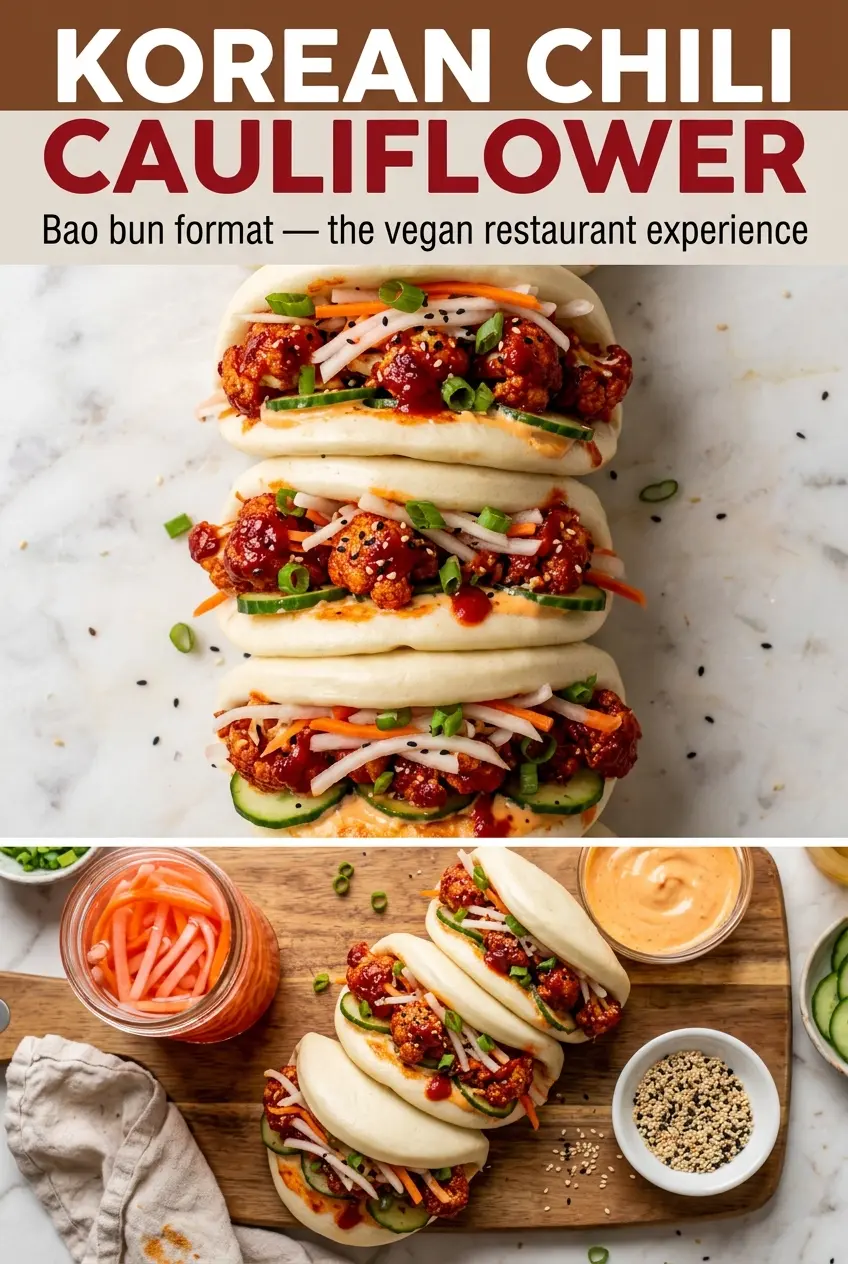
Air-Fried Korean Chili Cauliflower (Vegan)
Ingredients
Equipment
Method
- Whisk flour, cornstarch, garlic powder, and cold sparkling water with salt and pepper until you have a smooth batter. This should coat the cauliflower thickly rather than run off.
- Toss cauliflower florets in the batter until well coated, then arrange them in the air fryer basket in a single layer. Spray lightly if your basket needs help to prevent sticking.
- Air fry at 400°F for 18-20 min, flipping halfway, until crisp and browned. Look for deep golden edges and a set, crunchy coating.
- Simmer gochujang, soy sauce, honey, sesame oil, garlic, ginger, and rice vinegar together for about 3 min until glossy and pourable. Stir constantly so it thickens evenly.
- Immediately toss the hot air-fried cauliflower in the simmered glaze. Coat quickly so the crunch stays crisp and the glaze clings as a shiny layer.
- Steam bao buns according to package directions until soft and warm. Keep them covered so they don’t dry out.
- Fill each bao with glazed cauliflower, pickled daikon, and cucumber ribbons, then add sriracha mayo. Add the fillings in a way that lets the crispy cauliflower stay on top.
- Serve immediately with extra sriracha on the side. The contrast is best right after assembly.