
Watermelon sorbet turns icy, bright, and clean on the tongue, but the version worth making has a little more going on than just blended melon and sugar. The watermelon gives you that soft summer sweetness and a beautiful blush color, while fresh lime keeps the flavor sharp instead of flat. Add passion fruit and the whole thing wakes up: the tartness pulls the melon forward, and every spoonful tastes more vivid than you expect from such a short ingredient list.
The trick is treating watermelon like a high-water fruit that needs support. Straining the puree keeps the texture smooth instead of slushy, and chilling the base before churning helps it freeze with a finer grain. Passion fruit matters here because it brings both acidity and perfume, which watermelon needs if you want the sorbet to taste layered rather than one-note.
Below, I’ll walk through the little choices that make this sorbet scoop cleanly, freeze evenly, and taste like more than the sum of its parts. There’s also a fork-scrape method if you don’t own an ice cream maker, plus the one garnish that makes each bowl look as good as it tastes.
The passion fruit made the watermelon taste so much brighter, and the texture stayed smooth instead of turning into a hard block. I used the fork-scrape method and it still scooped beautifully after a few hours in the freezer.
Like this watermelon passion fruit sorbet? Save it to Pinterest for the days when you want something icy, jewel-bright, and made with just a handful of fresh ingredients.
The Reason Watermelon Sorbet Needs Lime and Passion Fruit, Not Just Sugar
Watermelon is naturally high in water and low in acid, which is why plain watermelon sorbet can taste pleasant for a second and then disappear. Sugar gives it body and keeps the texture scoopable, but acid is what makes the flavor stay on your palate. Lime adds that snap; passion fruit adds depth, perfume, and a tart edge that watermelon by itself can’t supply.
The other mistake people make is skipping the strain. Watermelon pulp can freeze grainy if you leave too much fibrous texture in the base, especially if your melon is a little stringy. A quick pass through a fine-mesh sieve gives you a cleaner freeze and a smoother spoonful.
- Watermelon: Use a ripe, fragrant melon with deep color. If it tastes dull on its own, the sorbet will taste dull no matter what else you add.
- Sugar: This isn’t just for sweetness. It lowers the freezing point so the sorbet stays soft enough to scoop instead of turning icy and hard.
- Fresh lime juice: Bottled lime juice can work in a pinch, but fresh tastes sharper and cleaner here. That brightness keeps the watermelon from reading as candy-like.
- Passion fruit pulp: This is the ingredient that makes the recipe taste layered. If you can’t find fresh pulp, thawed frozen passion fruit pulp is the best stand-in.
- Pinch of salt: It won’t make the sorbet taste salty. It sharpens the fruit and keeps the sweetness from flattening everything else.
How to Build a Smooth Sorbet Base Without Freezing in Clumps
Blending the Fruit First
Blend the watermelon until it’s completely liquefied, with no visible chunks left behind. That gives you an even base before you strain it, which matters because any leftover bits can freeze into icy flecks. If your melon is very watery, that’s fine; the sugar and acid will balance it later. A smooth puree now means a smoother sorbet later.
Straining for a Cleaner Freeze
Pour the puree through a fine-mesh sieve and press it through with a spoon. Don’t rush this part; the little bit of pulp that stays behind is usually what turns the texture coarse. You’re not trying to remove flavor, just the fibrous bits that don’t freeze gracefully. The strained liquid should look glossy and even.
Sweetening and Chilling the Base
Stir in the sugar, lime juice, passion fruit pulp, and salt until the sugar dissolves completely. Taste it before chilling: it should seem a touch sweeter and more intense than you want the finished sorbet, because freezing dulls flavor. Then chill the base for at least an hour. A cold base churns faster and forms smaller ice crystals, which is what gives you that smooth, clean scoop.
Churning or Fork-Scraping to the Right Texture
Churn the mixture in an ice cream maker until it looks like soft sorbet and holds ridges. If you’re using the fork-scrape method, freeze it in a shallow container and scrape every 30 to 45 minutes until it becomes fluffy and even. The failure point here is impatience: if you stop too early, the center stays slushy and the edges turn icy. Keep going until the texture is uniform from edge to middle.
Three Ways to Adjust This Sorbet Without Losing the Point
Make it dairy-free and vegan
It already is, as written. That’s part of the appeal: the texture comes from the fruit, sugar, and freezing technique, not from cream or eggs. Keep the base fully chilled and you won’t miss any dairy at all.
Swap the passion fruit if you can’t find it
Mango purée or a little extra lime can stand in, but the sorbet will lose some of that tropical sharpness. Passion fruit brings both acidity and aroma, so a substitute should aim for tartness first and sweetness second. If you use another fruit, taste carefully and add lime in small amounts until the base tastes lively.
Turn it into a layered dessert
Serve the sorbet over crushed meringue, fresh berries, or a spoonful of coconut yogurt. That adds contrast without burying the fruit. Keep the garnish light so the watermelon and passion fruit still taste like the center of the plate.
Storage and Reheating
- Refrigerator: Not recommended. Sorbet melts into juice fast and won’t hold its texture in the fridge.
- Freezer: Store in an airtight container for up to 2 weeks. Press parchment or plastic wrap directly on the surface to reduce ice crystals.
- Reheating: No reheating here. Let it sit at room temperature for 5 to 10 minutes before scooping; that softens the edges without turning the whole container watery.
Answers to the Questions Worth Asking
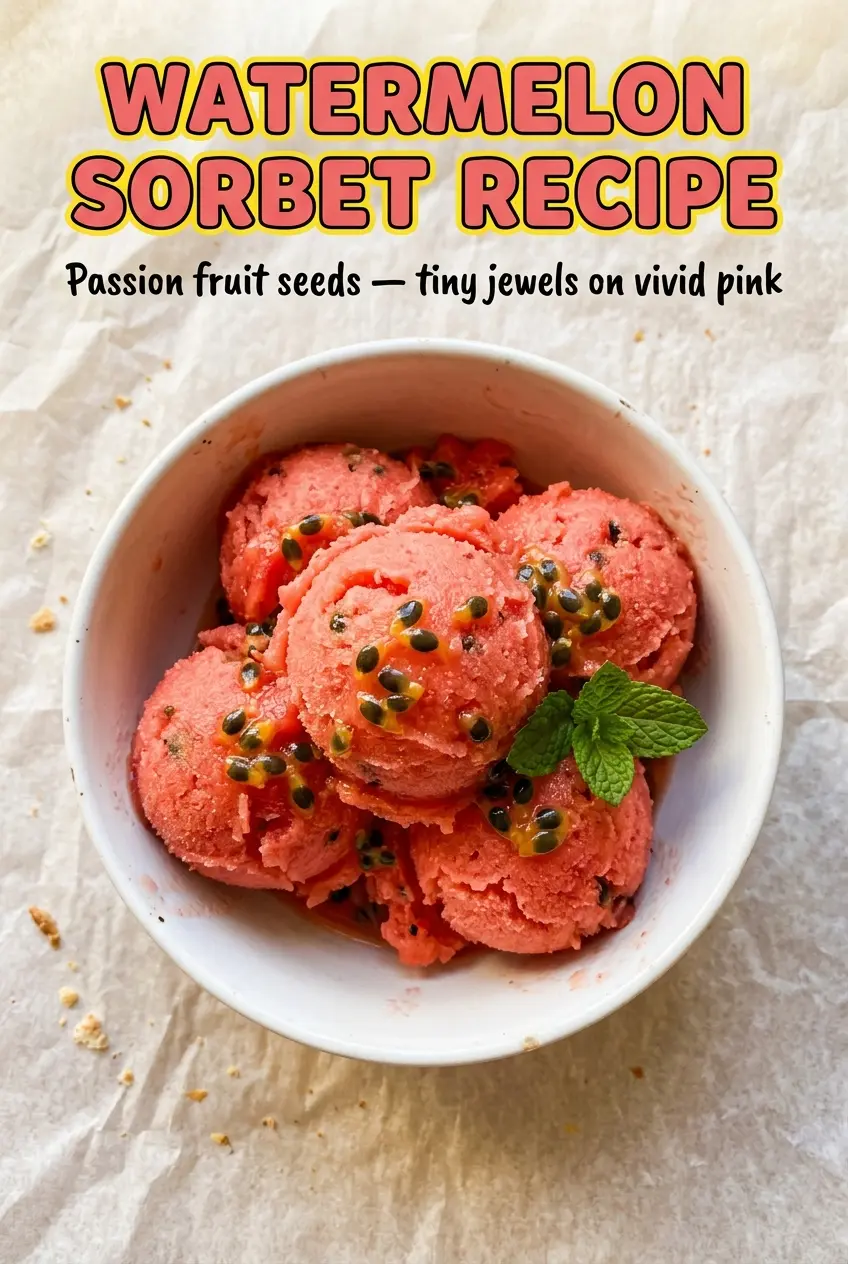
Watermelon Sorbet Recipe
Ingredients
Equipment
Method
- Blend the cubed fresh watermelon until completely smooth, then pour it through a fine-mesh sieve to remove fibers and leave a silky base.
- Stir the strained watermelon with sugar, fresh lime juice, fresh passion fruit pulp, and salt until the sugar dissolves and the mixture looks uniform.
- Chill the sorbet base for 1 hour in the refrigerator, until cold to the touch and ready to churn.
- Churn the chilled base in an ice cream maker until thickened to a soft-sorbet consistency, or use a fork-scrape method to mimic the churn.
- Scoop the watermelon sorbet into chilled bowls and top with fresh passion fruit seeds and mint.