
Bright, chunky tomato salsa with a clean vinegar edge is the kind of pantry project that pays off for months. The tomatoes soften just enough to release their juices, the peppers stay lively, and the finished jars hold onto that fresh-cooked garden flavor instead of turning dull after processing. When it’s done right, you get a salsa that still tastes like tomatoes first, not just heat and salt.
The part that makes this version work is the balance between texture and acidity. The tomatoes cook down briefly, but not so long that they collapse into sauce, and the vinegar stays at the tested amount needed for safe water bath canning. That ratio isn’t negotiable in a canning recipe. It’s what keeps the salsa shelf-stable, which is why this recipe uses a straightforward mix of tomatoes, peppers, onion, and garlic instead of trying to pack in extra low-acid ingredients.
Below, I’ll walk through the one point that matters most in canning salsa: how to keep the texture thick enough without cooking away the brightness. I’ve also included the best swaps for heat level and a few storage notes so your jars stay in good shape once they’re sealed.
The salsa thickened up beautifully in the simmer, and the jars sealed perfectly. I liked that it still had some texture after processing, not that mushy canned taste I’ve gotten from other recipes.
Save this water bath canned tomato salsa for when your garden tomatoes are ripe and you want jars that stay bright, chunky, and shelf-stable all year.
The One Thing That Keeps Canned Salsa from Turning Watery
The biggest mistake with homemade canned salsa is letting the tomatoes cook until they give up too much liquid. That leaves you with jars that process safely but taste thin and loose instead of spoonable. A short simmer is enough to pull the vegetables together and tame the sharp edges without turning the whole pot into sauce.
That’s why the recipe keeps the simmer to 15 to 20 minutes. You’re looking for a slight thickening, not reduction by half. The salsa should still mound on a spoon, and you should see bits of tomato, onion, and pepper instead of one homogenous mixture. Once it goes into the jars and through the water bath, the texture settles a little more, so stopping early preserves the best final result.
What Each Ingredient Is Actually Doing in This Dish
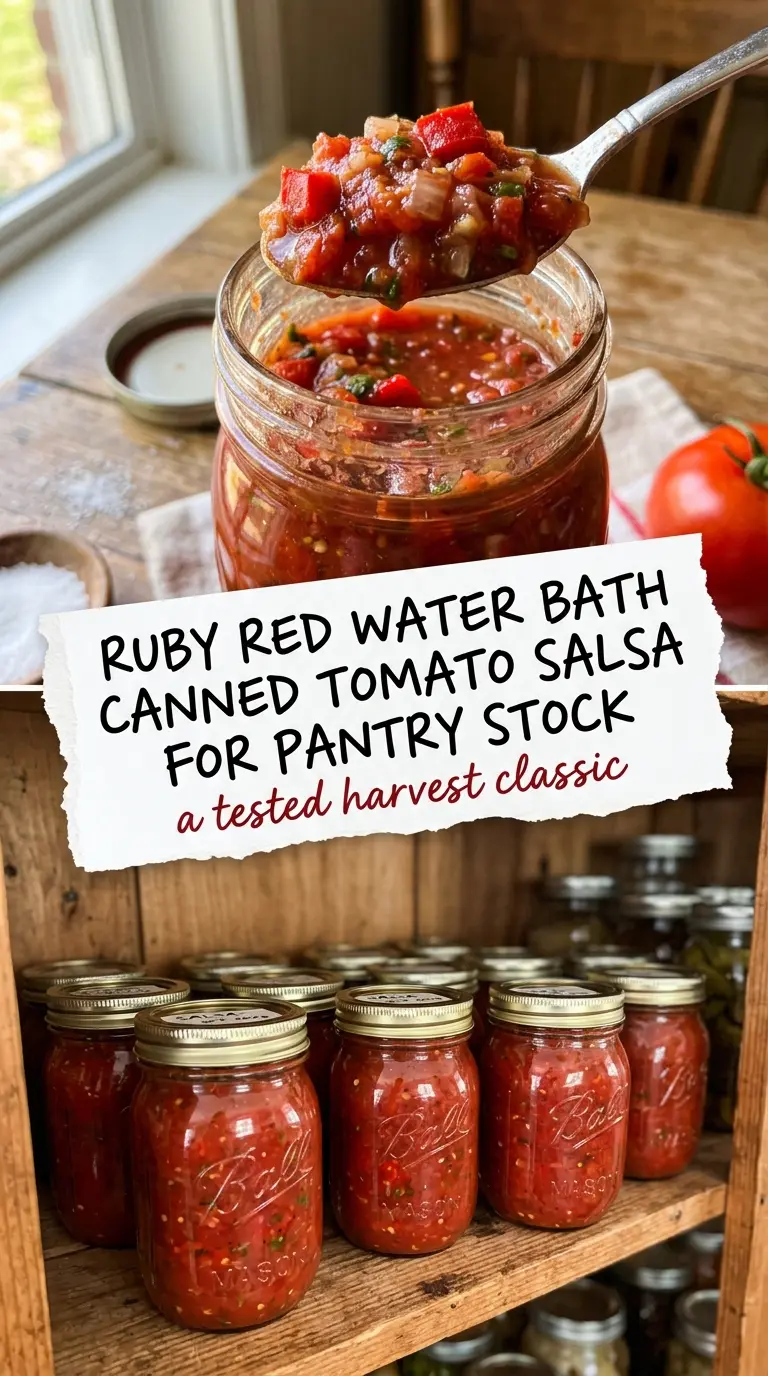
- Tomatoes — Use ripe, meaty tomatoes with good flavor. Juicy slicing tomatoes work, but if yours are very watery, expect a looser salsa and let them drain after chopping if needed.
- Vinegar — This is the safety ingredient, not just the seasoning. Stick with 5% acidity vinegar and the exact amount listed in the tested recipe, because swapping in a milder vinegar changes the acidity in a way you can’t judge by taste.
- Jalapeños — Seed them for milder salsa or leave some seeds in if you want more heat. Fresh peppers matter here because they bring texture as well as spice.
- Cilantro — Add it at the end so it stays green and fresh-tasting. If it cooks too long, it fades into the background fast.
How to Build the Salsa So It Stays Safe in the Jar
Start with clean, hot jars
Wash and heat the jars, lids, and bands according to standard canning guidelines before you start filling. Hot salsa going into cold jars is a quick way to crack glass, and a rushed setup is where most canning mistakes begin. Have your pot, funnel, ladle, jar lifter, and towels lined up before the salsa is finished.
Cook just long enough to marry the flavors
Combine the tomatoes, onion, peppers, jalapeños, garlic, vinegar, salt, and cumin in a large pot, then bring it to a boil and drop it to a steady simmer. Stir often enough to keep the bottom from scorching, especially as the mixture starts to thicken. If you let it go too long, the salsa loses its fresh tomato edge and turns soft instead of lively.
Finish with cilantro and fill the jars while it’s hot
Stir in the cilantro at the end so it keeps its color and aroma. Ladle the salsa into the jars with 1/2-inch headspace, then wipe the rims until they’re spotless before applying the lids and bands. A dirty rim can keep a jar from sealing, and one stray drip is enough to cause trouble during storage.
Process for the full 15 minutes
Set the filled jars in the water bath canner and process for 15 minutes once the water is at a full boil. Don’t start timing early. If your altitude is higher than standard, the processing time needs to be adjusted according to safe canning guidelines, because the boil behaves differently up there.
How to Adapt This for More Heat, Less Heat, or a Different Pantry
Mild Salsa with the Same Bright Finish
Use fewer jalapeños and remove every seed and membrane. You’ll keep the pepper flavor without much heat, and the salsa still processes the same way because the acidity stays unchanged.
Spicier Salsa with More Bite
Leave some jalapeño seeds in, or add one extra pepper if you want a sharper finish. Keep the total amount of low-acid vegetables within the tested recipe, since the safety balance depends on the vinegar ratio, not on how much heat you add.
Gluten-Free and Naturally Dairy-Free
This salsa is already both gluten-free and dairy-free as written, which makes it an easy pantry staple for mixed diets. Just verify that your vinegar and cumin are plain and free from seasoning blends with added fillers.
Storage and Reheating
- Refrigerator: After opening, keep jars refrigerated and use within 1 to 2 weeks. The texture may loosen a little as it sits.
- Freezer: This recipe is better canned than frozen. Freezing changes the texture and makes the tomatoes watery once thawed.
- Reheating: Salsa is usually served cold or at room temperature. If you want it warm for a dish, heat only the portion you need gently on low so it doesn’t cook down into paste.
Questions I Get Asked About This Recipe
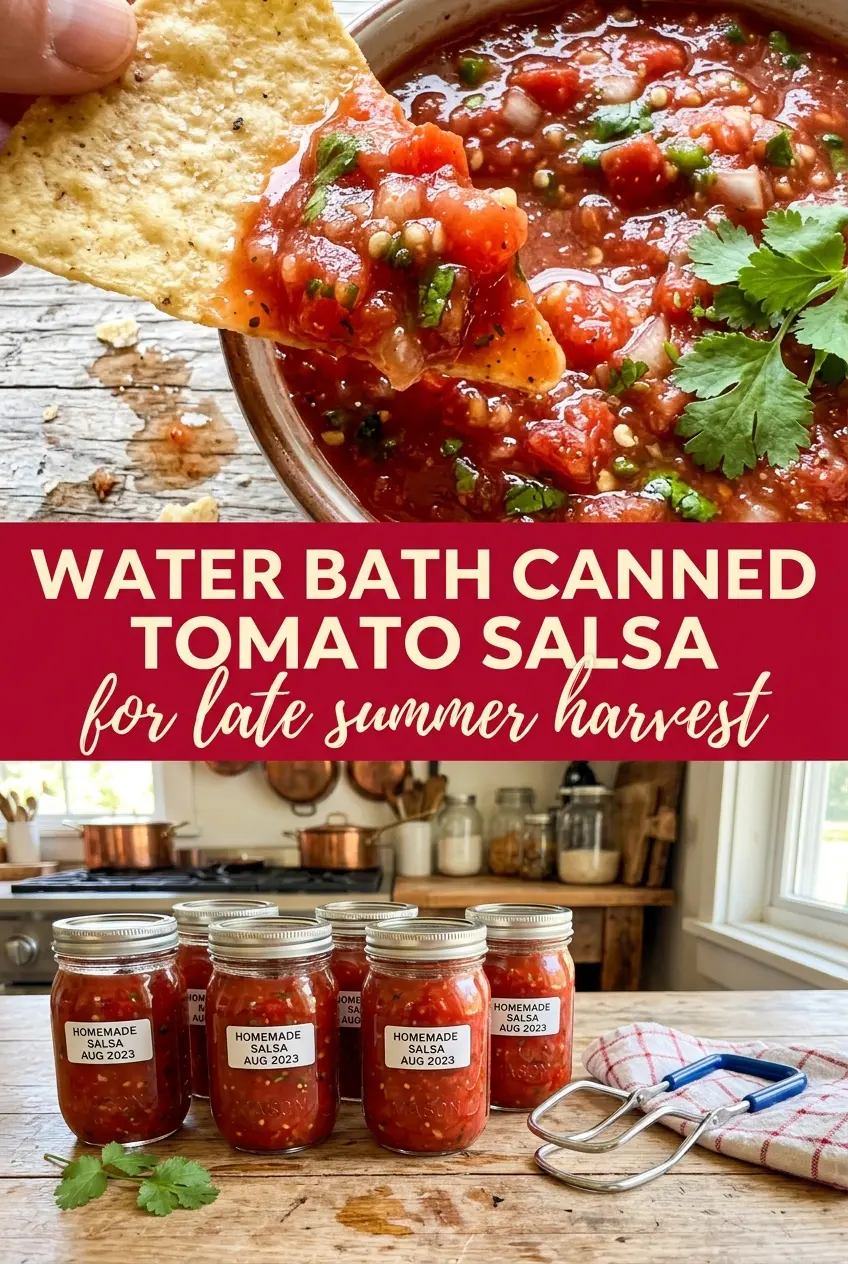
Water Bath Canned Tomato Salsa
Ingredients
Equipment
Method
- Sterilize jars, lids, and bands according to standard canning safety guidelines. Keep jars warm until ready to fill.
- Combine the tomatoes, onion, bell peppers, jalapenos, and garlic in a large pot. Heat over medium until bubbling around the edges.
- Stir in the vinegar, salt, and cumin. Mix until the seasoning is fully dissolved and evenly distributed.
- Bring to a boil, then reduce heat and simmer for 15-20 minutes until thickened slightly. Look for a glossy, cohesive texture as the liquid reduces.
- Stir in the fresh cilantro at the end. Cook just long enough to distribute it, then remove from heat.
- Ladle the hot salsa into the prepared jars, leaving 1/2-inch headspace. Remove air bubbles and keep headspace consistent for each jar.
- Wipe rims clean, apply lids and bands, and process in a water bath canner for 15 minutes. Confirm a steady boil during processing and let jars cool undisturbed.