
Sweet mango, sharp lime, and a little jalapeño heat make this salsa disappear fast. The best versions stay chunky and bright, with each bite giving you soft fruit, a clean citrus pop, and enough salt to pull everything into focus. It works because the mango stays firm enough to hold its shape, so the bowl doesn’t turn watery before it hits the table.
The balance matters more than the ingredient count here. Ripe mango brings the sweetness, red onion adds crunch and bite, and cilantro keeps the whole thing tasting fresh instead of flat. A short rest gives the salt time to wake up the fruit juices without breaking the texture.
Below, I’ll show you how to keep the salsa from getting mushy, what to do if your mango is extra sweet, and the easiest way to adjust the heat so it works with chips, tacos, or grilled fish.
The mango stayed in nice chunks and the lime kept it from tasting too sweet. I made it for fish tacos and the bowl was empty before dinner was over.
Love the bright, chunky texture of this mango salsa? Save it to Pinterest for taco night, grilled fish, or a fast chip dip with tropical flair.
The Difference Between Bright Mango Salsa and Watery Fruit Salad
The failure point with mango salsa is usually moisture. A mango that’s too soft will collapse as soon as the salt hits it, and then the bowl turns syrupy instead of staying crisp and scoopable. Ripe but firm fruit gives you sweet flavor without the mush, which is the whole trick here.
The second place people lose control is the onion. Large chunks can dominate every bite, while a fine dice blends into the salsa and sharpens it without taking over. Jalapeño also matters more than people think; removing the seeds keeps the heat manageable, but leaving a little membrane behind gives you a cleaner, fresher kick than crushed red pepper ever will.
- Ripe mangoes — The fruit should yield slightly when pressed but still feel sturdy. If it’s too soft, chill it first and dice with a light hand so the pieces hold together.
- Red onion — Raw onion gives this salsa its bite and crunch. If yours tastes harsh, soak the diced onion in cold water for 5 minutes, then drain well before mixing.
- Jalapeño — This is where the heat lives. For a milder salsa, use half a pepper or swap in finely diced bell pepper for crunch without spice.
- Lime juice — Fresh lime keeps the salsa tasting sharp and prevents the mango from reading flat. Bottled juice works in a pinch, but the flavor won’t be as clean.
What Each Ingredient Is Actually Doing in This Bowl
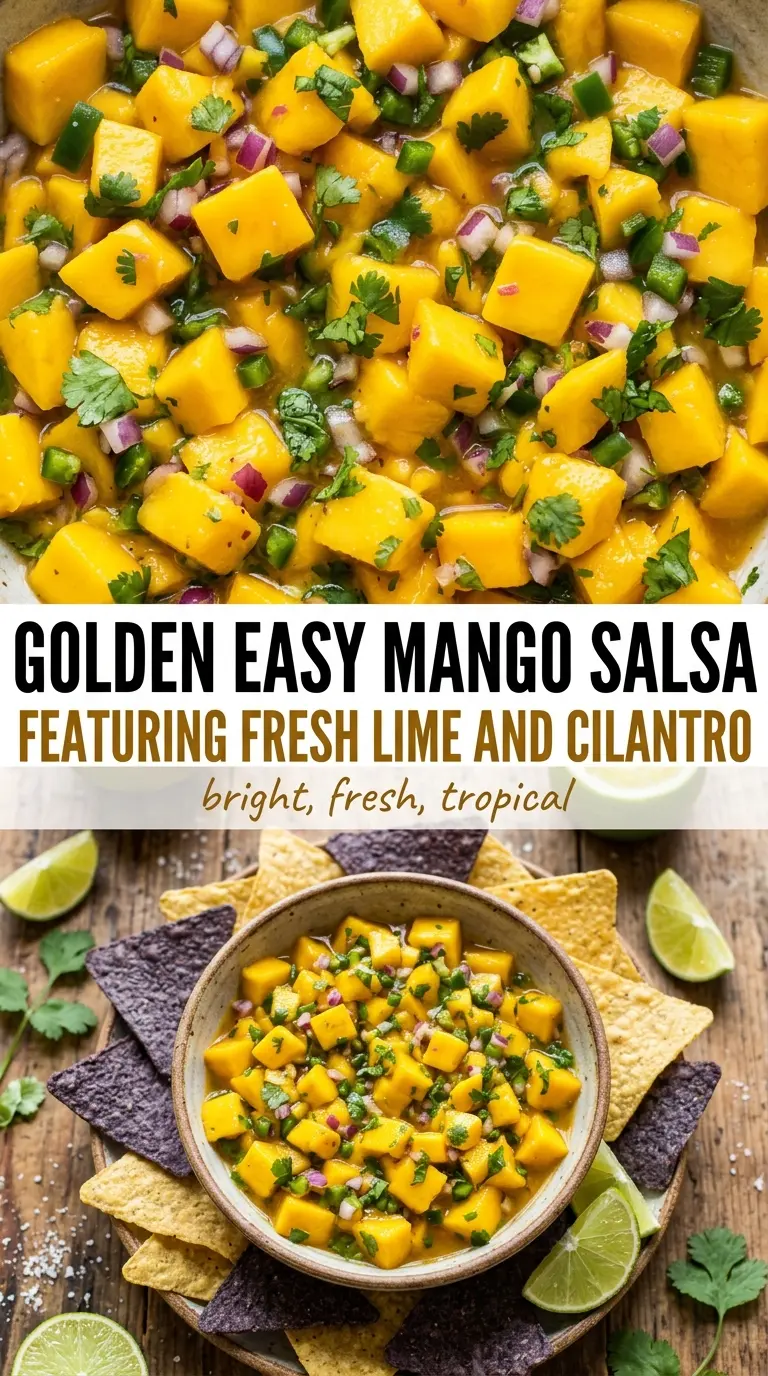
Bright mango gives the salsa its body. You want fruit that slices cleanly instead of smearing on the cutting board, because that texture is what keeps every spoonful distinct.
Red onion brings the sharp edge that keeps the salsa from tasting candy-sweet. If you’re using a very strong onion, rinse it briefly after chopping, then pat it dry so the salsa doesn’t get watered down.
Cilantro and lime do the freshening work. Cilantro should be chopped right before mixing so it doesn’t darken, and the lime should go in after the fruit so you can taste the balance before adding more salt.
Building the Salsa So It Stays Chunky
Dice the Fruit, Don’t Mash It
Cut the mango into even pieces and stop there. If you keep chopping after the fruit is already in the bowl, the edges break down and the salsa starts to look soft before the salt even goes in. A clean dice gives you the best texture and makes the whole bowl easier to scoop.
Fold in the Sharp Ingredients
Add the onion, jalapeño, cilantro, and lime juice over the mango and use a spoon to fold, not stir aggressively. Hard stirring crushes the fruit, especially if the mango is very ripe. The mixture should look glossy and loose, with the mango still holding its shape after every turn of the spoon.
Let the Salt Do Its Job
Season at the end and give the salsa a few minutes to sit. The salt draws out a little juice and pulls the flavors together, but too much time can soften the fruit. Serve it within the first day for the cleanest texture and brightest flavor.
How to Adapt This for Different Tables
Milder Mango Salsa for Kids or Heat-Sensitive Guests
Skip the jalapeño entirely or replace it with minced bell pepper. You’ll lose the peppery kick, but the salsa keeps its crunch and bright contrast, which works better than trying to hide heat behind more lime.
Dairy-Free, Gluten-Free, and Naturally Vegan
This salsa already fits all three without any changes. That makes it an easy topping for tacos, grilled proteins, and grain bowls when you need something fresh that works across a mixed table.
More Tropical, Less Sharp
Add a small amount of diced pineapple or peach if you want a softer, sweeter salsa. Keep the ratio modest so the mango still leads; too much extra fruit makes the bowl taste like a chopped fruit salad instead of a savory topping.
Storage and Reheating
- Refrigerator: Store in an airtight container for up to 1 day. After that, the mango softens and the salsa gets loose.
- Freezer: Don’t freeze it. The fruit breaks down and turns watery once thawed.
- Reheating: No reheating needed. If it’s been chilled, let it sit at room temperature for 10 to 15 minutes so the flavors open back up.
Answers to the Questions Worth Asking
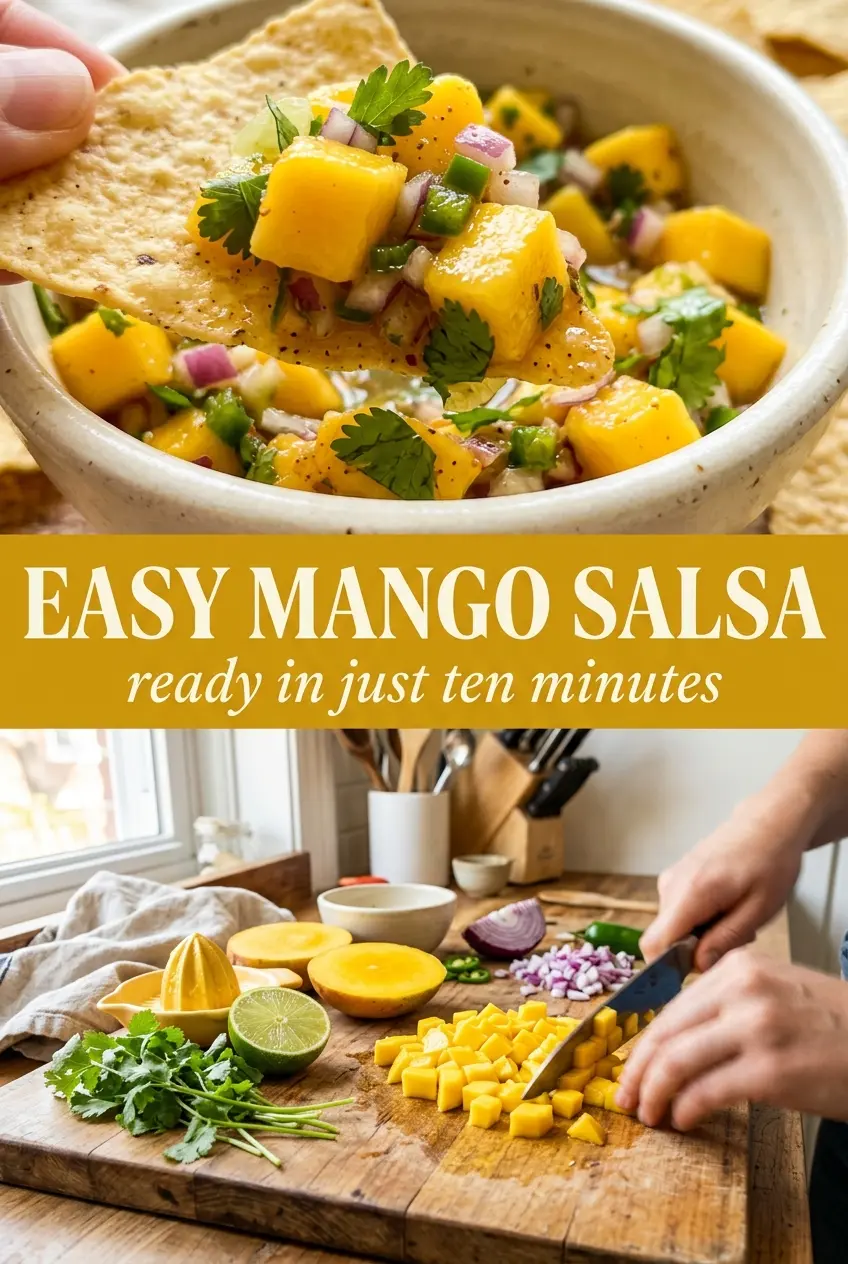
Easy Mango Salsa
Ingredients
Method
- In a bowl, combine the diced mango, red onion, and jalapeno.
- Stir in the chopped cilantro and the fresh lime juice.
- Season with salt to taste, then stir until evenly distributed.
- Let the salsa sit for 2 minutes so the flavors meld, then serve immediately or chilled.