
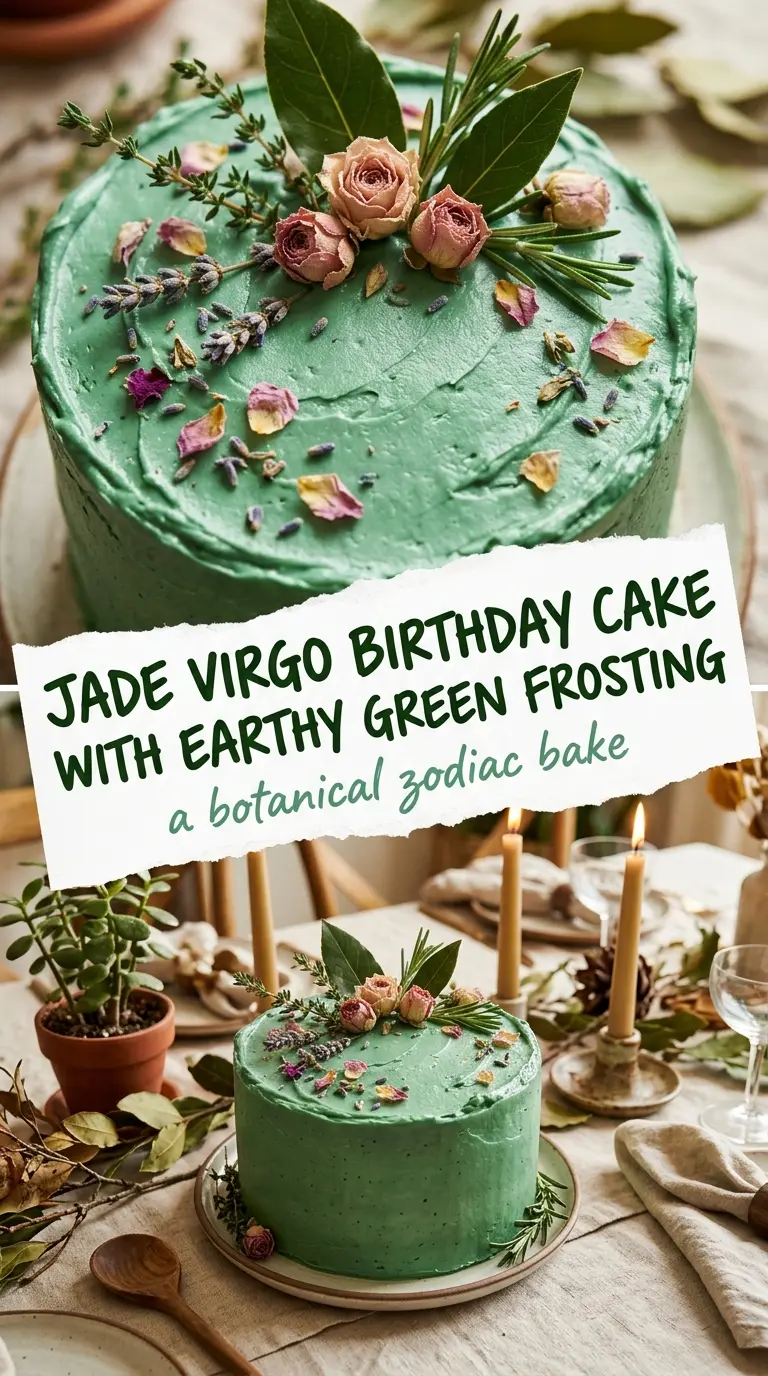
Soft vanilla layers and a smooth jade-green buttercream make this Virgo birthday cake feel polished without being fussy. The cake itself stays simple on purpose: tender crumb, clean vanilla flavor, and a finish that looks calm, elegant, and a little botanical. That balance matters here. Virgo-themed cakes work best when they look intentional rather than overloaded, and this one lands right in that sweet spot.
The batter uses the classic creaming method, which gives the cake its light structure as long as the butter and sugar are beaten until pale and fluffy. Alternate the dry ingredients with the milk and stop mixing as soon as the batter looks smooth; overmixing is the fastest way to turn a soft layer cake into something tight and springy. The frosting gets its color from just a touch of green food coloring, and a little goes a long way if you want that earthy jade tone instead of a neon finish.
Below, I’ve included the small details that make the cake easier to frost cleanly, plus a few ways to adapt the look if you want to lean more botanical or keep it even simpler.
The vanilla layers baked up even and stayed moist, and the green buttercream was easier to smooth than I expected. I chilled the layers first like suggested, and the sides came out clean instead of sliding around.
Pin this Virgo birthday cake for a clean vanilla layer cake with jade-green buttercream and botanical garnish.
The Cleanest Way to Frost a Zodiac Cake Without Losing the Sharp Edges
A layer cake like this only looks polished if the layers are handled cold. Warm cake crumbs drag through the frosting, and soft layers slide when you try to smooth the sides. Chill the layers until they’re firm to the touch, then crumb-coat first. That thin first layer traps loose crumbs so the final coat can go on cleanly.
The other detail that matters is the frosting texture. If it’s too soft, the color will look streaky and the sides will slump. Beat the buttercream until it’s smooth and spreadable, then chill it briefly if it feels loose. That gives you enough structure to tint it jade-green and create the clean, earthy finish this cake needs.
What Each Ingredient Is Actually Doing in This Cake
- All-purpose flour — This gives the cake its structure without making it dense. Cake flour will make it a little softer, but all-purpose keeps the crumb sturdy enough for stacking and frosting.
- Baking powder — This is what lifts the layers so they bake up even instead of flat. Don’t swap in baking soda here unless the rest of the recipe changes, because the rise depends on baking powder doing the work.
- Butter — Butter brings flavor and helps the cake stay tender. It needs to be softened, not melted; if it’s too warm, the batter won’t hold air well when you cream it with the sugar.
- Eggs — These bind the batter and add richness. Add them one at a time so the mixture stays smooth instead of looking curdled.
- Milk — Milk loosens the batter just enough for a soft crumb. Whole milk gives the best texture, but 2% works if that’s what you have.
- Buttercream frosting — A classic American-style buttercream is the easiest way to get that smooth, colored finish. If you want to use a less sweet frosting, the cake still works, but the surface won’t be quite as clean for decorating.
- Green food coloring — Use gel coloring if you can. Liquid coloring can thin the frosting, while gel gives you that jade tone without changing the texture.
- Edible flowers or herbs — These are the finishing touch that makes the theme read as Virgo instead of just green. Rosemary, thyme, mint, or small edible blossoms all work because they add a botanical look without crowding the top.
Building the Batter and Frosting It Before the Crumb Coat Sets
Mixing the Dry Ingredients
Whisk the flour, baking powder, and salt together before they go anywhere near the butter. That breaks up clumps and spreads the leavening evenly through the batter, which helps the layers rise at the same pace. If the dry ingredients aren’t fully blended, you can end up with uneven pockets in the crumb.
Creaming for a Light Crumb
Beat the butter and sugar until the mixture turns pale and fluffy, not just combined. That step traps air, and it’s one of the main reasons the cake bakes up soft instead of heavy. If the butter looks greasy or soupy, it was too warm and the texture won’t hold as well in the oven.
Finishing the Batter Without Overworking It
Add the eggs one at a time, then alternate the dry ingredients with the milk. Stop mixing as soon as the batter looks smooth and thick, because extra beating after the flour goes in develops too much gluten. Divide the batter evenly so both layers bake at the same rate and cool flat enough to stack without trimming much.
Coloring and Frosting the Cake
Let the layers cool completely before you touch the frosting. Warm cake melts buttercream on contact, and that’s when the sides start to slide. Tint the frosting with a little green food coloring at a time until you get a muted jade tone, then spread on a thin crumb coat before the final layer. A short chill between coats makes the finish smoother and helps the edges stay sharp.
Three Ways to Make This Virgo Cake Fit the Party
Botanical Finish With Fresh Herbs
Top the cake with small rosemary sprigs, thyme, or mint for a cleaner earth-sign look. Herbs bring a sharper, greener visual than flowers, and they pair well with the vanilla cake without making the decoration feel busy.
Dairy-Free Version
Use a dairy-free butter substitute and unsweetened non-dairy milk in both the cake and frosting. The crumb will be a touch less rich, but the structure still holds, and the color and decoration stay exactly the same.
A More Subtle Sugar Finish
If you want a less sweet cake, use a thin layer of frosting between the cakes and a thinner coat on the outside. The finish will look a little more rustic, but the vanilla flavor comes through more clearly and the botanical garnish still reads beautifully.
Baking as Cupcakes Instead
Divide the batter into lined cupcake tins and bake until the tops spring back when lightly pressed. You’ll lose the dramatic layered look, but you gain easy serving, and the jade frosting with a tiny herb garnish still makes the Virgo theme obvious.
Storage and Reheating
- Refrigerator: Store covered for up to 4 days. The cake stays moist, but the buttercream firms up, so let slices sit at room temperature before serving.
- Freezer: Freeze unfrosted layers tightly wrapped for up to 2 months. Frosted slices can be frozen, but the garnish won’t look as fresh after thawing.
- Reheating: This cake doesn’t need reheating. If it’s chilled, let it warm on the counter for 30 to 45 minutes so the buttercream softens and the crumb tastes tender again.
Answers to the Questions Worth Asking
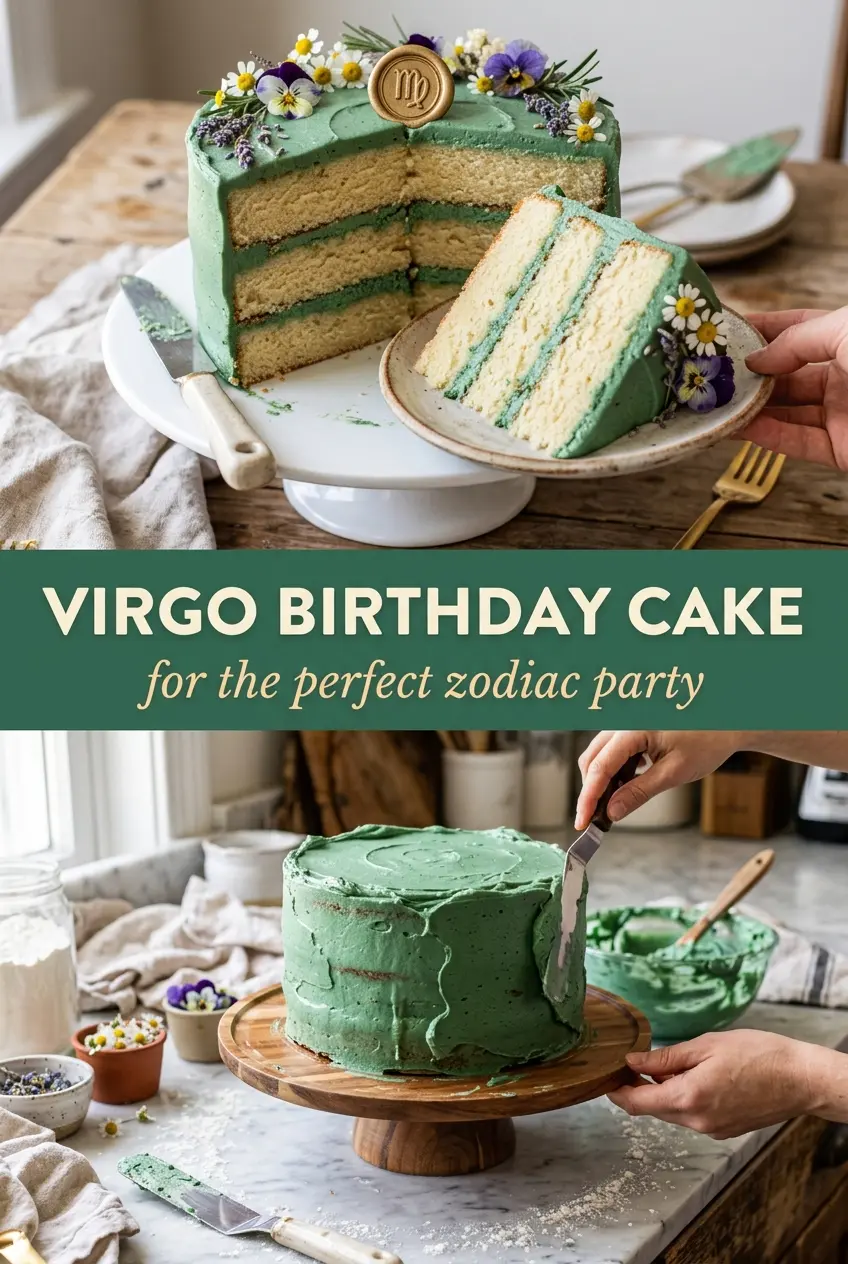
Virgo Birthday Cake
Ingredients
Equipment
Method
- Preheat the oven to 350°F and grease two 8-inch cake pans.
- Whisk together the all-purpose flour, baking powder, and salt until evenly combined.
- Cream the butter and granulated sugar until light and fluffy, then beat in the eggs one at a time.
- Alternate adding the dry ingredients and milk, mixing until smooth, then stir in the vanilla extract.
- Divide the batter between the pans and bake for 25-30 minutes until a toothpick comes out clean.
- Cool completely, then tint the buttercream frosting jade-green and frost the layers.
- Decorate with edible flowers or herbs for a botanical Virgo-themed finish.