
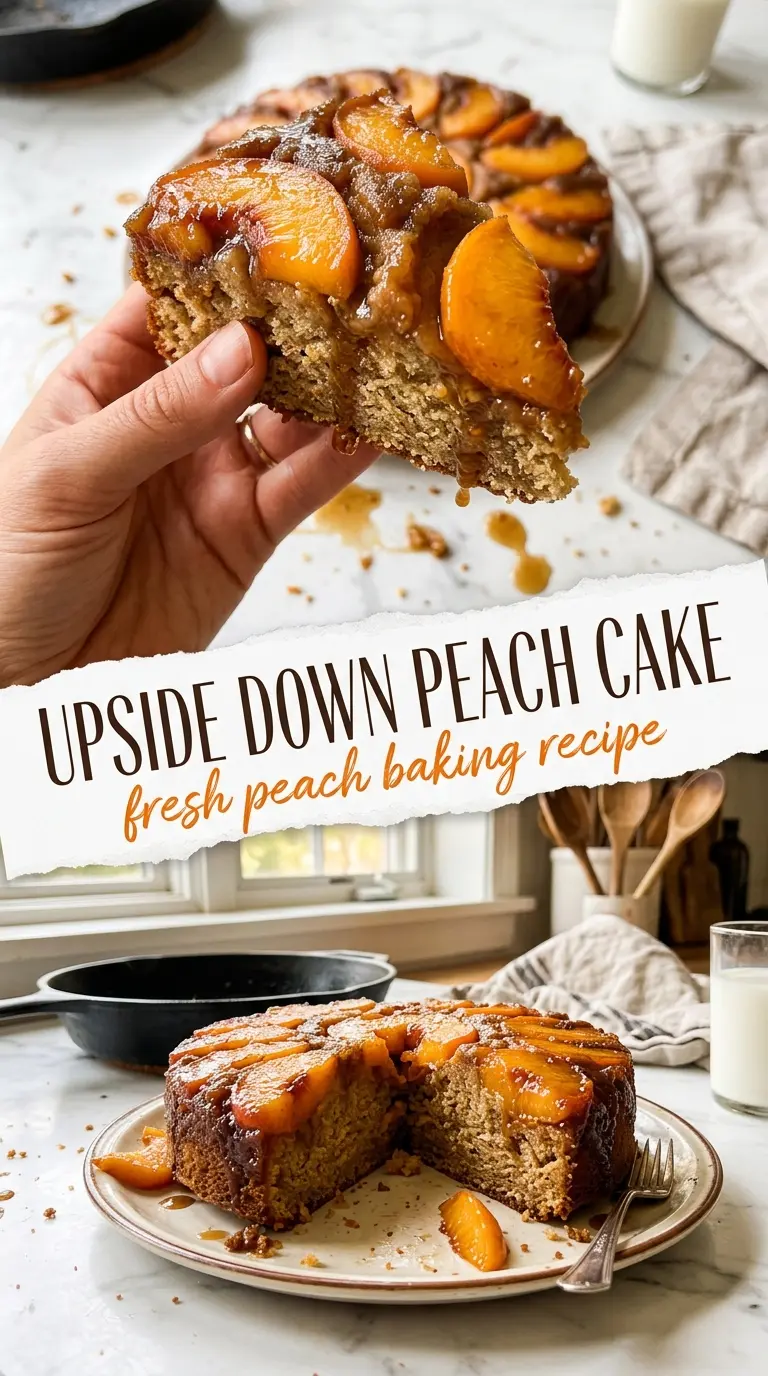
Glossy peach slices and a deep caramel layer turn this upside down peach cake into the kind of dessert people hover over while it cools. The top bakes into a shiny, jammy finish, and when you flip it out, the peaches settle into a pattern that looks far more complicated than it actually is. The cake underneath stays soft and buttery, with enough structure to hold the fruit without turning dense or soggy.
The part that makes this version work is the way the caramel starts in the pan instead of being added later. Butter and brown sugar melt together into a thin syrup that coats the peaches as the cake bakes, which keeps the fruit glossy and gives the finished cake that clean release when you invert it. The batter is simple on purpose. It needs to be thick enough to support the fruit, but not so heavy that it buries the peach flavor.
Below, I’ve included the part that matters most: how to layer the peaches so they stay neat after flipping, plus the timing that keeps the bottom from sticking to the pan.
The caramel set up beautifully in the pan and the peaches stayed in place when I flipped it. Mine came out with a gorgeous golden top and the cake was still tender the next day.
Save this upside down peach cake for the moment you want glossy caramel peaches and a dramatic flip with barely any fuss.
The Peach Layer Needs a Hot Pan, Not Just a Pretty Arrangement
The biggest mistake with an upside down cake is treating the fruit layer like decoration. It’s not. The butter and brown sugar need enough heat to melt into a thin caramel before the peaches go in, or you end up with a dry sugary patch that sticks in places and runs in others. Starting the caramel right in the cake pan gives the peaches a slick base and keeps the topping from tearing when you turn the cake out.
Slice the peaches evenly so they sit flat and cook at the same rate. If the pieces are too thick, they can lift the batter as it bakes and leave gaps in the finished top. If your peaches are very ripe and juicy, layer them snugly but don’t pile them too high; too much fruit adds steam, and steam is what turns a neat upside down cake into a soft, slippery mess.
What Each Ingredient Is Doing in This Cake
- Fresh peaches — Use peaches that are ripe but still hold their shape. Too-soft fruit collapses into the caramel and loses the clean pattern on top. If your peaches are very juicy, pat the slices dry first so the caramel stays concentrated instead of watered down.
- Butter — This does two jobs here: it builds the caramel layer and gives the cake richness. The pan layer can use standard salted or unsalted butter, but if you use salted, keep the rest of the recipe lightly seasoned. Let the butter melt fully with the brown sugar before adding the peaches so the topping spreads evenly.
- Brown sugar — This is the caramel flavor in the pan. Light brown sugar gives a softer butterscotch note; dark brown sugar makes the topping deeper and a little more molasses-heavy. White sugar won’t give the same sticky finish, so don’t swap it here.
- Flour — Plain all-purpose flour gives the cake enough structure to hold the fruit without getting tough. If you use cake flour, the crumb turns more delicate but can become fragile when you flip it. Measure carefully and don’t pack the flour down, or the cake will bake up dry.
- Eggs — These set the batter and help it lift around the peaches. Room temperature eggs blend more smoothly into the butter and sugar, which keeps the batter from looking curdled. Cold eggs can still work, but they take longer to incorporate.
Building the Caramel and Flipping It Cleanly
Melt the Base in the Pan
Set the butter and brown sugar directly in the cake pan and warm them just until the butter is melted and the sugar looks wet and grainy. You’re not trying to cook a hard caramel here. You just want a glossy base that can spread across the bottom before the batter goes in. If the mixture looks oily and separated, give it another minute over gentle heat and stir once or twice so the sugar dissolves more evenly.
Arrange the Peaches in One Tight Layer
Lay the peach slices in the caramel while it’s still warm. Nestle them close together so there aren’t open gaps in the final top. The fruit should sit flat against the pan; if you stack it, the cake can bake unevenly and the top won’t release cleanly. Press the slices lightly into the caramel so they adhere without sinking.
Build the Batter Without Overworking It
Cream the remaining butter and sugar until pale and fluffy, then beat in the eggs one at a time. That step traps air and gives the cake some lift. Fold in the flour just until you no longer see dry streaks. If you keep mixing after that, the cake gets tight instead of tender, and it won’t have the soft crumb this dessert needs.
Bake Until the Center Sets, Then Flip While Warm
Pour the batter over the peaches and spread it gently to the edges. Bake at 350°F until the top is set and a tester comes out with a few moist crumbs, about 40 minutes. Don’t let it sit too long before flipping. If the caramel cools completely, it starts to glue itself to the pan. Run a knife around the edge, rest a plate over the cake, and invert in one confident motion.
How to Adapt This Cake Without Losing the Flip
Use canned peaches when fresh ones aren’t available
Drain the peaches very well and pat them dry before layering them into the pan. Canned fruit is softer and sweeter than fresh, so the upside down layer will be less structured, but it still works if you keep the pieces in a single layer and don’t add extra syrup from the can.
Make it dairy-free
Use a good plant-based butter that melts cleanly and bakes well. The flavor will be a little less rich, but the caramel layer and the flip will still work. Choose a dairy-free butter with enough fat to behave like real butter, not a thin spread.
Add a little spice without covering the peaches
A small pinch of cinnamon or cardamom in the batter works well here. Keep it restrained. The goal is to support the peach and caramel, not turn the cake into a spice cake.
Storage and Reheating
- Refrigerator: Store covered for up to 4 days. The peaches will soften a bit more, but the cake stays moist.
- Freezer: Freeze slices tightly wrapped for up to 2 months. The texture is best after thawing in the fridge, not at room temperature.
- Reheating: Warm slices in a 300°F oven for 10 to 12 minutes. The microwave can make the caramel loose and the crumb gummy, so use it only if you’re in a hurry.
Answers to the Questions Worth Asking

Upside Down Peach Cake
Ingredients
Equipment
Method
- Melt the butter and brown sugar together in the cake pan until smooth and glossy, then remove from heat to keep it pourable.
- Arrange the peach slices in the caramel in an even layer so they form a ringed pattern on top after flipping.
- Cream the remaining butter and sugar until light and fluffy, then beat in the eggs one at a time until the mixture looks smoother.
- Fold in the flour until just combined, then pour the batter over the peaches and gently level the surface.
- Bake at 350F for 40 min, until the top is golden and a toothpick in the center comes out clean.
- Flip the cake onto a plate immediately while warm, so the caramel releases and the peach ring pattern stays intact.