
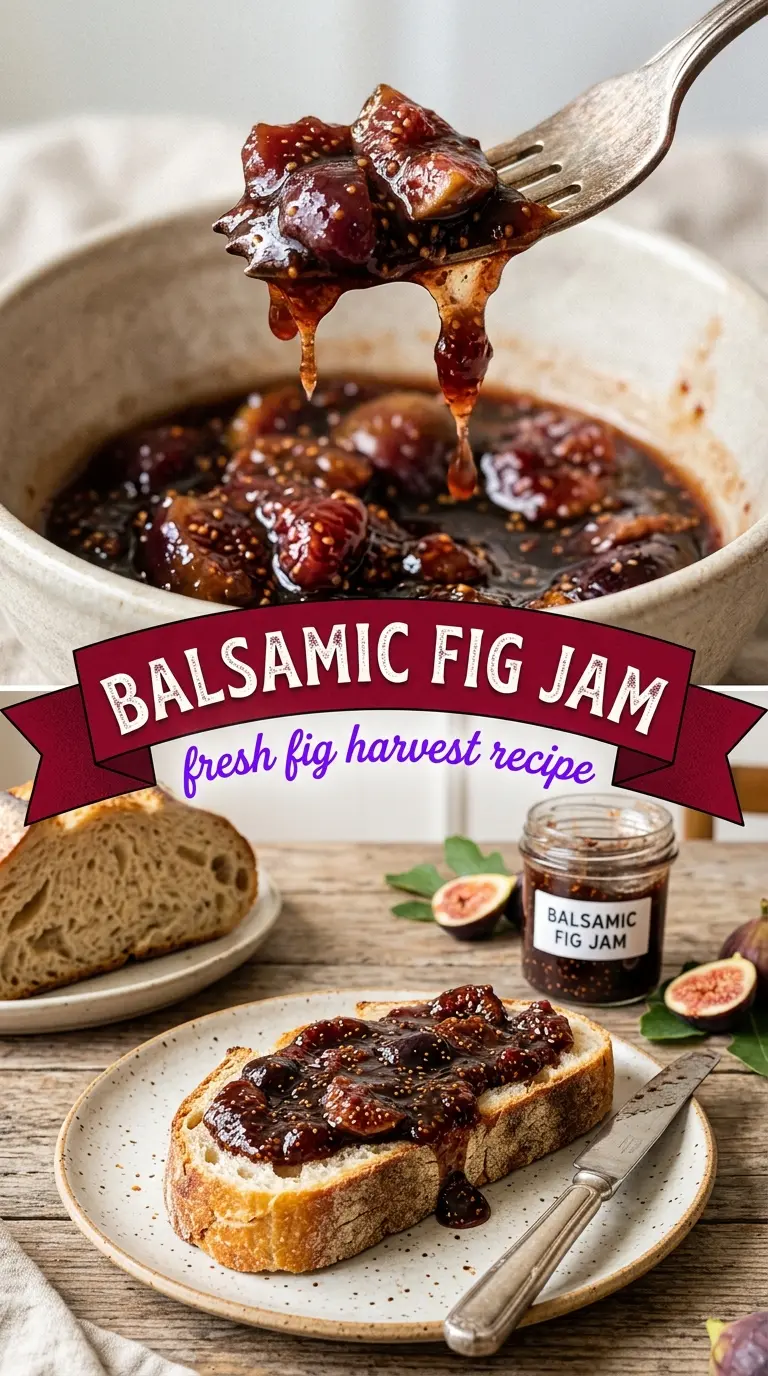
Deep purple figs cook down into a glossy jam with a rich, tangy edge that keeps each spoonful from tipping too sweet. The balsamic doesn’t taste sharp here; it rounds out the figs and gives the finished jam a darker, more grown-up depth that makes it just as good beside cheese and crackers as it is spread on toast.
The texture comes from simmering the fruit long enough for the figs to break apart and the liquid to tighten into a jammy set. A cinnamon stick adds warmth without taking over, and stirring often matters because fig jam can catch on the bottom before it looks thick. The result is a small-batch preserve with real body and a clean finish.
Below, I’ve included the little details that matter most: when the jam is ready to jar, why the balsamic works better than lemon here, and how to store it so the color and texture stay as good as the day you made it.
The jam set up beautifully and the balsamic gave it this deep, almost savory finish that made it taste way more expensive than it was. I used it on a grilled cheese and my husband asked if I made extra.
Balsamic Fig Jam has that glossy, sweet-tart finish that makes a plain cracker feel like an appetizer.
The Bittersweet Balance That Keeps Fig Jam from Tasting Flat
Fig jam can taste one-note if the fruit and sugar are left to do all the work. The balsamic vinegar fixes that by adding acidity and a dark, almost syrupy edge that makes the sweetness taste fuller instead of louder. It also helps the jam pair better with savory foods, which is why this version feels more flexible than a standard fig preserve.
The other thing that matters is patience. Fresh figs release a lot of moisture at first, then tighten up as the liquid cooks off. If you rush it, you’ll end up with a loose spread that slides off the spoon. If you cook it until the bubbles get thicker and slower and the fruit looks glossy instead of watery, you’re in the right place.
What Each Ingredient Is Actually Doing in This Dish
- Fresh figs — Ripe figs give you the soft flesh and natural pectin-like body this jam needs. If yours are very soft, that’s fine; just cut away any bruised spots. Underripe figs stay a little woody and won’t break down as smoothly.
- Sugar — This does more than sweeten. It helps the jam thicken and preserves the color. Cutting it much lower changes the set, so if you reduce it, expect a softer jam and a shorter fridge life.
- Balsamic vinegar — Use a decent balsamic here, not the absolute cheapest bottle, because the flavor sits in the final jam. It adds depth and keeps the fruit from tasting bland. If you only have red wine vinegar, use less and add a teaspoon of honey to soften the sharper edge.
- Cinnamon stick — A whole stick gives warmth without muddying the jam. Ground cinnamon can work in a pinch, but it spreads more aggressively and can make the finished jam look speckled and heavy.
Watching the Pot, Not the Clock
Starting the Cook
Combine the figs, sugar, and balsamic vinegar in a heavy pot and set it over medium heat. As the sugar melts, the mixture will look loose and glossy before it starts to thicken. That early stage can fool you into thinking nothing is happening, but the fruit is already softening and releasing liquid. Stir often from the beginning so the sugar doesn’t sit on the bottom and scorch before the figs break down.
Simmering to Jammy
Once the pot comes to a steady simmer, lower the heat enough to keep the bubbles gentle and active, not aggressive. You want the figs to collapse and the liquid to reduce until the spoon leaves a clear trail for a second or two before closing back up. If the jam starts spitting hard or sticking around the edges, the heat is too high. Slow heat gives you a thick, glossy finish instead of a sticky, burned one.
Knowing When It’s Ready
After about 30 minutes, check the texture by dragging a spoon through the center. The jam should mound slightly and fall in heavy ribbons rather than pour like sauce. The figs will look dark and soft, and the liquid around them will have a shiny, almost lacquered look. Pull the cinnamon stick before jarring, because leaving it in too long can push the spice flavor past the point where it feels balanced.
Jarring and Sealing
Ladle the jam into clean jars while it’s hot, leaving a little headspace at the top. If you’re water-bath canning it, process the jars for the full 10 minutes so the lids seal properly. If the jars aren’t sealed after cooling, refrigerate them and use those first. A poor seal is the main thing that shortens the life of homemade jam, not the cooking itself.
Three Smart Ways to Change This Fig Jam Without Losing the Point
Make It Less Sweet Without Breaking the Set
You can reduce the sugar a little, but don’t cut it dramatically or the jam will stay loose and won’t keep as well. If you want a sharper finish, add a splash more balsamic at the end instead of taking sugar out at the start. That keeps the texture intact while shifting the flavor toward tangy rather than candy-sweet.
Swap the Cinnamon for a More Savory Finish
If you want the jam to lean more toward a cheese-board spread than a breakfast spread, use a small sprig of rosemary instead of the cinnamon stick. Pull it early so it doesn’t get piney. The result is less warm-spiced and more herbal, which works especially well with goat cheese and roasted pork.
Make It Vegan-Friendly and Pantry-Ready
This jam is already naturally vegan, gluten-free, and dairy-free, so there’s nothing to convert. The only thing worth checking is your balsamic, since some aged versions can be pricier but not necessarily better here. A solid everyday balsamic gives you the right balance of acidity and body without wasting the good bottle.
Storage and Reheating
- Refrigerator: Store sealed jars in the fridge for up to 3 weeks once opened; the texture will tighten slightly as it chills.
- Freezer: Fig jam freezes well. Leave headspace in freezer-safe containers and thaw overnight in the fridge before using.
- Reheating: You usually won’t reheat jam, but if it thickens too much after chilling, set the jar in warm water for a few minutes and stir. Don’t microwave it hard or the sugar can seize at the edges before the center loosens.
Questions I Get Asked About This Recipe
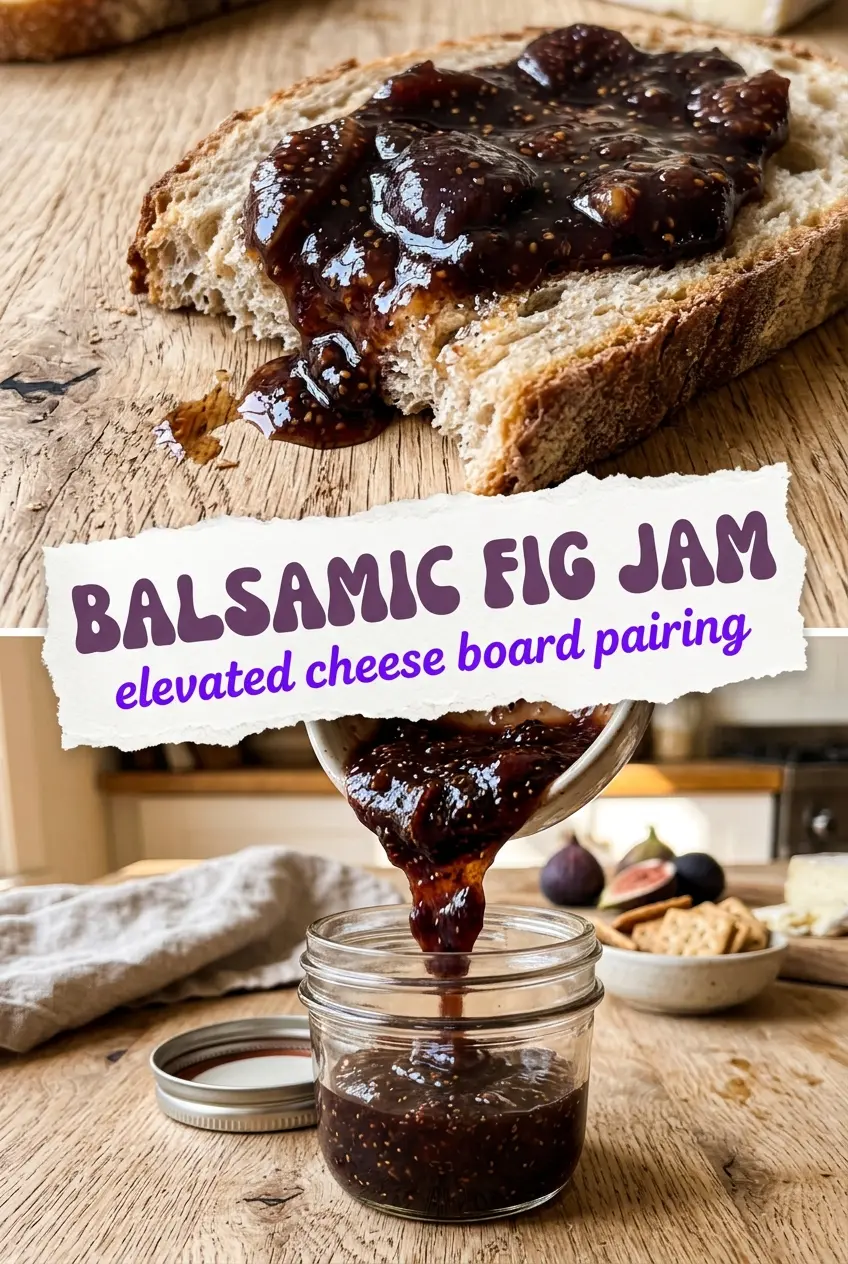
Balsamic Fig Jam
Ingredients
Equipment
Method
- Combine chopped fresh figs, sugar, and balsamic vinegar in a Dutch oven over medium heat, stirring until the sugar is moistened and the mixture looks syrupy. Bring to a steady simmer and reduce to maintain bubbling.
- Simmer for 30 min, stirring often, until the jam thickens and looks glossy with deep purple fig pieces. Skim any foam if needed and keep the simmer consistent.
- Remove the cinnamon stick and discard it. Taste and adjust thickness by simmering 5 minutes more if you want it thicker.
- Jar the jam while hot into clean jars, leaving the proper headspace for canning. Wipe rims, cap tightly, and keep jars hot until processing.
- Process the sealed jars in a water bath for 10 min so the lids seal properly. Remove and cool completely before storing.