
A Thanksgiving charcuterie board earns its place on the table because it solves the one problem every holiday gathering has before the main meal lands: people are hungry now. The mix of creamy brie, sharp cheddar, salty cured meats, juicy fruit, and crunchy crackers keeps everyone circling back without anyone getting stuck waiting on the oven. It looks generous and festive, but the best part is that it asks almost nothing from the cook once it’s assembled.
What makes this board work is balance. The ripe figs and pomegranate bring brightness, the honey softens the sharper edges of the cheddar, and the prosciutto and salami keep the sweet pieces from feeling one-note. If you’ve made boards before, you already know the trick is not piling everything into a heap. You want contrast, movement, and enough empty space that each item can breathe a little. That’s what turns a tray of snacks into something people want to linger over.
Below, I’ve included the arrangement order that keeps the board from feeling crowded, plus a few smart swaps if you need to build it from what you can actually find at the store. The goal is a board that looks abundant, tastes balanced, and holds up well while guests help themselves.
The brie and honey in the center made the whole board taste pulled together, and the figs with the candied pecans were the first things gone. I loved that the crackers stayed crisp because nothing was piled on top of them.
Save this Thanksgiving charcuterie board for the holiday when you want something abundant, no-cook, and easy to arrange in 20 minutes.
The One Thing That Keeps a Holiday Board From Looking Scattered
A good charcuterie board doesn’t happen because you bought enough food. It happens when you give every texture a job. The soft cheese needs a center, the meats need shape, the fruit needs open space so it reads fresh, and the crackers need room at the edge so they don’t go stale from sitting under everything else. When a board looks cluttered, it’s usually because the cook filled every inch too early instead of building around the largest items first.
Start with the brie and the honey dish because they anchor the board visually and tell guests where to begin. Then lay down the cheddar in fans and fold the meats into loose ribbons so they add height without swallowing the surface. The final fruit and nuts go into the gaps, not on top of everything. That’s the difference between a board that looks styled and one that looks dumped out.
What Each Ingredient Is Actually Doing on This Board
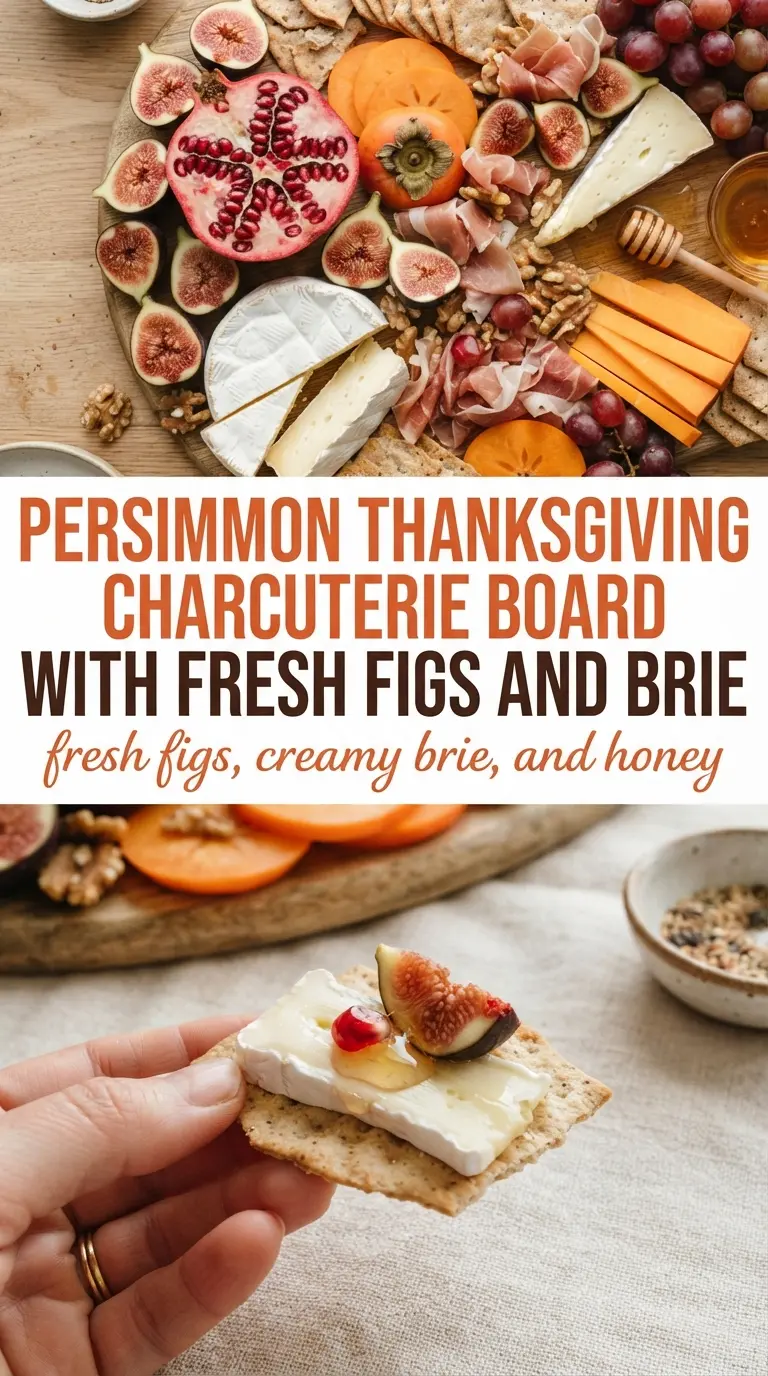
- Aged cheddar — This gives the board its sharp, savory backbone. A good cheddar matters here because it holds its own next to the fruit and honey. If you need a substitute, use another firm cheese with bite, like gouda or manchego, and slice it thin so it still feels easy to eat.
- Brie — Brie brings the creamy center that makes people pause and reach for crackers. Let it sit at room temperature for a bit so it softens, but don’t leave it out long enough to turn greasy. A triple-cream brie works too, though it reads a little richer.
- Prosciutto and salami — These cured meats add salt, fat, and shape. Folding or curling them instead of laying them flat makes the board look fuller without using more food. If you can’t find prosciutto, thinly sliced ham can work, but it won’t bring the same silky texture.
- Fresh figs, pomegranate seeds, and grapes — This is the fresh, juicy contrast that keeps the board from feeling heavy. Figs are the most seasonal-looking element, but grapes and pomegranate seeds do the job if figs are hard to find. Dry the fruit well before arranging it so it doesn’t stain the cheese or crackers.
- Candied pecans and crackers — These add crunch and keep the board from turning soft and monotonous. Candied pecans give you both sweetness and texture in one bite, which matters when the rest of the board leans creamy. Use sturdy crackers that can handle cheese and honey without snapping the second they’re picked up.
- Honey — Honey ties the sharp cheddar, creamy brie, and salty meats together. A little goes a long way, so drizzle lightly or keep it in a small dish for dipping. If you want a deeper note, use hot honey, but only if your guests like a little heat.
Building the Board So It Looks Full Before It Looks Fussy
Set the Anchors First
Line a sheet pan or large board with parchment, then place the brie and a small honey dish near the center. That center point gives the board structure and keeps your eye from wandering. If the brie is hidden at the edge, the whole arrangement starts to feel accidental. The board should look like it has a focal point from the first minute.
Fan, Fold, and Curve the Savory Pieces
Fan the cheddar slices into a loose arc, then fold the prosciutto and salami into ribbons or half-moons. Straight lines make a board feel flat, while curves create movement and help the tray look abundant. If your meat is sliced too thick, it won’t fold cleanly, so use thin slices for the best texture. The goal is height without bulk.
Fill the Gaps With Color
Tuck the figs, grapes, and pomegranate seeds into the open spaces around the cheese and meat. Don’t dump them into one corner. Small clusters look intentional, and scattered fruit brings the board to life. If the pomegranate seeds are wet, blot them first or they’ll bleed onto the parchment and make the board look messy.
Finish With Crunch and Access
Add the candied pecans and crackers last so they stay crisp and easy to grab. Keep the crackers at the perimeter or in a narrow row where hands can reach them without crossing over the softer foods. If you pile crackers under fruit or cheese, they soften fast and lose the texture that makes them worth including. The finished board should look full, but each piece still needs its own landing spot.
Three Ways to Adapt This Board Without Losing the Balance
Dairy-Free Version With the Same Contrast
Swap the brie and cheddar for two plant-based cheeses with different textures, one soft and one sliceable. You’ll lose some of the sharp dairy richness, so lean harder on the honey, fruit, and salty meats to keep the board interesting. If your dairy-free cheeses are bland, add a little flaky salt right before serving.
Gluten-Free Board That Still Feels Substantial
Use certified gluten-free crackers or crispbread and check the candied pecans for any coating ingredients if you’re buying them packaged. The rest of the board is naturally gluten-free, so this swap is easy. Choose a sturdy cracker with enough structure to carry brie and honey without breaking in half.
Make It Bigger for a Crowd
Double the fruit first, then add more crackers and one extra cheese before increasing the meats. That order matters because fruit and crackers fill space without making the board feel heavy. If you just pile on more salami, the whole thing starts to read as a meat tray instead of a grazing board.
Storage and Reheating
- Refrigerator: Store leftovers covered for up to 2 days. The crackers will soften if they sit against the cheese, so keep them separate if you can.
- Freezer: This board doesn’t freeze well once assembled. The fresh fruit, cheese, and crackers all lose texture, so freeze only any extra meat or cheese before it’s plated.
- Reheating: No reheating needed. For the best texture, let the cheese sit at room temperature for 20 to 30 minutes before serving leftovers so it tastes soft instead of cold and firm.
Answers to the Questions Worth Asking
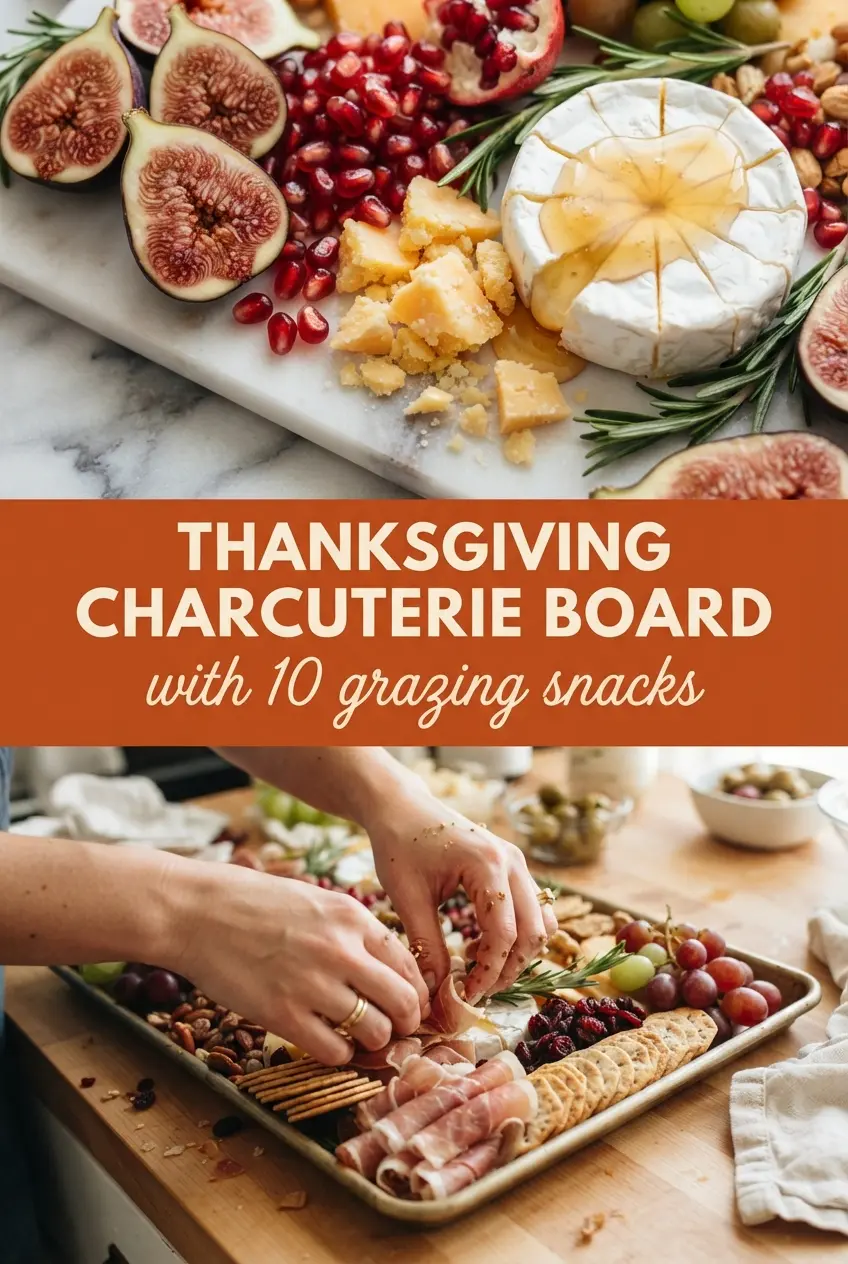
Thanksgiving Charcuterie Board
Ingredients
Equipment
Method
- Line a sheet pan with parchment and set the brie and a small dish of honey in the center.
- Fan out the sliced aged cheddar around the center, then fold the prosciutto and salami in curved rows.
- Fill the gaps with halved figs, red grapes, and pomegranate seeds for even coverage.
- Tuck in the candied pecans and crackers so they are visible across the board.