
Glossy, caramelized butternut squash with crisp edges and a tender center is the kind of side dish that disappears before the main course gets a fair shot. The maple syrup clings to every cube, the butter helps the edges brown instead of drying out, and the pinch of cinnamon gives the squash just enough warmth to taste like more than plain roasted vegetables. It lands on the table looking simple, but the pan comes out with deep amber spots and a sweetness that feels balanced, not cloying.
The trick is using enough heat to drive off moisture fast. Butternut squash holds a lot of water, so if the oven runs too low or the pan is crowded, you get soft steamed cubes instead of browned ones. A sheet pan with space between the pieces matters more here than a long ingredient list. The maple syrup and butter also need to coat the squash evenly before roasting so the sugars can caramelize instead of pooling and burning in one corner.
Below, I’ve laid out the small details that keep this side dish from turning mushy, plus a few ways to adapt it when you want a different finish or need to work around what’s in the kitchen.
The squash caramelized beautifully and stayed tender inside instead of turning watery. I used a parchment-lined sheet pan and the edges came out sticky and browned, which made it taste like something from a holiday dinner table.
Save these maple-roasted butternut squash cubes for the kind of side dish that turns deep golden, sticky, and tender on one pan.
The Reason This Squash Browns Instead of Going Soft
Butternut squash can roast two different ways: caramelized and concentrated, or soft and a little watery. The difference usually comes down to surface moisture and pan space. Once the cubes are tossed with maple syrup and butter, they need direct contact with a hot pan so the sugars can brown. If the pieces are piled up, the steam has nowhere to go and the squash cooks through before the edges can color.
The other detail that matters is the cut size. Keep the cubes even so they finish at the same time, and don’t cut them tiny. Smaller pieces dry out before they develop those dark, sticky edges. A 425°F oven gives you enough heat to caramelize the maple without leaving the centers chalky. If your squash still looks pale at 30 minutes, give it a few more minutes and leave it alone long enough for the bottoms to catch.
What Each Ingredient Is Actually Doing in This Dish
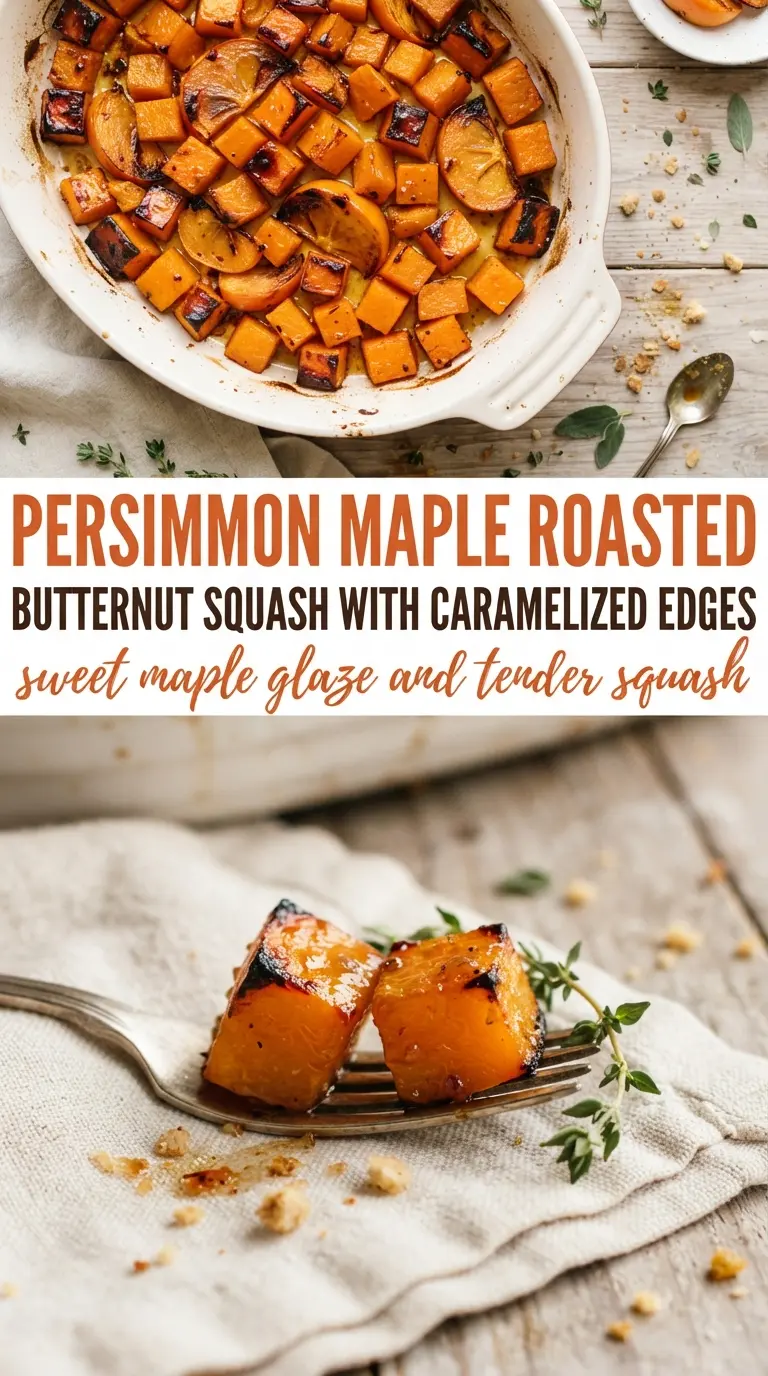
- Butternut squash — This is the backbone of the dish, so fresh squash with firm flesh matters. Pre-cut squash works in a pinch, but it’s often drier and less sweet, which means less browning and a softer finish.
- Maple syrup — This adds sweetness and helps create the glossy coating that caramelizes in the oven. Use real maple syrup here; pancake syrup won’t brown the same way or give the same clean maple flavor.
- Butter — The melted butter helps the coating cling and gives the edges a richer roast. If you need a dairy-free version, olive oil can replace it, though the result will taste cleaner and less rounded.
- Olive oil — Olive oil keeps the squash from sticking and helps it roast evenly. Use a standard bottle here; this isn’t the place for your best finishing oil.
- Cinnamon — A small amount warms the squash without turning it into dessert. More than half a teaspoon can push the dish into overly sweet territory, especially once the maple reduces.
- Fresh thyme — The thyme at the end cuts through the sweetness and keeps the dish grounded. Add it after roasting so it stays fragrant instead of turning dull and woody in the oven.
The 35 Minutes That Decide the Texture
Coating the Squash Evenly
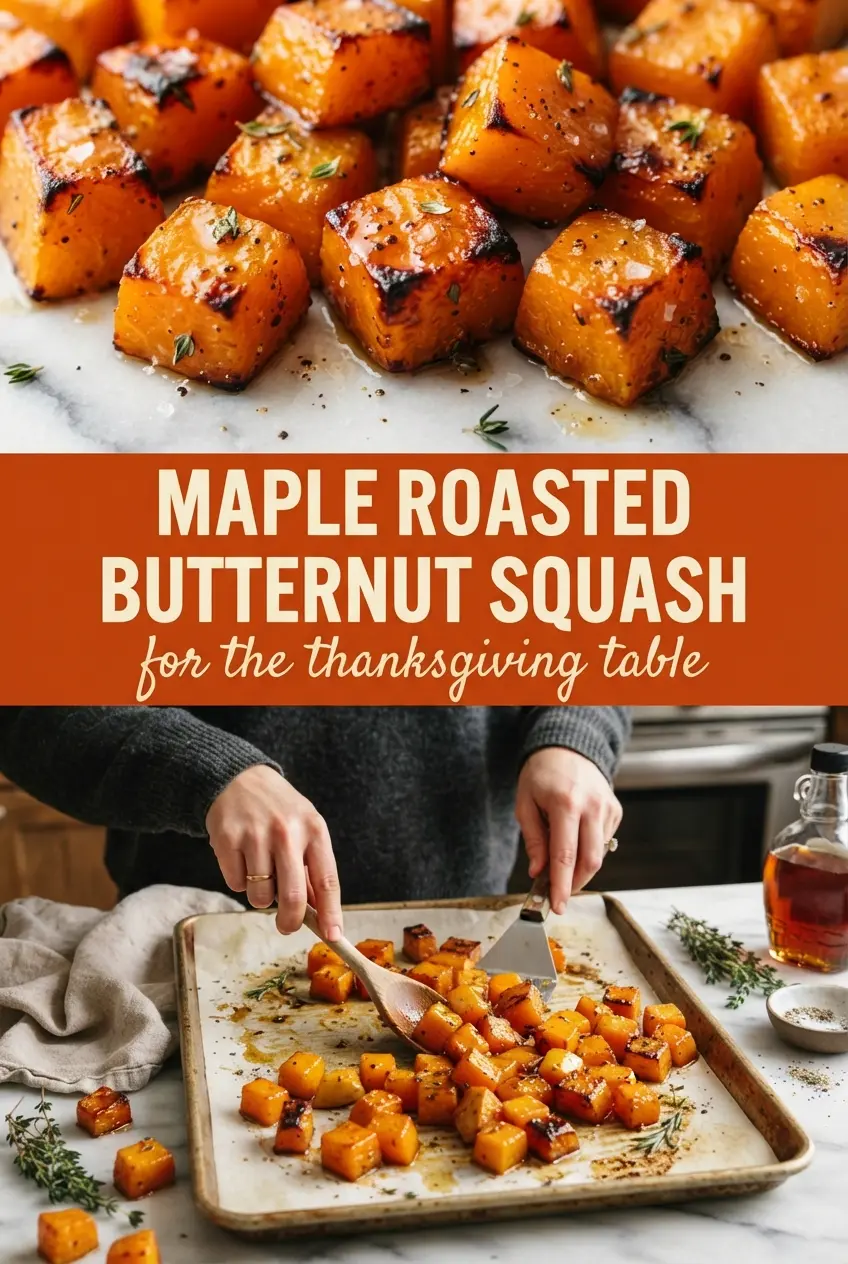
Toss the cubed squash with the oil, maple syrup, melted butter, cinnamon, salt, and pepper until every piece is lightly coated. The coating should look glossy, not pooled at the bottom of the bowl. If the syrup sits in one spot, those pieces will burn while the rest stay pale. A large bowl gives you room to coat without breaking the cubes apart.
Roasting for Color, Not Just Softness
Spread the squash on a sheet pan in a single layer with a little space between pieces. That gap lets the hot air hit the edges and keeps the squash from steaming. Roast at 425°F for 30 to 35 minutes, flipping once halfway through so both sides pick up color. If the pan is crowded, split it between two pans rather than forcing everything onto one.
Finishing With Fresh Thyme
Pull the squash when the edges are deep golden and sticky and the centers are tender when pierced with a fork. The maple should look caramelized, not blackened. Scatter the thyme over the hot squash right before serving so it releases its aroma without losing its brightness. If you add it too early, the herb gets buried under the heat and the flavor disappears.
How to Adapt This for a Bigger Crowd or a Different Pantry
Dairy-Free Maple Squash
Swap the butter for an equal amount of olive oil. You’ll lose a little of the round, rich finish, but the squash still browns well and the maple comes through clearly. If you want a little more depth, add a tiny splash of apple cider vinegar after roasting to sharpen the sweetness.
Savory-leaning Version With Less Sweetness
Cut the maple syrup back to 2 tablespoons and add an extra pinch of black pepper. The squash will still caramelize, but the result leans more dinner-side than holiday-sweet. This works well if you’re serving it with roasted chicken, pork, or anything with a salty pan sauce.
Doubling for a Crowd
Double the ingredients, but use two sheet pans instead of packing everything onto one. Crowding is the fastest way to lose browning, and the extra pan is worth it. Rotate the pans halfway through roasting if your oven has hot spots.
Storage and Reheating
- Refrigerator: Store leftovers in an airtight container for up to 4 days. The squash softens a little as it sits, but the flavor stays good.
- Freezer: It freezes, but the texture turns softer after thawing, so I don’t recommend it unless you plan to use it mashed or folded into another dish.
- Reheating: Reheat on a sheet pan at 400°F until hot, not in the microwave if you want to keep the edges intact. The oven brings back some of the browning; the microwave makes it slump.
Answers to the Questions Worth Asking
Maple Roasted Butternut Squash
Ingredients
Equipment
Method
- Heat the oven to 425°F and position a rack in the center so the squash roasts evenly.
- Toss the cubed butternut squash with olive oil, maple syrup, melted butter, cinnamon, salt, and black pepper until every piece looks glossy and coated.
- Spread the squash in a single layer on a sheet pan and roast for 30 to 35 minutes, flipping once halfway through, until caramelized with dark crisp edges.
- Top immediately with fresh thyme so the leaves stay bright and fragrant.