
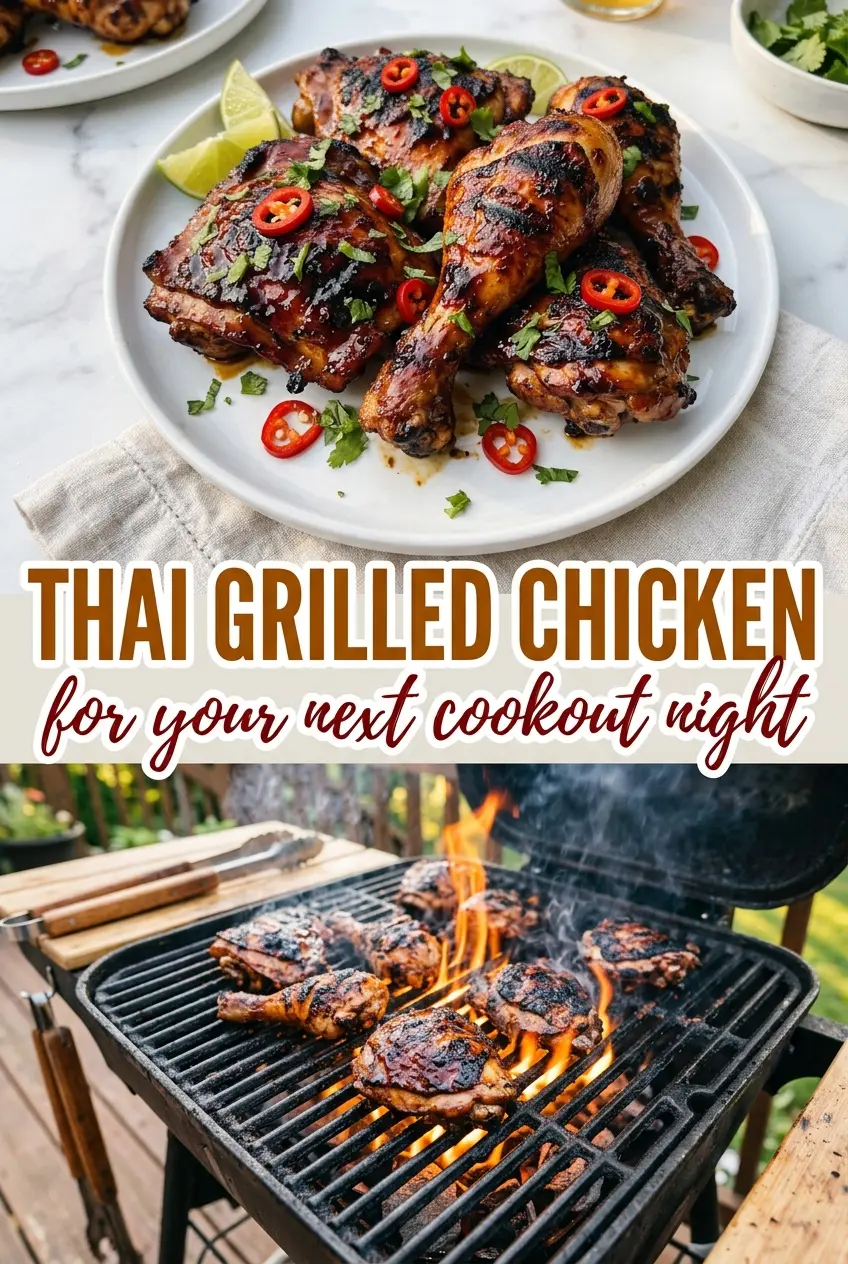
Thai grilled chicken earns its place on the grill the moment the marinade hits the meat. The skin chars into a deep mahogany crust, the edges go a little sticky from the palm sugar, and the meat underneath stays juicy with that unmistakable mix of lemongrass, garlic, and pepper. It smells as good as it looks, which is usually the first sign you’re on the right track.
What makes this version work is the paste. Grinding the white peppercorns first, then pounding the lemongrass, garlic, and cilantro roots into a fine paste, gives the marinade enough body to cling to the chicken instead of sliding off. Fish sauce and soy sauce bring salt and depth, while dark sweet soy and palm sugar help the skin color fast without burning before the meat cooks through.
Below, I’ll walk you through the one part that matters most on a grill: getting real char without drying out the chicken. I’ve also included a few smart swaps if you can’t track down cilantro roots or want to adjust the heat.
The marinade coated the chicken so well, and the skin got that deep caramelized char without burning. I grilled it over medium heat like you said and the meat stayed juicy all the way through.
Thai grilled chicken with smoky char and a sticky lemongrass marinade belongs on your next cookout menu.
The Marinade Has to Be Thick Enough to Stick
Most grilled chicken marinades are too thin. They season the surface a little, but they don’t build that lacquered crust that makes Thai grilled chicken memorable. Here, the paste matters more than the liquid. Once the lemongrass, garlic, peppercorns, and cilantro roots are pounded smooth, the mixture clings to the chicken and helps the sugars and salts caramelize instead of dripping straight into the fire.
The other thing people miss is heat control. Palm sugar and dark sweet soy darken fast, so a hot grill can turn the outside bitter before the chicken cooks through. Medium heat gives you time to develop color and keep the inside juicy. If flare-ups start, move the pieces to a cooler spot instead of chasing the flame with more turning. That’s how you get even char, not burnt skin and raw meat.
What Each Ingredient Is Actually Doing in This Dish

- Chicken pieces — Bone-in pieces hold up best on the grill and stay juicier than boneless cuts. Skin-on chicken gives you the charred, crisp exterior this dish is known for.
- Lemongrass — Fresh lemongrass brings the bright, citrusy aroma that defines the marinade. Mince it very finely or pound it well, because big woody pieces stay tough and don’t infuse the meat properly.
- Cilantro roots or stems — Roots are traditional and give the deepest flavor, but stems work well if roots aren’t available. Chop them first so they break down into the paste instead of turning stringy.
- White peppercorns — These bring a sharp, earthy heat that feels different from black pepper. Grinding them first helps the paste become smooth and lets the pepper bloom into the marinade evenly.
- Fish sauce and soy sauces — Fish sauce supplies the salty, savory backbone, while soy sauce rounds it out. Dark sweet soy adds color and a little molasses-like depth, so don’t swap it for regular soy unless you’re okay with a lighter, less sticky finish.
- Palm sugar — This helps the chicken caramelize on the grill and balances the salt in the marinade. Brown sugar can stand in if needed; use the same amount and expect a slightly less complex sweetness.
The 20 Minutes That Set Up the Smoke and Char
Pounding the Paste Until It Turns Fragrant
Start with the white peppercorns so they break down cleanly, then add the lemongrass, garlic, and cilantro roots. Pound until the mixture looks almost like wet sand with no obvious chunks of lemongrass left. If the paste stays coarse, it won’t coat the chicken evenly and the tougher bits can scorch on the grill before they soften.
Marinating for Flavor That Reaches the Meat
Whisk the paste with the fish sauce, soy sauces, palm sugar, and water, then coat the chicken thoroughly. Two hours gives you good flavor, but overnight gives you the best payoff because the seasoning has time to settle into the meat. Keep the chicken refrigerated while it marinates, and don’t let it sit too long in a metal bowl if the mixture is especially salty.
Grilling Over Medium Heat, Not a Firestorm
Put the chicken skin-side up over medium heat and let it cook steadily instead of constantly moving it around. The skin should darken gradually and pick up char marks without turning black in spots. If the grill flares, shift the chicken to a cooler area; that small adjustment protects the sugars in the marinade and keeps the skin from burning before the center reaches 165°F.
Resting Before the Garnish Goes On
Let the chicken rest a few minutes after it comes off the grill so the juices settle back into the meat. Then finish with sesame seeds, fresh chiles, cilantro, and lime wedges. The lime is not just garnish here — it wakes up the smoky, salty edges and makes the whole dish taste complete.
How to Adapt This for What You Have on Hand
Cilantro Root Substitute That Still Tastes Right
Use the stems from a big bunch of cilantro if you can’t find roots. The flavor is a little less earthy, but the stems still give that green, herbaceous base the marinade needs. Chop them finely before pounding so they blend into the paste instead of staying fibrous.
Gluten-Free Version
Use a certified gluten-free soy sauce in place of regular soy sauce. The rest of the recipe already works naturally gluten-free as long as your sauces are verified, and the chicken still gets the same salty-sweet char.
Less Sweet, More Savory
Cut the palm sugar down to 1 tablespoon if you want a less sticky finish. You’ll lose a little of the lacquered shine, but the chicken will still brown well and the savory notes from the fish sauce and garlic will come forward more clearly.
No Grill, Same Marinade
Roast the chicken on a rack in a hot oven if you don’t have access to a grill. You won’t get the same smoke, but you’ll still get deep color and sticky edges if you finish under the broiler for a minute or two. Watch it closely, because the sugar in the marinade can go from glossy to burnt fast.
Storage and Reheating
- Refrigerator: Store leftovers for up to 4 days. The skin softens in the fridge, but the flavor stays strong.
- Freezer: It freezes well for up to 2 months. Wrap the pieces tightly and thaw in the fridge before reheating so the meat warms evenly.
- Reheating: Warm in a 325°F oven until hot, or slice and reheat gently in a skillet with a splash of water. High heat dries out the chicken and makes the sugars in the marinade taste scorched.
Answers to the Questions Worth Asking
Thai Grilled Chicken
Ingredients
Equipment
Method
- Grind the white peppercorns into a powder, then add the minced lemongrass, garlic, and chopped cilantro roots or stems and pound into a fine paste.
- Whisk the paste with fish sauce, soy sauce, dark sweet soy sauce, palm sugar, and water until the marinade looks smooth and well combined.
- Add the bone-in chicken pieces to a bag or dish, pour the marinade over, and coat well.
- Marinate at least 2 hours or overnight in the refrigerator.
- Preheat the grill to medium heat, then place the chicken skin-side up and move to cooler spots if flare-ups occur.
- Grill, turning occasionally, until the skin is deeply charred and the internal temperature reaches 165°F.
- Rest the chicken for a few minutes, then garnish with sesame seeds, fresh chiles, and cilantro and serve with lime wedges.