
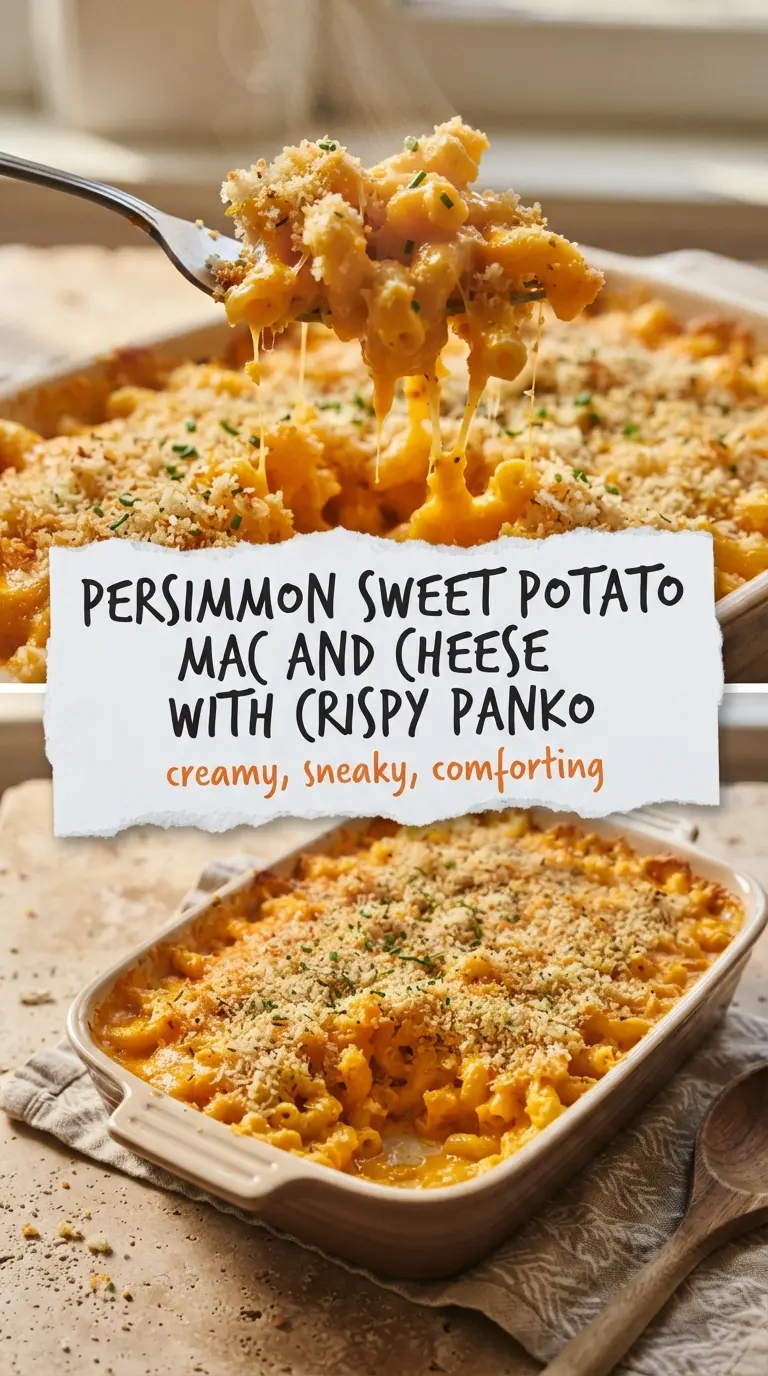
Sweet potato mac and cheese lands on the table creamy, glossy, and deeply comforting, with a sauce that clings to every elbow instead of pooling at the bottom of the dish. The sweet potato adds body and a velvety texture that makes the cheese sauce feel richer than it actually is, and it brings a gentle sweetness that rounds out the sharp cheddar without turning the dish into dessert-adjacent territory.
The trick is keeping the base balanced. A roasted sweet potato gives you a concentrated flavor and a drier, smoother mash than boiling does, which matters because extra water can thin out the sauce and make it taste muted. Freshly shredded cheddar also melts cleaner than the bagged stuff, so you get a sauce that stays silky instead of turning grainy.
Below, I’m walking through the part that matters most: how to build the sauce so it stays smooth, when to pull it off the heat, and how to get that panko topping crisp without drying out the pasta underneath.
The sweet potato made the sauce so velvety, and the cheddar still came through clearly. Mine baked up with a crisp top and creamy center, and the leftovers reheated without getting gluey.
Save this sweet potato mac and cheese for the night you want a creamy baked pasta with a crisp panko lid and a little extra vegetable goodness.
The Sweet Potato Trick That Keeps This Mac and Cheese from Feeling Heavy
Mac and cheese can go wrong in two common ways: it turns gluey from too much starch, or it gets flat and one-note because the sauce is all cheese and milk with no backbone. Sweet potato fixes both problems when you use it the right way. It adds natural body, so the sauce feels thick and luxurious without needing a mountain of flour, and it softens the sharp edge of the cheddar just enough to make the whole dish taste rounder.
The mistake people make is treating the sweet potato like a filler. It isn’t there to disappear completely. It should blend into the cheese sauce and make it silkier, with just enough sweetness to balance the salt and sharpness. Roasting matters here because it concentrates the flavor and keeps the mash dry enough to help the sauce instead of watering it down.
- Roasted sweet potato — Roasting gives you a deeper, sweeter flavor and a thicker mash. If you boil it, the extra moisture can make the sauce loose and bland.
- Sharp cheddar — This is what keeps the dish tasting like mac and cheese instead of sweet potato casserole with pasta. Mild cheddar gets lost once the sweet potato goes in.
- Milk — Whole milk gives the cleanest, creamiest result, but 2% works in a pinch. Anything thinner makes the sauce less stable.
- Panko breadcrumbs — These give you a crisp top that stays light. Regular breadcrumbs work, but they bake up denser and less shattery.
What Each Part of the Sauce Is Doing While It Cooks
The roux is the insurance policy. Butter and flour cooked together first give the milk something to thicken into, which keeps the sauce from separating later. If the flour tastes raw, it hasn’t cooked long enough; give it a minute in the pan before the milk goes in, but don’t let it brown unless you want a nuttier flavor.
The sweet potato belongs in the sauce once the milk has thickened slightly, not at the end. That lets it melt into the base and coat the pasta evenly. Add the cheese off the heat. If the pan is too hot, the cheddar can seize and turn grainy instead of melting into a smooth sauce.
- Butter and flour — This makes the thickening base. Cook it just long enough to lose the raw flour smell.
- Milk — Add it gradually while whisking so the roux can absorb it without clumping. Dumping it in all at once makes lumps harder to break up.
- Mashed sweet potato — Smooth mash works best. If yours has strings or chunks, push it through a sieve or mash it very well before adding it.
- Freshly shredded cheddar — Pre-shredded cheese often has anti-caking starches that make melting less smooth. Shred it yourself if you want the best texture.
Building the Sauce So It Stays Smooth
Start with the roux
Melt the butter, whisk in the flour, and let it cook just until it stops smelling dusty. That short cooking time matters because raw flour tastes chalky, but overcooking the roux before the milk goes in can make the sauce feel pasty. You want a pale, smooth paste that loosens easily when you whisk in the milk.
Thicken before the cheese goes in
Pour in the milk slowly, whisking the whole time so the mixture stays smooth. As it heats, it should go from thin to lightly coat-the-spoon thick, with small bubbles around the edge of the pan. If it still looks watery, give it another minute or two; if you rush the cheese into thin milk, the final sauce won’t cling to the pasta.
Finish with cheese off the heat
Stir in the sweet potato, garlic powder, salt, and pepper first, then pull the pan off the burner before adding the cheddar. The residual heat is enough to melt it. If the sauce looks grainy, the heat was too high — take the pan off immediately and whisk until it comes back together.
Coat the pasta, then bake for texture
Toss the sauce with the cooked macaroni while it’s still warm so every piece gets covered. The baking step is there for the top, not to cook the pasta further. Once it goes into the oven, the sauce should bubble at the edges and the panko should turn golden and crisp, not dark and dry.
How to Adapt It for Different Kitchens and Different Diets
Gluten-Free Version
Use your favorite gluten-free pasta and swap the flour for a 1:1 gluten-free blend or cornstarch slurry. The sauce will still thicken, but it may need a gentler simmer and a little extra whisking to stay smooth. Use gluten-free breadcrumbs or skip the topping and broil briefly for color.
Extra-Cheesy Version
Swap up to half of the cheddar for Monterey Jack, Gruyère, or Colby Jack if you want a softer, meltier sauce. You’ll lose a little of the sharp cheddar bite, but the texture gets even silkier and more spoonable.
Dairy-Light Version
You can use a good unsweetened oat milk or lactose-free milk in place of regular milk, and the sauce still comes together nicely. The result will be a touch less rich, but the sweet potato helps carry the creaminess so the difference is smaller than you’d expect.
Storage and Reheating
- Refrigerator: Store covered for up to 4 days. The sauce thickens as it chills, so the pasta will look firmer the next day.
- Freezer: It freezes, but the texture gets a little softer after thawing. Freeze in portions, wrap tightly, and thaw overnight in the fridge for best results.
- Reheating: Reheat covered in the oven at 325°F with a splash of milk stirred in, or warm single portions on the stove over low heat. High heat is what turns leftovers grainy and dry.
Answers to the Questions Worth Asking

Sweet Potato Mac and Cheese
Ingredients
Equipment
Method
- Cook elbow macaroni according to package directions, then drain and set aside.
- Roast the sweet potato until tender, then mash it to a smooth puree.
- Melt 2 tbsp butter in a saucepan over medium heat, then whisk in the flour to form a roux.
- Gradually whisk in the milk until smooth and slightly thickened.
- Stir in mashed sweet potato, garlic powder, salt, and pepper until evenly combined.
- Remove from the heat and stir in the shredded cheddar until fully melted and glossy.
- Toss the cooked macaroni with the cheese sauce, then transfer to a baking dish.
- Mix panko breadcrumbs with 1 tbsp melted butter and sprinkle evenly over the top.
- Bake at 375°F for 15-20 minutes, until the surface is golden and the filling is visibly bubbly.