
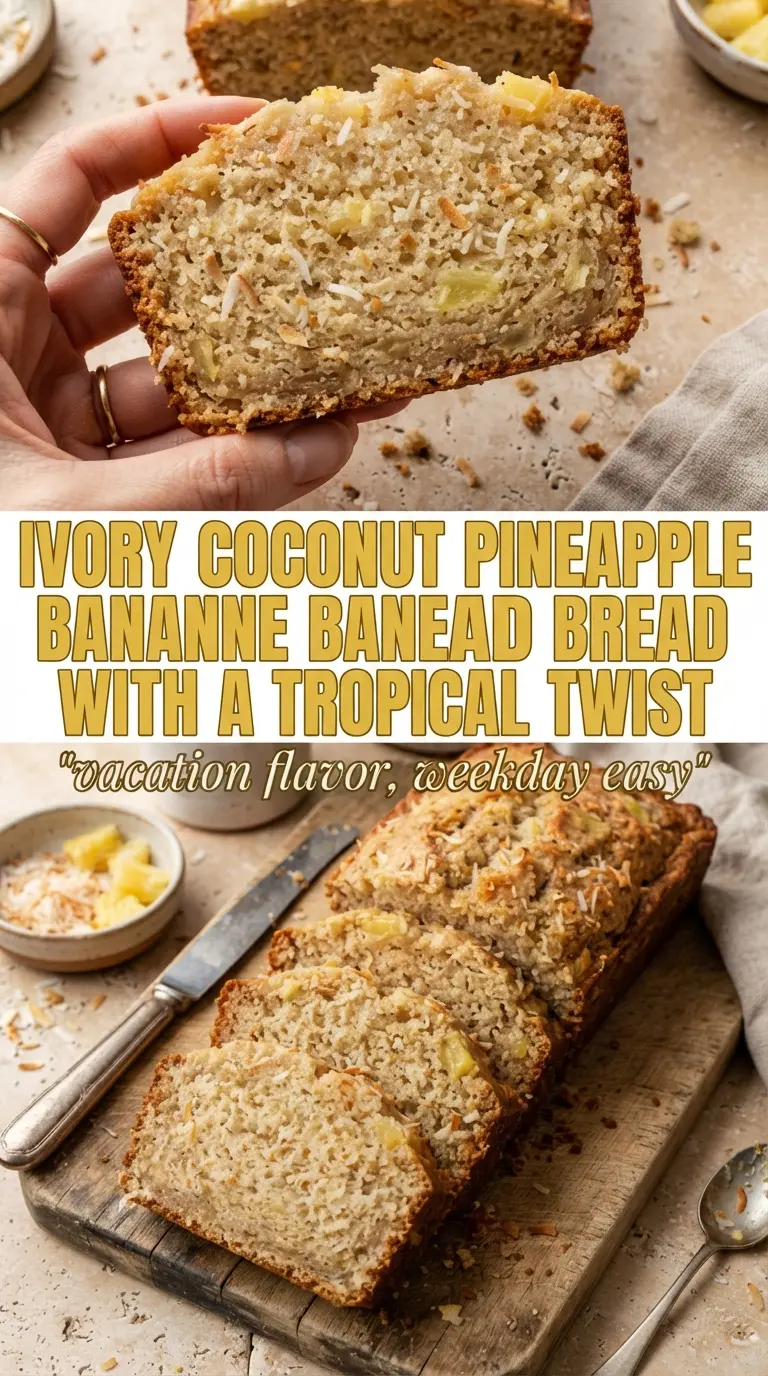
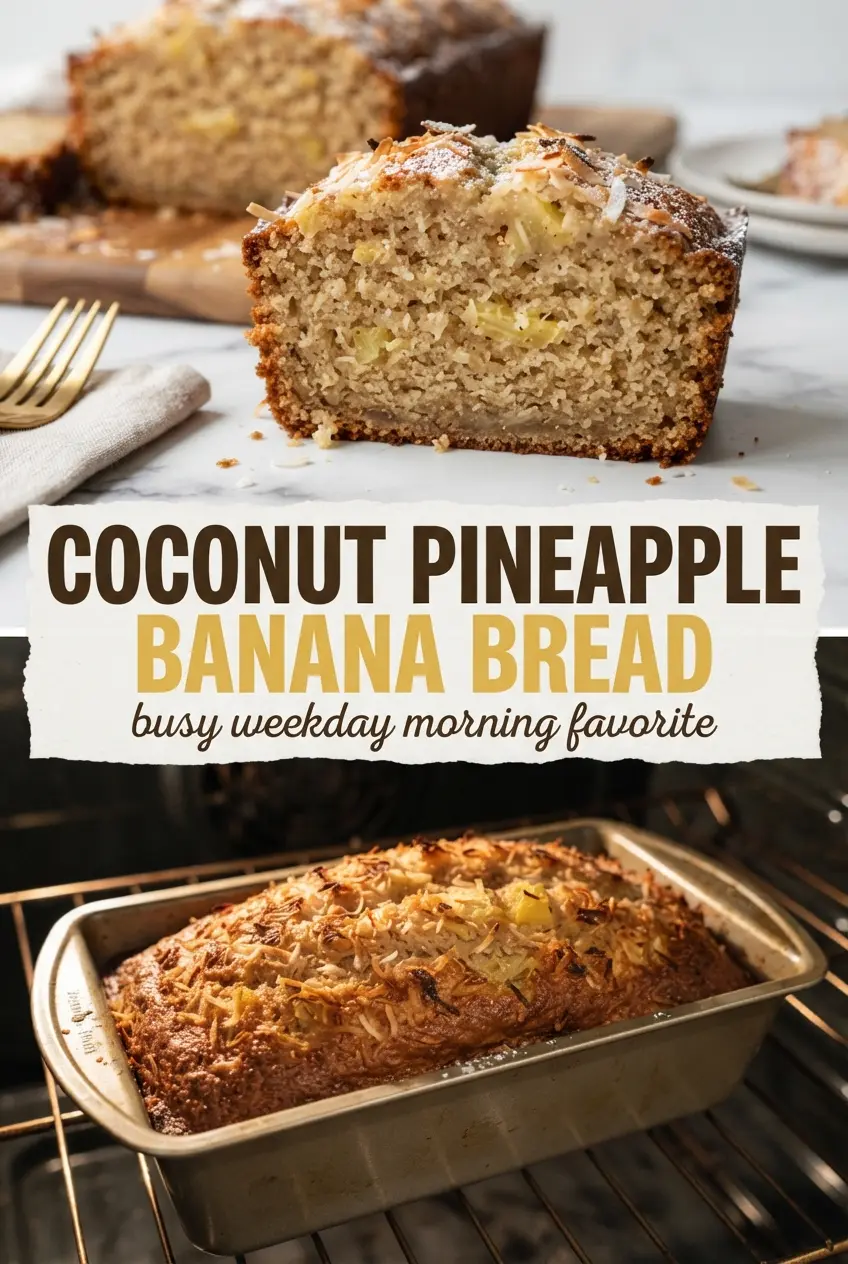
Moist banana bread gets a bright tropical lift here, with crushed pineapple folding into the batter for extra tenderness and shredded coconut adding a soft chew in every slice. The top bakes into a lightly crisp, golden cap that makes the loaf feel a little more special than the usual quick bread, but it still keeps the easy, no-fuss comfort people want from banana bread.
The trick is balance. Ripe bananas bring sweetness and body, pineapple adds moisture and a little acidity, and the oil keeps the crumb soft for days. Drain the pineapple well and stop mixing as soon as the flour disappears; those two moves keep the loaf from turning gummy or dense. A quick scatter of coconut over the top gives you a toasted finish without needing a glaze or frosting.
Below, I’m walking through the small details that matter most, including how to keep the batter from getting too wet and how to get a better coconut topping with almost no extra effort.
The pineapple kept the loaf incredibly moist without making it heavy, and the coconut on top turned golden and crisp in the oven. I sliced it warm and it held together beautifully.
Save this coconut pineapple banana bread for the days when you want a soft, tropical loaf with a toasted coconut top.
The Reason This Loaf Stays Moist Without Turning Heavy
Banana bread gets into trouble when the batter carries too much extra liquid or when it’s stirred into submission. Pineapple is the main risk here, which is why draining it well matters more than anything else in the bowl. Too much juice will make the crumb wet and slightly pasty in the center, even if the top looks done.
The other thing that keeps this loaf from going dense is restraint. Once the flour goes in, the batter only needs a few folds. Overmixing develops too much structure in a quick bread, and that tight crumb can hide the banana flavor instead of letting it come through.
- Mashed ripe banana — The riper the banana, the sweeter and softer the loaf will be. You want plenty of brown spotting on the peel and a mash that looks loose, not chunky.
- Crushed pineapple — This brings the tropical note and extra moisture. Drain it well, then press it lightly in a sieve or paper towel if it looks especially wet.
- Vegetable oil — Oil keeps banana bread tender longer than butter does. If you swap in melted butter, the loaf will taste richer but the crumb will set a little firmer once cooled.
- Shredded coconut — It adds chew inside the loaf and helps build that toasted finish on top. Unsweetened coconut works best if you don’t want the bread to lean too sweet.
What Each Bowl Is Doing Before It Hits the Pan
The flour, baking soda, and salt go together first so the leavener is evenly distributed. That matters in a loaf like this because you don’t want one section rising faster than another and creating a tunnel through the middle.
The wet mixture does most of the flavor work. Banana and pineapple bring sweetness and moisture, the sugar helps the crust brown, and the eggs bind everything into a sliceable loaf. Vanilla doesn’t read as a loud flavor here, but it rounds out the fruit so the bread tastes complete instead of flat.
Once the dry ingredients are folded in, the coconut gets added last so it stays visible in the crumb. If you stir it too early, it disappears into the batter and you lose the texture that makes this loaf stand out.
Building the Batter Without Deflating It
Mixing the Dry Ingredients
Whisk the flour, baking soda, and salt together until the mixture looks evenly combined. This is the small step that keeps the bread from tasting uneven or rising in streaks. If you skip it, you can end up with one salty bite or a pocket of soda that leaves a bitter edge.
Bringing the Wet Ingredients Together
In a separate bowl, whisk the banana, drained pineapple, sugar, oil, eggs, and vanilla until the mixture looks glossy and well blended. The sugar should start dissolving into the fruit, and the banana should be mostly smooth. If the pineapple is still dripping when it goes in, the batter will loosen more than it should.
Folding, Not Beating
Add the dry ingredients to the wet mixture and fold just until you no longer see streaks of flour. Then fold in the coconut. Stop the moment the batter comes together; a few tiny flour patches are better than a tough loaf, and they’ll disappear in the oven.
Baking Until the Center Is Set
Pour the batter into a greased loaf pan, top it with a little extra coconut, and bake at 350°F for 55 to 60 minutes. The top should be deeply golden and the center should spring back when pressed lightly. A toothpick in the middle should come out clean or with a few moist crumbs, not raw batter. If the coconut on top is browning too fast before the loaf is done, tent it loosely with foil for the last part of the bake.
Three Ways to Change This Loaf Without Losing the Good Part
Make it dairy-free without changing the crumb
This loaf already skips dairy, so you don’t need to change a thing for that diet. That’s useful if you’re baking for a mixed group, because the texture stays soft and the flavor still leans rich from the banana and oil.
Swap in whole wheat flour for a nuttier loaf
You can replace up to half the all-purpose flour with whole wheat flour. The loaf will taste a little earthier and the crumb will be slightly tighter, but the banana and pineapple keep it from getting dry.
Toast the coconut topping for a deeper finish
A few minutes in a dry skillet or a low oven takes the coconut from pale to golden and gives the top a better crunch. Watch it closely, because coconut goes from toasted to burnt fast, and burnt flakes turn bitter in a loaf like this.
Add chopped nuts if you want more texture
A handful of chopped macadamias or pecans fits the tropical theme and adds a firmer bite. Stir them in with the coconut so they stay evenly distributed instead of sinking to the bottom of the pan.
Storage and Reheating
- Refrigerator: Store the cooled loaf tightly wrapped for up to 4 days. The crumb stays moist, though the coconut topping softens a bit after day one.
- Freezer: This bread freezes well. Wrap individual slices or the whole loaf tightly and freeze for up to 3 months; thaw at room temperature so condensation doesn’t make the crust soggy.
- Reheating: Warm slices in a toaster oven or a low oven for a few minutes. Microwaving works, but too long makes the bread rubbery and dulls the coconut topping.
Questions I Get Asked About This Bread
Coconut Pineapple Banana Bread
Ingredients
Equipment
Method
- Whisk together the all-purpose flour, baking soda, and salt in a bowl until evenly combined, with no visible streaks.
- Whisk together the mashed ripe banana, crushed pineapple, drained pineapple granules, granulated sugar, vegetable oil, eggs, and vanilla extract until smooth and glossy.
- Fold the dry ingredients into the wet ingredients until just combined, stopping as soon as no dry flour remains for a soft loaf texture.
- Fold in the shredded coconut until evenly distributed through the batter.
- Pour batter into a greased loaf pan and sprinkle extra coconut on top so it forms a toasted layer during baking.
- Bake at 350°F for 55-60 minutes, tenting with foil if the top browns too quickly, until a toothpick comes out clean.