
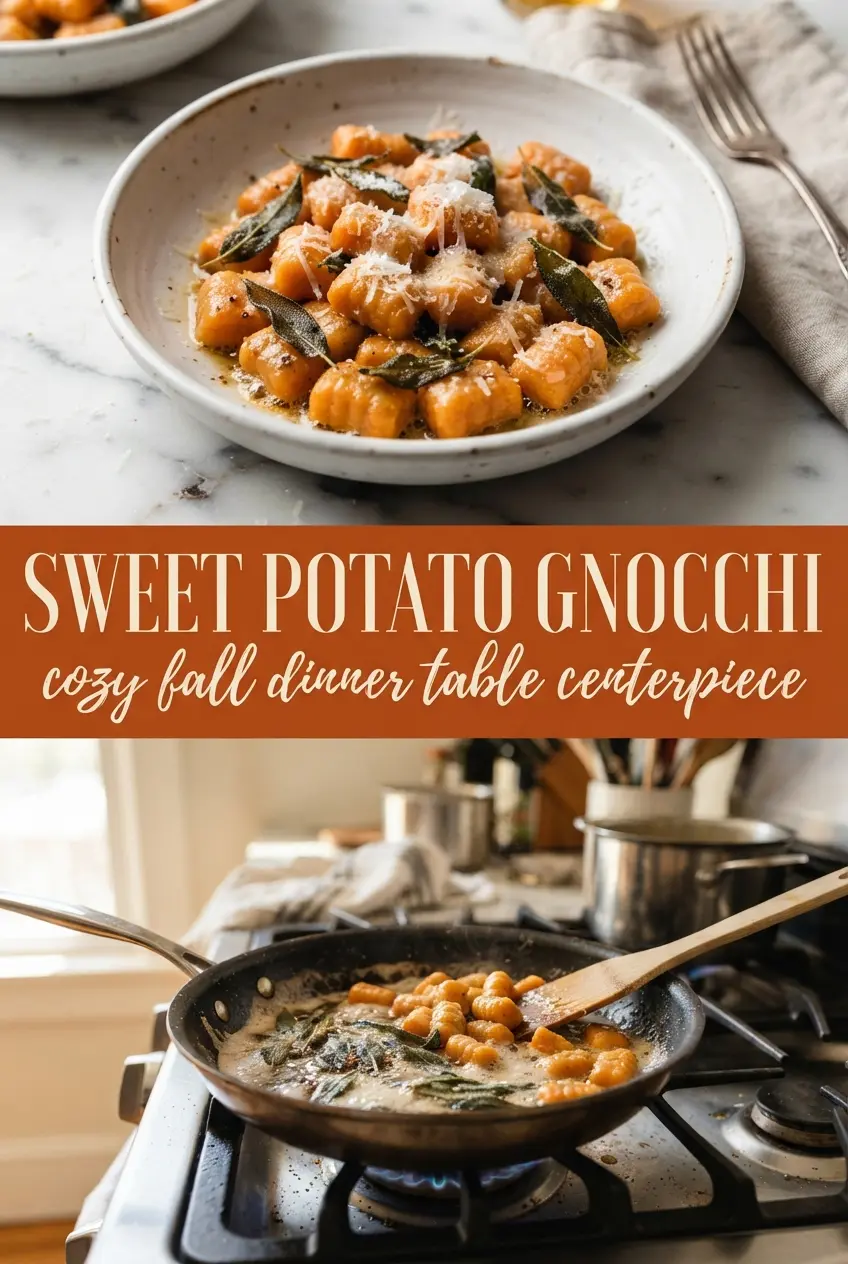
Sweet potato gnocchi should be tender enough to yield the second your fork hits it, with just enough structure to hold onto a nutty brown butter sauce. The sweet potato brings a gentle earthiness and a soft orange color, while the Parmesan at the end sharpens everything so the dish doesn’t taste flat or one-note. When the gnocchi are done right, they feel light on the plate and rich enough to stand on their own.
The trick is keeping the dough soft without turning it sticky or overworked. Sweet potato varies a lot in moisture, which is why the flour amount can’t be treated like a fixed law; you’re looking for a dough that comes together cleanly but still feels supple under your hands. Brown butter and sage do the heavy lifting here, but only if the butter is cooked patiently enough to turn deep gold and smell nutty before the sage goes in.
Below, I’m walking through the parts that matter most: how to judge the dough, how to spot browned butter before it slips into burnt, and how to keep the gnocchi tender instead of heavy. Those are the details that separate an okay batch from the kind you’ll want to make again.
The gnocchi stayed light instead of gummy, and the brown butter picked up just enough sage flavor without overpowering the sweet potato. I also appreciated the note about not overworking the dough — mine held together beautifully after a quick boil.
Save these sweet potato gnocchi for the night you want pillowy pasta with crisp sage and brown butter in one skillet.
The Gnocchi Dough That Stays Tender Instead of Turning Heavy
Most gnocchi go wrong before they ever hit the water. The dough gets kneaded like bread, the flour gets added until it feels safe, and the result is dense little dumplings that sit in the stomach like lead. Sweet potato makes that mistake even easier because it starts out moist and soft, so the line between workable dough and over-floured dough is thinner than it looks.
The goal here is a dough that barely comes together and then stops. Mix just until the flour disappears and the dough can be shaped without sticking to everything in sight. If it feels tacky, dust the board lightly as you roll; if it feels dry and stiff, the gnocchi will cook up chewy instead of tender.
- Roasted sweet potato — Roasting drives off excess moisture and concentrates flavor. Boiling the potatoes adds water you don’t want, and that extra moisture always turns into extra flour later.
- All-purpose flour — This gives the dough enough structure to hold its shape, but too much is the fastest way to make the gnocchi heavy. Add only as much as needed for the dough to come together.
- Egg — The egg helps bind the dough and gives it a little resilience in the boil. A large egg is the right size here; a second egg would push the dough toward breadier and denser.
- Parmesan — It’s not in the dough, but it matters at the end because it adds salt, umami, and a dry, savory finish. Freshly grated Parmesan melts more evenly than the pre-shredded kind.

What the Sweet Potato, Butter, and Sage Each Bring to the Pan
The sweet potato is the backbone of the dish, so use one that’s fully cooked and mashed until smooth. Any lumps will show up in the final dough and make rolling harder than it needs to be. If the mash seems loose or wet, let it cool and steam off a bit before mixing in the flour.
The butter needs to be real butter, not margarine or a light substitute, because browning depends on the milk solids in butter turning deep golden and nutty. The sage should be fresh; dried sage won’t fry into crisp leaves, and it won’t perfume the butter the same way. Salt matters in two places here: in the dough for balance, and again at the end so the finished dish tastes complete.
- Fresh sage leaves — They crisp in the butter and perfume the whole pan. Add them after the butter has browned; if they go in too early, they’ll scorch before the butter is ready.
- Butter — This is the sauce. Watch the color, not the clock, because browned butter can go from perfect to burnt in under a minute once the milk solids start coloring.
- Salt and pepper — The finishing seasoning keeps the sweet potato from tasting flat. Pepper is optional but useful if you want a little bite against the richness.
The 20 Minutes That Matter Most
Mixing the Dough Without Beating It Into Submission
Combine the mashed sweet potato, flour, egg, and salt until you have a soft dough that holds together when pressed. Stop as soon as it comes together; extra mixing develops gluten and makes the gnocchi rubbery. If the dough is sticky, dust your hands and the counter with a little flour, but don’t keep adding more to the bowl unless you want heavier gnocchi.
Shaping Ropes and Cutting Clean Pieces
Roll the dough into long ropes on a lightly floured surface, then cut them into small pieces. Keep the ropes even so the gnocchi cook at the same rate; uneven chunks leave you with some mushy pieces and some underdone ones. If the ropes crack as you roll them, the dough is too dry, which usually means too much flour went in.
Boiling Until They Float, Then Pulling Them Quickly
Drop the gnocchi into well-salted boiling water and wait for them to float. That floating cue tells you the outside has set and the center is cooked through enough to finish in the pan. As soon as they rise, pull them out with a slotted spoon or spider; leaving them in the water too long softens the surface and makes them fragile.
Brown Butter and Sage at the Exact Right Moment
Melt the butter in a skillet and keep it moving as the foam settles and the solids sink to the bottom. You’re looking for a warm hazelnut smell and flecks that turn amber, not black. Add the sage only after the butter is browned so the leaves crisp in the hot fat instead of burning in raw butter.
Finishing the Toss
Add the drained gnocchi straight into the skillet and toss gently so they’re coated without tearing. The sauce should cling in a thin glossy layer, not pool at the bottom of the pan. Shower on the Parmesan while everything is hot so it melts into the folds and catches on the ridges.
How to Adapt This for a Different Night at the Table
Gluten-Free Gnocchi
Use a 1:1 gluten-free flour blend with xanthan gum and keep the dough a little softer than you would with regular flour. The gnocchi will be a touch more delicate, but they can still hold together if you handle them gently and don’t overboil them.
Dairy-Free Version
Swap the butter for a plant-based butter that browns well, then watch it closely since some alternatives darken faster than dairy butter. You’ll lose a little of the classic nutty depth, but the sage still gives you an aromatic finish.
Extra-Savory Finish
Add a little black pepper and an extra handful of Parmesan at the end if you want the dish less sweet and more savory. A squeeze of lemon zest also works here, but use it lightly so it brightens the butter instead of competing with it.
Storage and Reheating
- Refrigerator: Store cooked gnocchi for up to 3 days. They’ll firm up a bit as they chill, so expect a slightly denser bite after reheating.
- Freezer: Uncooked gnocchi freeze well. Freeze them in a single layer on a tray, then move them to a bag; cook from frozen and add a minute or two to the boil.
- Reheating: Reheat in a skillet with a little butter over medium-low heat until warmed through. The common mistake is microwaving them hard, which turns the texture gummy and can make the sauce split.
Answers to the Questions Worth Asking
Sweet Potato Gnocchi with Brown Butter and Sage
Ingredients
Equipment
Method
- In a mixing bowl, combine the mashed sweet potato, all-purpose flour, egg, and salt until a soft dough forms (stop as soon as it comes together). If needed, sprinkle in a little extra flour only to prevent sticking.
- Lightly flour your work surface and roll the dough into long ropes, then cut into small gnocchi pieces.
- Bring a pot of salted water to a boil and cook the gnocchi until they float to the surface, about 2–3 minutes. As they rise, let them simmer briefly, then drain.
- In a skillet over medium heat, melt the butter and cook until it turns golden brown and nutty, about 3–5 minutes. Watch closely because it can go from brown to burnt quickly.
- Add the fresh sage leaves and fry until crisp, about 30–60 seconds. The leaves should darken slightly and get crisp at the edges.
- Add the drained gnocchi to the brown butter and sage and toss until coated, 1–2 minutes. Season with salt and pepper to taste.
- Serve immediately and top with grated Parmesan cheese so it melts into the warm gnocchi.