
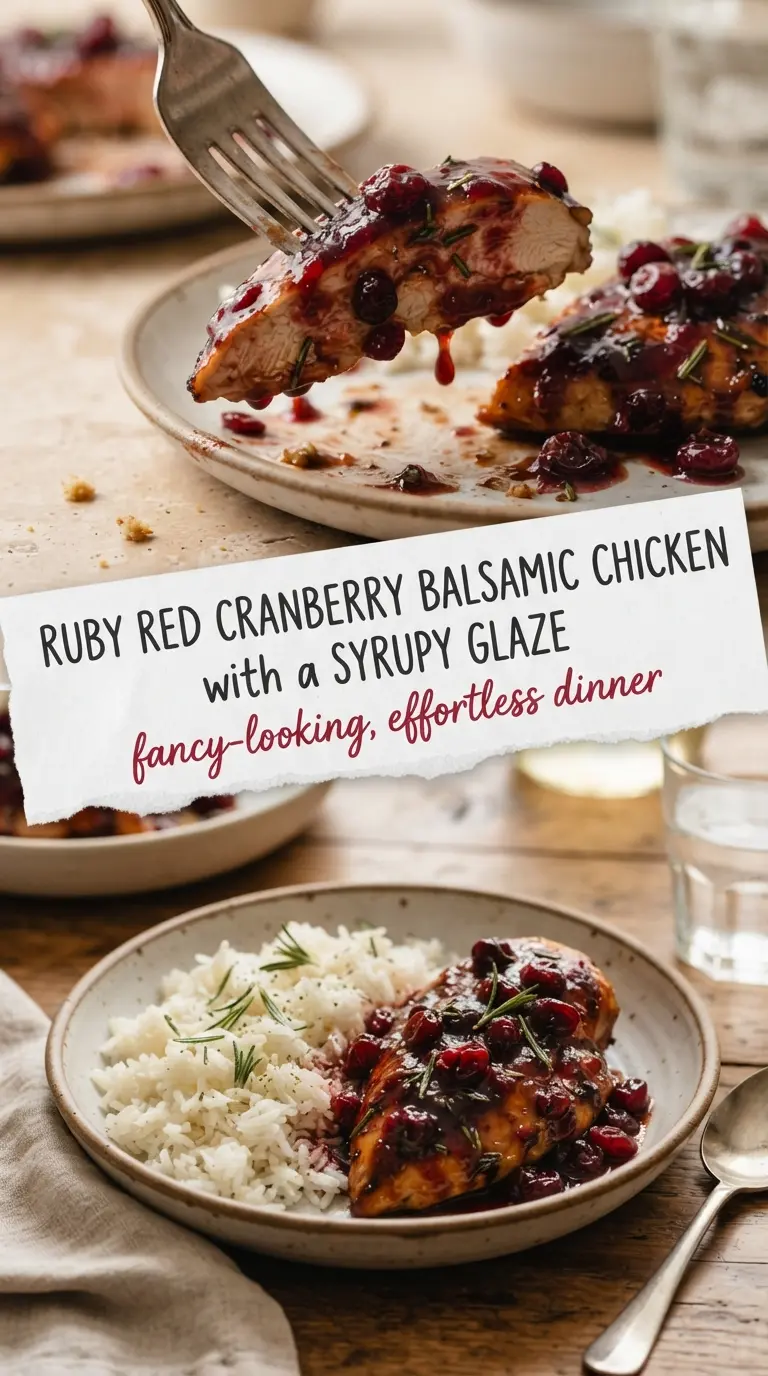
Ruby-red cranberry balsamic chicken earns its place on a weeknight table because the sauce turns glossy, tart, and a little sticky without asking for much more than one pan and a few smart ingredients. The chicken stays juicy under that syrupy glaze, and the burst cranberries give each bite a sharp little pop that keeps the sauce from tasting flat or overly sweet.
What makes this version work is the balance. Balsamic vinegar brings depth, honey rounds out the edges, and chicken broth gives the sauce enough body to reduce without turning harsh. Searing the chicken first matters because those browned bits left behind are the backbone of the sauce. Don’t rush that part. The pan should smell deeply savory before the liquid goes in.
Below, I’ll walk you through the reduction that gives the sauce its shine, the cranberry detail that keeps the whole dish lively, and a few ways to adjust it if you need to work with what’s in your kitchen.
The sauce thickened into a shiny glaze right at the end, and the cranberries gave it this bright tart flavor that kept the chicken from tasting heavy. I served it over rice and my husband asked if we could have it again the next night.
Save this cranberry balsamic chicken for the nights when you want a glossy one-pan dinner with a sweet-tart sauce that tastes like it took far longer than it did.
The Part Most Cranberry Chicken Gets Wrong: A Thin, Sharp Sauce
The mistake with a lot of cranberry chicken recipes is that they stop too soon. You get a pan sauce that tastes acidic, watery, or one-note because the cranberries never fully break down and the balsamic never gets a chance to tighten up. What you want here is a reduction with texture: the berries burst, the liquid simmers down, and the sauce turns from thin and shiny to thick enough to coat the chicken instead of pooling around it.
The sear is not just about color. Browning the chicken leaves fond in the pan, and that fond dissolves into the sauce once the vinegar and broth go in. If you skip that step or cook the chicken too gently, the sauce loses depth. That’s the difference between a fast skillet dinner and something that tastes layered and finished.
- Let the chicken brown properly first — pale chicken makes a pale sauce. You want a good golden crust before it comes out of the pan.
- Reduce the sauce until it thickens slightly before the chicken returns — if you add the chicken back too early, the sauce stays loose and never really glazes.
- Use the cranberries for body as much as flavor — they burst as they heat, and that pulp helps the sauce turn glossy and clingy.
What Each Ingredient Is Actually Doing in This Dish
- Boneless chicken breasts — These cook quickly and give you a clean canvas for the sauce. If yours are thick, pound them to even thickness so the center cooks through before the outside dries out. Chicken thighs work too if you want a richer, juicier result with a little more forgiveness.
- Fresh cranberries — This is the ingredient that makes the sauce feel special. Fresh berries hold their shape for a while, then burst into a tart, jammy base. Frozen cranberries can work; thaw them first so they don’t water down the pan and slow the reduction.
- Balsamic vinegar — This brings depth and a dark, almost syrupy tang once it reduces. A decent everyday balsamic is fine here, but if yours tastes harsh straight from the bottle, the sauce will taste harsh too until it has a chance to cook down with the honey and broth.
- Honey — It softens the cranberries and takes the edge off the vinegar without making the sauce taste sugary. Maple syrup works in a pinch, but it changes the flavor toward woodsy and less bright.
- Chicken broth — This keeps the sauce from reducing into straight vinegar and gives it enough volume to simmer around the chicken. Use low-sodium broth if you want better control over the seasoning.
- Garlic and rosemary — Garlic gives the sauce warmth; rosemary gives it a piney, savory finish that stands up to the cranberries. Strip the rosemary leaves from the stem so you don’t end up with woody bits in the finished sauce.
The 20 Minutes That Actually Matter in the Pan
Getting a Real Sear on the Chicken
Season the chicken well and lay it into hot olive oil without crowding the pan. You’re looking for a deep golden crust that releases on its own, not pale steamed chicken with a few beige spots. If the pan is overcrowded, the chicken will give off too much moisture and the surface will soften instead of browning. Once both sides are golden, pull it out even if it isn’t cooked through yet; it finishes later in the sauce.
Building the Sauce in the Same Pan
Add the garlic to the hot pan and cook it just until fragrant. If it darkens, it turns bitter fast, so keep it moving. Pour in the balsamic vinegar, broth, and honey while scraping the bottom of the skillet to pull up the browned bits. That fond is where the savory flavor lives, and it should dissolve into the liquid instead of being left behind.
Letting the Cranberries Burst and Thicken
Stir in the cranberries and rosemary, then let the sauce simmer until the berries split and the liquid starts to look syrupy. At first it will seem loose, then it will suddenly take on body as the cranberries break down. If it still looks thin, keep simmering; the sauce should coat the back of a spoon and leave a visible trail when you drag a finger through it.
Finishing the Chicken Without Drying It Out
Return the chicken to the pan and spoon the sauce over the top. Let it simmer gently until the chicken is cooked through and the glaze clings to the meat. High heat here works against you because it can tighten the chicken before the sauce has finished reducing. A low simmer gives you tender chicken and a lacquered finish at the same time.
Three Ways to Work This Recipe Into Your Week
Make it dairy-free as written
This recipe is already dairy-free, which is part of why it works so well for a wide crowd. The sauce gets its richness from the reduced balsamic, honey, and chicken broth instead of cream or butter, so you don’t lose anything by leaving dairy out.
Swap in chicken thighs for a juicier finish
Boneless skinless thighs handle the sauce well and stay tender even if they simmer a minute longer than planned. They bring a richer, darker flavor and a little more fat to the pan, which makes the glaze taste fuller. The only tradeoff is that they won’t slice as neatly as breasts.
Use frozen cranberries when that’s what you have
Frozen cranberries work fine, but thaw them first so the pan doesn’t flood with extra moisture. Cold berries straight from the freezer delay the simmer and can make the sauce thin before it has a chance to reduce. Once thawed, they burst and thicken just like fresh berries.
Turn it into a glaze for rice, mashed potatoes, or roasted vegetables
If you want the sauce to do double duty, reduce it a touch longer before the chicken goes back in. That gives you a thicker glaze that clings well over starches and vegetables instead of disappearing into the plate. The flavor stays the same, but the texture becomes more spoonable and less saucy.
Storage and Reheating
- Refrigerator: Store leftovers in an airtight container for up to 4 days. The sauce will thicken as it chills, which is normal.
- Freezer: It freezes well for up to 2 months, though the cranberry sauce may soften a little after thawing. Freeze in portions with plenty of sauce so the chicken doesn’t dry out.
- Reheating: Reheat gently on the stove over low heat or in the microwave at reduced power. Add a splash of broth if the sauce has tightened too much. Fast, high heat is what dries out the chicken and makes the glaze separate.
Answers to the Questions Worth Asking

Cranberry Balsamic Chicken
Ingredients
Equipment
Method
- Season the chicken breasts with salt and pepper. Make sure both sides are evenly coated so the seasoning stays on through simmering.
- Heat the olive oil in a skillet over medium-high heat, then sear the chicken until golden on both sides, about 3-5 minutes per side. Transfer chicken to a plate to keep it from overcooking while you build the sauce.
- Add the minced garlic to the same pan and cook until fragrant, about 30-60 seconds. Stir so the garlic doesn’t brown.
- Pour in the balsamic vinegar, chicken broth, and honey, scraping up any browned bits from the bottom of the pan. Bring the mixture to a simmer so the flavors start thickening.
- Add the cranberries and rosemary, then simmer until the cranberries burst and the sauce thickens to a glossy, spoon-coating texture, about 8-12 minutes. Watch for ruby-red berries popping and bubbles turning denser.
- Return the chicken to the pan and spoon the glossy sauce over the top to coat. Continue simmering just until the chicken is heated through, about 2-3 minutes, then serve.