
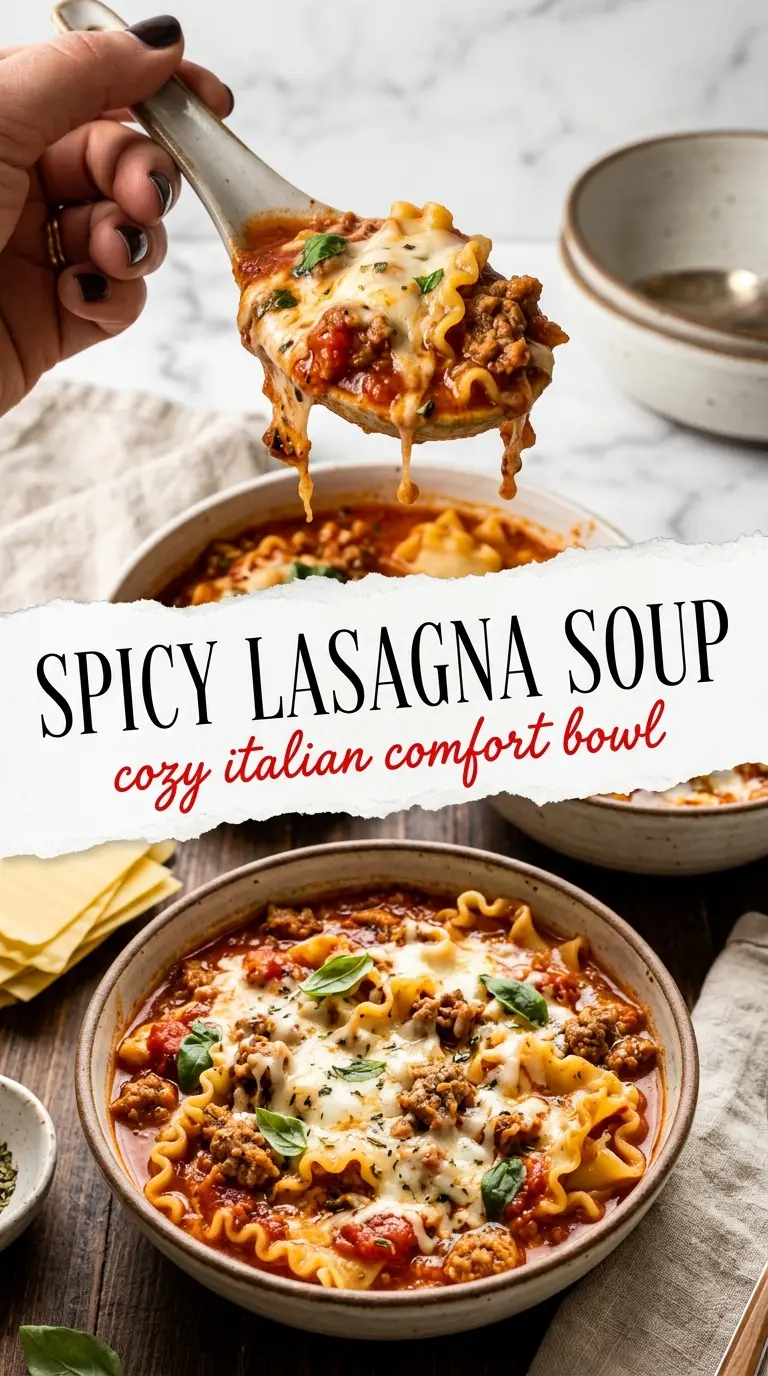
Spicy lasagna soup hits the bowl with everything people love about lasagna, just in a form that’s easier to eat on a weeknight. The broth is rich and tomato-forward, the sausage gives it deep savory flavor, and those broken noodles turn tender and slurpable without losing their bite. The best part is the ricotta on top: it melts into the hot soup in little creamy pockets that calm the heat without dulling it.
What makes this version work is the layering. Browning the sausage first builds a flavorful base, and letting the marinara simmer with the broth gives the tomato time to soften into something rounder and more cohesive. The red pepper flakes go in early enough to bloom in the soup, so the heat tastes woven through instead of sitting on top. Break the noodles before they go in, and keep the simmer gentle so they cook through without going mushy.
Below, I’ve included the details that matter most: how to keep the noodles from overcooking, when to adjust the heat, and a few smart ways to make the soup work with what you already have in the kitchen.
The broth had so much flavor, and the noodles stayed tender without falling apart. I added a little extra ricotta on top and my husband said it tasted like lasagna in a bowl.
Spicy lasagna soup is the kind of bowl worth saving for nights when you want bold tomato broth, tender noodles, and creamy ricotta without the work of layering a pan of lasagna.
The Difference Between Brothy and Bland Is the First 10 Minutes
A soup like this lives or dies by the base. If the sausage just sits in the pot and turns gray, the broth will taste flat no matter how much seasoning you add later. You want real browning on the meat so the bottom of the pan picks up those dark bits. That fond is the backbone of the soup.
The marinara matters more than people think. Since it’s the main tomato flavor, a thin or overly sweet jar can make the whole pot taste one-note. A sauce with a little acidity and garlic gives the soup shape, and the broth stretches it into something spoonable instead of heavy. Red pepper flakes add heat, but they also wake up the sausage and tomato together, which is why this version tastes integrated instead of just spicy.
What the Sausage, Marinara, and Ricotta Each Bring to the Bowl
- Ground Italian sausage — This is the main source of fat and seasoning, so it does more than add protein. If you swap in plain ground pork or turkey, add extra fennel, garlic, and salt or the soup will taste leaner and less lasagna-like. Drain off excess grease after browning, but leave a little behind for flavor.
- Marinara — This is your tomato base, so buy one you’d happily eat straight from a jar. A chunky sauce works fine because it breaks down as it simmers, but if the jar tastes overly sweet, the soup will need more red pepper flakes or a splash of vinegar to balance it.
- Beef broth — Beef broth gives the soup a deeper, more savory finish than water or light stock would. If you only have chicken broth, use it, but expect a slightly lighter result. Low-sodium broth is the safer choice because the sausage and marinara already bring plenty of salt.
- Ricotta — The ricotta is the creamy finish that turns this from tomato soup with pasta into something that tastes like lasagna. Whole-milk ricotta gives the smoothest texture; part-skim works if that’s what you have, but it can be a little grainier. Dollop it on top right before serving so it softens into the broth without disappearing completely.
- Broken lasagna noodles — Breaking the noodles gives the soup those wide, craggy ribbons that catch the broth and cling to the sausage. Don’t overcook them in the pot; they keep softening as the soup sits. If you know you’ll have leftovers, cook the noodles just until tender and expect them to absorb more broth overnight.
Building the Soup So the Pasta Stays Tender and the Broth Stays Rich
Brown the Sausage Until the Pan Leaves a Film
Cook the sausage over medium-high heat until it’s deeply browned in spots, not just no longer pink. You want the bottom of the pot to develop a brown film because that’s where the flavor starts. If there’s a lot of grease, spoon off the excess after browning, but keep enough to cook the next layer of flavor.
Let the Tomato Base Simmer Before the Noodles Go In
Add the marinara, broth, and red pepper flakes, then bring the pot to a steady simmer. This is the point where the broth turns from ingredients into a soup, and it needs a few minutes for the tomato to mellow and the spices to spread through evenly. If the simmer is too hard, the broth can taste aggressive and the noodles will overcook later.
Cook the Lasagna Noodles in the Soup, Not Ahead of Time
Stir in the broken noodles and cook until they’re tender but still have a little bite in the center. They should move easily in the broth and look fully hydrated, with no hard white core left. If you cook them until they’re perfectly soft in the pot, they’ll turn heavy and bloated by the time you serve the bowls.
Finish with Ricotta at the Table
Ladle the soup into bowls first, then add the ricotta on top in a generous dollop. The heat from the broth softens it just enough to create creamy streaks without making the whole pot cloudy. If you stir the ricotta into the pot, the texture disappears and you lose that lasagna-style finish.
How to Adapt This for a Lighter Bowl, a Meatless Version, or Better Leftovers
Make It Meatless Without Losing Body
Swap the sausage for plant-based Italian crumbles or browned mushrooms with extra fennel and garlic. The soup will be a little lighter, but the tomato base still carries the dish if you keep the seasoning bold and don’t skip the browning step.
Use Ground Turkey for a Leaner Pot
Ground turkey works well, but it needs help to taste full. Add a little olive oil when browning and season more assertively than you would with sausage. You’ll get a cleaner, milder soup that still feels hearty.
Make It Gluten-Free
Use a sturdy gluten-free lasagna noodle or broken gluten-free pasta that can hold up in broth. Cook it just to tenderness, because gluten-free pasta can go from firm to mushy fast in a simmering soup. If needed, cook the pasta separately and add it to each bowl before ladling in the broth.
Storage and Reheating
- Refrigerator: Store for up to 4 days. The noodles will keep soaking up broth, so expect the soup to thicken.
- Freezer: Freeze the broth and sausage base without the noodles and ricotta for best texture. Pasta gets soft after thawing, so add fresh noodles when you reheat.
- Reheating: Warm gently on the stovetop over medium-low with a splash of broth or water. Boiling it hard will turn the noodles too soft and can make the ricotta topping disappear into the soup.
Answers to the Questions Worth Asking

Spicy Lasagna Soup
Ingredients
Equipment
Method
- Heat a Dutch oven over medium-high heat and brown the ground Italian sausage, breaking it up as it cooks until no longer pink. Drain excess fat so the soup stays rich but not greasy.
- Add marinara, beef broth, and red pepper flakes to the pot and stir to combine. Bring to a simmer, then cook for 5-8 minutes so the flavors meld and the broth turns deep red.
- Add the broken lasagna noodles and stir so they’re submerged. Simmer for 12-15 minutes, stirring occasionally, until tender with curled pasta ribbons.
- Ladle the soup into bowls, then top each bowl with a generous dollop of ricotta. Add a few red pepper flecks if you want extra heat on top.