
Harissa chickpeas hit that sweet spot between fast weeknight cooking and a dish that tastes like it had time to develop. The chickpeas stay tender but pick up the smoky heat of the sauce, and the crushed tomatoes round everything out so the spice feels deep instead of sharp. Piled onto flatbread or spooned over rice, they land as bold, saucy, and satisfying without needing a long simmer.
What makes this version work is the order. The onion softens first, then the garlic goes in just long enough to bloom without burning. The harissa, paprika, and cumin are cooked in the oil before the tomatoes, which wakes up the spices and gives the sauce a fuller, richer edge. Once the chickpeas go in, they have time to soak up the sauce instead of just getting coated on the outside.
Below, I’ve included the little things that matter here: how to keep the sauce from tasting flat, what to use if your harissa runs hotter than expected, and the best way to serve these chickpeas if you want them to feel like a full meal.
The sauce thickened up perfectly and the chickpeas soaked up all that smoky harissa flavor. I served it with warm naan and my husband asked for it again the next night.
Pin these smoky harissa chickpeas for a fast skillet dinner that turns pantry chickpeas into a bold, saucy meal.
The trick to keeping harissa from tasting harsh
Harissa can taste flat, or even a little rough, if it goes straight into liquid and never gets a chance to bloom. That’s the mistake that leaves people wondering why their sauce tastes one-note instead of layered. Cooking the paste with the onion, garlic, paprika, and cumin in the oil first gives the spices a head start and softens the heat into something deeper and more rounded.
The other thing that matters is simmer time. Chickpeas don’t need long, but they do need enough time in the sauce to absorb it. If you stop too early, the sauce tastes separate from the chickpeas. Letting it cook until the tomatoes darken slightly and the liquid clings to the spoon gives you that thick, spoonable texture that works over grain bowls, rice, or bread.
What each ingredient is doing in this skillet
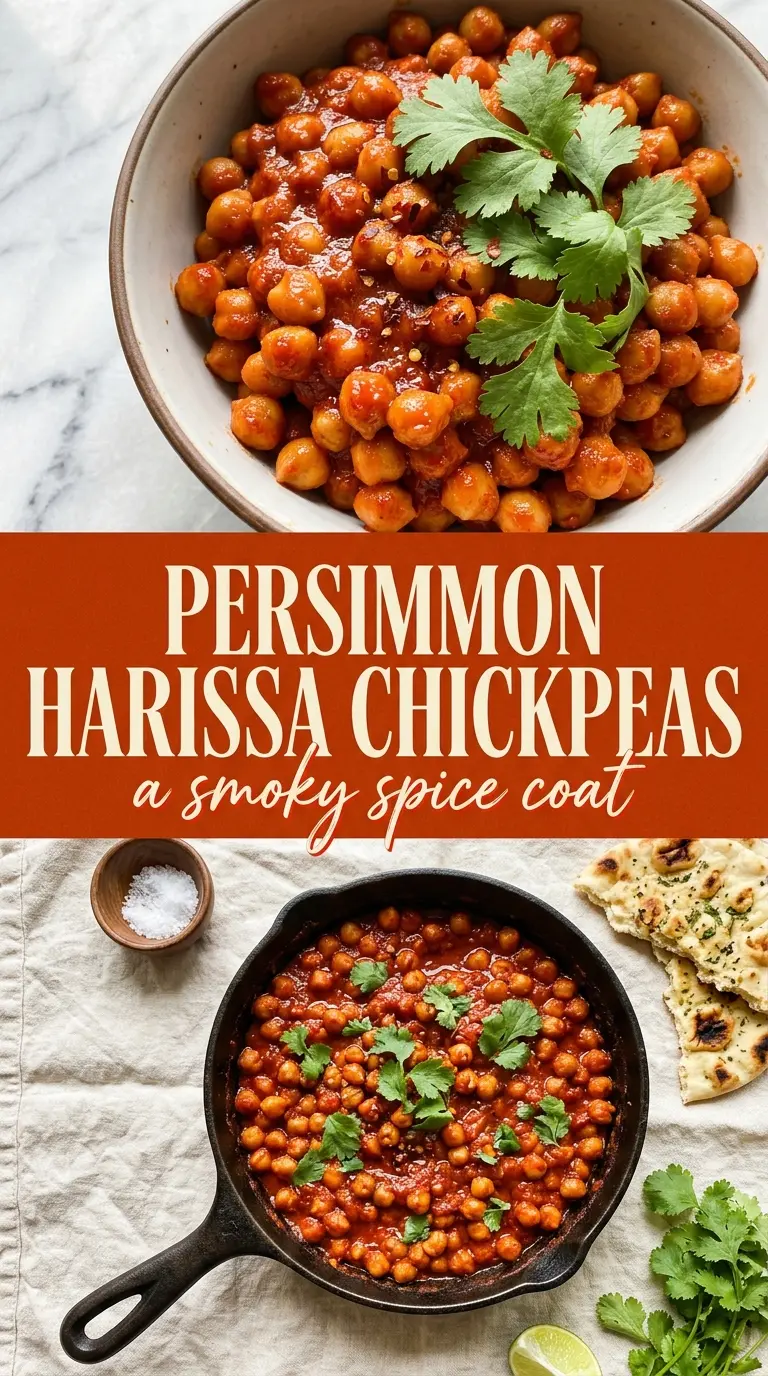
- Harissa paste — This is the backbone of the dish, so use one you actually like the taste of on its own. Some jars lean more smoky, some more fiery, and that difference will show up in the finished sauce. If yours is especially hot, start with a little less and add more at the end.
- Chickpeas — Canned chickpeas are perfect here because they hold their shape and soak up the sauce without turning to mush. Rinse them well so the sauce stays clean-tasting instead of starchy. If you cook chickpeas from dry, they need to be fully tender before they go in.
- Crushed tomatoes — These give the sauce body and a little sweetness, which keeps the harissa from tasting blunt. Tomato sauce works in a pinch, but crushed tomatoes give you a better texture because they still leave some body in the pan.
- Smoked paprika and cumin — These spices extend the harissa instead of competing with it. The paprika reinforces the smokiness, while cumin adds a warm earthiness that makes the sauce taste cooked and complete.
- Fresh cilantro — Add it at the end so it stays bright. Parsley works if cilantro tastes soapy to you, but the finish will be less herbal and a little flatter.
Building the sauce before the chickpeas go in
Softening the onion first
Start with the olive oil and onion over medium heat. You want the onion soft and translucent, not browned, because browned onion pushes the sauce in a different direction and can make the harissa taste louder than it should. Five minutes is usually enough if the pan isn’t overcrowded. If the onion starts taking on color too quickly, lower the heat and keep going until it loses its raw edge.
Waking up the spice paste
Add the garlic, harissa, smoked paprika, and cumin and cook them briefly in the oil. You’ll smell the change almost right away; the mixture should go from sharp and paste-like to fragrant and a little glossy. This is where the sauce gets its depth. If the garlic starts browning, the heat is too high and it will turn bitter, so pull the pan back before that happens.
Simmering until the sauce clings
Pour in the crushed tomatoes, season, and let the mixture simmer before adding the chickpeas. The sauce should bubble gently, not boil hard, so the tomatoes soften without splattering everywhere. Once the chickpeas are in, keep the simmer going until the sauce thickens and coats the beans instead of pooling around them. If it still looks thin at the end, give it a few extra minutes uncovered; the finish should be saucy, not watery.
The final toss
Stir in the cilantro off the heat or right at the end. That keeps the herbs fresh and avoids muddying the color of the sauce. Taste once more before serving. Harissa brands vary a lot, and a final pinch of salt or squeeze of lemon can pull the whole skillet into focus if it needs it.
How to adapt these harissa chickpeas for the way you eat
Make it vegan and naturally gluten-free
The base recipe already works for both diets as written, which is one reason it’s such a useful pantry meal. Serve it with rice, gluten-free flatbread, or roasted vegetables and you’ve got a complete dinner without changing the sauce at all.
Dial the heat up or down
If your harissa is aggressive, use 2 tablespoons instead of 3 and finish with more only after tasting. If you want more heat, add a pinch of red pepper flakes with the spices or stir in the extra tablespoon at the end for a brighter, sharper burn.
Turn it into a fuller meal
A handful of spinach stirred in at the end softens into the sauce, or you can fold in roasted cauliflower for more texture. If you want extra richness, top the finished skillet with a spoonful of yogurt or tahini, but add it at the table so it doesn’t mute the spices in the pan.
Storage and Reheating
- Refrigerator: Store in an airtight container for up to 4 days. The sauce gets thicker as it sits, and the chickpeas take on even more flavor.
- Freezer: This freezes well for up to 2 months. Let it cool completely, then freeze in portions so it thaws evenly. The texture stays good after reheating because the chickpeas hold up better than most beans.
- Reheating: Warm it gently on the stove with a splash of water if the sauce has tightened up. Don’t blast it in the microwave on high, or the sauce can splatter and the chickpeas can dry out before the center is hot.
Questions I Get Asked About This Recipe
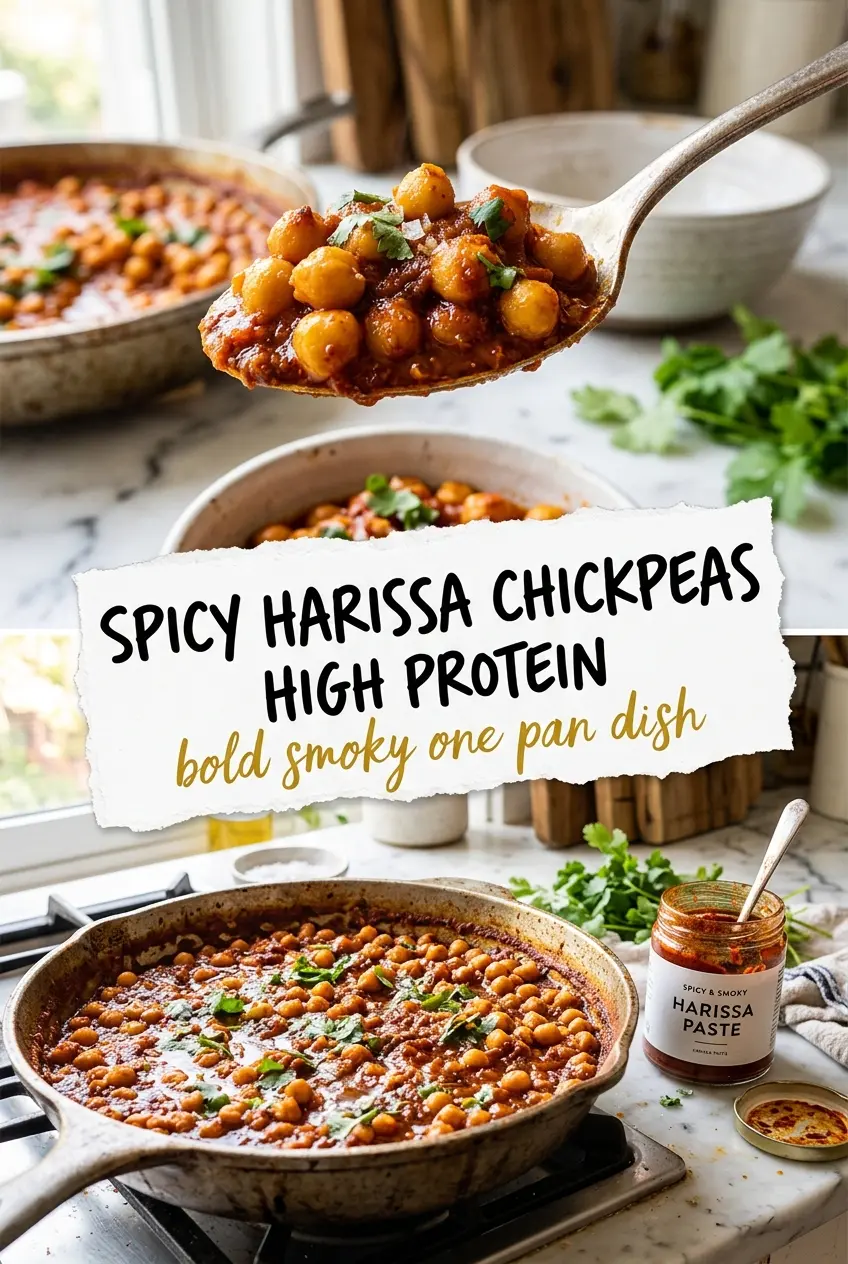
Spicy Harissa Chickpeas
Ingredients
Equipment
Method
- Heat the olive oil in a large skillet over medium heat, then sauté the onion for 5 minutes until soft, stirring occasionally so it cooks evenly.
- Add the garlic and cook for 1 minute until fragrant, keeping the heat at medium so it doesn’t brown.
- Stir in the harissa paste, smoked paprika, and ground cumin, cooking for 1-2 minutes until fragrant and darkened slightly in the pan.
- Add the crushed tomatoes, salt, and pepper, then bring to a simmer for 5 minutes so the sauce starts to thicken.
- Stir in the chickpeas and simmer for another 10 minutes until the sauce thickens and the chickpeas are infused with flavor.
- Top with chopped fresh cilantro before serving to finish the dish fresh and aromatic.