
Roasted acorn squash gets its best texture when the cut sides hit the pan first and have time to caramelize before the filling goes in. That first roast turns the flesh tender and sweet, with browned edges that hold up under a savory sausage filling instead of collapsing into a watery pile. The result is hearty without feeling heavy, and every bite gets a mix of soft squash, juicy sausage, crisp breadcrumbs, and a little sharp Parmesan.
The apple matters here because it keeps the filling from tasting flat. As it cooks with the sausage, it softens just enough to disappear into the mixture without turning mushy, and the sage bridges the sweet squash and the rich sausage in a way that tastes deliberate, not fussy. Roasting the squash before stuffing it also gives you a head start on the whole dish, so the final bake is just long enough to heat everything through and crisp the topping.
Below, I walk through the parts that change the outcome most: how to roast the squash so it browns instead of steams, how to keep the filling savory instead of soggy, and what to swap if you need to work with what you’ve got in the kitchen.
The squash turned tender and caramelized instead of watery, and the sausage filling stayed crisp on top after the final bake. My husband went back for seconds and said the apple and sage made it taste like a full holiday dinner.
Save this sausage stuffed acorn squash for a cozy dinner that gives you sweet squash, savory filling, and crisp golden breadcrumbs in one pan.
The Reason the Squash Needs Its First Roast Before You Stuff It
Acorn squash can go wrong in two ways: undercooked centers or soggy edges. The first roast solves both. When the halves go in cut-side down, the surface in contact with the pan gets direct heat, which pulls the moisture out of the flesh and lets the sugars deepen instead of steaming in place. That’s how you get squash that tastes roasted, not boiled.
Flipping the squash after that first bake matters just as much. If you stuff it while it’s still cut-side down, the filling sits in steam and the top never crisps properly. Turning it cut-side up creates a little bowl that holds the sausage mixture neatly and lets the breadcrumb topping brown in the second bake.
- Cut-side down first — This is what gives you caramelized edges and a tender interior.
- Don’t rush the first roast — If the squash still feels firm at the center, the final bake won’t fix it.
- Second bake is for the top — The filling only needs enough heat to marry, but the crumbs need time to toast.
What Each Ingredient Is Doing in This Dish
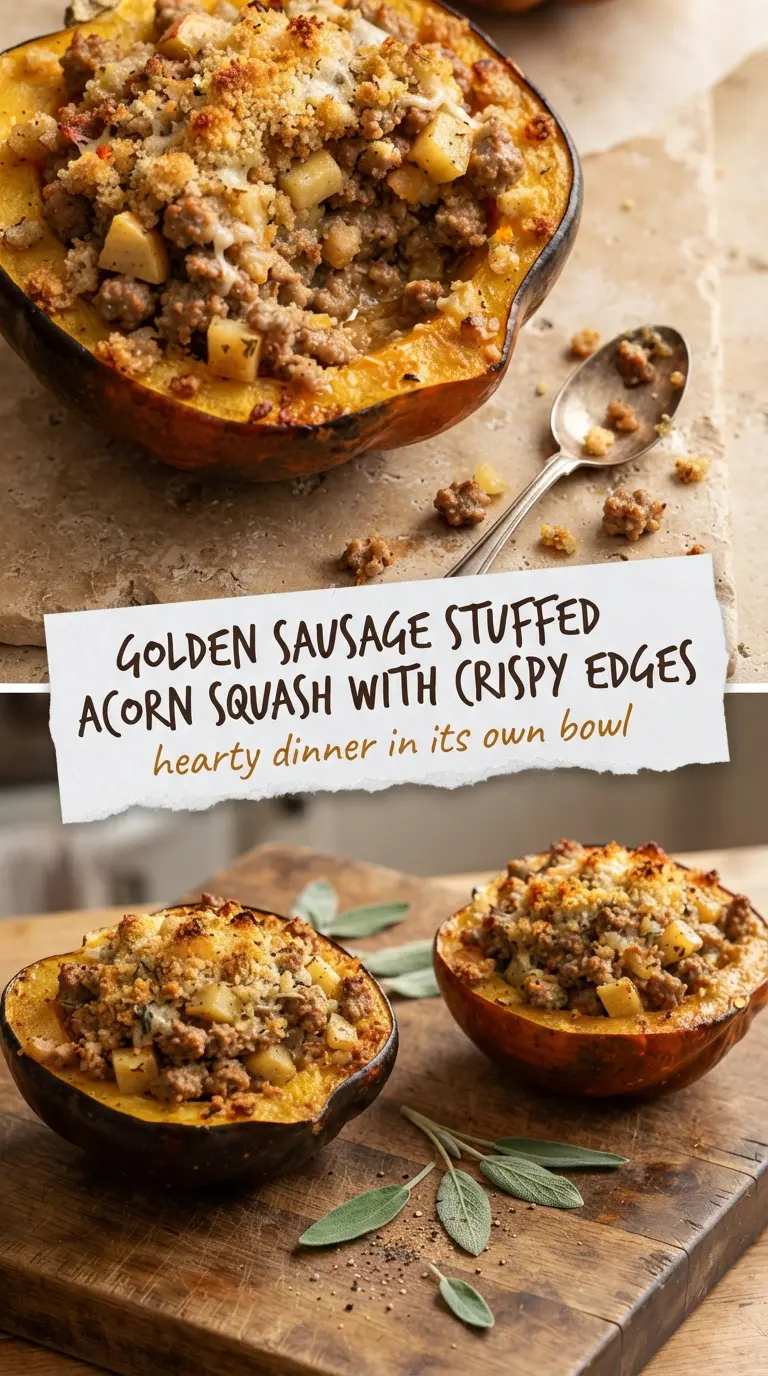
- Acorn squash — The shell and the side dish all in one. Choose squash that feels heavy for its size with matte skin; shiny squash tends to be picked early and can taste less developed. If you need a swap, delicata works in a pinch, but it cooks faster and gives you smaller portions.
- Italian sausage — This is the backbone of the filling, so use one you’d actually eat on its own. Mild or hot both work; hot sausage brings more depth, while mild lets the apple and sage stand out. Turkey sausage also works, but it’s leaner, so you’ll want to watch that it doesn’t dry out.
- Apple — The apple brings a little brightness and juiciness that keeps the filling from feeling dense. Use a firm apple like Honeycrisp, Pink Lady, or Granny Smith so it softens without dissolving. Soft apples turn to paste and blur into the sausage.
- Breadcrumbs — These give the filling structure and a crisp top. If you want more crunch, toast them in the skillet for a minute or two before stuffing. Fresh breadcrumbs work too, but they’ll give you a softer topping.
- Fresh sage — Dried sage can work, but fresh sage has a cleaner, woodsy flavor that plays better with squash and apple. Chop it fine so it doesn’t clump in one bite and overpower the filling.
- Parmesan — This adds salt, nuttiness, and a little edge that keeps the filling from tasting one-note. Pre-grated Parmesan is fine here if that’s what you have, but the finer texture of freshly grated cheese melts and binds better.
Building the Filling So It Stays Crisp, Not Greasy
Roasting the Squash Until It Yields
Brush the cut sides with olive oil, season them, and put them cut-side down on the pan. You’re looking for squash that gives easily when pressed with a fork at the thickest part, but still holds its shape. If the flesh is still firm after 30 minutes, give it a few more minutes before you move on. Undercooked squash is the main reason stuffed squash slices badly at the table.
Cooking Out the Sausage Fat
Brown the sausage in a skillet and break it into small, even crumbles as it cooks. You want the meat deeply browned, not pale and steamed, because that browning is where the flavor comes from. If there’s a lot of grease in the pan, drain off the excess before adding the apple. Leaving too much fat behind makes the filling oily and keeps the breadcrumbs from crisping.
Finishing the Filling With Apple, Sage, and Parmesan
Add the apple next and cook it just until it softens at the edges. Then stir in the breadcrumbs, sage, and Parmesan off the heat so the crumbs stay dry and the cheese doesn’t clump. The mixture should look loose but cohesive, not wet. If it seems too soft, let it sit in the hot pan for a minute; the breadcrumbs will absorb the excess moisture before you stuff the squash.
The Final Bake That Pulls It All Together
Flip the squash cut-side up and mound the filling generously into each half. The top should look full, even if it rises above the rim a little. Bake just until the stuffing is hot through and the top turns golden at the edges. If you leave it in too long, the squash can collapse and the breadcrumb topping goes from crisp to dry.
Three Smart Ways to Adapt This Stuffed Squash
Make It Gluten-Free
Swap the breadcrumbs for gluten-free breadcrumbs or crushed gluten-free crackers. You’ll still get the crunchy top, though the texture can be a little more delicate than standard crumbs. If your substitute seems coarse, drizzle it with a touch of olive oil before topping the squash so it browns evenly.
Use Turkey Sausage for a Lighter Filling
Turkey sausage works well if you want a lighter plate, but it doesn’t render as much fat or carry flavor the way pork sausage does. Add a little extra olive oil to the skillet and season the filling more assertively if needed. The texture stays good, but the flavor lands a little cleaner and less rich.
Swap the Apple for Pear
A firm pear gives you the same sweet-savory balance with a softer, floral note. Use it only if it’s still firm, because overripe pear can disappear into the sausage. The filling will taste a little more delicate and less tart than the apple version.
Make It Dairy-Free
Skip the Parmesan and add a pinch of extra salt plus a spoonful of nutritional yeast if you want a little savory edge back. The dish still works without cheese, but you lose some of the nutty finish that helps the filling taste complete. Toasting the breadcrumbs in a little oil becomes even more important for flavor and texture.
Storage and Reheating
- Refrigerator: Store leftovers in an airtight container for up to 4 days. The squash softens a bit, but the flavor holds up well.
- Freezer: Freeze the stuffed halves tightly wrapped for up to 2 months. The texture of the squash gets softer after thawing, but it still works for a leftovers meal.
- Reheating: Reheat in a 350°F oven until warmed through, about 15–20 minutes. The oven keeps the topping crisp; the microwave will make the breadcrumbs soggy and flatten the filling.
Questions I Get Asked About This Recipe
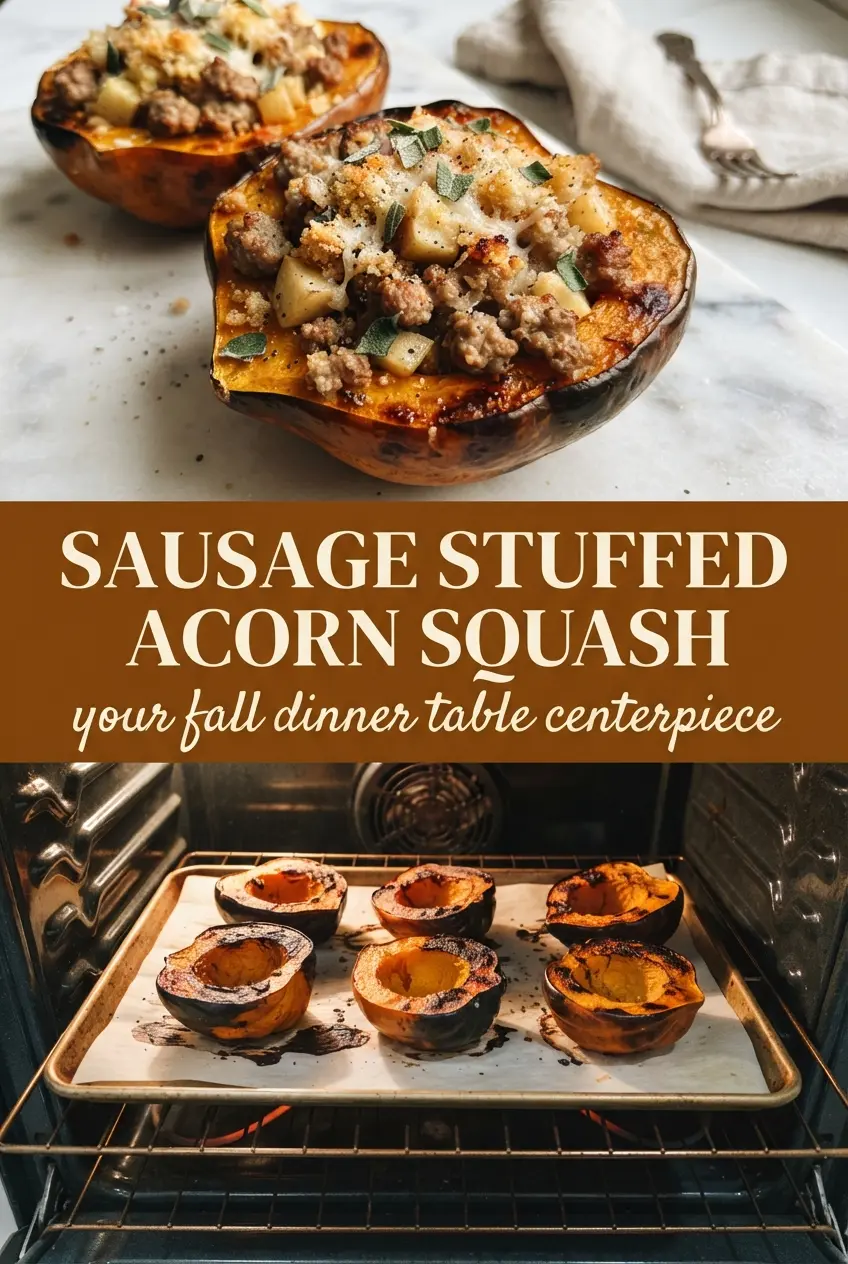
Sausage Stuffed Acorn Squash
Ingredients
Equipment
Method
- Preheat the oven to 400°F and brush the squash halves with 1 tbsp olive oil, then season with salt and pepper.
- Arrange the squash cut-side down on a sheet pan and roast for 25-30 minutes, until the flesh is tender and edges start to caramelize with a deep amber color.
- Heat the remaining 1 tbsp olive oil in a skillet and brown the Italian sausage, breaking it up as it cooks.
- Add the diced apple to the skillet and cook until softened, about 5-7 minutes.
- Stir in breadcrumbs, chopped sage, and grated Parmesan cheese until evenly combined and fragrant.
- Flip the roasted squash halves and fill generously with the sausage mixture, packing it into the cavities.
- Return to the oven and bake for 10 minutes until the tops are golden and crisp.