
Silky pumpkin Alfredo clings to every strand of fettuccine with that glossy, spoon-coating texture people chase in a good cream sauce. The pumpkin adds body and a gentle sweetness, but the real payoff is how the Parmesan and sage keep it from tasting flat. You get a sauce that feels rich without being heavy, and it comes together fast enough to work on a busy night.
The part that makes this version worth keeping is the balance. Pumpkin puree thickens the sauce on its own, so you don’t need to reduce it down until the cream turns dull and overcooked. A little reserved pasta water loosens everything at the end and helps the sauce grab onto the noodles instead of sitting in the bowl like gravy. Crispy fried sage on top gives you that sharp, earthy finish that cuts through the richness and keeps each bite interesting.
Below, I’ll walk through the one detail that keeps the sauce smooth, the ingredient choices that matter most, and a few ways to adapt it if you need to swap ingredients or plan ahead.
The sauce turned out smooth and coated the pasta beautifully, and the fried sage stayed crisp even after plating. I added a splash of pasta water at the end and it loosened up just enough without getting soupy.
Save this pumpkin Alfredo pasta with sage for the night you want a creamy dinner that feels a little special without extra effort.
The Secret to Keeping Pumpkin Alfredo Smooth Instead of Grainy
Pumpkin Alfredo can go grainy for two reasons: the sauce gets too hot after the Parmesan goes in, or the mixture gets reduced until the dairy tightens up and separates. The fix is simple. Build the sauce over moderate heat, then drop the heat before the cheese hits the pan. Parmesan melts into a stable sauce when it has time and gentle heat; it turns sandy when it’s rushed.
The other thing that matters is texture. Pumpkin puree adds thickness fast, so this isn’t the kind of sauce that needs to simmer forever. If it looks too thick once the pasta goes in, the answer isn’t more cream. It’s a splash of starchy pasta water, which loosens the sauce and helps it cling to the noodles at the same time.
What Each Ingredient Is Actually Doing in This Dish
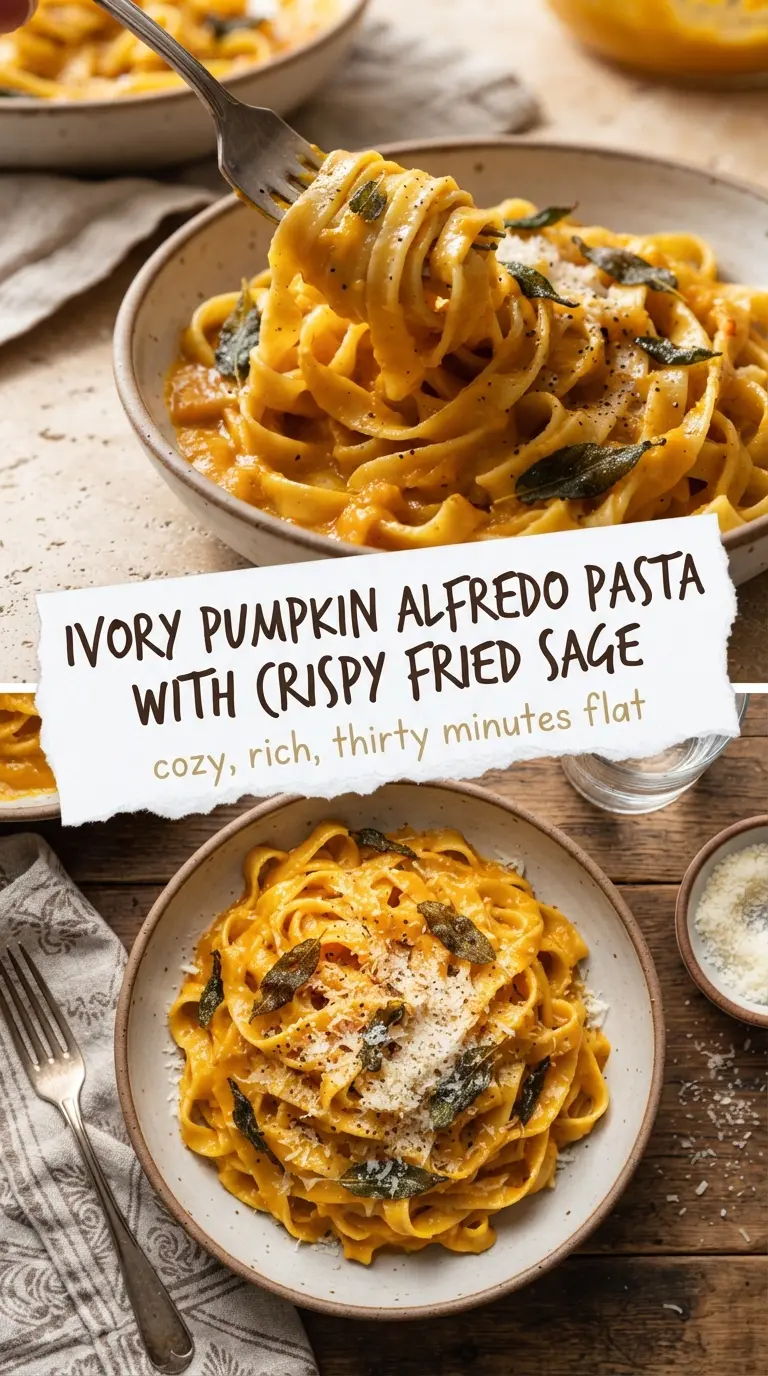
The pumpkin puree is the backbone here. Use plain puree, not pie filling, or you’ll end up with sweetness and spice that don’t belong in the sauce. Heavy cream gives the Alfredo its plush texture, and half-and-half won’t quite hold the same body once the pasta is tossed through. Parmesan matters too; the pre-shredded kind often has anti-caking agents that can make the sauce less smooth, so grate it yourself if you can.
Fettuccine is the right shape because the broad noodles carry the sauce instead of letting it slide off. Butter starts the sauce and carries the garlic flavor, while the extra butter for the sage gives you those crisp leaves that taste toasted and aromatic instead of grassy. Nutmeg is small but important. It should stay in the background, adding warmth rather than announcing itself.
- Pasta water — This is your backup plan for thickness. It’s not there to water the sauce down; it’s there to help it emulsify so the cream, cheese, and pumpkin stay smooth together.
- Fresh sage — Dried sage won’t give you the same crisp finish. Fresh leaves fry quickly and turn glassy at the edges, which is part of what makes the final plate taste finished.
- Parmesan — Freshly grated Parmesan melts cleaner than packaged shreds. If you use pre-grated, stir it in off the heat and expect a slightly less silky texture.
How to Build the Sauce So It Stays Glossy
Cooking the Pasta to the Right Point
Boil the fettuccine until it’s just shy of fully tender, then drain it while reserving a good cup of the cooking water. Pasta that goes into the sauce with a little bite finishes better because it keeps cooking in the pan. If you cook it all the way to soft in the pot, it can turn mushy once it sits in the sauce.
Starting the Garlic and Pumpkin Base
Melt the butter and cook the garlic just until it smells fragrant, not brown. Garlic that browns here can turn bitter under the cream, and that bitterness hangs around. Stir in the pumpkin, cream, and nutmeg and let the mixture warm through until it looks uniform and slightly thickened, with no streaks of cream left floating on top.
Melting in the Parmesan
Pull the heat down before you add the cheese, then stir until the sauce turns smooth and velvety. If the burner is too hot, Parmesan can tighten into tiny grainy bits instead of melting into the sauce. Add it gradually if your pan runs hot, and let each handful disappear before the next goes in.
Finishing the Pasta and the Sage
Toss the drained pasta in the sauce and add a splash of pasta water only if the noodles look dry or the sauce sits too thick in the pan. You want the sauce to coat the strands in a glossy layer, not pool underneath them. Fry the sage in the second pan just until it crisps and darkens a shade or two; once it starts to curl hard and deepen quickly, it’s close to burning, so pull it off the heat right away.
How to Adapt This for a Lighter Dinner or a Different Pantry
Make It Dairy-Free
Use full-fat canned coconut milk or an unsweetened oat cream in place of the heavy cream, then swap the Parmesan for a dairy-free Parmesan-style alternative or a tablespoon of nutritional yeast. The sauce won’t taste exactly the same, but it will still be rich and creamy. Keep the heat low because plant-based creams can split if they boil hard.
Use Gluten-Free Pasta Without Losing the Sauce
A good gluten-free fettuccine works here, but it usually releases more starch and can go soft faster than wheat pasta. Cook it just to al dente and toss it in the sauce immediately so it doesn’t sit and absorb too much liquid. Save the pasta water anyway; even gluten-free water can help loosen the sauce.
Add Protein Without Overcrowding the Pan
Grilled chicken, sautéed mushrooms, or browned Italian sausage all fit well here. The key is to cook the protein separately and fold it in at the end so the sauce doesn’t thin out while the meat releases juices. Mushrooms are the best vegetarian add-in because they echo the earthiness of the sage.
Storage and Reheating
- Refrigerator: Store in an airtight container for up to 3 days. The sauce thickens as it chills.
- Freezer: It can be frozen, but cream sauces lose some smoothness after thawing. Freeze in a shallow container for up to 1 month if you need to, then expect a slightly less silky texture.
- Reheating: Warm it slowly in a skillet over low heat with a splash of milk or water, stirring often. High heat is what breaks the sauce and makes the pasta clump.
Answers to the Questions Worth Asking
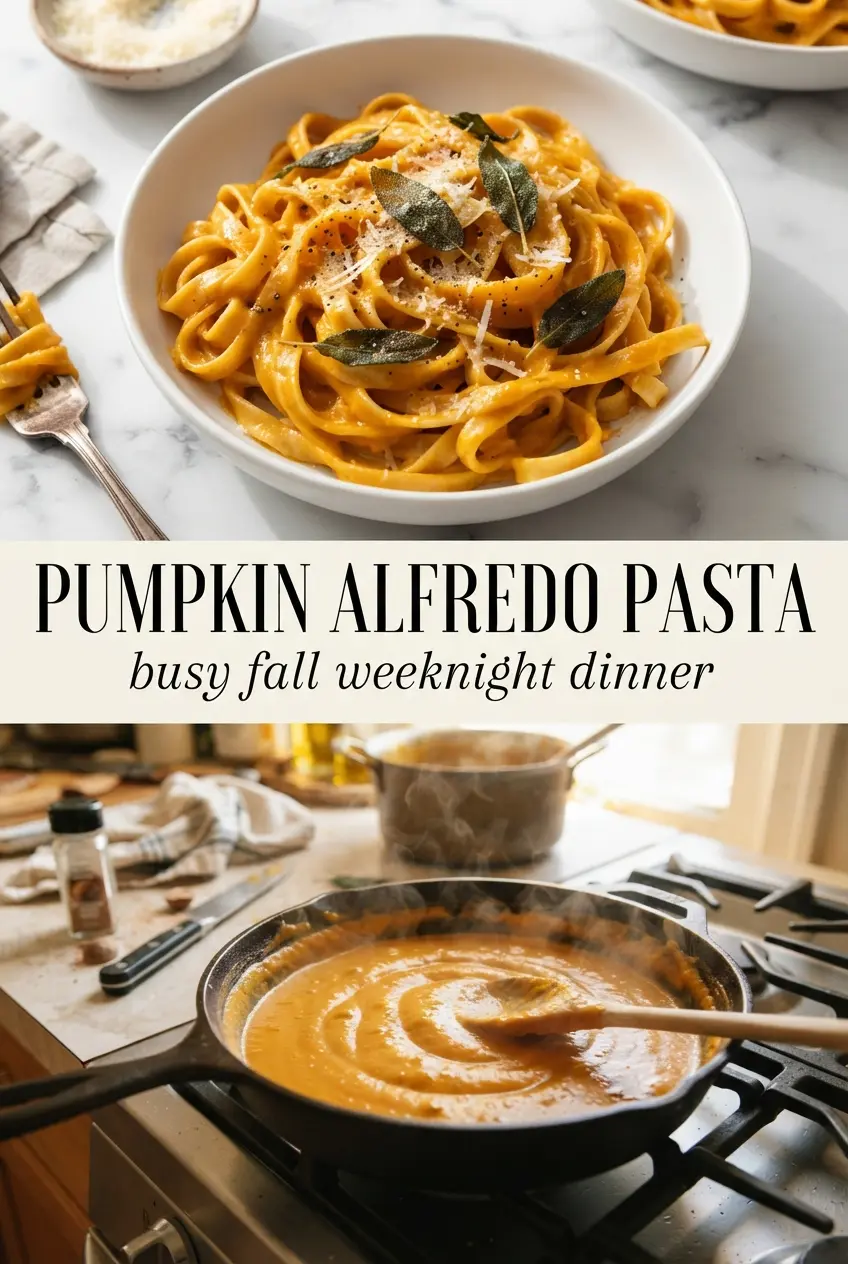
Pumpkin Alfredo Pasta with Sage
Ingredients
Equipment
Method
- Bring a pot of salted water to a boil, then cook the fettuccine according to package directions until al dente. Drain and reserve some pasta water for thinning.
- Melt 2 tbsp butter in a skillet over medium heat until foamy, then add the minced garlic. Sauté until fragrant, about 30-60 seconds, without browning.
- Stir in the pumpkin puree, heavy cream, and nutmeg, then bring the mixture to a gentle simmer. Simmer for 5 minutes, stirring occasionally, until slightly thickened.
- Reduce heat to low, then stir in the grated Parmesan until melted and smooth. Season with salt and pepper to taste.
- Add the cooked fettuccine to the sauce and toss to coat every strand. Thin with reserved pasta water, 1-2 tbsp at a time, until glossy and saucy.
- Melt the additional 2 tbsp butter in a separate pan over medium heat. Fry the sage leaves until crisp, about 30-60 seconds, turning once if needed.
- Drain the fried sage on a lined sheet pan to keep it crisp. Top the plated pasta with the crispy sage before serving.