
Roasted tomato peach salsa has that sweet-smoky balance that makes it easy to keep reaching for another chip, but this version also holds up beautifully for canning. The roasted tomatoes bring a deeper, almost jammy tomato flavor instead of a watery fresh salsa base, and the peaches soften into the pot without disappearing completely. What you end up with is bright, thick, and just a little bit chunky, with enough acid and heat to keep it lively.
The roasting step matters more than it looks. Tomatoes release a lot of liquid, and if you skip that bit of oven time, the salsa can turn thin and a little flat. Roasting concentrates the flavor first, then the simmer finishes the texture so the jars end up with something spoonable, not soupy. I also keep the vinegar in the mix from the start because canning isn’t the place to wing acid balance.
Below, I’ve laid out the part that actually changes the final jar, plus a few smart swaps and the storage details you’ll want if you’re opening a jar later for tacos, grilled chicken, or a quick snack.
The roasted tomatoes made the salsa so much thicker than my usual version, and the peaches gave it this deep sweetness that still tasted fresh after processing. I was nervous about canning it, but the texture set up perfectly in the jars.
Save this roasted tomato peach salsa for canning when you want a smoky-sweet jar of summer produce that actually thickens up.
The Roasting Step That Keeps This Salsa From Turning Watery
The biggest mistake in fruit-and-tomato salsa is starting with too much moisture and hoping the simmer will fix it. It usually won’t. Roasting the tomatoes first dries them out just enough to concentrate the flavor, and that matters even more once the peaches go in, because peaches bring their own juice and can push the texture toward loose if the base isn’t already reduced.
Don’t roast the tomatoes until they collapse into mush. You want softened edges, some caramelized spots, and enough structure left that they still look like tomatoes when they go into the pot. That little bit of browning gives the salsa a deeper, rounder taste, and it keeps the finished jars from tasting like sweet tomato sauce with peppers in it.
What Each Ingredient Is Actually Doing in This Jar
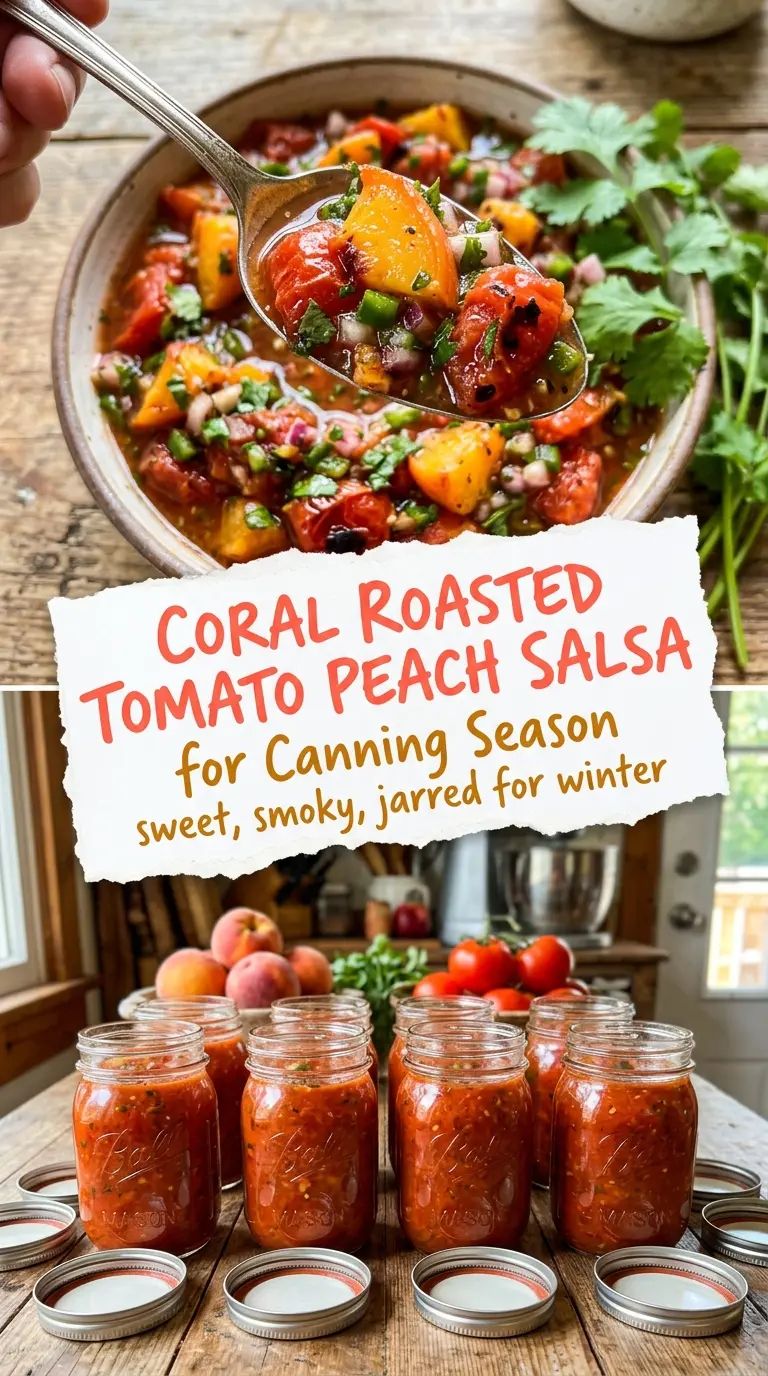
- Roma tomatoes — These are the right tomato here because they’re fleshier and less watery than slicing tomatoes. If you use a juicier variety, expect a looser salsa and a longer simmer.
- Peaches — Use ripe but not collapsing peaches. They should be fragrant and sweet, but still firm enough to hold some shape after simmering instead of disappearing into the tomatoes.
- Apple cider vinegar — This isn’t just for tang. It’s doing the acid work that matters for safe canning, so don’t swap it casually for a weaker or untested vinegar if you’re following a preserved recipe.
- Jalapeños — Seed them for milder salsa or leave some seeds in if you want more heat. Fresh peppers bring a cleaner bite than dried spice here, and they keep the salsa tasting bright.
- Cilantro — Add it at the end so it stays fresh and doesn’t go dull and muddy in the pot. If you’re one of the people who tastes soap, flat-leaf parsley gives you green flavor without the cilantro note.
How to Build the Salsa So It Cooks Down Without Losing Its Brightness
Roast the Tomatoes First
Spread the tomato pieces on a hot baking sheet and roast them until they slump and take on a few darkened edges. That char is where a lot of the depth comes from. If the tomatoes are pale and just softened, the salsa can taste thin even after a long simmer.
Simmer the Fruit and Vegetables Together
Once everything is in the pot, let it come up slowly and then hold at a steady simmer. You want the peaches to soften and the onion to lose its raw edge, but you don’t want a hard boil that breaks everything down too fast. Stir often enough to keep the bottom from catching, especially as the mixture thickens near the end.
Watch for the Spoon Test
The salsa is ready when it mounds on a spoon instead of running off in a watery sheet. It should still look glossy, but the liquid should have reduced enough that the pieces cling together. If it looks thin in the pot, it will look thinner in the jar.
Stir in the Cilantro at the End
Add the cilantro right before ladling so it keeps its fresh color and doesn’t turn dull during the simmer. This is a small move, but it keeps the finished salsa tasting alive instead of cooked flat.
What to Change When You Want a Different Kind of Jar
Make it milder for everyone at the table
Use one jalapeño instead of two and remove the seeds and white ribs. You’ll lose some heat, but the salsa stays balanced because the peaches and tomatoes carry enough sweetness and acidity to keep it interesting.
Make it a little punchier and hotter
Leave the jalapeño seeds in, or swap one pepper for a serrano if you want sharper heat. That changes the salsa from sweet-smoky to brighter and more aggressive, which works well if you’re planning to serve it with rich foods like pork or cheese.
Make it without cilantro
Leave the cilantro out and finish with a little extra onion for freshness. The salsa will taste cleaner and less herbal, which works well if you’re serving it to people who don’t like cilantro.
Keep it naturally gluten-free and vegetarian
This recipe already fits both without any changes, which is part of why it works so well for gifting and batch canning. The main thing to protect is the acid balance, not the dietary label.
Storage and Reheating
- Refrigerator: Unopened, properly processed jars keep for about 1 year in a cool, dark pantry; once opened, refrigerate and use within 1 to 2 weeks. The salsa will continue to settle and may look a little looser after chilling.
- Freezer: This recipe is meant for water bath canning, not freezing in jars. If you want to freeze a portion instead, use freezer-safe containers and leave headspace for expansion.
- Reheating: Warm opened salsa gently in a small saucepan over low heat if you want it for tacos or spooning over grilled meat. Don’t boil it hard, or the peaches can break down and the texture gets mushy.
Answers to the Questions Worth Asking
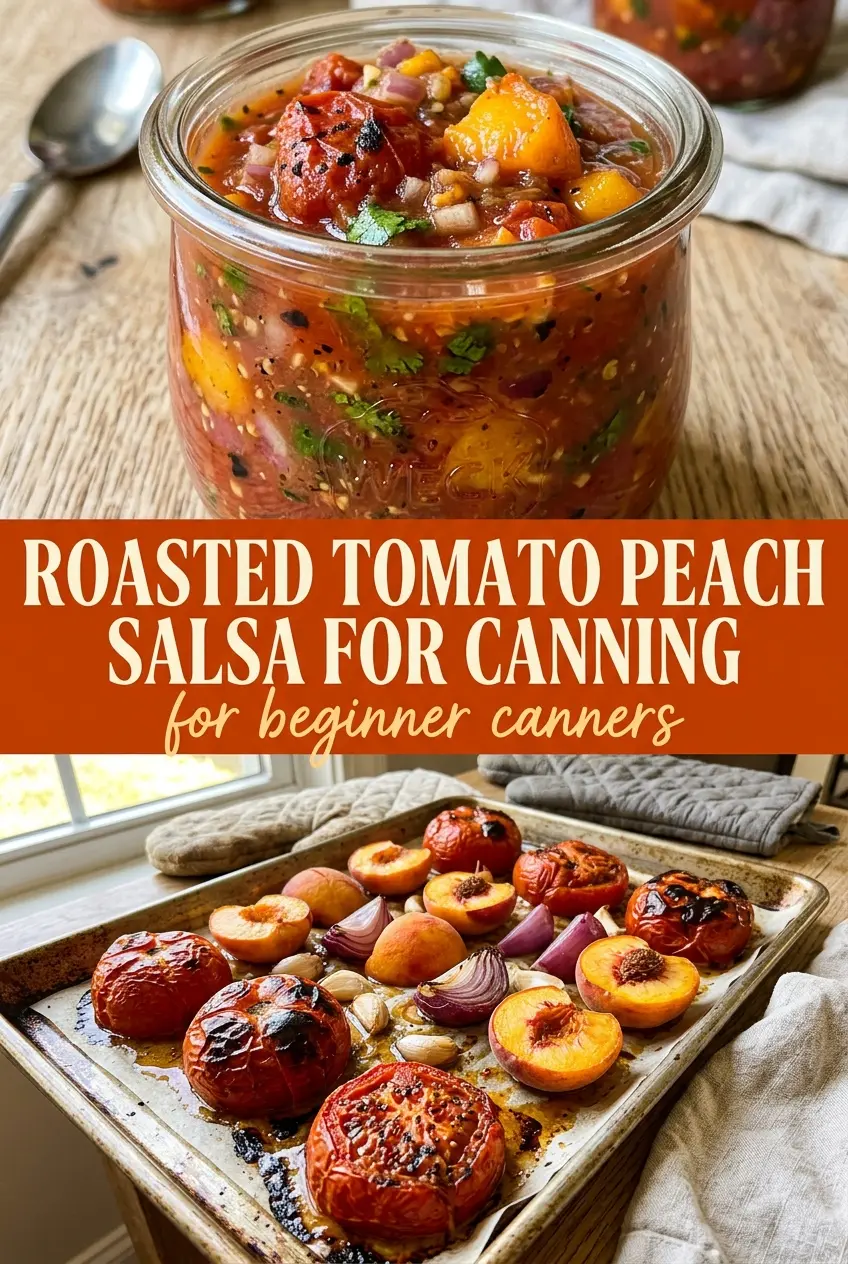
Roasted Tomato Peach Salsa for Canning
Ingredients
Equipment
Method
- Preheat the oven to 425°F and roast the roma tomatoes on a sheet pan for 20–25 minutes, until softened and slightly charred. Let them cool just enough to handle, then dice.
- Add the roasted tomatoes, peaches, diced onion, jalapeños, and minced garlic to a large pot. Stir to combine.
- Stir in apple cider vinegar, sugar, and salt, then simmer for 20–25 minutes until slightly thickened. Stir occasionally to prevent sticking.
- Turn off the heat and stir in fresh cilantro just before canning.
- Ladle hot salsa into sterilized jars, leaving 1/2-inch headspace. Wipe jar rims and apply lids according to your canner setup.
- Process the jars in a water bath canner following safe canning guidelines for the correct time and style of jar. Let jars cool fully before checking seals.