
Gochujang spicy chicken ramen hits that sweet spot between fast and deeply satisfying. The broth turns glossy and brick-red, the chicken soaks up the heat, and the noodles keep just enough chew to carry all that savory spice without going limp. It tastes like something that simmered for a long time, even though it lands on the table in 25 minutes.
The trick here is building the broth with gochujang, soy sauce, garlic, and ginger before the chicken ever goes in. That gives the paste a chance to dissolve evenly instead of clumping on the bottom of the pot. Cooking the noodles separately keeps the broth clean and keeps the noodles from stealing all the liquid before you get to the bowl.
Below, you’ll find the small details that keep the broth balanced, the best swaps if your pantry is missing one thing, and the reheating note that matters if you want leftovers to taste just as good the next day.
The broth had that deep gochujang heat without being one-note, and the noodles stayed springy because I cooked them separately. My husband went back for a second bowl and asked if I could make it again next week.
Save this gochujang chicken ramen for a fast bowl with glossy broth, chewy noodles, and just the right amount of heat.
The Reason the Broth Stays Bold Instead of Muddy
Gochujang can go sideways in soup if it never fully dissolves. You end up with little red streaks instead of a broth that tastes unified from the first spoonful to the last. Whisking the paste into the broth before anything else gives it time to melt in, and that little bit of ginger sharpens the heat so the bowl tastes layered instead of flat.
The other thing that matters is heat control. A hard boil can make the garlic taste harsh and can push the broth from glossy to thin and aggressive. A steady simmer is enough here. It keeps the chicken tender, lets the soy sauce round out the spice, and gives the ramen broth that rich, clingy finish people expect from a good noodle bowl.
What Each Ingredient Is Actually Doing in This Bowl
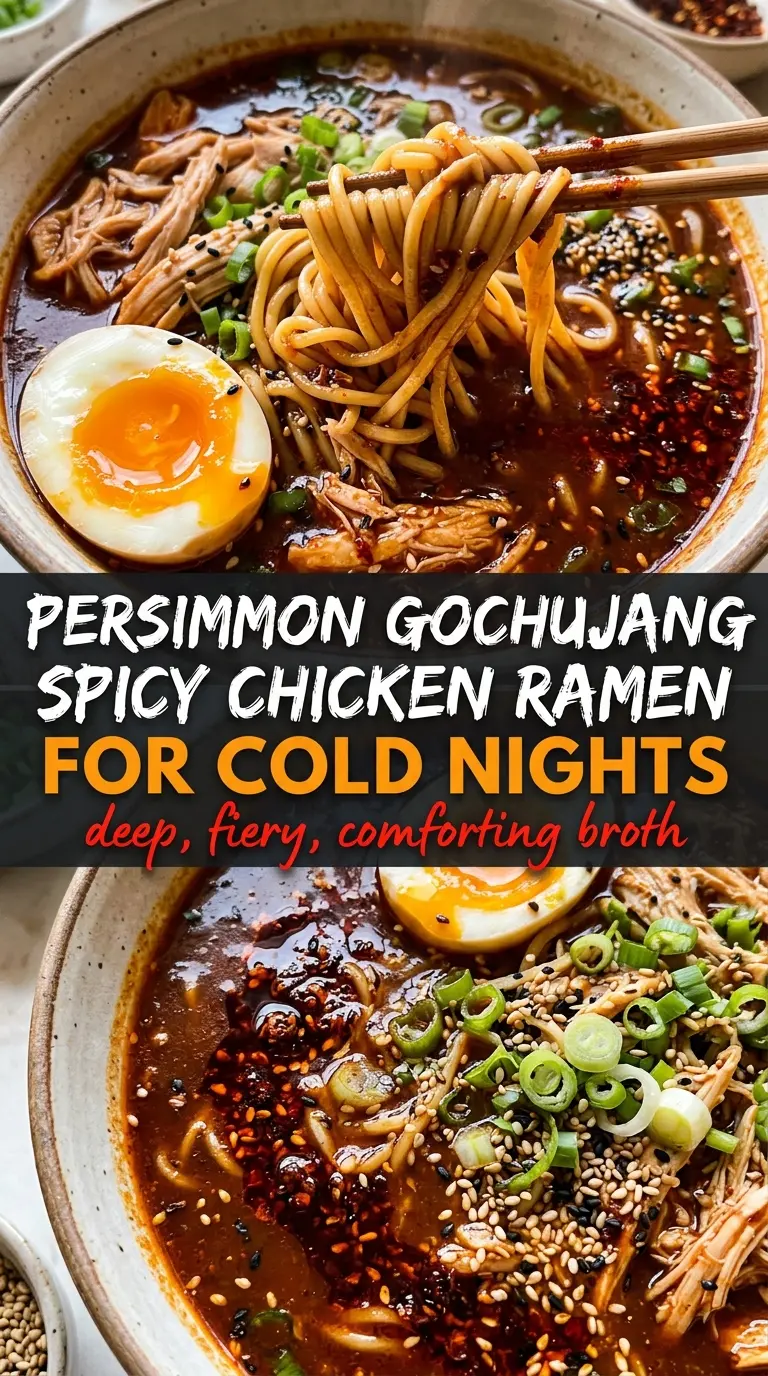
- Gochujang paste — This is the backbone of the broth. It brings heat, sweetness, and fermented depth all at once, which is why the soup tastes much bigger than the ingredient list looks. There isn’t a true stand-in for it, but chili paste plus a little miso comes closest if that’s what you have.
- Chicken broth — Use a broth you’d actually drink on its own. Since there are only a few moving parts here, a thin or overly salty broth will show up fast. Low-sodium broth is the safer choice because the soy sauce already adds salt.
- Shredded cooked chicken — Rotisserie chicken works well and saves time. The key is already-cooked chicken, since it only needs to warm through and absorb the broth. If you use freshly cooked chicken, shred it before adding so it picks up more flavor.
- Ramen noodles — Cook them separately or they’ll soak up too much broth and turn soft before you eat. Standard dried ramen noodles are fine here; discard the seasoning packet because the broth is already doing that job.
- Sesame oil — This goes on at the end so its aroma stays vivid. If you cook it hard, the flavor dulls. A small drizzle changes the whole bowl.
Building the Bowl Without Overcooking the Noodles
Whisk the broth base until it looks smooth
Start by whisking the gochujang, soy sauce, garlic, and ginger into the chicken broth before the pot gets fully hot. You want the paste to disappear into the liquid, not sit in little clumps at the bottom. Bring it to a gentle simmer, not a rolling boil, so the garlic softens instead of turning bitter.
Let the chicken warm through in the seasoned broth
Add the shredded chicken and give it ten minutes in the simmering broth. That time matters because the chicken picks up the gochujang flavor instead of tasting like plain leftovers dropped into soup. If the broth looks like it’s reducing too fast, lower the heat; you want concentrated flavor, not a salty paste.
Cook the noodles separately and stop at just-tender
Boil the ramen in its own pot according to the package directions, then drain it right away. The noodles keep their spring when they’re not sitting in the broth, and that texture is what makes the bowl feel complete instead of mushy. If they go a minute too long, they’ll keep softening once the hot broth hits them.
Finish with sesame oil and toppings right before serving
Divide the noodles among bowls, ladle the broth and chicken over the top, then drizzle on the sesame oil. Add green onions and a soft-boiled egg at the very end so they stay bright and fresh. The egg yolk mixing into the broth gives you a richer, silkier spoonful right at the finish.
Three Ways to Make This Ramen Fit What You Have
Use tofu instead of chicken
Swap in extra-firm tofu cut into cubes and simmer it gently in the broth for the last few minutes. You lose the deeper savory richness chicken brings, but the tofu soaks up the gochujang broth well and keeps the bowl vegetarian. Pressing the tofu first helps it hold its shape.
Make it dairy-free and gluten-free
The base is already dairy-free, so the main change is using gluten-free ramen or rice noodles and checking that your gochujang is certified gluten-free. Regular soy sauce often contains wheat, so use tamari if needed. The bowl stays just as bold, but the noodles may soften a little faster if you use rice noodles.
Turn up the heat without changing the balance
Add a spoonful of chili crisp or a pinch of red pepper flakes with the broth base. That gives you sharper heat on top of the gochujang’s slow burn without thinning the soup. Go light at first; the broth should still taste savory, not just hot.
Use instant ramen seasoning if you’re out of broth
If you’re stuck, dissolve one seasoning packet into four cups of water and build the rest of the recipe as written. It won’t taste as full or clean as real broth, but the gochujang still gives it enough depth to work. Taste before adding extra soy sauce because the packet may already be salty.
Storage and Reheating
- Refrigerator: Store the broth and chicken separately from the noodles for up to 3 days. The flavor gets deeper, but the noodles keep absorbing liquid if they sit together.
- Freezer: The broth and chicken freeze well for up to 2 months. Freeze without noodles, since ramen turns soft and unpleasant after thawing.
- Reheating: Reheat the broth gently on the stove until steaming, then add fresh or separately reheated noodles. A hard boil can make the chicken stringy and can push the broth toward bitter.
Answers to the Questions Worth Asking
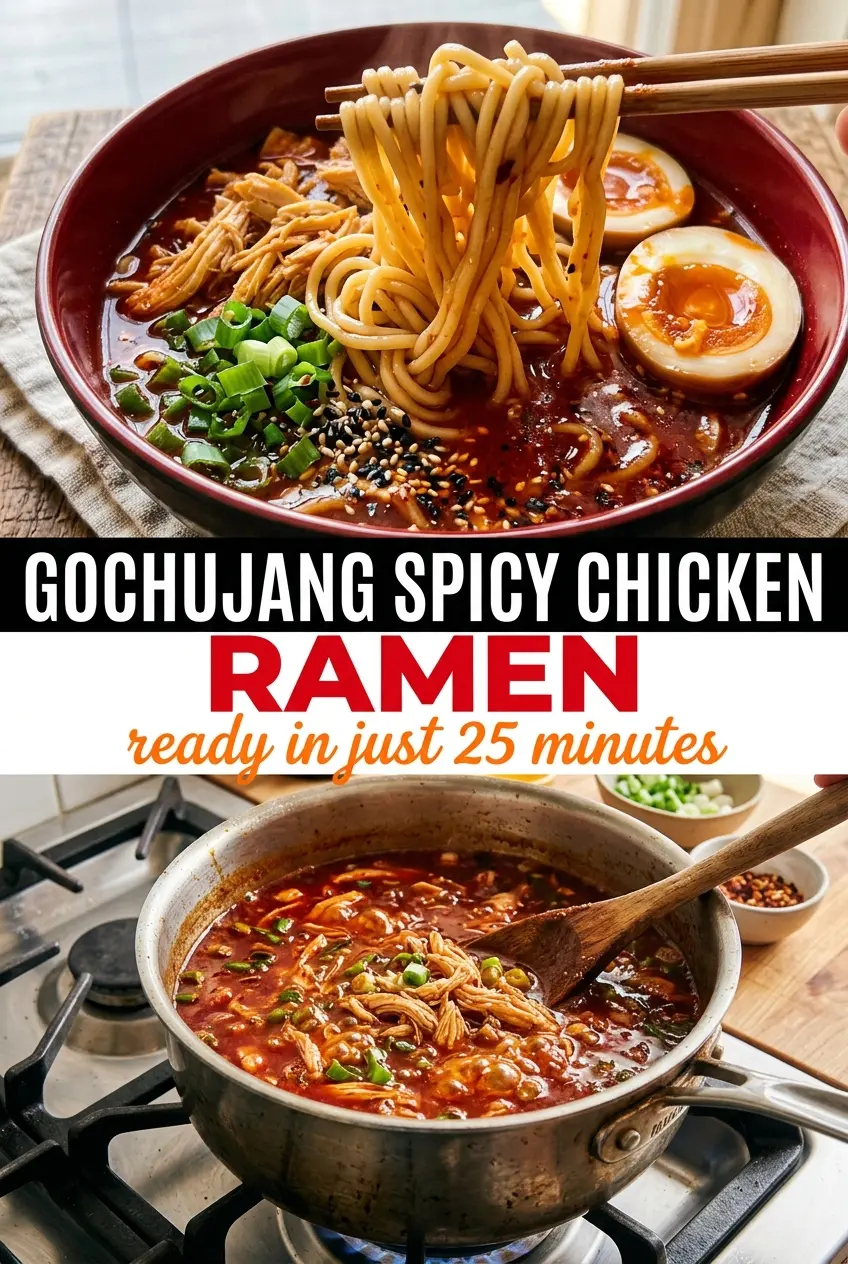
Gochujang Spicy Chicken Ramen
Ingredients
Equipment
Method
- Whisk gochujang paste, soy sauce, garlic, ginger, and chicken broth in a large Dutch oven and bring to a simmer, about 95°C, for 2-3 minutes until glossy and fragrant.
- Add shredded cooked chicken to the simmering broth and reduce to a gentle simmer, about 90°C, for 10 minutes so the flavors meld and the chicken warms through.
- Cook ramen noodles separately according to package directions until tender, then drain well.
- Divide noodles among bowls and ladle the hot gochujang broth and chicken over the top so the noodles immediately soak up the sauce.
- Drizzle sesame oil over each bowl and top with sliced green onions and a soft-boiled egg before serving.