
Roasted tomato and garlic ricotta pasta lands in that sweet spot between effortless and special. The tomatoes burst in the oven, the garlic turns soft and mellow, and the ricotta becomes a silky sauce that coats every twist of pasta without feeling heavy. It tastes like you spent all afternoon on dinner, even though the oven does most of the work.
The key is roasting both the tomatoes and the garlic until they’re past the point of just being tender. You want the tomatoes collapsed and jammy, with some of their juices left on the pan, and the garlic soft enough to mash into the ricotta with almost no resistance. A splash of pasta water loosens everything into a sauce that clings instead of puddling at the bottom of the bowl.
Below, I’ll show you how to get that creamy texture without cream, how to keep the sauce from turning grainy, and what to change if you want to make it a little richer or turn it into a lighter weeknight dinner.
The garlic melted right into the ricotta and the sauce coated the pasta instead of sitting in a pool at the bottom. I used the pasta water like you said and it came together in minutes with that sweet roasted tomato flavor all through it.
Roasted Tomato and Garlic Ricotta Pasta is the kind of creamy, no-cream dinner worth pinning for the nights when you want something simple that still tastes like you paid attention.
The Reason This Sauce Stays Silky Instead of Grainy
Ricotta can go from lush to sandy if you hit it with too much heat or skip the pasta water. That’s the main thing people get wrong with cheese-based sauces: they treat the dairy like it needs to be cooked hard, when really it just needs to be warmed through and thinned into a coating. In this pasta, the heat comes from the roasted tomatoes and the just-cooked noodles, not a boiling pan of cheese.
The other part that matters is the pan juices. Those tomato drippings carry concentrated flavor, and they help turn the ricotta into something that tastes built rather than mixed. If your sauce seems thick or stiff, it’s usually because the ricotta went in cold and stayed that way. Let the roasted garlic mash completely into it first, then use a splash of pasta water to bring it to a glossy, spoonable texture.
What Each Ingredient Is Actually Doing in This Dish
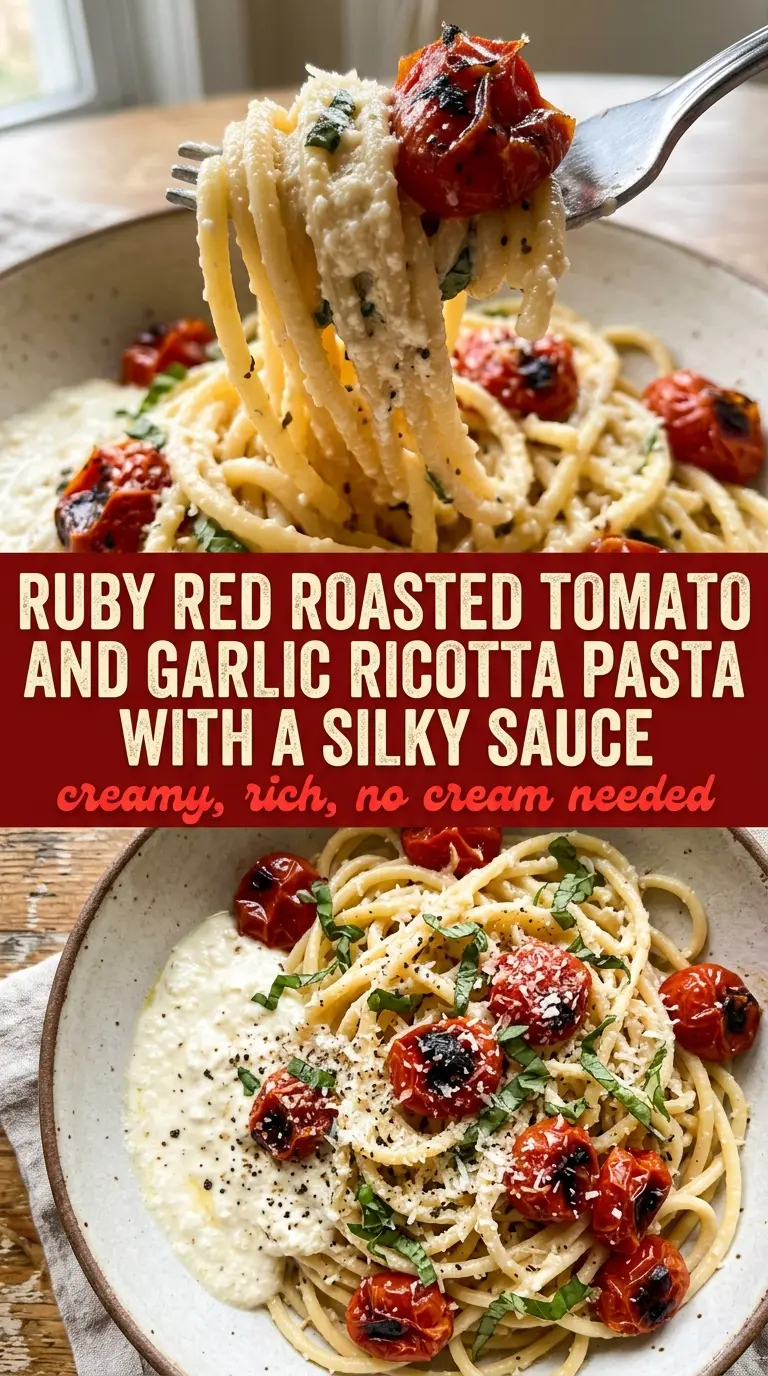
- Cherry tomatoes — These roast fast and collapse into their own jammy sauce. Larger tomatoes release more water and take longer to concentrate, so they don’t give you the same sweet, blistered edges.
- Whole head garlic — Roasting a whole head turns sharp garlic into something soft, almost sweet, and easy to mash into the ricotta. Pre-minced garlic won’t give you that mellow, spreadable texture.
- Whole milk ricotta — This is what makes the sauce creamy without cream. Part-skim ricotta works in a pinch, but it’s drier and can taste a little chalky, so loosen it with a bit more pasta water.
- Parmesan — Parmesan adds salt and depth, not just cheese flavor. Grated finely, it melts in more smoothly; if all you have is shredded, give it an extra minute off the heat to settle into the sauce.
- Pasta water — Don’t skip reserving it. The starch helps the ricotta and tomato juices bind to the pasta instead of sliding off, which is what turns this from a topping into a proper sauce.
- Fresh basil — Basil brings the fresh finish that keeps the dish from tasting flat. Tear it at the last minute so it keeps its aroma instead of bruising into the sauce.
The 20 Minutes That Matter Most in This Pasta
Roasting Until the Tomatoes Burst
Spread the tomatoes out in a single layer so they roast instead of steam. You’re looking for blistered skins, wrinkled edges, and juices pooling on the pan. If the pan looks crowded, the tomatoes will soften without developing that concentrated sweetness, so use two pans if that’s what it takes. The garlic can roast alongside them wrapped in foil; it should squeeze out like paste when it’s done.
Turning Ricotta Into Sauce
Scoop the ricotta into a bowl and mash in the roasted garlic until it’s completely smooth. A few streaks are fine, but chunks of garlic tell you it needs more mixing. Add the pasta water a spoonful at a time and stop as soon as the ricotta looks glossy and loose enough to coat a spoon. If it gets soupy, you’ve gone too far; the tomatoes and pasta will loosen it a little more once everything is tossed together.
Bringing Everything Together
Add the hot pasta straight into the bowl or pan with the ricotta mixture, then fold in the roasted tomatoes and their juices. The residual heat from the noodles warms the sauce without breaking it. If the sauce tightens up, add another splash of pasta water and toss again until it clings to the pasta in a thin, even layer. Finish with parmesan and basil after the heat is off so the herbs stay bright and the cheese doesn’t clump.
Three Ways to Make This Pasta Fit the Night You’re Having
Make It Gluten-Free Without Changing the Sauce
Use your favorite gluten-free pasta shape with good surface texture, like a ridged corn-rice blend. The sauce itself doesn’t need any adjustment, but gluten-free pasta can shed starch faster, so keep an eye on the cooking water and reserve it before the pasta gets too soft.
Use Dairy-Free Ricotta for a Lighter, Different Finish
A good almond- or cashew-based ricotta works here, but it won’t have the same mild creaminess or the slight tang of dairy ricotta. Add the pasta water a little more gradually, because plant-based versions can loosen fast and turn pasty if they’re overmixed.
Add Protein Without Weighing the Dish Down
Toss in shredded rotisserie chicken, sliced grilled sausage, or white beans for extra substance. Chicken and sausage make it heartier and more savory, while white beans keep the meal vegetarian and add a creamy bite of their own.
Make It Fresher and Brighter
Finish with lemon zest or a pinch of red pepper flakes if you want the roasted flavors to pop more. Lemon cuts through the richness of the ricotta, while pepper flakes add heat without changing the creamy texture.
Storage and Reheating
- Refrigerator: Store leftovers in an airtight container for up to 3 days. The sauce thickens as it sits, so expect a denser texture the next day.
- Freezer: I don’t recommend freezing this one. Ricotta sauces tend to turn grainy after thawing, and the tomatoes lose the jammy texture that makes the dish work.
- Reheating: Warm it gently in a skillet over low heat with a splash of water or milk, stirring until the sauce loosens again. High heat is what breaks the ricotta and makes the pasta dry, so keep the burner low and patient.
Answers to the Questions Worth Asking
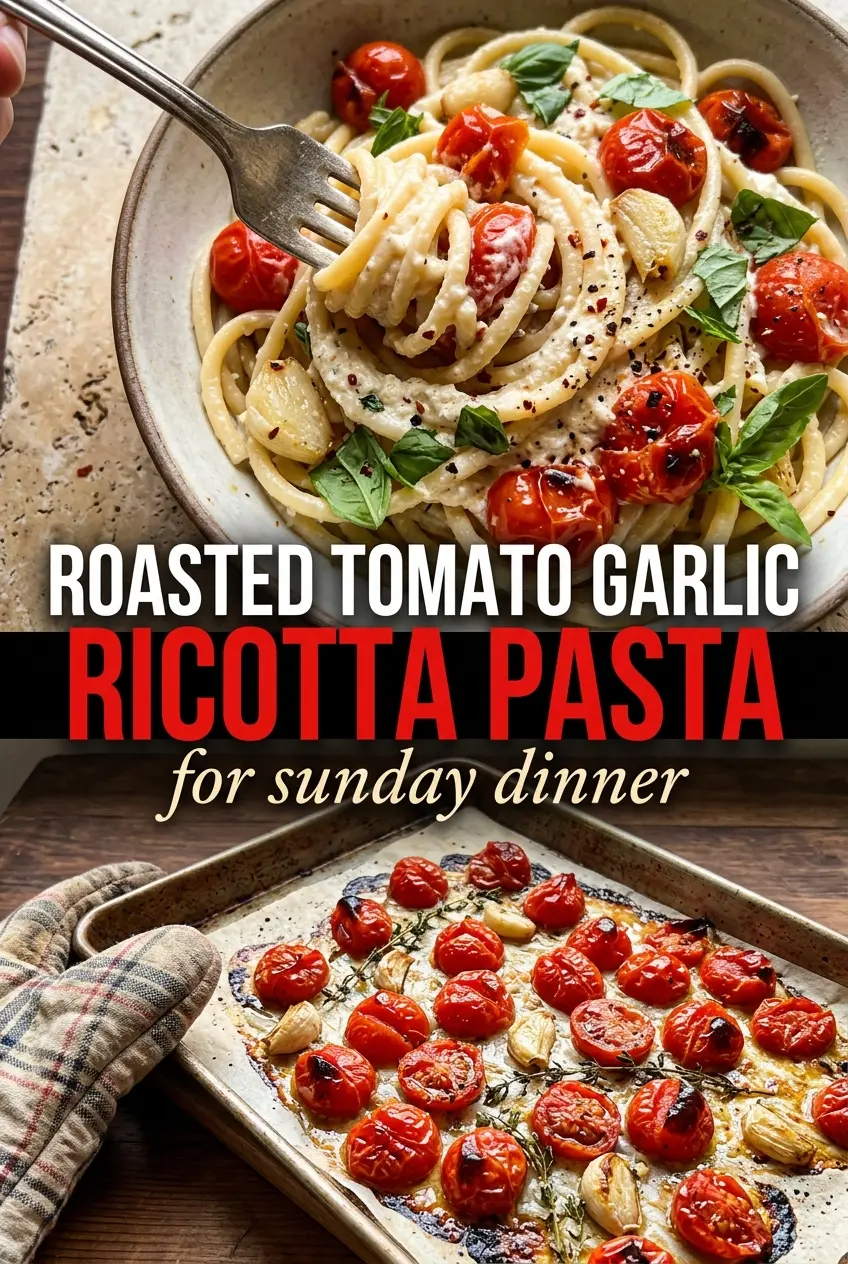
Roasted Tomato and Garlic Ricotta Pasta
Ingredients
Equipment
Method
- Preheat the oven to 400°F. Slice the top off the garlic head, drizzle with olive oil, and wrap in foil.
- Toss the cherry tomatoes with olive oil, salt, and pepper on a baking sheet. Spread them into an even layer so they blister instead of steam.
- Roast the tomatoes and garlic for 30–35 minutes at 400°F. Roast until the tomatoes burst and the garlic is soft and golden.
- Cook the pasta according to package directions. Reserve 1/2 cup pasta water before draining.
- Squeeze the roasted garlic cloves into the ricotta and mash together. Thin the mixture with a splash of reserved pasta water until silky.
- Toss the pasta with the roasted tomatoes, garlic ricotta, and parmesan. Top with torn fresh basil before serving.